Also known as Air Plant · 3 saves
Tillandsia
Tillandsia, the genus most gardeners know as air plant. We track 3 varieties; the ones most used by real gardeners.
The 3 most-saved Tillandsia varieties
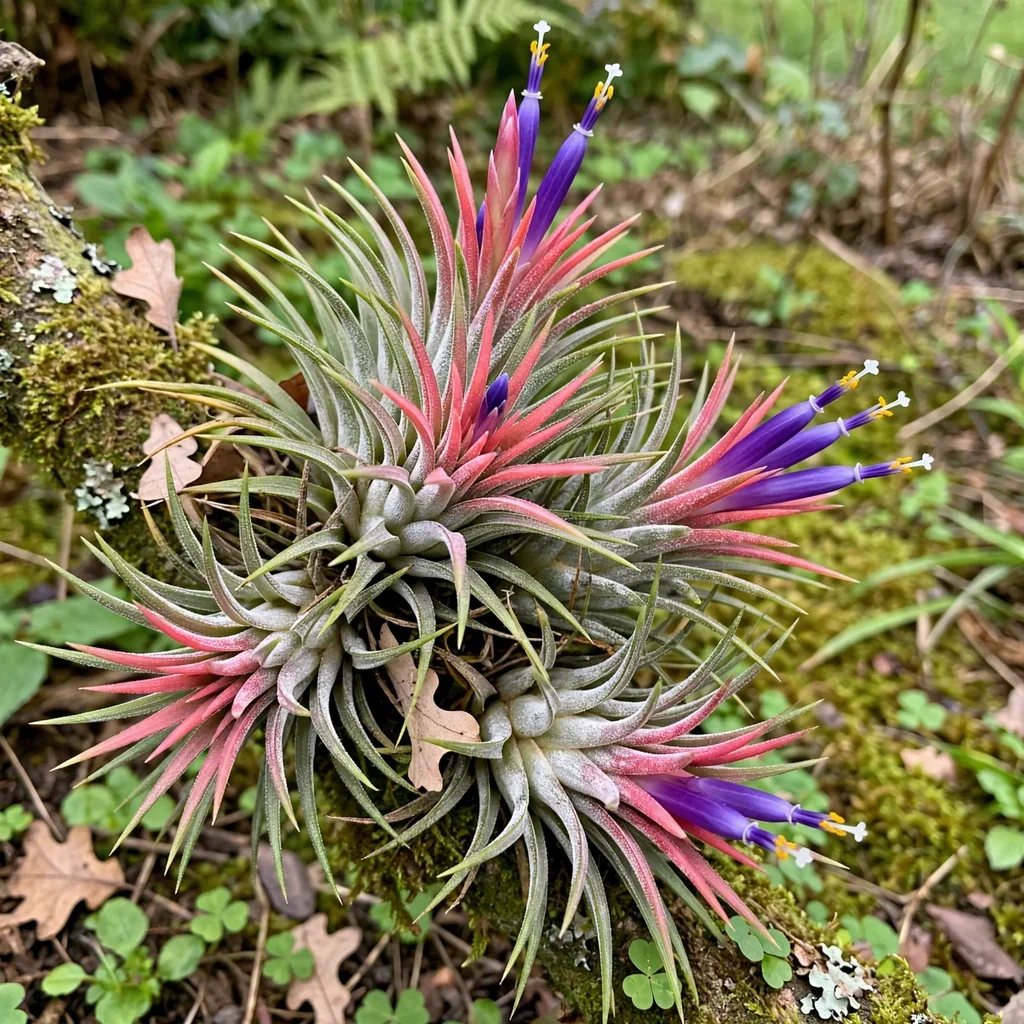
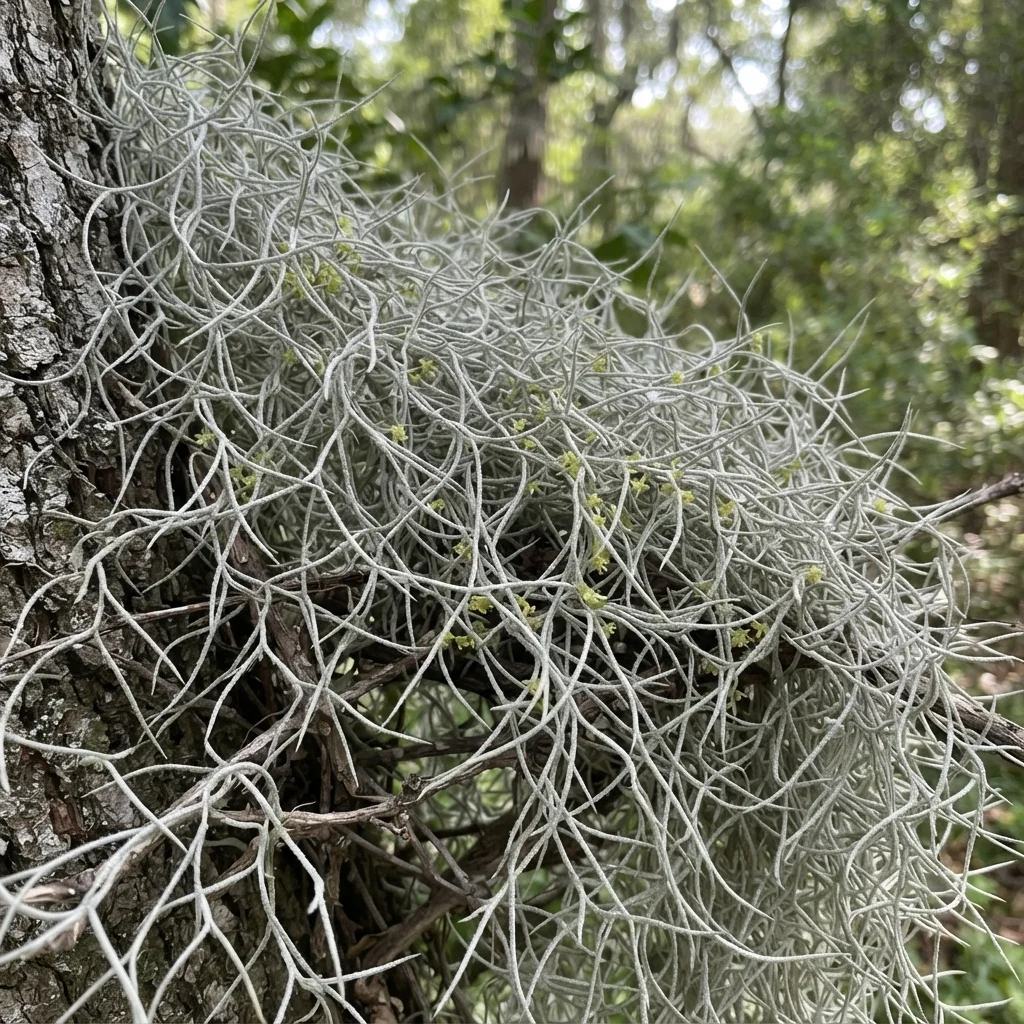
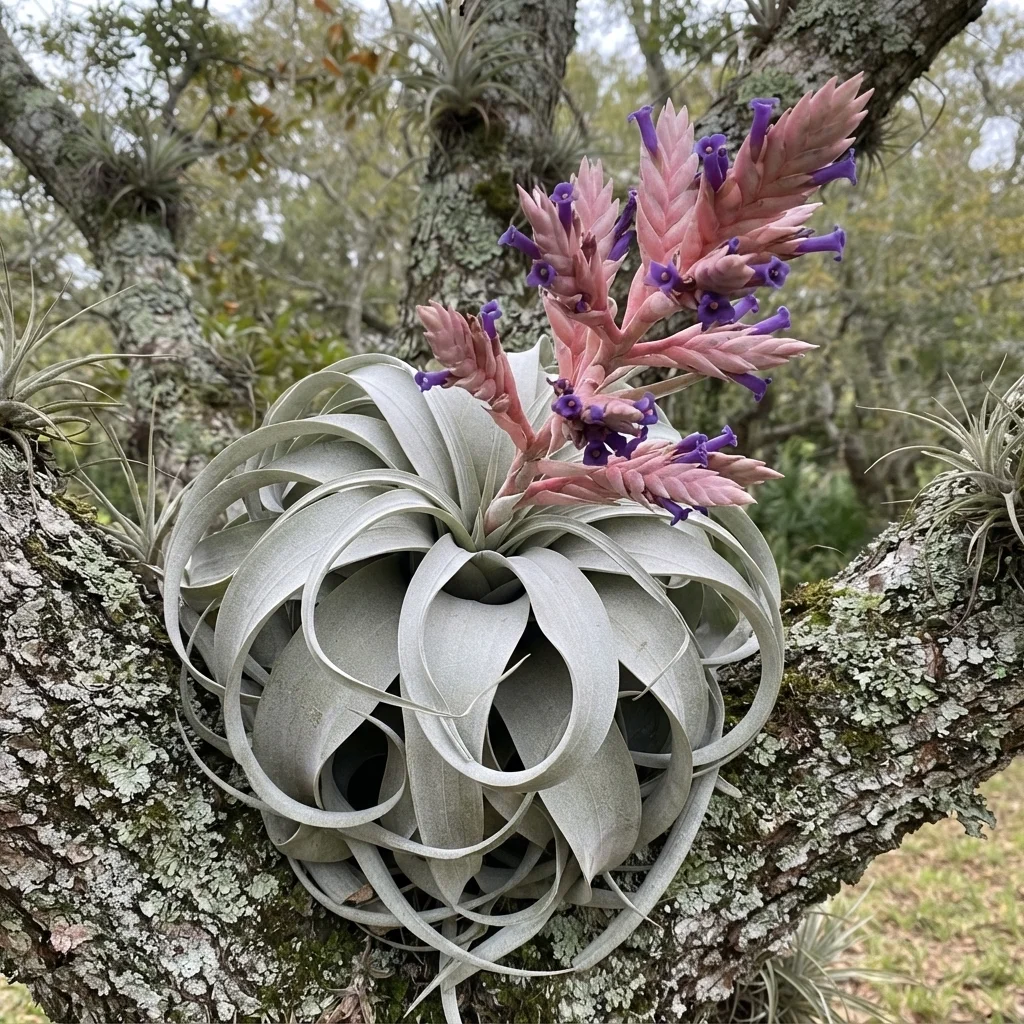
3 species of Tillandsia
Each one is a parent of the varieties above.
Track your Tillandsia in Sow
Save the Tillandsia you grow and get care reminders timed to your zone.
How to grow Tillandsia
Whats common across all Tillandsia varieties in our catalog — drawn from the care records of the 3 most-grown of them.
The Tillandsia year
- FertilizeApril–August100% of varieties
Mist with a highly diluted liquid bromeliad or orchid fertilizer once a month during the active growing season.
- Check for PestsJune–August67% of varieties
Inspect the dense inner core of the strands for scale, mealybugs, or sheltering beetles during warm summer months.
- Winter PrepNovember67% of varieties
Bring outdoor hanging displays indoors to a bright, well-ventilated room if sustained freezing temperatures are expected.


Do
- Provide continuous, active air movement around all parts of the hanging strands.
- Use a highly diluted, low-nitrogen liquid fertilizer once a month during spring and summer.
- Protect the plant from sustained freezing temperatures by moving it indoors during winter.
- Mist regularly to maintain humidity 🌱
- Provide bright, indirect light
Avoid
- Do not plant Spanish moss in soil, potting mix, or any heavy organic substrate.
- Do not allow the core of the clump to remain wet or soggy for extended periods.
- Do not prune heavily into old, leafless sections expecting new vegetative buds to form.
- Avoid overwatering as it can cause rot ❌
What goes wrong with Tillandsia
| Problem | What you'll see | What to do |
|---|---|---|
| Mealybugs | White cottony masses on leaves and stems | Apply neem oil or insecticidal soap |
| Scale insects | Brown or black bumps on plant surfaces | Use horticultural oil or remove manually |
| Red bugs and grain beetles | Insects sheltering within the dense hanging strands, which can cause biting issues for humans handling the material. | Quarantine wild-harvested material and treat cultivated collections with insecticidal soap if an infestation occurs. |
| Scale insects and mealybugs | Cottony masses or small raised bumps on the slender stems, accompanied by sap depletion. | Spot-treat affected areas with isopropyl alcohol or horticultural oils formulated specifically for bromeliads. |
| Fungal stem rot | Blackening and mushy disintegration of the stems, typically caused by prolonged wetness and stagnant air. | Prune away and discard all rotting sections immediately, then increase air circulation and reduce watering frequency. |
| Root rot | Soft, blackened roots and wilting | Reduce watering, improve drainage, and remove affected parts |
| Crown rot | Browning and softening of the inner leaf bases, with leaves pulling out easily from the center. | Prevent by drying the plant upside down after watering; discard specimens with advanced rot as they cannot be saved. |
Making more Tillandsia
Division
- Gently pull apart a healthy, established clump into smaller, multi-strand sections.
- Ensure each divided piece has several active, growing tips.
- Hang the new divisions in a bright location with excellent air circulation.
- Resume normal misting schedules immediately to encourage active growth.
Offset division
- Gently remove offsets from the mother plant
- Allow offsets to callus for 1-2 days
- Place on moist sphagnum moss or soil
- Maintain high humidity for 2-3 weeks
Tillandsia questions
How many types of Tillandsia are there?
The Sow catalog tracks 3 distinct Tillandsia varieties. The most popular — ranked by 3 real gardeners — are shown first above.
What zones does Tillandsia grow in?
Across its varieties, Tillandsia covers USDA Zones 8–10. Individual varieties differ — each plant page lists its exact range, and Sow filters the catalog to your zone automatically.
When does Tillandsia bloom?
Most Tillandsia varieties bloom in varies, spring. Staggering early, mid, and late varieties extends the genus's season in one bed.
Which Tillandsia should I choose?
Start from the most-saved varieties above — popularity across thousands of gardens is a strong signal of reliability — then filter by your zone and sun. In the Sow app you can preview any of them in a photo of your actual yard before you buy.