The Story
Plant Bio
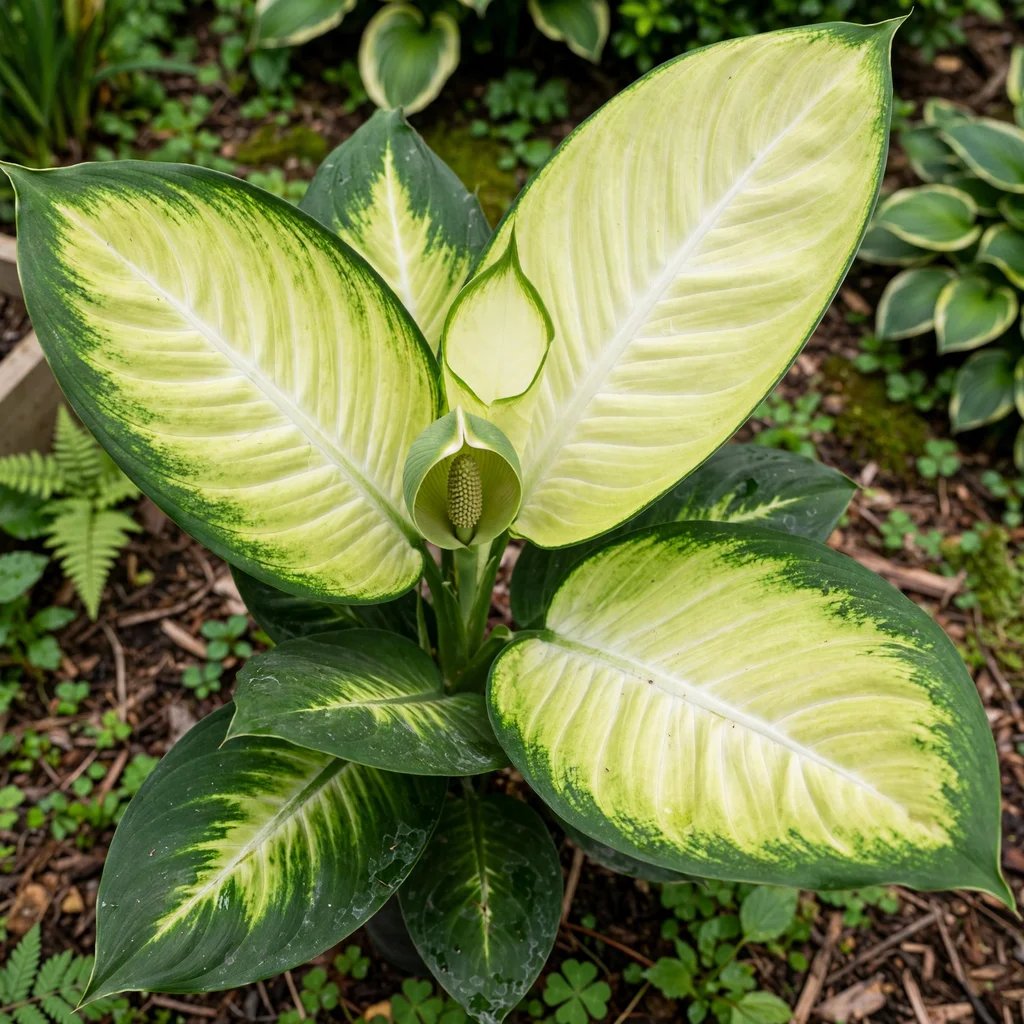
Dieffenbachia seguine is an upright, cane-forming evergreen perennial native to the tropical understories of Central and South America. The species is characterized by its broad, fleshy leaves and aroid inflorescences consisting of a greenish-white spathe enclosing a pale spadix.
'Tropic Marianne' is distinguished by its large, glossy leaves that feature a luminous chartreuse to creamy-white center contrasting sharply with deep green margins. New foliage emerges with bright cream tones that intensify in coloration as the leaf lamina expands.
Uses & Benefits:
Essentials
At a Glance
Plant Type
Tropical
Height
48"
Width
28"
Light
Partial Sun, Shade
Zones
10
Water
Moderate
Humidity
Moderate to high
Lifespan
Perennial
Native To
Central and South America
Toxicity
Highly toxic; contains calcium oxalate crystals
Bloom period
Summer
In flower about 3 months of the year
Planting
How to Grow
- Position the plant in bright, indirect light, avoiding direct sun which scorches the variegated leaf tissue.
- Plant in a loose, highly aerated aroid mix containing bark, perlite, and peat to ensure rapid drainage.
- Water thoroughly when the top two inches of soil feel dry, allowing excess water to drain completely from the pot.
- Maintain ambient temperatures above 60°F (15°C) and provide moderate to high humidity to prevent leaf margin browning.
Pro Tip
Keep the potting medium consistently moist but never waterlogged, as stagnant water at the root zone rapidly induces fatal basal decay.
Keep It Thriving
Care Guide
Do
- Use sterile pruning shears when removing dead or damaged lower leaves at the stem base.
- Apply a balanced water-soluble foliage fertilizer every four to six weeks during active spring and summer growth.
- Wipe the broad leaves periodically with a damp cloth to remove dust and discourage spider mites.
Don't
- Do not cut back aggressively into old, bare, leafless wood, which results in slow and patchy recovery.
- Never allow the pot to sit in standing water or use heavy, poorly drained garden soils.
- Do not mist the foliage unless there is excellent air circulation, as stagnant moisture invites fungal leaf spots.
Seasonal Care Calendar
| Task | Jan | Feb | Mar | Apr | May | Jun | Jul | Aug | Sep | Oct | Nov | Dec |
|---|---|---|---|---|---|---|---|---|---|---|---|---|
| Fertilize | ||||||||||||
| Pest Check | ||||||||||||
| Prune | ||||||||||||
| Winter Prep |
Watch Out For
Pests & Diseases
Common Pests
Common Diseases
In the Garden
Landscape Uses & Companions
Landscape Uses
Companion Plants
Multiply
Propagation Methods
Good to Know
Common Questions
Dumb Cane questions
What zones can Dumb Cane grow in?
Dumb Cane is hardy in USDA Zone 10. Inside that range it survives winter in the ground; outside it, grow it as an annual or a container plant you protect.
When does Dumb Cane bloom?
Dumb Cane typically blooms in summer through summer. Exact timing shifts a week or two with your zone — Sow's bloom calendar maps it to your garden.
Does Dumb Cane need full sun?
Dumb Cane does best in part shade.
Keep exploring
Explore the genus
Hardy in your zone?
Grow Dumb Cane with confidence
See it in a design of your actual yard, get zone-matched care reminders, and track it season by season in your garden journal.