17 named cultivars
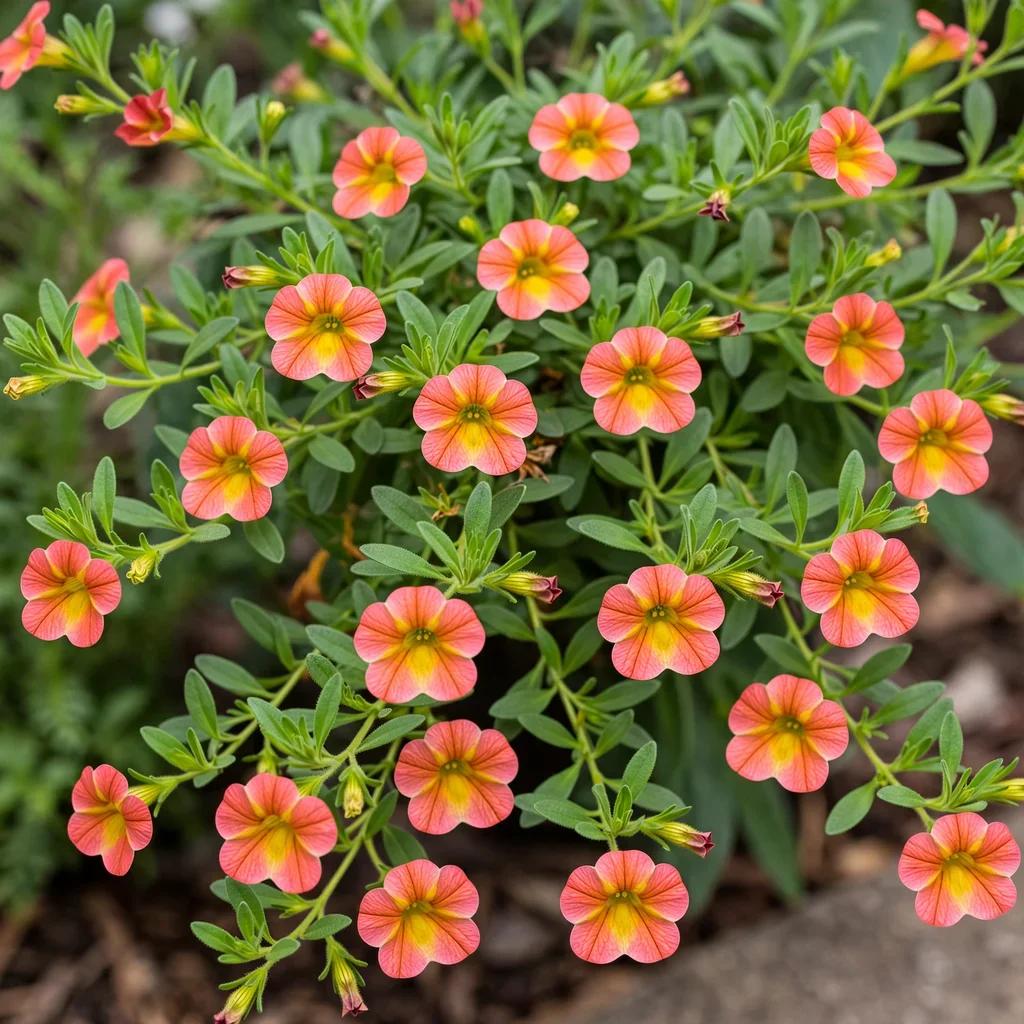 ‘Superbells Coral Sun’Superbells Coral Sun
 ‘Mix’Calibrachoa Mix
 ‘White’White Million Bells
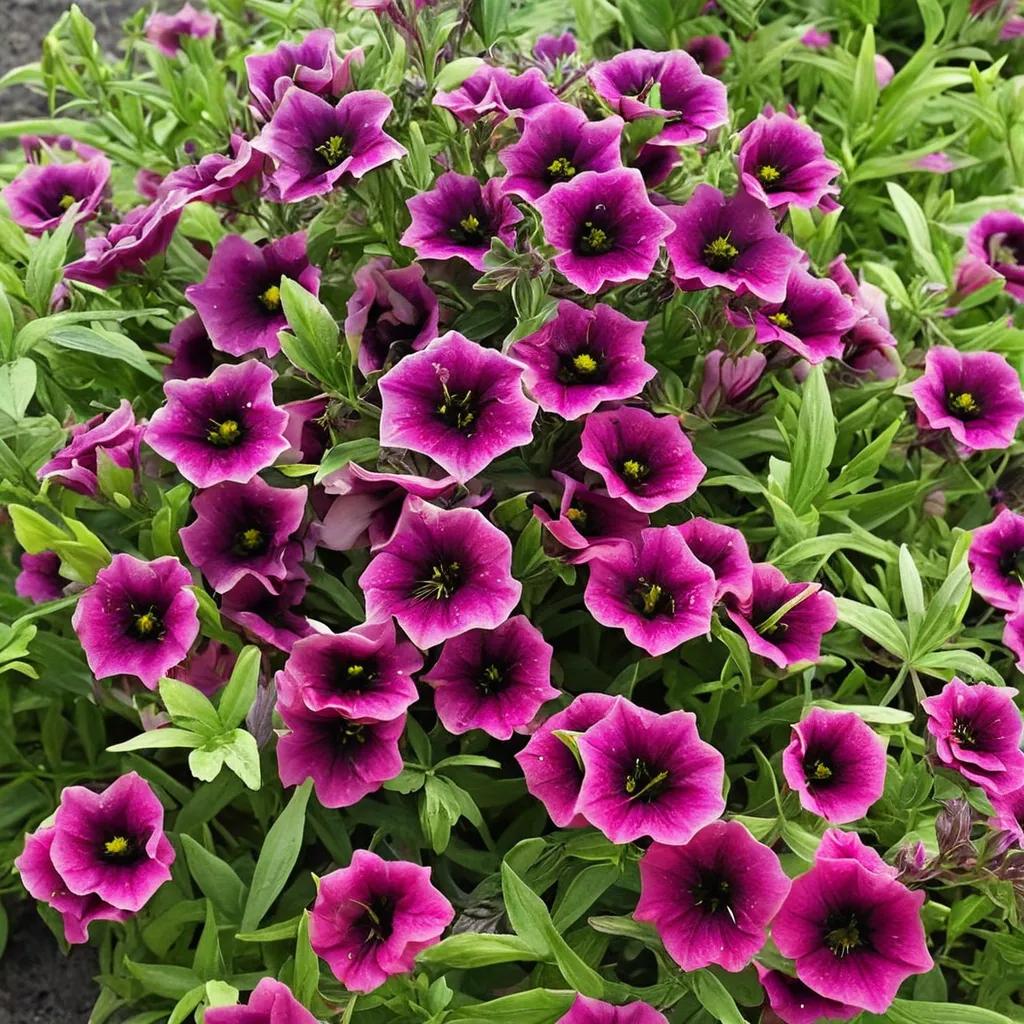 ‘Blackcurrant Punch’Blackcurrant Punch Million Bells
 ‘Double Blue’Double Blue Million Bells
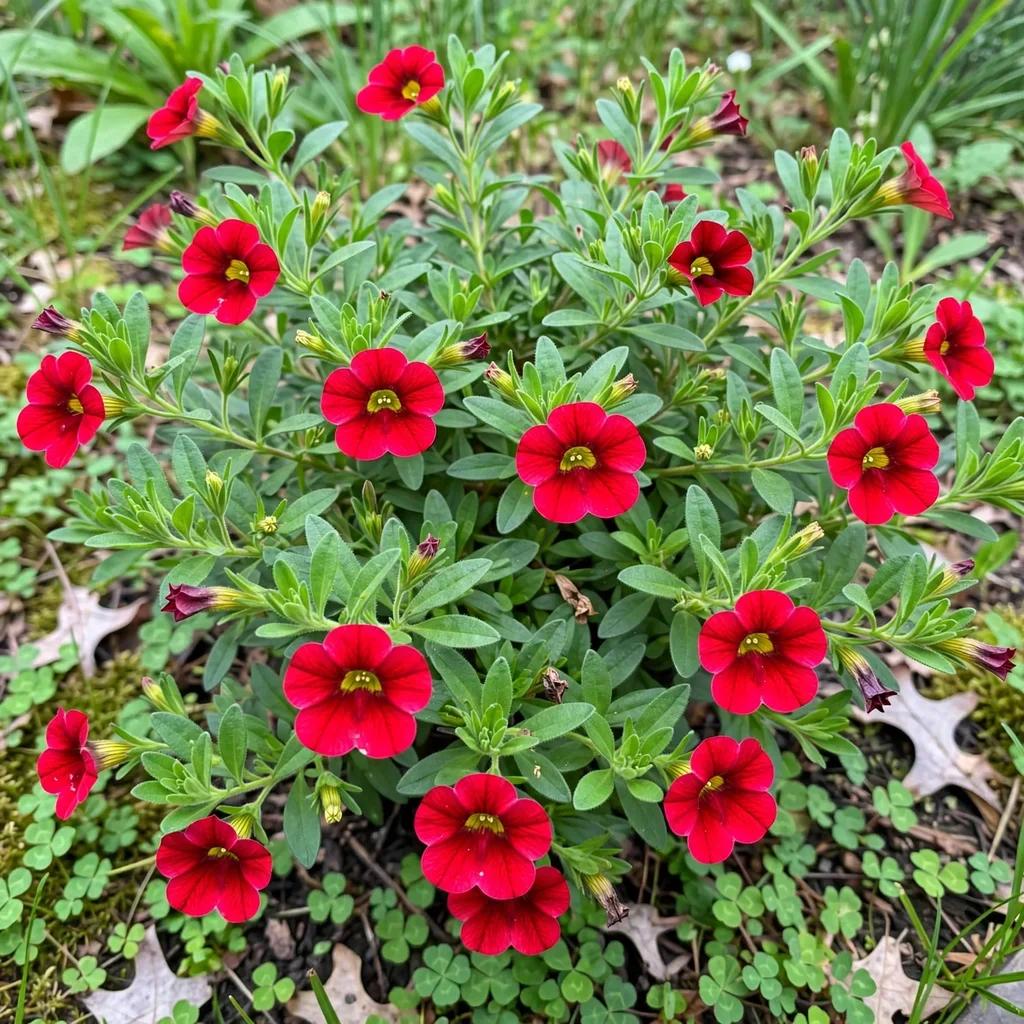 ‘Superbells Cherry Red’Superbells Cherry Red Million Bells
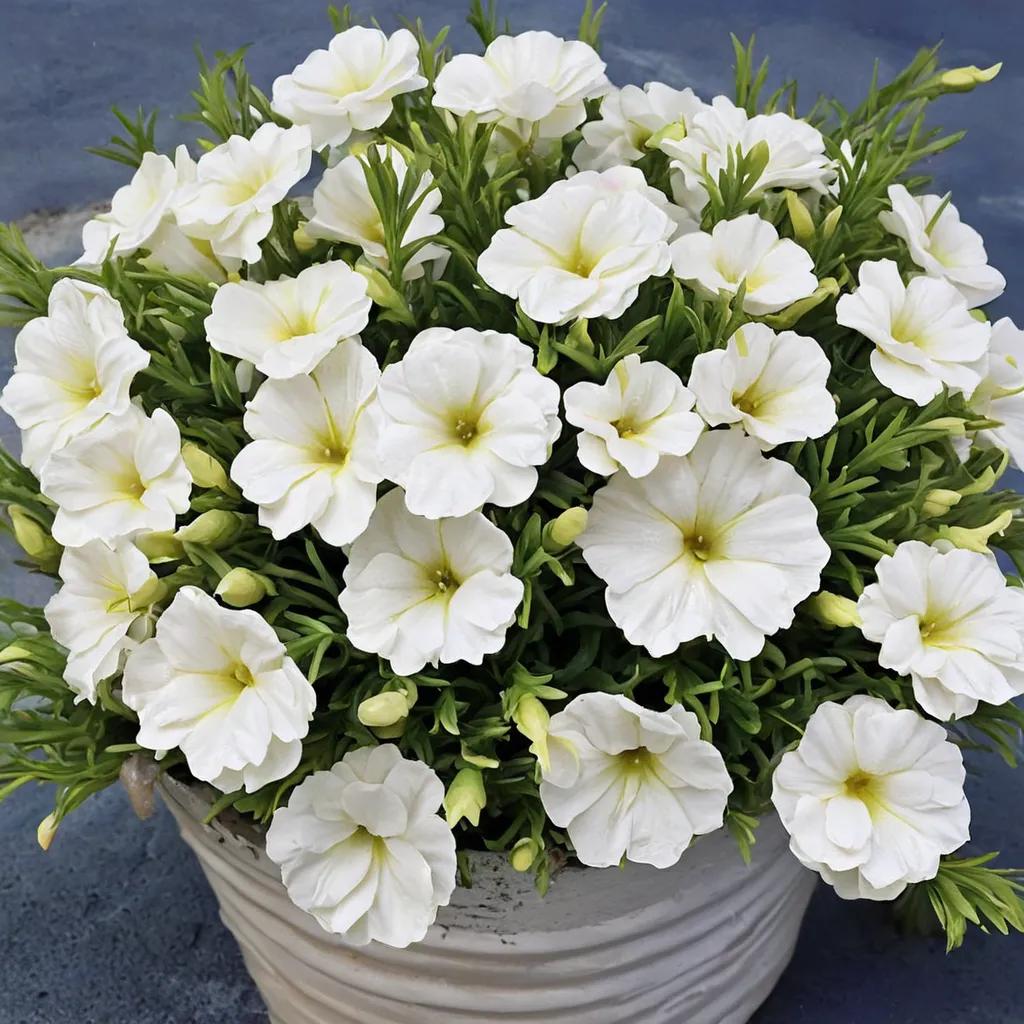 ‘Superbells White’Superbells White Million Bells
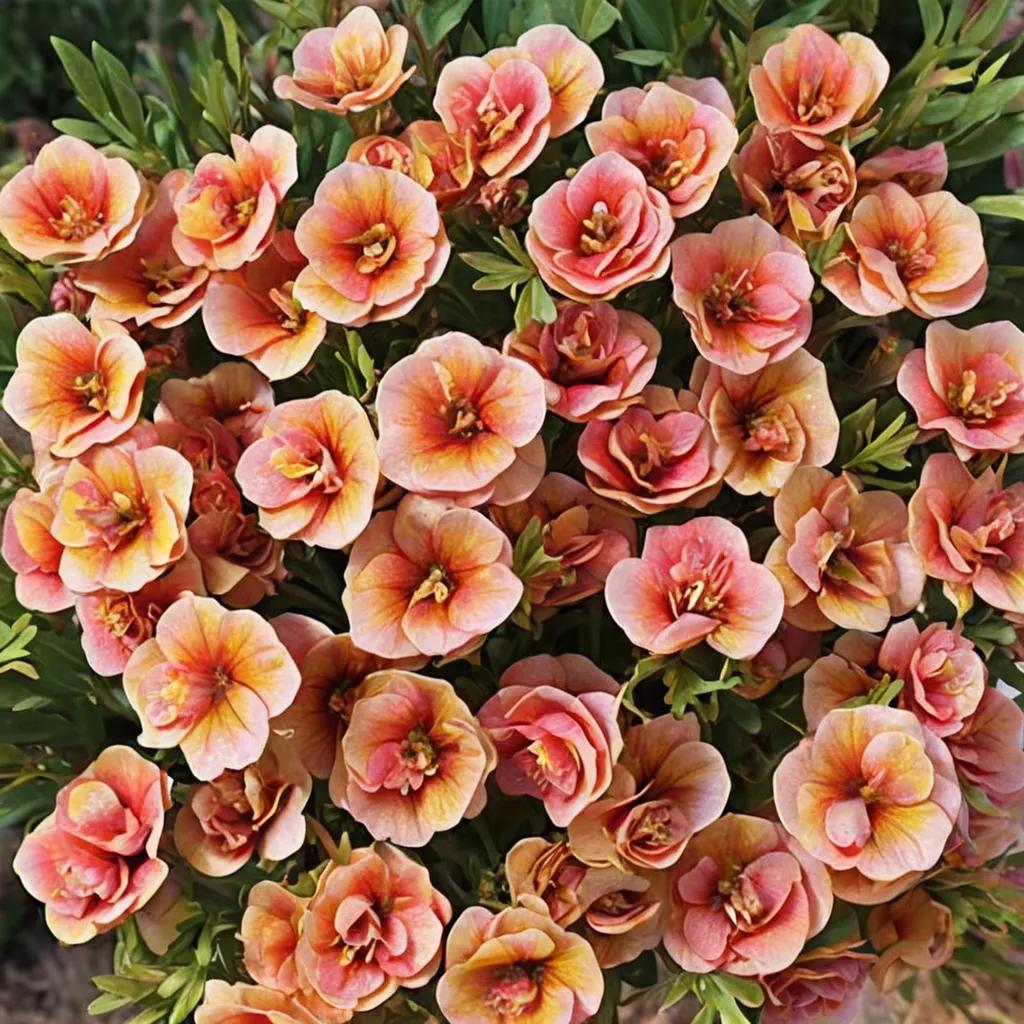 ‘Double Orange’Calibrachoa Double Orange
 ‘Double Ruby’Calibrachoa Double Ruby
 ‘Tangerine Punch’Calibrachoa Tangerine Punch
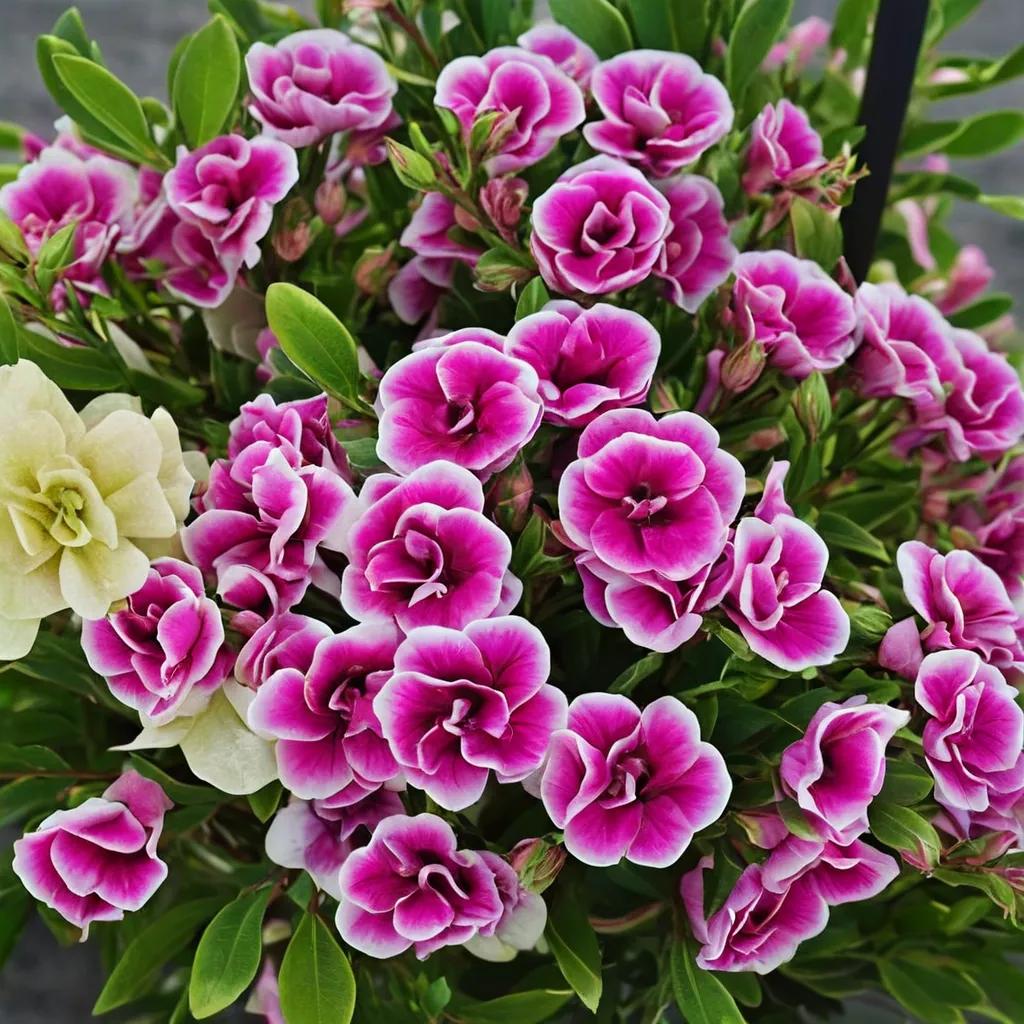 ‘Doublette Love Swept’Calibrachoa Doublette Love Swept
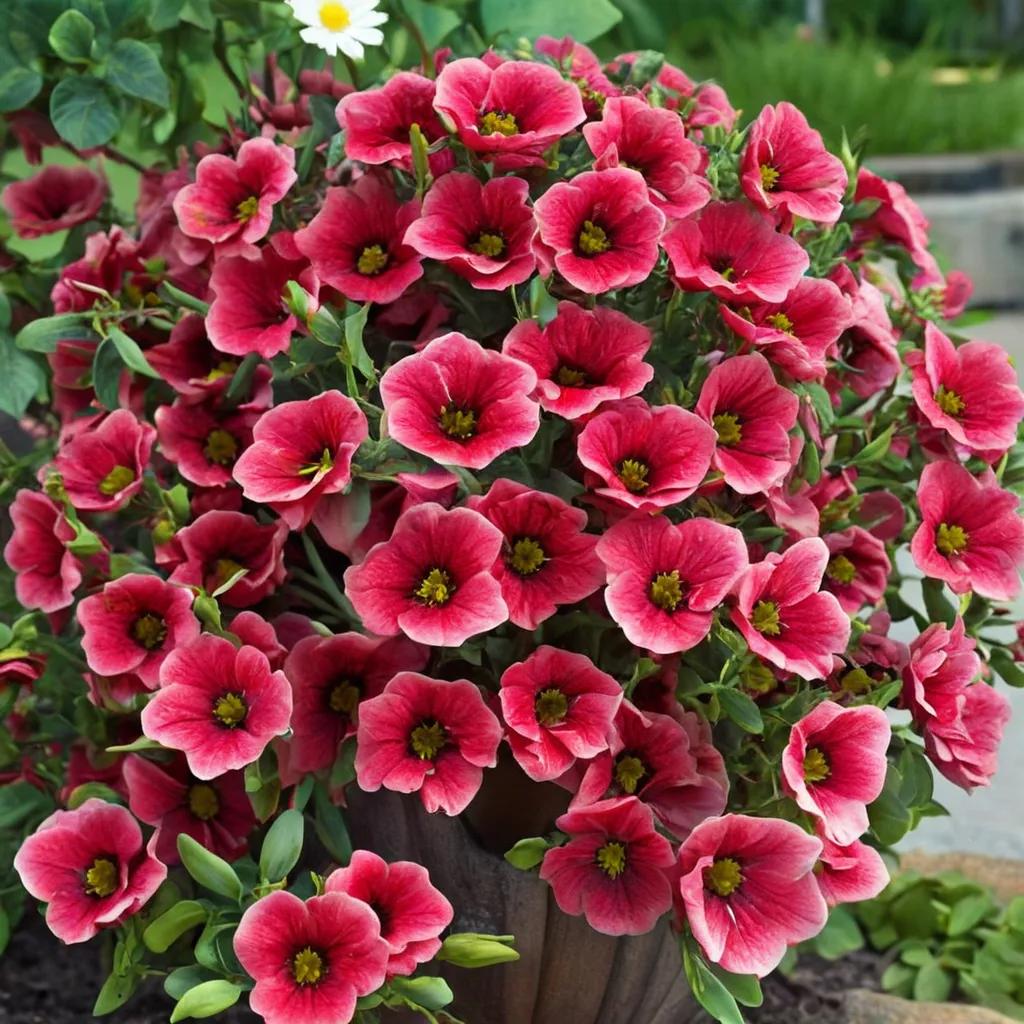 ‘Pomegranate Punch’Superbells Pomegranate Punch
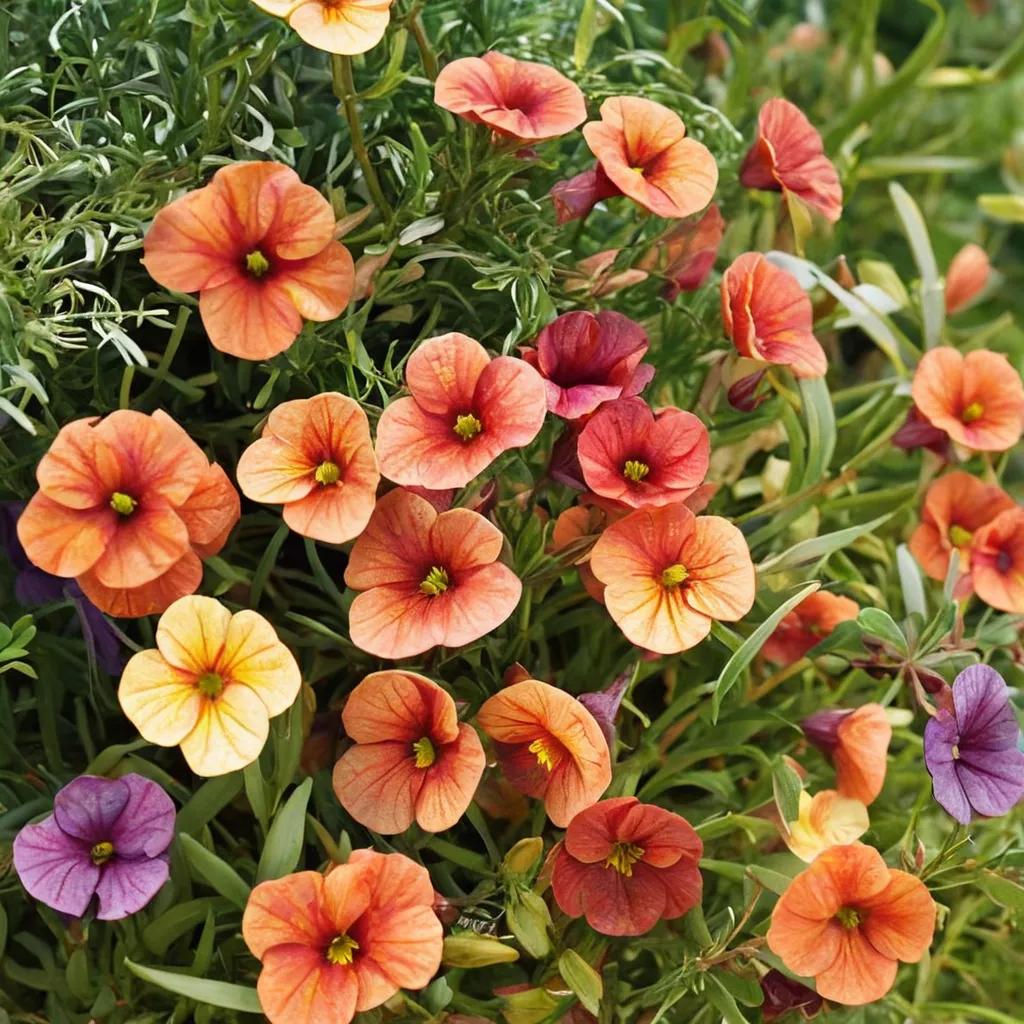 ‘Dreamsicle’Dreamsicle Million Bells
 ‘Double Redstone’Calibrachoa Double Redstone
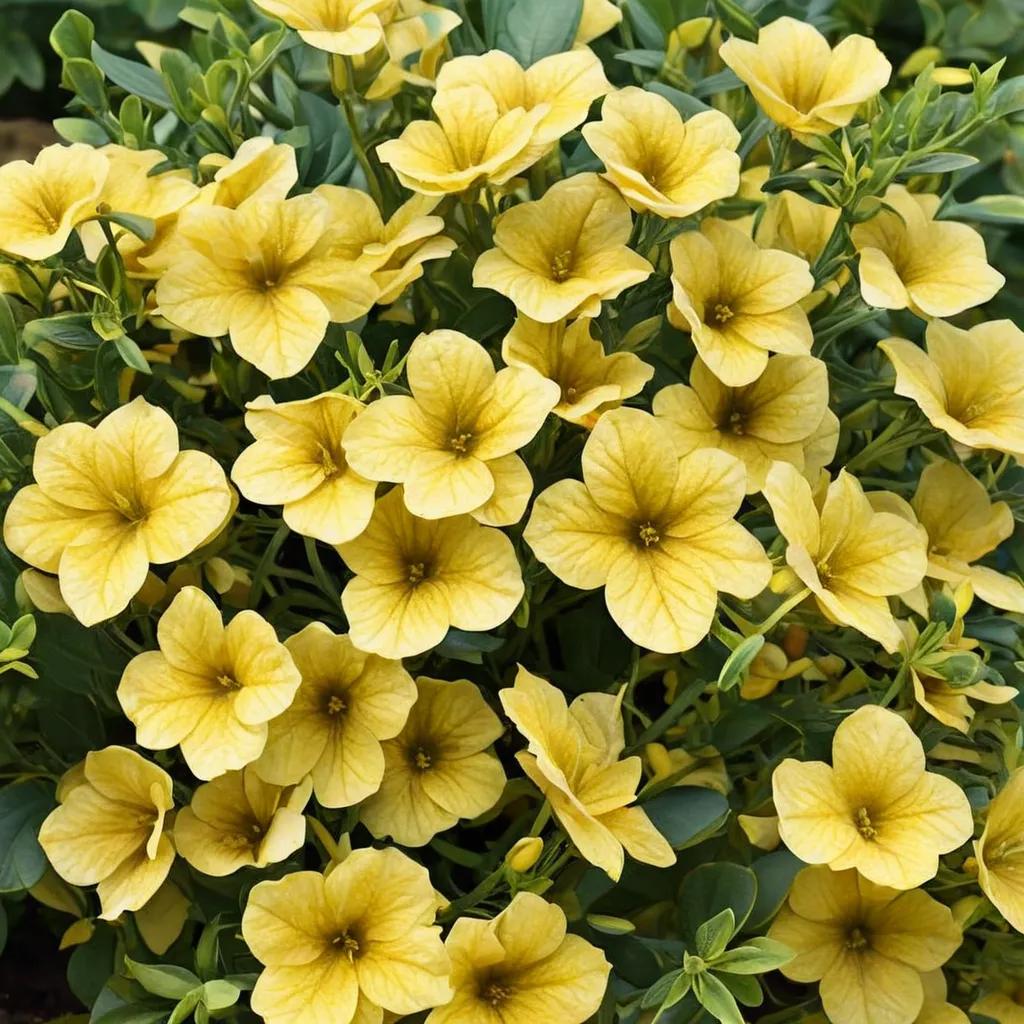 ‘Yellow’Million Bells Yellow
 ‘Blue Moon Punch’Blue Moon Punch Million Bells
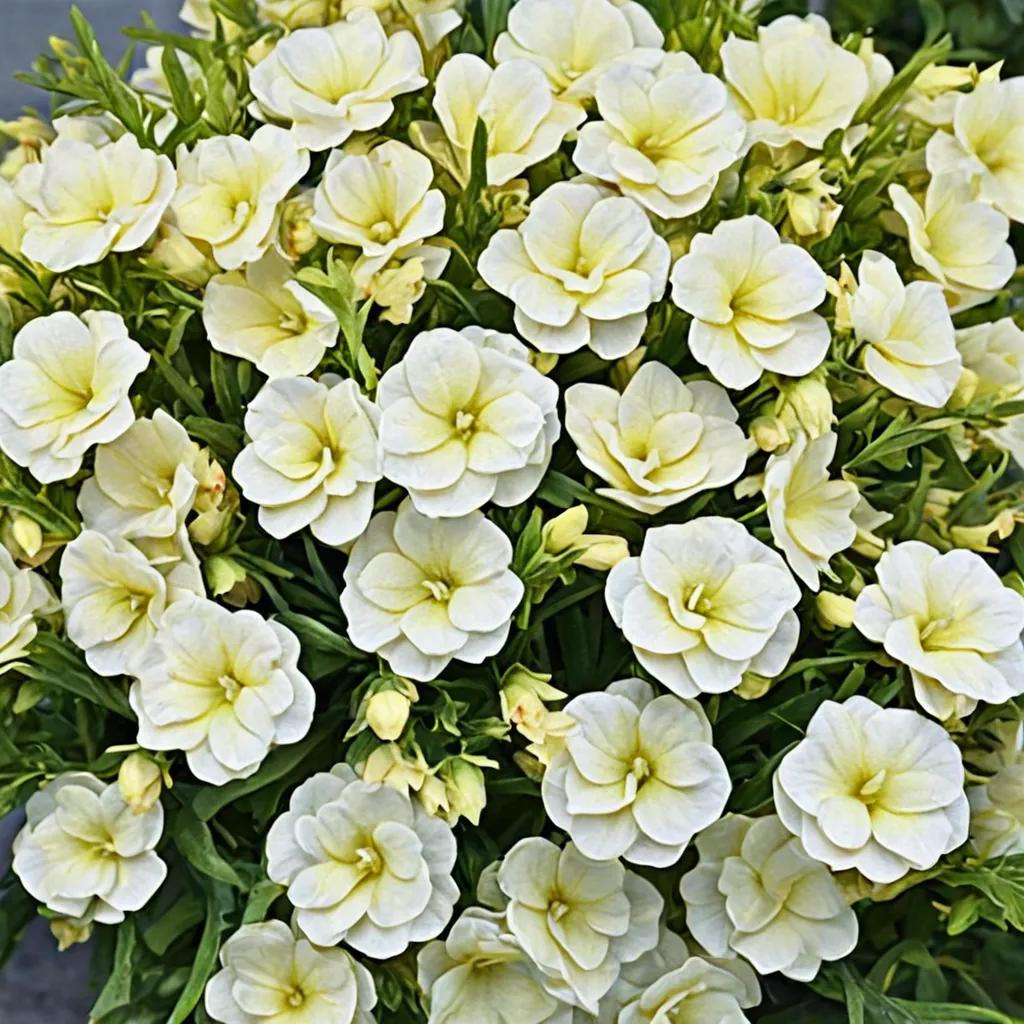 ‘Double Chiffon’Calibrachoa Double Chiffon
The Story
Plant Bio
Calibrachoa x hybrida, million bells, is a trailing tender perennial grown as a summer annual, making a low mound three to nine inches high that spills a foot or two over the edge of a pot. It carries hundreds of inch-wide funnel-shaped flowers, like miniature petunias, from late spring until the first frost.
Unlike petunias it is self-cleaning and never needs deadheading. It does insist on acid conditions, though: in limey compost or hard tap water the leaves yellow between green veins as iron locks up. Feed with an acidifying fertiliser, and let the compost dry slightly between waterings, because it rots far more readily than a petunia.
Uses & Benefits:
Essentials
At a Glance
Plant Type
Annual
Height
6"
Width
18"
Light
Full Sun, Partial Sun
Zones
9, 10
Water
Moderate
Humidity
Moderate
Lifespan
Annual
Native To
Garden hybrid; the genus is South American
Toxicity
Non-toxic
Planting
How to Grow
- Plant in full sun in free-draining compost.
- Grow it in containers rather than open ground.
- Let the surface dry slightly between waterings.
- Feed weekly with an acidifying liquid fertiliser.
- Watch for yellowing between the leaf veins.
- Trim lightly if the trails go bare at the base.
Pro Tip
Yellow leaves with green veins mean locked-up iron, not hunger — switch to an acid feed rather than adding more general fertiliser.
Keep It Thriving
Care Guide
Do
- Grow it in a container in full sun ☀️
- Feed with an acidifying fertiliser 🧪
- Let the compost surface dry between waterings 🌵
- Use rainwater where the tap water is hard 💧
Don't
- Keep the compost constantly wet ❌
- Bother deadheading — it cleans itself ❌
- Plant it in heavy garden soil ❌
Seasonal Care Calendar
| Task | Jan | Feb | Mar | Apr | May | Jun | Jul | Aug | Sep | Oct | Nov | Dec |
|---|---|---|---|---|---|---|---|---|---|---|---|---|
| Feed | ||||||||||||
| Plant Out |
Watch Out For
Pests & Diseases
Common Pests
Common Diseases
In the Garden
Landscape Uses & Companions
Landscape Uses
Companion Plants
Multiply
Propagation Methods
Good to Know
Common Questions
Million Bells questions
What zones can Million Bells grow in?
Million Bells is hardy in USDA Zones 9–10. Inside that range it survives winter in the ground; outside it, grow it as an annual or a container plant you protect.
Is Million Bells deer resistant?
Not reliably. Deer may browse Million Bells, especially tender spring growth — plan on repellents or fencing where pressure is high.
When does Million Bells bloom?
Million Bells typically blooms in late spring to frost through late summer. Exact timing shifts a week or two with your zone — Sow's bloom calendar maps it to your garden.
Does Million Bells need full sun?
Million Bells does best in full sun to part shade. In hot climates, afternoon shade keeps blooms fresher longer.
Is Million Bells drought tolerant?
Yes — once established (usually after the first full season), Million Bells handles dry spells with minimal watering. Water deeply its first year to build the root system that makes that possible.
More Calibrachoa to compare
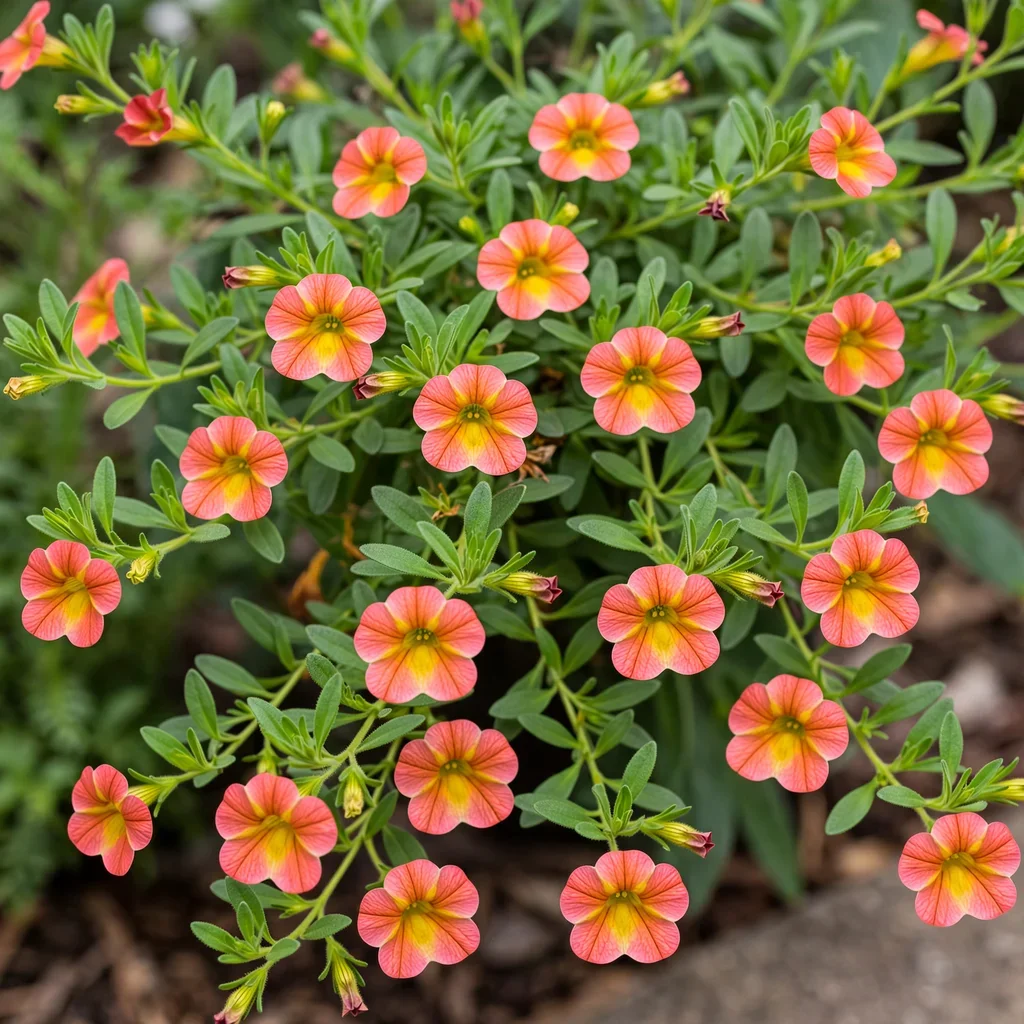
Superbells Coral Sun
Calibrachoa x hybrida 'Superbells Coral Sun'
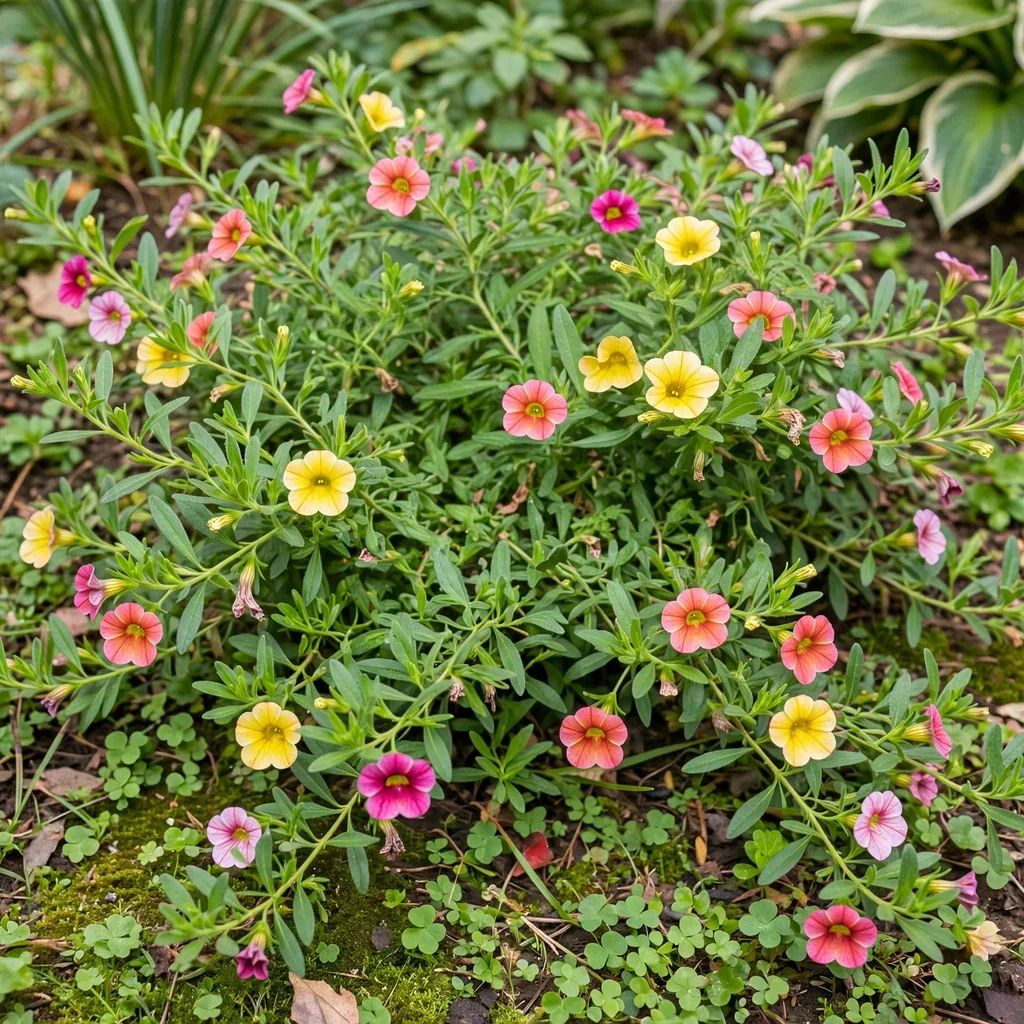
Calibrachoa Mix
Calibrachoa x hybrida 'Mix'
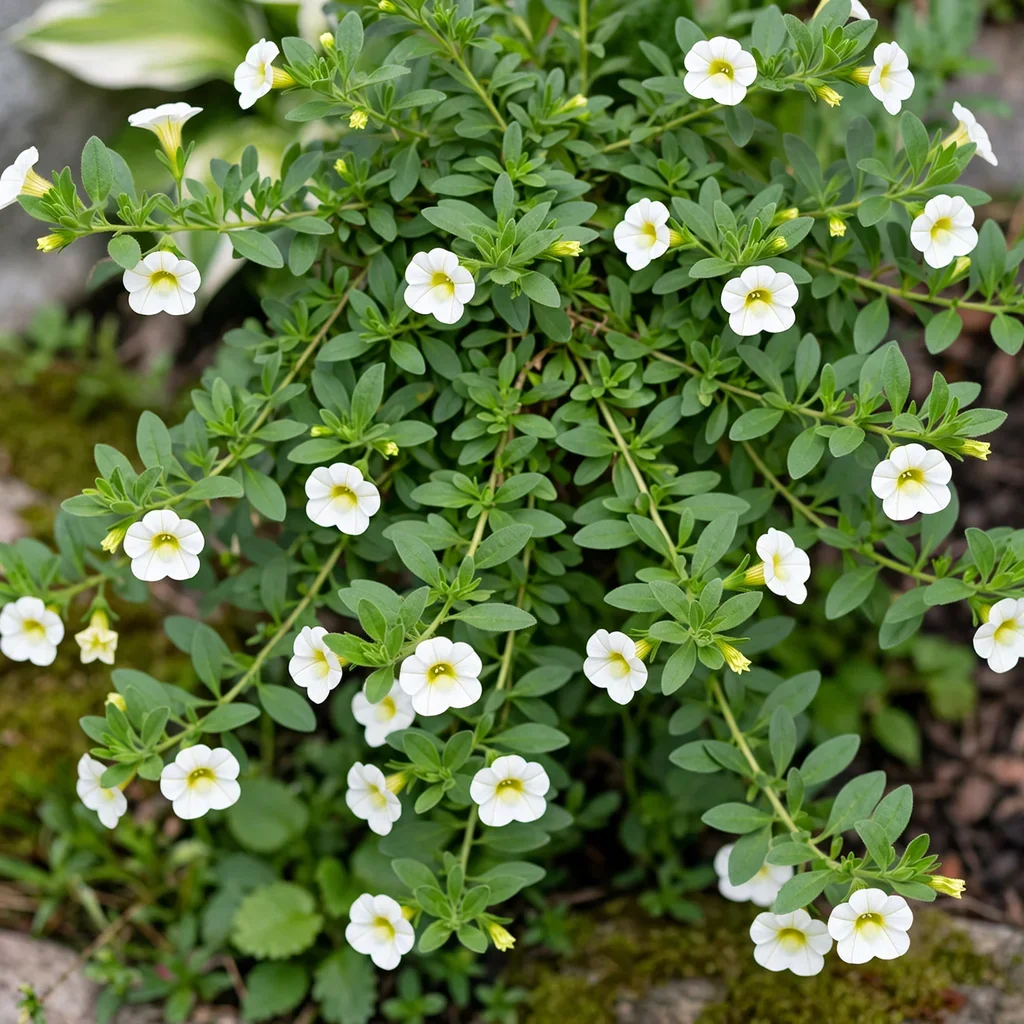
White Million Bells
Calibrachoa x hybrida 'White'
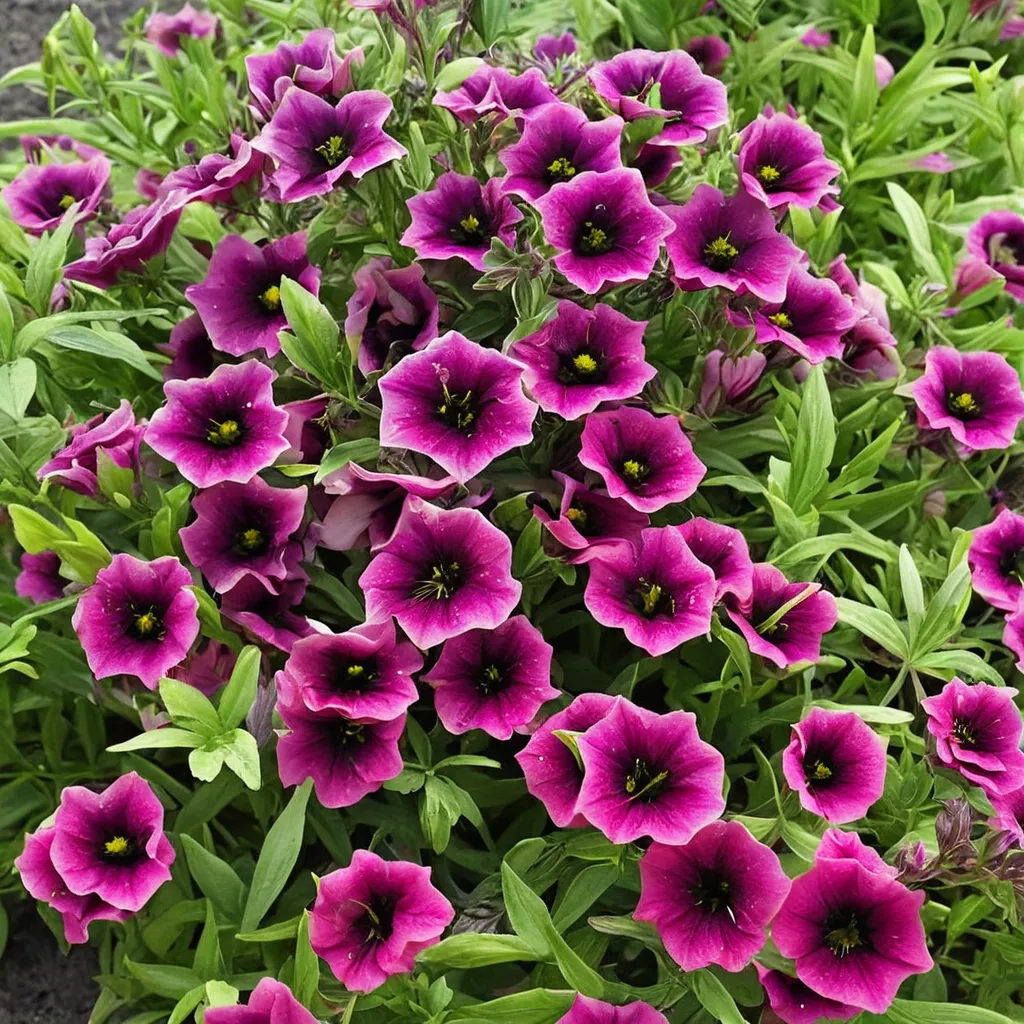
Blackcurrant Punch Million Bells
Calibrachoa x hybrida 'Blackcurrant Punch'
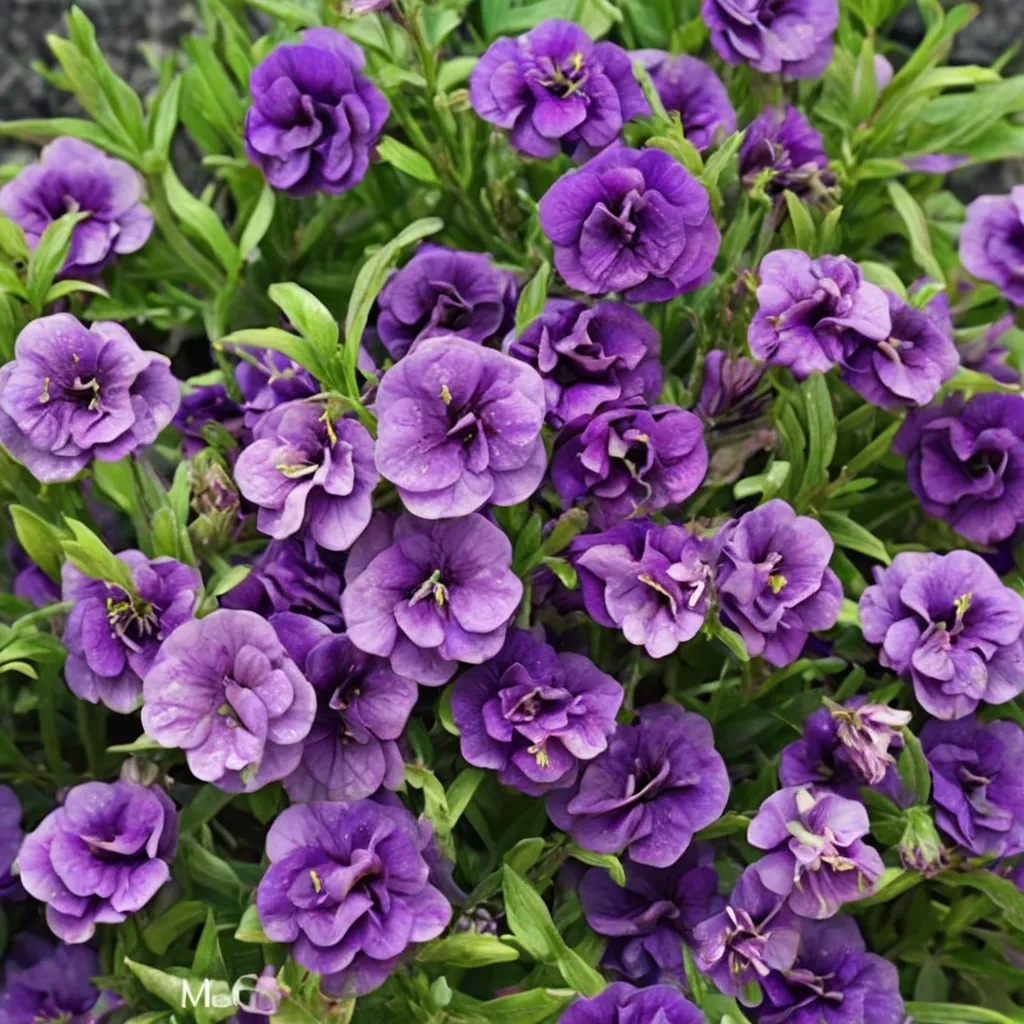
Double Blue Million Bells
Calibrachoa x hybrida 'Double Blue'
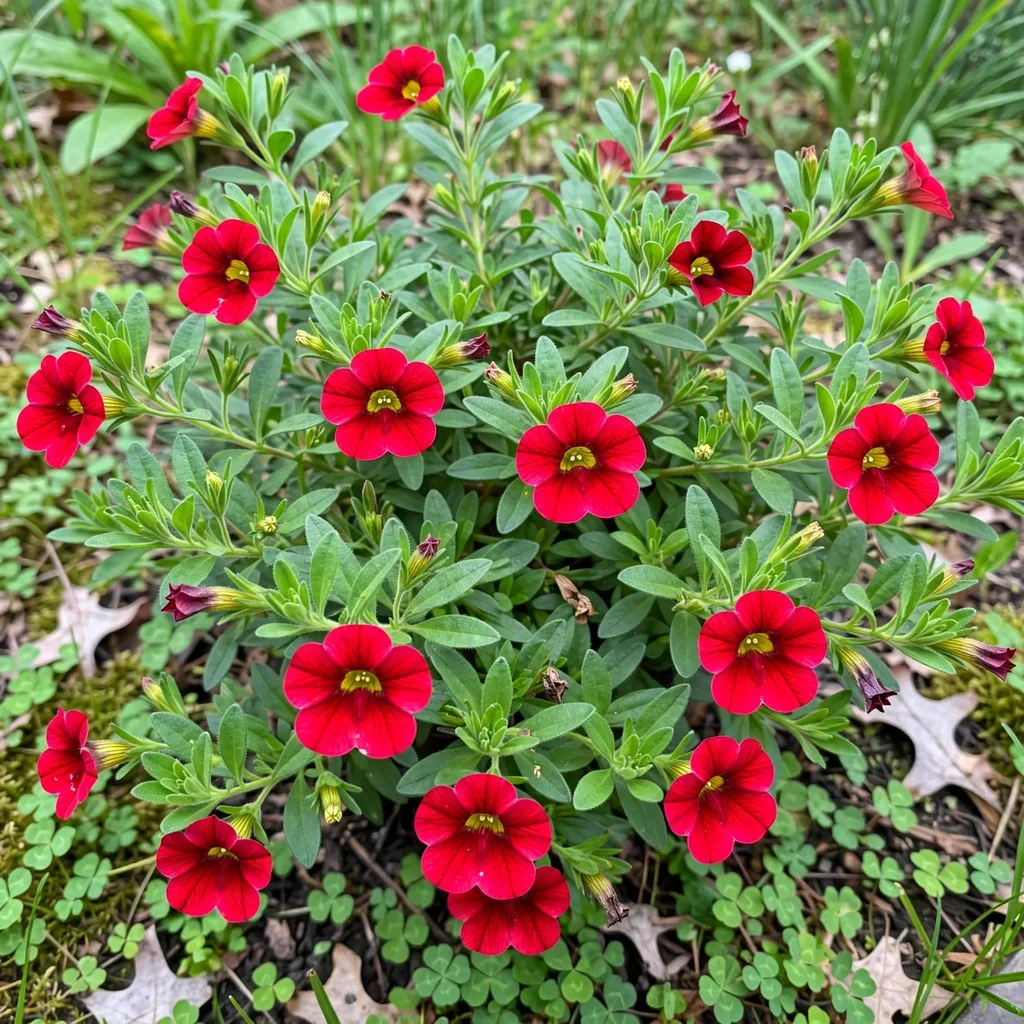
Superbells Cherry Red Million Bells
Calibrachoa x hybrida 'Superbells Cherry Red'
Keep exploring
Explore the genus
Hardy in your zone?
Grow Million Bells with confidence
See it in a design of your actual yard, get zone-matched care reminders, and track it season by season in your garden journal.