0 named cultivars
The Story
Plant Bio
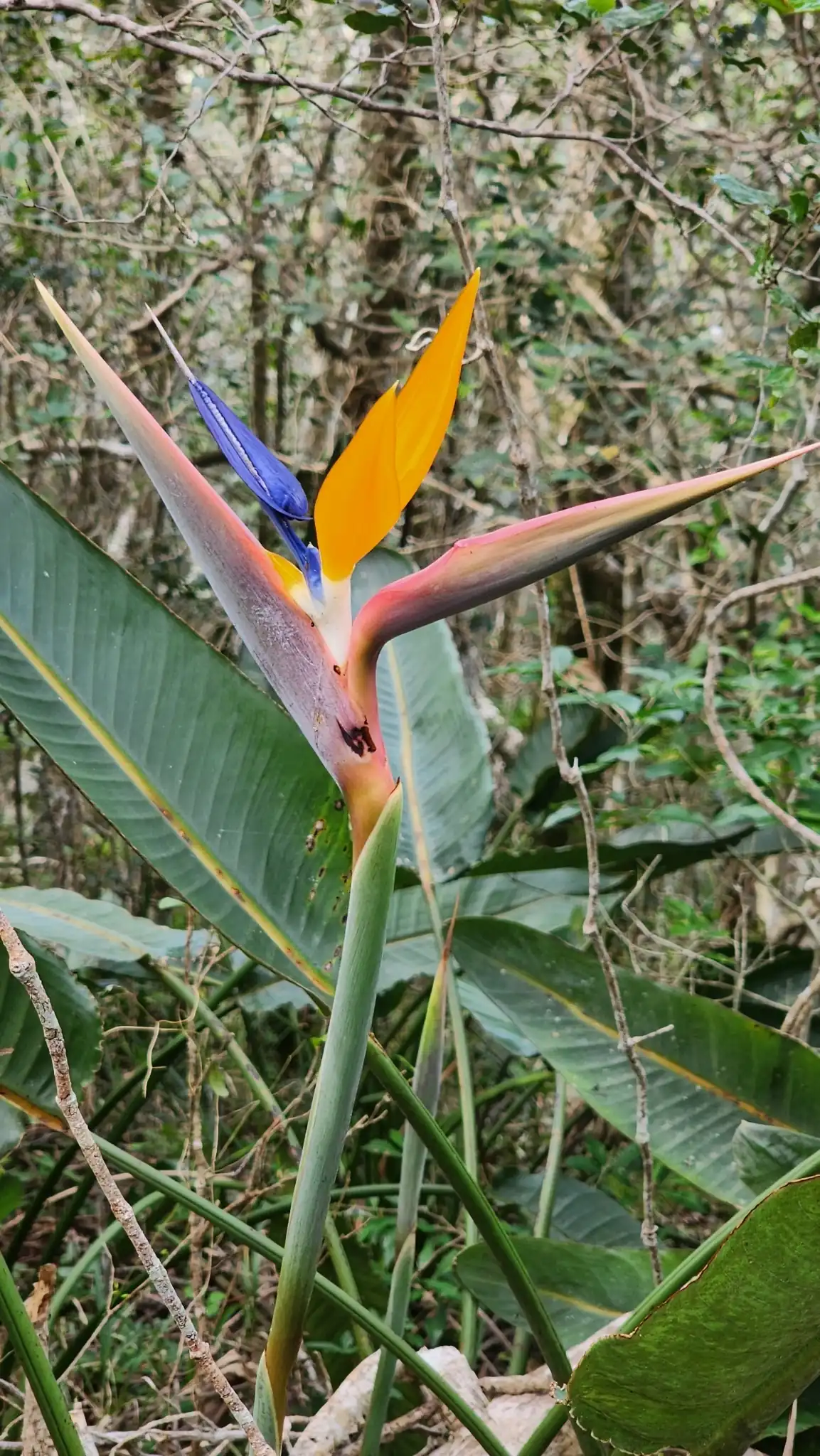
Strelitzia reginae is a clumping, evergreen herbaceous perennial native to southern Africa, characterized by its upright, structural form and thick subterranean rhizomes. The stiff, leathery, glaucous grey-green leaves resemble paddle blades and are held erect on long, sturdy petioles.
The distinctive inflorescence features a horizontal, boat-shaped green spathe from which brilliant orange sepals and intense blue petals emerge sequentially. This architectural species is highly wind-resistant and thrives in frost-free coastal environments.
Uses & Benefits:
Essentials
At a Glance
Plant Type
Perennial
Height
72"
Width
72"
Light
Full Sun, Partial Sun
Zones
10
Water
Low to moderate
Humidity
Moderate to high
Lifespan
Perennial
Native To
South Africa
Toxicity
Mildly toxic to humans and pets if ingested
Bloom period
Fall – Spring
In flower about 9 months of the year
Planting
How to Grow
- Select a planting site with rich, highly organic, well-draining soil that receives full sun to partial shade.
- Dig a hole twice the width of the root ball and set the plant so the crown sits exactly at soil level.
- Water deeply at planting, then allow the top few inches of soil to dry out completely between subsequent waterings.
- Apply a balanced, slow-release fertilizer combined with compost during the active spring and summer growing seasons.
Pro Tip
Do not overwater in an attempt to mimic a tropical bog; standing moisture rapidly triggers fatal root rot in the succulent root system. Expect the broad, stiff leaves to split naturally along their lateral veins over time, which is a normal mechanical adaptation to wind rather than a sign of disease.
Keep It Thriving
Care Guide
Do
- Prune spent flower stalks and dead, tattered leaves cleanly at the base of the plant.
- Ensure excellent soil drainage to prevent waterlogging and root rot.
- Bring container-grown specimens indoors before temperatures drop below freezing.
Don't
- Do not overwater or allow the plant to sit in standing water.
- Do not prune into old, live, leafless woody stems.
- Do not panic when leaves split longitudinally, as this is a natural wind-shedding mechanism.
Seasonal Care Calendar
| Task | Jan | Feb | Mar | Apr | May | Jun | Jul | Aug | Sep | Oct | Nov | Dec |
|---|---|---|---|---|---|---|---|---|---|---|---|---|
| Fertilize | ||||||||||||
| Pest Check | ||||||||||||
| Prune | ||||||||||||
| Winter Prep |
Watch Out For
Pests & Diseases
Common Pests
Common Diseases
In the Garden
Landscape Uses & Companions
Landscape Uses
Companion Plants
Multiply
Propagation Methods
Good to Know
Common Questions
Bird of Paradise questions
What zones can Bird of Paradise grow in?
Bird of Paradise is hardy in USDA Zone 10. Inside that range it survives winter in the ground; outside it, grow it as an annual or a container plant you protect.
Is Bird of Paradise deer resistant?
Yes — Bird of Paradise is rated deer-resistant. Deer typically pass it over, though extreme hunger can override any plant's defenses.
When does Bird of Paradise bloom?
Bird of Paradise typically blooms in fall through spring. Exact timing shifts a week or two with your zone — Sow's bloom calendar maps it to your garden.
Does Bird of Paradise need full sun?
Bird of Paradise does best in full sun to part shade. In hot climates, afternoon shade keeps blooms fresher longer.
Is Bird of Paradise drought tolerant?
Yes — once established (usually after the first full season), Bird of Paradise handles dry spells with minimal watering. Water deeply its first year to build the root system that makes that possible.
More Strelitzia to compare
Keep exploring
Explore the genus
Hardy in your zone?
Grow Bird of Paradise with confidence
See it in a design of your actual yard, get zone-matched care reminders, and track it season by season in your garden journal.