The Story
Plant Bio
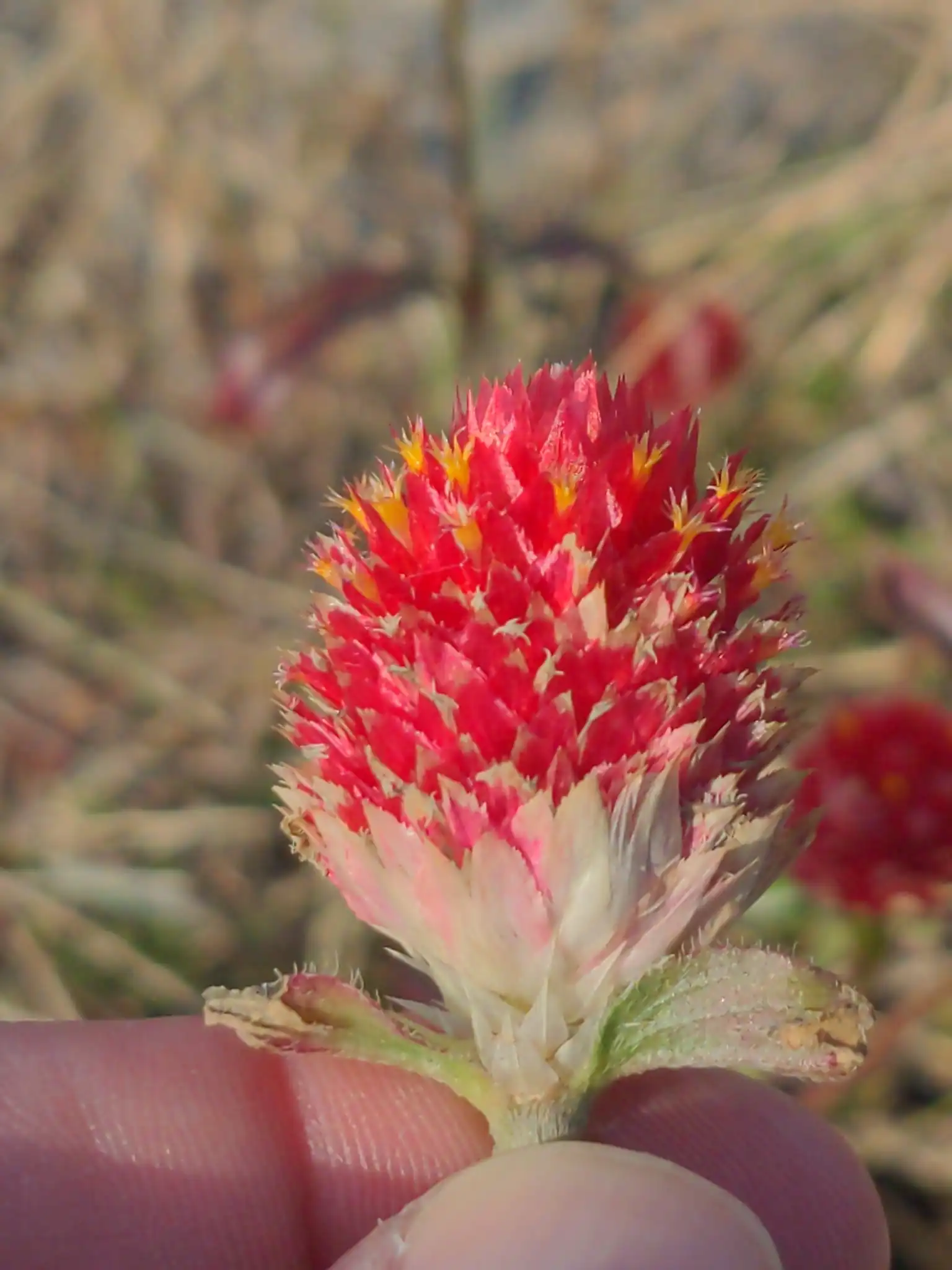
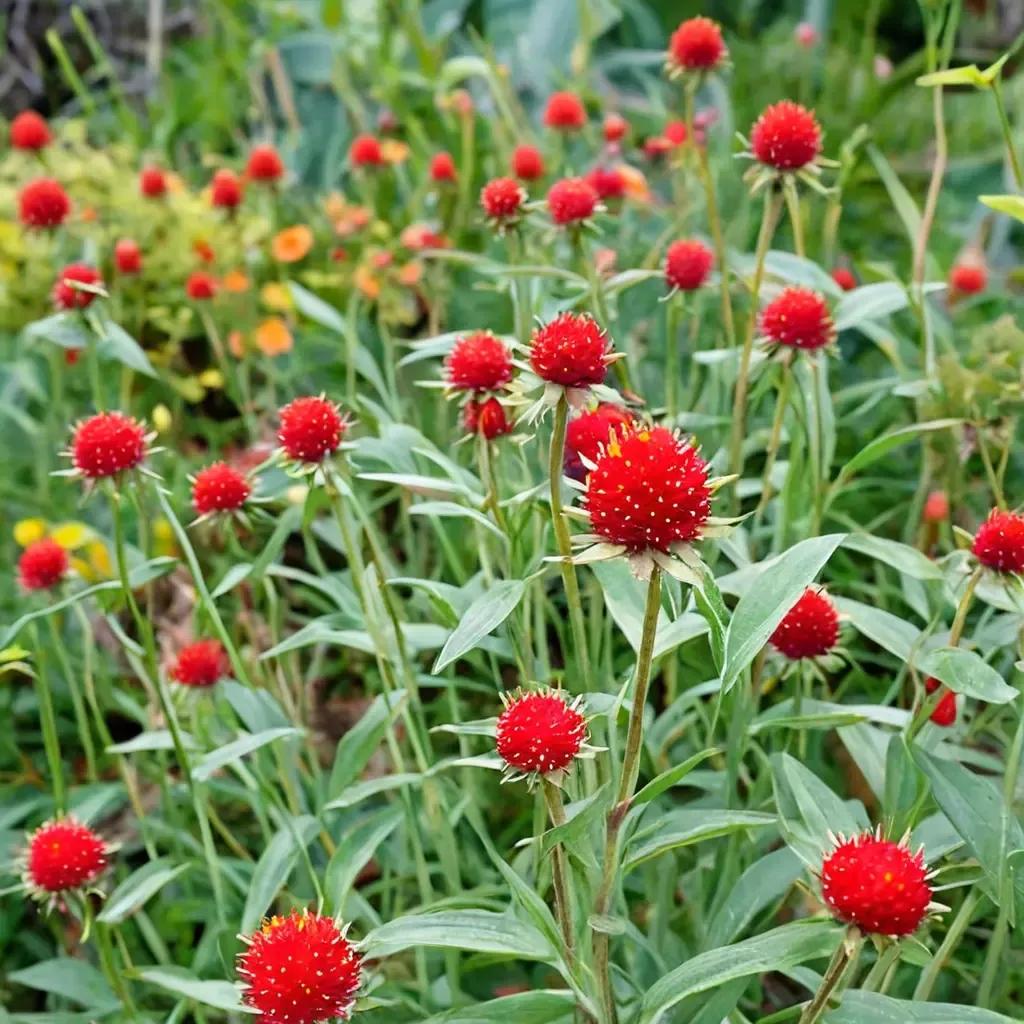
Gomphrena haageana is a tender perennial globe amaranth native to Mexico, New Mexico and Texas, growing two to two and a half feet high and one to one and a half across. Narrow greyish leaves clothe wiry upright stems, and the display comes from bright orange papery bracts surrounding tiny insignificant yellow flowers, produced from June until frost.
It is taller and brighter than the common annual globe amaranth, and the papery bracts hold their colour completely when dried, which makes it one of the better everlastings for cutting. It also flowers unbroken from June to frost in heat and drought that stops most bedding plants, needing neither deadheading nor irrigation.
Uses & Benefits:
Essentials
At a Glance
Plant Type
Perennial
Height
24"
Width
12"
Light
Full Sun
Zones
9, 10
Water
Low to medium
Humidity
Low
Lifespan
Perennial, usually grown as an annual
Native To
Mexico, New Mexico and Texas
Toxicity
Non-toxic
Planting
How to Grow
- Sow indoors in early spring or plant out after the last frost.
- Choose full sun and average, free-draining soil.
- Space plants about a foot apart.
- Water young plants; established ones tolerate drought.
- Cut stems for drying just as the bracts colour fully.
- Hang cut stems upside down in a dry, airy place.
Pro Tip
Cut for drying as the bracts reach full colour rather than later; over-mature heads shatter once dry.
Keep It Thriving
Care Guide
Do
- Give it full sun and free drainage ☀️
- Cut stems for drying at peak colour ✂️
- Let established plants dry between waterings 🌵
- Use it in cutting and butterfly beds 🦋
Don't
- Plant it out before the last frost ❌
- Overwater established plants ❌
- Bother deadheading it ❌
Seasonal Care Calendar
| Task | Jan | Feb | Mar | Apr | May | Jun | Jul | Aug | Sep | Oct | Nov | Dec |
|---|---|---|---|---|---|---|---|---|---|---|---|---|
| Cut | ||||||||||||
| Sow |
Watch Out For
Pests & Diseases
Common Pests
Common Diseases
In the Garden
Landscape Uses & Companions
Landscape Uses
Companion Plants
Multiply
Propagation Methods
Good to Know
Common Questions
Globe Amaranth questions
What zones can Globe Amaranth grow in?
Globe Amaranth is hardy in USDA Zones 9–10. Inside that range it survives winter in the ground; outside it, grow it as an annual or a container plant you protect.
Is Globe Amaranth deer resistant?
Yes — Globe Amaranth is rated deer-resistant. Deer typically pass it over, though extreme hunger can override any plant's defenses.
When does Globe Amaranth bloom?
Globe Amaranth typically blooms in early summer until frost through late summer. Exact timing shifts a week or two with your zone — Sow's bloom calendar maps it to your garden.
Does Globe Amaranth need full sun?
Globe Amaranth does best in full sun (6+ hours).
Is Globe Amaranth drought tolerant?
Yes — once established (usually after the first full season), Globe Amaranth handles dry spells with minimal watering. Water deeply its first year to build the root system that makes that possible.
More Gomphrena to compare
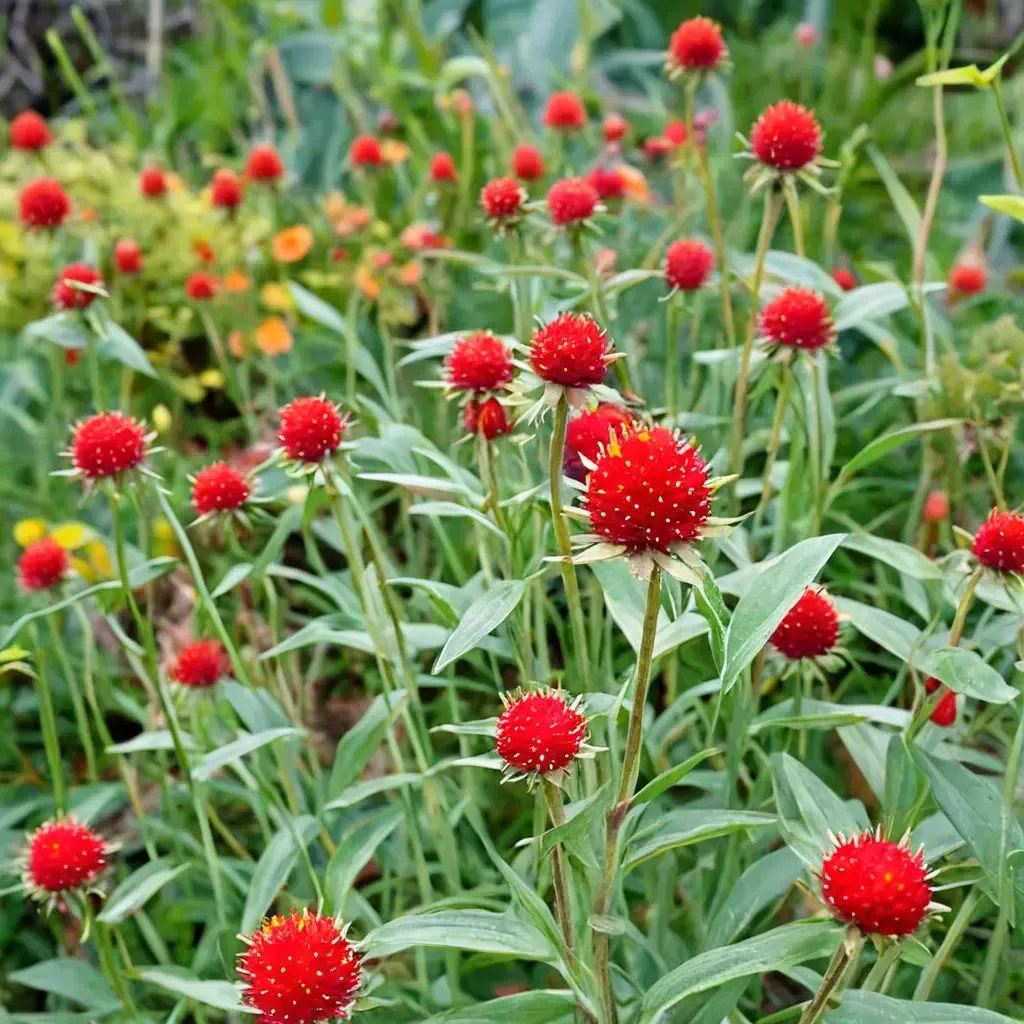
Strawberry Fields Globe Amaranth
Gomphrena haageana 'Strawberry Fields'
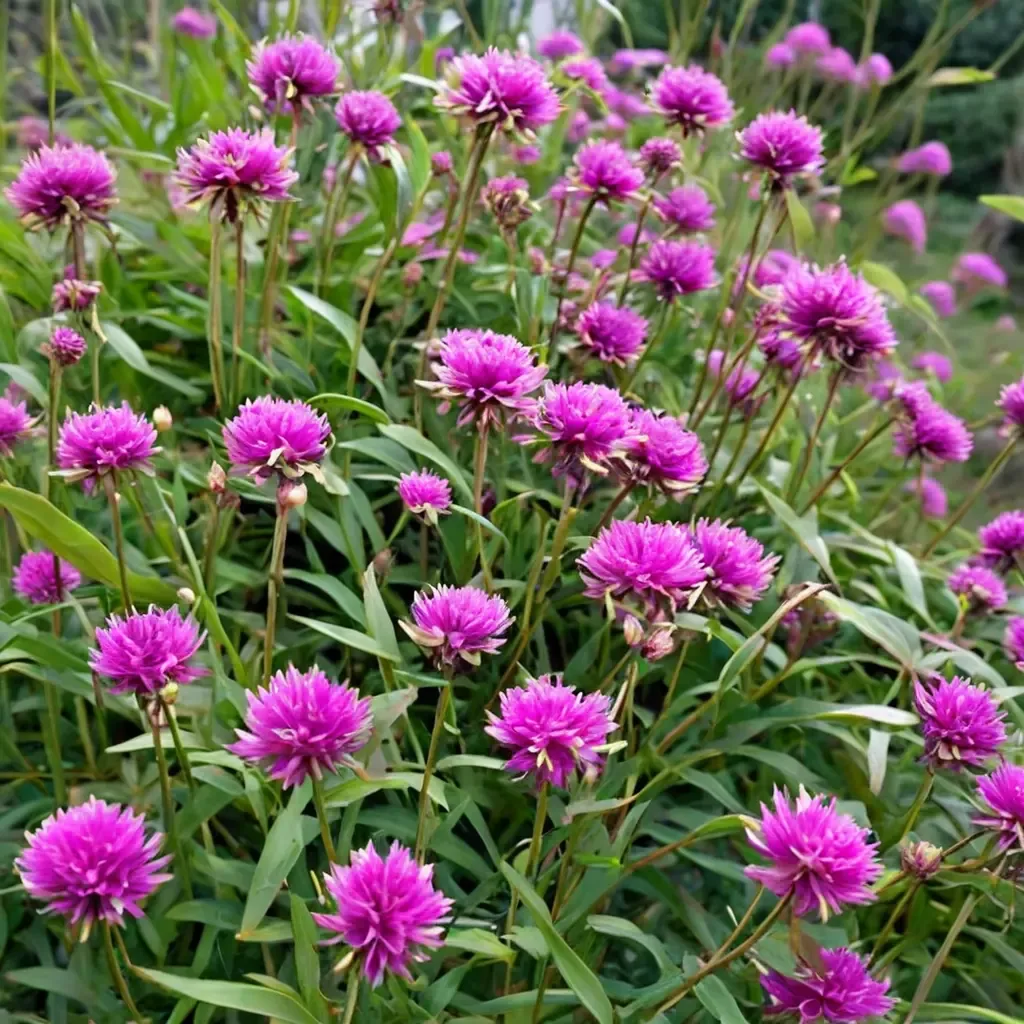
Fireworks Globe Amaranth
Gomphrena globosa 'Fireworks'
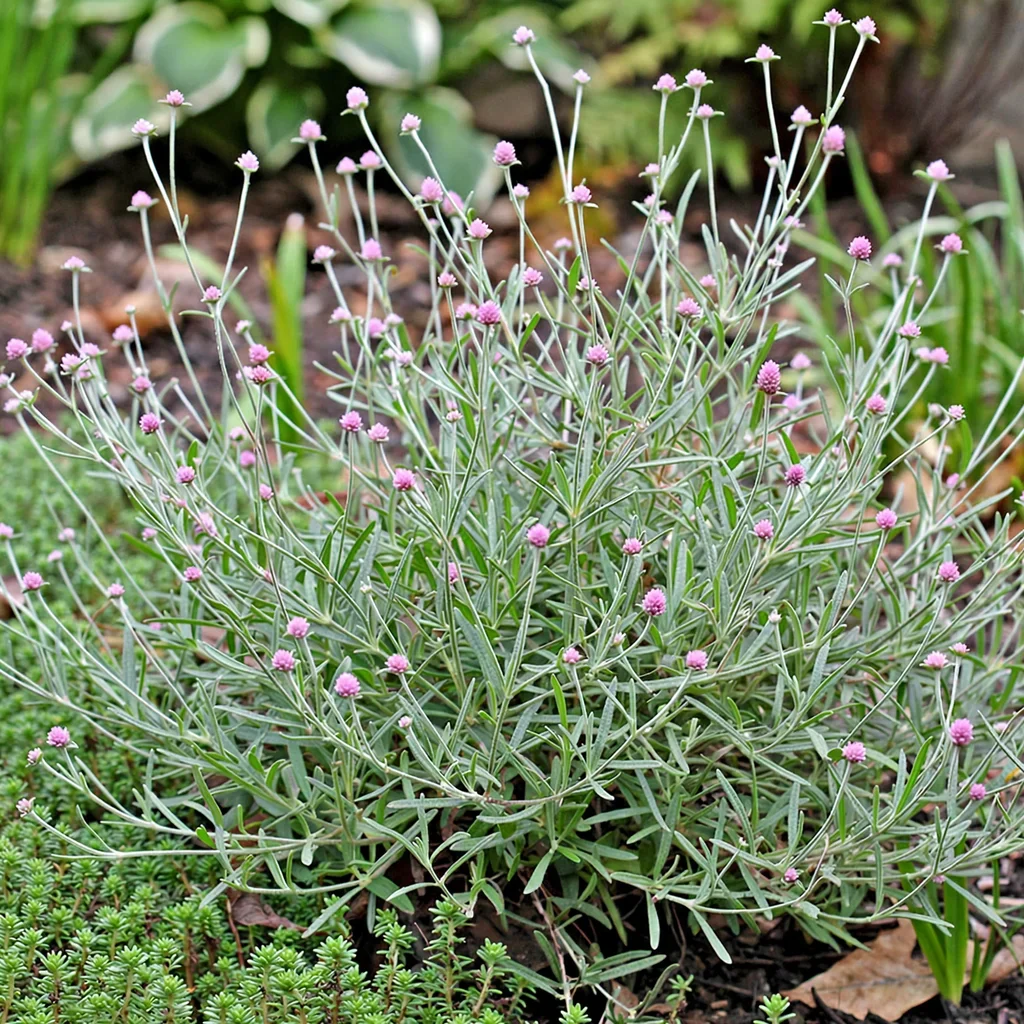
Prostrate Globe Amaranth
Gomphrena decumbens 'Airy Bachelor's Buttons'
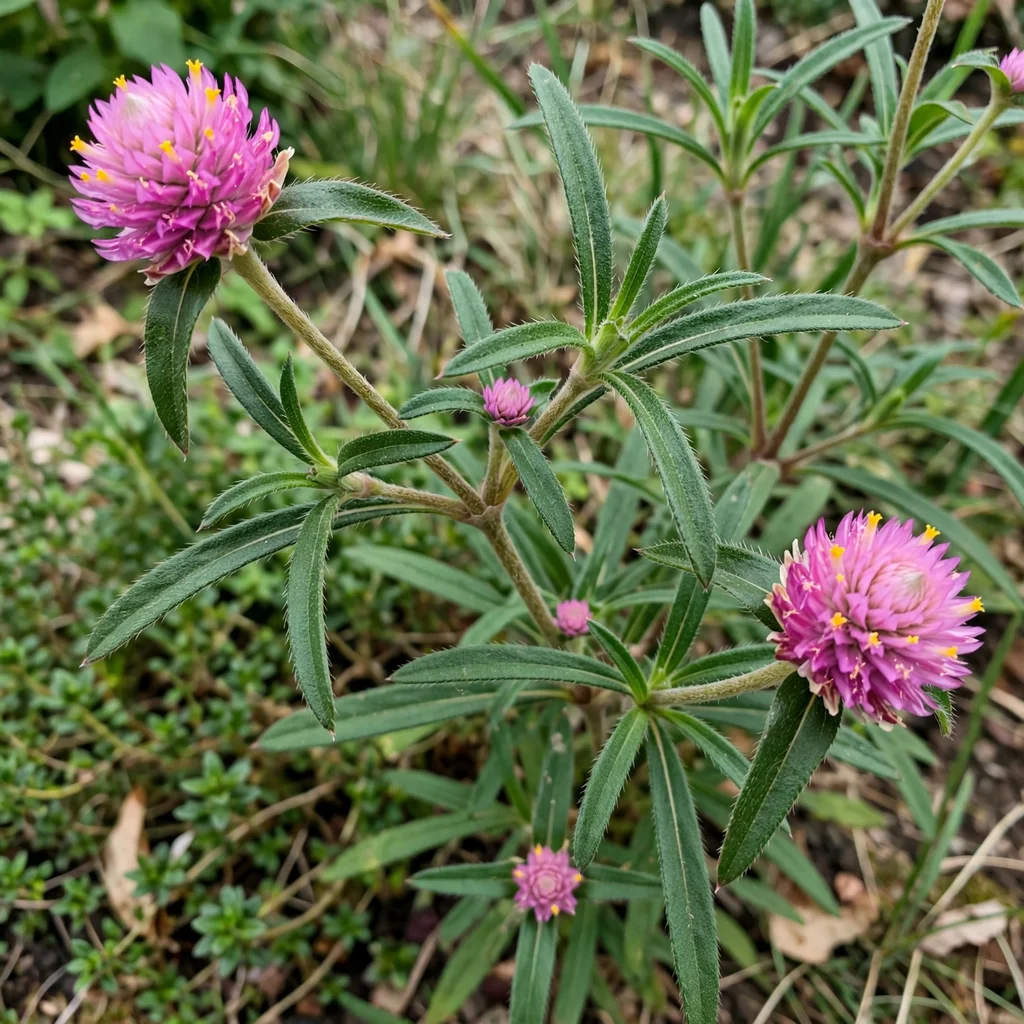
Pink Globe Amaranth
Gomphrena pulchella
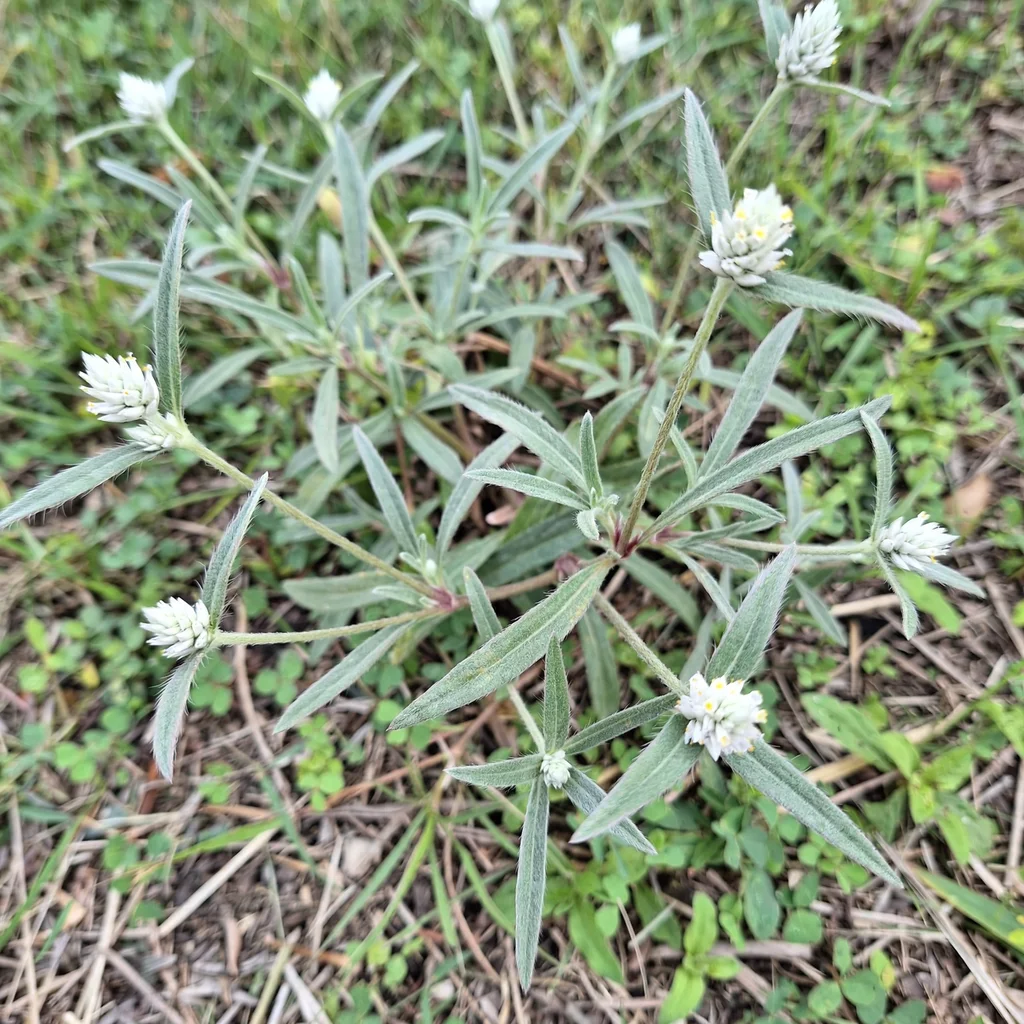
Soft Khakiweed
Gomphrena celosioides

Truffula Pink Globe Amaranth
Gomphrena pulchella 'Truffula Pink Globe Amaranth'
Keep exploring
Explore the genus
Hardy in your zone?
Grow Globe Amaranth with confidence
See it in a design of your actual yard, get zone-matched care reminders, and track it season by season in your garden journal.