The Story
Plant Bio
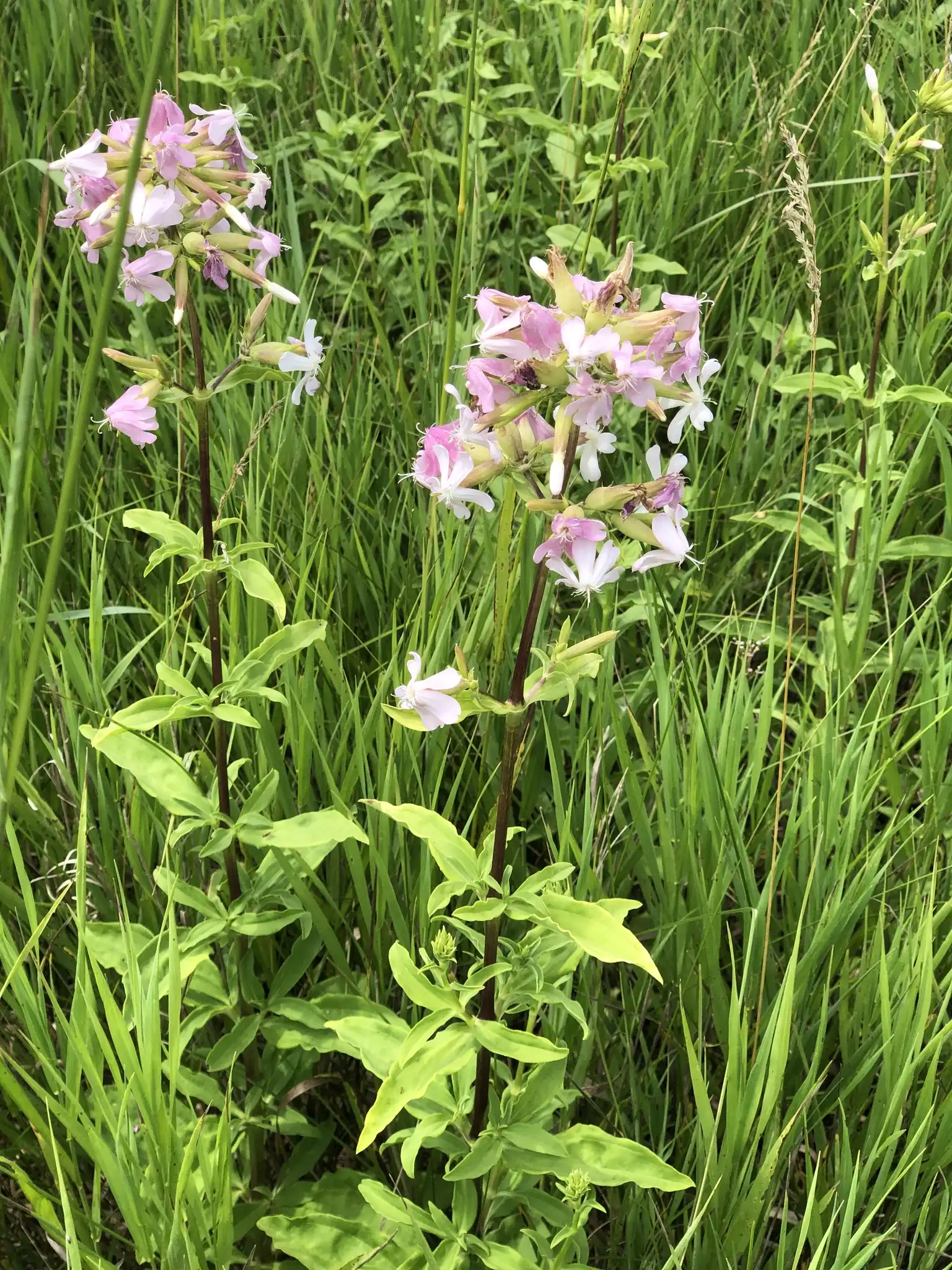
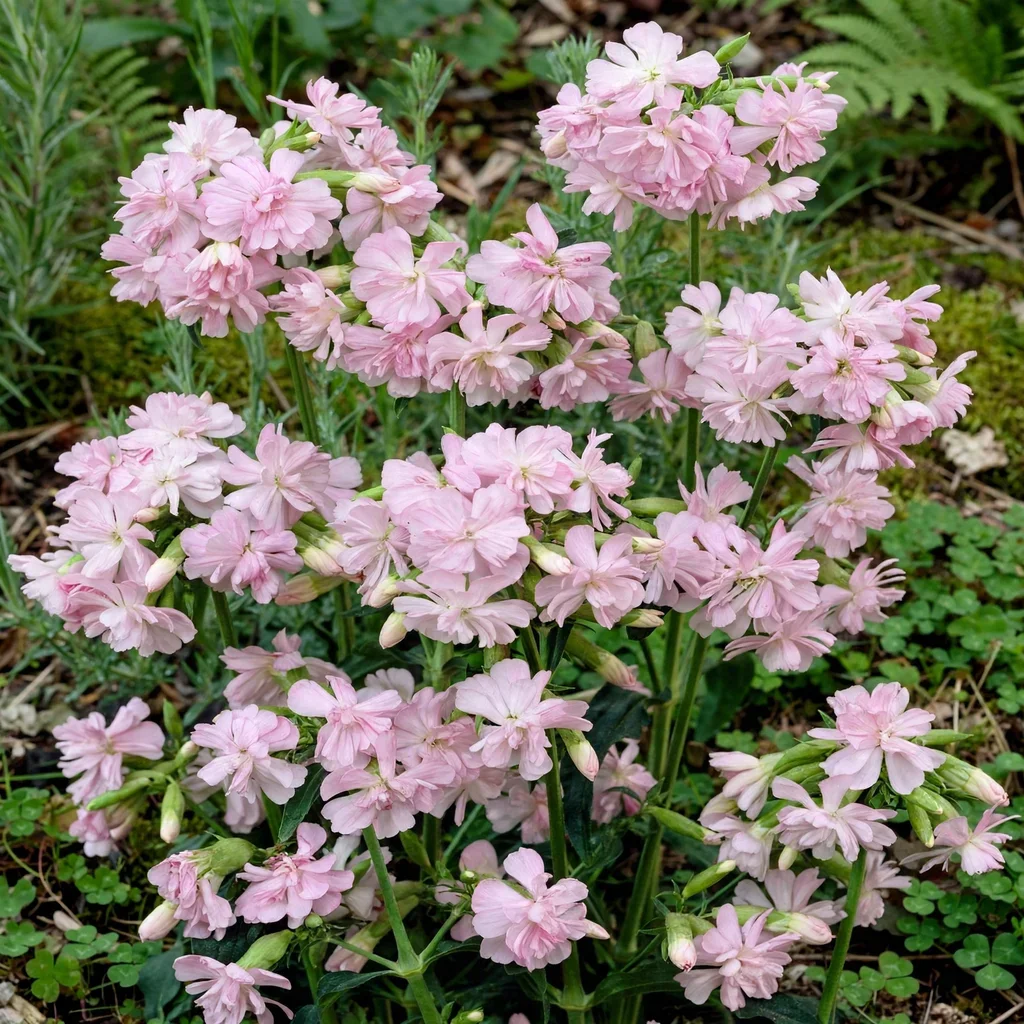
Saponaria officinalis, soapwort or bouncing bet, is an upright rhizomatous perennial from Europe and the Caucasus, one to two and a half feet high with smooth reddish-tinged stems. Broadly lance-shaped ribbed leaves sit in pairs, and clusters of pale pink or white tubular flowers open through summer, scented most strongly in the evening.
Crush the leaves in water and they lather — the saponins that give the plant its name made it a soap for centuries, and conservators still use it to wash fragile antique textiles. Those same saponins are highly poisonous to fish, so never plant it where runoff reaches a pond. It also runs strongly at the root and will colonise a border if left unchecked.
Uses & Benefits:
Essentials
At a Glance
Plant Type
Perennial
Height
15"
Width
15"
Light
Full Sun, Partial Sun
Zones
4, 5, 6, 7, 8, 9
Water
Low
Humidity
Moderate
Lifespan
Perennial
Native To
Europe to the Caucasus
Toxicity
Toxic if eaten; poisonous to fish
Marketplace
Where to Buy
Shipping costs Year-round shipping Free shipping
Planting
How to Grow
- Plant in full sun in any well-drained soil.
- Keep it away from ponds and water features.
- Give it room, or confine the roots.
- Cut it back after flowering to limit seeding.
- Divide or reduce the clump every few years.
- Expect it to reappear from root fragments.
Pro Tip
Crushed leaves lather in warm water — the traditional soap, and still used by conservators on antique fabric.
Keep It Thriving
Care Guide
Do
- Give it full sun and poor soil ☀️
- Contain the running roots 🚧
- Cut it back after flowering ✂️
- Enjoy the evening scent 🌙
Don't
- Plant it near a pond or stream ❌
- Let it seed through a small border ❌
- Eat any part of it ❌
Seasonal Care Calendar
| Task | Jan | Feb | Mar | Apr | May | Jun | Jul | Aug | Sep | Oct | Nov | Dec |
|---|---|---|---|---|---|---|---|---|---|---|---|---|
| Cut Back | ||||||||||||
| Reduce |
Watch Out For
Pests & Diseases
Common Pests
Common Diseases
In the Garden
Landscape Uses & Companions
Landscape Uses
Companion Plants
Multiply
Propagation Methods
Good to Know
Common Questions
Soapwort questions
What zones can Soapwort grow in?
Soapwort is hardy in USDA Zones 4–9. Inside that range it survives winter in the ground; outside it, grow it as an annual or a container plant you protect.
Is Soapwort deer resistant?
Yes — Soapwort is rated deer-resistant. Deer typically pass it over, though extreme hunger can override any plant's defenses.
When does Soapwort bloom?
Soapwort typically blooms in summer to fall through late summer. Exact timing shifts a week or two with your zone — Sow's bloom calendar maps it to your garden.
Does Soapwort need full sun?
Soapwort does best in full sun to part shade. In hot climates, afternoon shade keeps blooms fresher longer.
Is Soapwort drought tolerant?
Yes — once established (usually after the first full season), Soapwort handles dry spells with minimal watering. Water deeply its first year to build the root system that makes that possible.
More Saponaria to compare
Keep exploring
Explore the genus
Grow Soapwort with confidence
See it in a design of your actual yard, get zone-matched care reminders, and track it season by season in your garden journal.