The Story
Plant Bio
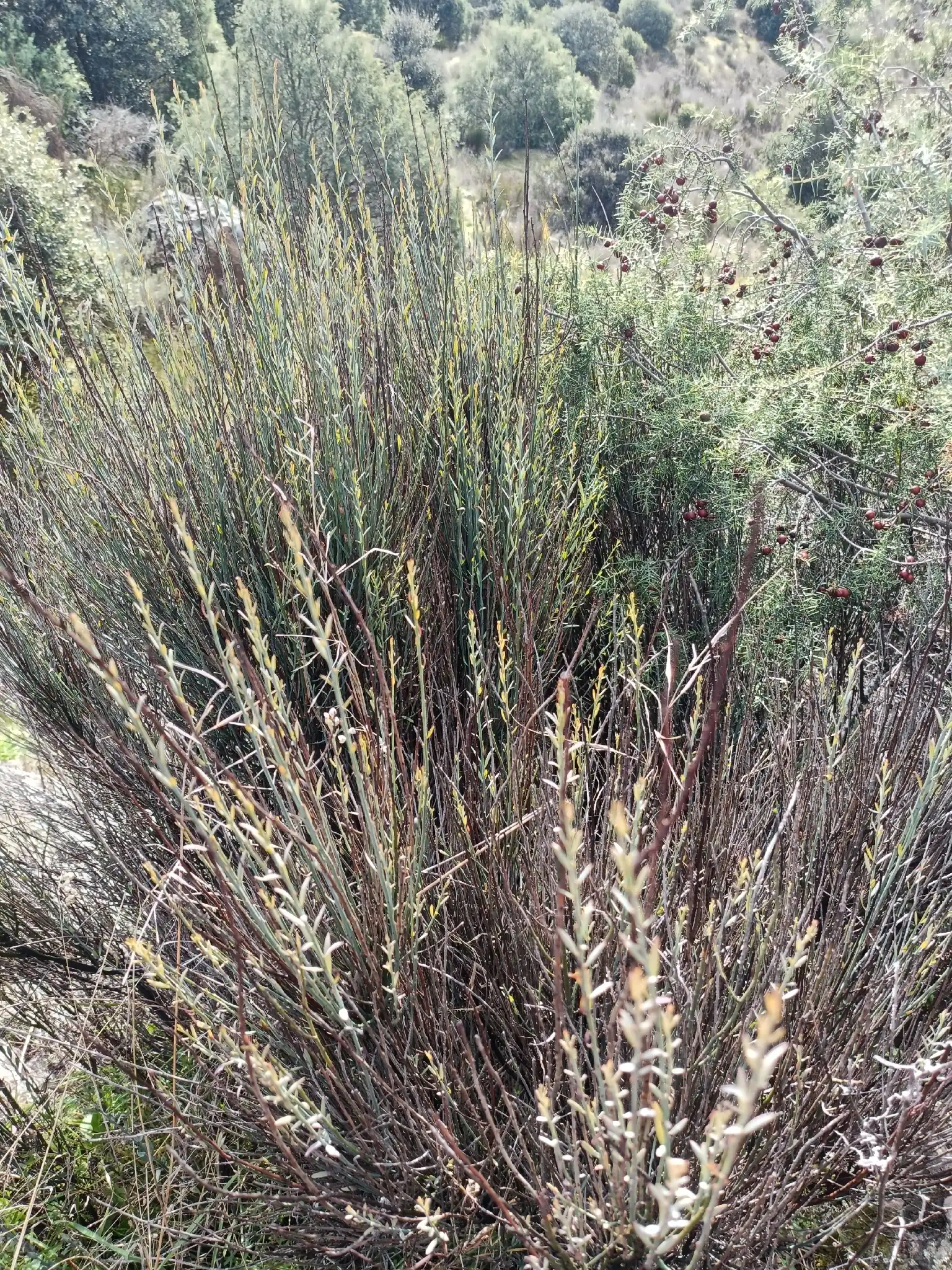
Osyris alba, known as white osyris, is a small, broom-like evergreen shrub native to the Mediterranean basin, characterized by numerous green, striated branches. The narrow, leathery leaves are mostly present during winter and spring, frequently dropping during the hot summer months when the green stems carry out photosynthesis.
This species is a hemiparasite that secures water and nutrients by attaching its roots to those of neighboring host plants. In late spring, it produces tiny, yellow-green flowers that eventually develop into small, fleshy red fruits.
Uses & Benefits:
Essentials
At a Glance
Plant Type
Shrub
Height
48"
Width
48"
Light
Full Sun
Zones
8, 9, 10
Water
Low
Humidity
Moderate
Lifespan
Perennial
Native To
Mediterranean Basin
Toxicity
Caution Advised
Bloom period
Spring – Early summer
In flower about 4 months of the year
Planting
How to Grow
- Select a planting site in full sun with exceptionally sharp drainage, such as a sandy slope or gravel bed.
- Position the young plant within twelve inches of an established host shrub to facilitate root contact.
- Dig a shallow planting hole, insert the root ball without disturbing the soil, and backfill with native mineral soil.
- Water sparingly during the first summer to encourage root establishment without rotting the crown.
Pro Tip
Always plant this species directly alongside a vigorous host shrub, such as a mastic tree or wild olive, to establish the necessary root connections.
Keep It Thriving
Care Guide
Do
- Plant next to a suitable host shrub to ensure long-term survival.
- Ensure the soil is sandy, stony, and highly alkaline or neutral.
- Provide full sun and excellent air circulation.
Don't
- Do not overwater or plant in heavy, poorly drained clay soils.
- Do not apply regular fertilizers, as this plant is adapted to nutrient-poor soils.
- Do not cut back into old, leafless wood when pruning.
Seasonal Care Calendar
| Task | Jan | Feb | Mar | Apr | May | Jun | Jul | Aug | Sep | Oct | Nov | Dec |
|---|---|---|---|---|---|---|---|---|---|---|---|---|
| Pest Check | ||||||||||||
| Plant | ||||||||||||
| Prune | ||||||||||||
| Winter Prep |
Watch Out For
Pests & Diseases
Common Pests
Common Diseases
In the Garden
Landscape Uses & Companions
Landscape Uses
Companion Plants
Multiply
Propagation Methods
Good to Know
Common Questions
White Osyris questions
What zones can White Osyris grow in?
White Osyris is hardy in USDA Zones 8–10. Inside that range it survives winter in the ground; outside it, grow it as an annual or a container plant you protect.
When does White Osyris bloom?
White Osyris typically blooms in spring through early summer. Exact timing shifts a week or two with your zone — Sow's bloom calendar maps it to your garden.
Does White Osyris need full sun?
White Osyris does best in full sun (6+ hours).
Is White Osyris drought tolerant?
Yes — once established (usually after the first full season), White Osyris handles dry spells with minimal watering. Water deeply its first year to build the root system that makes that possible.
Keep exploring
Explore the genus
Hardy in your zone?
Grow White Osyris with confidence
See it in a design of your actual yard, get zone-matched care reminders, and track it season by season in your garden journal.