The Story
Plant Bio
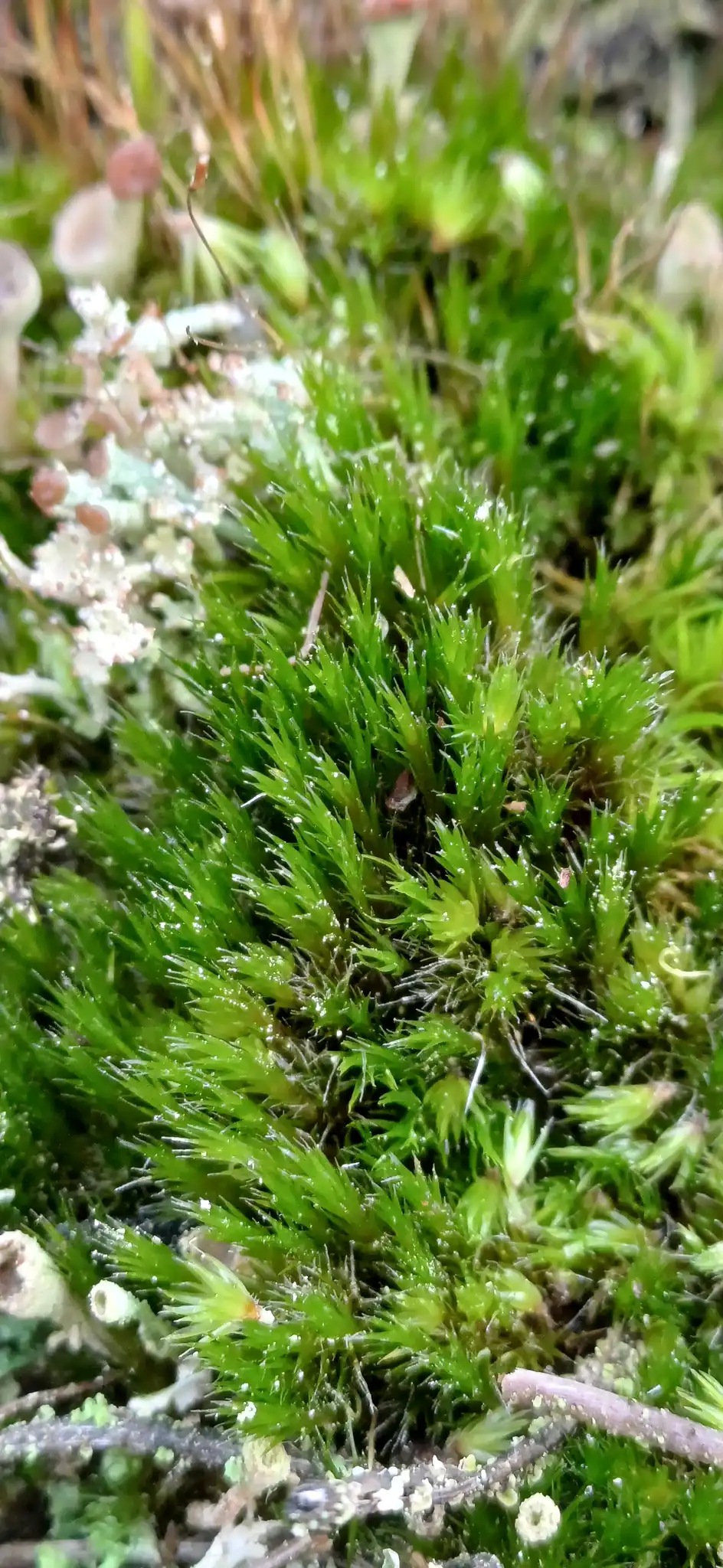
Campylopus introflexus, commonly known as heath star-moss, is an acrocarpous perennial moss that forms dense, compact turfs and extensive cushions on acidic, nutrient-poor substrates. The yellowish-green to olive-green leaves feature prominent clear hair-points that reflex at a ninety-degree angle when dry, giving the mats a distinctive frosted, star-like appearance.
This species is highly adapted to disturbed, open habitats and exhibits exceptional desiccation tolerance, with shoots that curl and lock during dry periods and revive rapidly upon rehydration. In fall and winter, it produces brown capsules on curved, yellowish-brown stalks that rise slightly above the foliage.
Uses & Benefits:
Essentials
At a Glance
Plant Type
Groundcover
Height
2"
Width
12"
Light
Full Sun, Partial Sun
Zones
6, 7, 8, 9, 10
Water
Low
Humidity
Tolerant
Lifespan
Perennial
Native To
Southern Hemisphere
Toxicity
Non-toxic
Bloom period
Fall – Winter
In flower about 6 months of the year
Planting
How to Grow
- Select an open, unshaded site with acidic, nutrient-poor soil, bare peat, sand, or rotting wood.
- Press moss fragments or intact cushions firmly onto the cleared substrate to ensure direct contact.
- Mist the area regularly during the initial establishment phase to maintain light moisture without waterlogging.
- Keep the surrounding area free of leaf litter and invasive vascular weeds that could shade out the colony.
Pro Tip
Avoid applying nitrogen fertilizers or lime to the moss, as these chemical inputs rapidly kill the colony and encourage competing weeds and algae.
Keep It Thriving
Care Guide
Do
- Provide full sun to partial shade in an open, exposed location.
- Ensure the substrate is well-drained to prevent stagnant, waterlogged conditions.
- Allow the moss to dry out naturally, relying on its inherent desiccation tolerance.
Don't
- Do not fertilize, as excess nutrients encourage competing algae and weeds.
- Do not rake or aggressively clean the dry mats, which destroys the cushion structure needed for drought recovery.
- Do not apply lime, which raises soil pH and kills the calcifuge moss.
Seasonal Care Calendar
| Task | Jan | Feb | Mar | Apr | May | Jun | Jul | Aug | Sep | Oct | Nov | Dec |
|---|---|---|---|---|---|---|---|---|---|---|---|---|
| Pest Check | ||||||||||||
| Propagate | ||||||||||||
| Spring Cleanup | ||||||||||||
| Winter Prep |
Watch Out For
Pests & Diseases
Common Pests
Common Diseases
In the Garden
Landscape Uses & Companions
Landscape Uses
Multiply
Propagation Methods
Good to Know
Common Questions
Heath Star-Moss questions
What zones can Heath Star-Moss grow in?
Heath Star-Moss is hardy in USDA Zones 6–10. Inside that range it survives winter in the ground; outside it, grow it as an annual or a container plant you protect.
Is Heath Star-Moss deer resistant?
Yes — Heath Star-Moss is rated deer-resistant. Deer typically pass it over, though extreme hunger can override any plant's defenses.
When does Heath Star-Moss bloom?
Heath Star-Moss typically blooms in fall through winter. Exact timing shifts a week or two with your zone — Sow's bloom calendar maps it to your garden.
Does Heath Star-Moss need full sun?
Heath Star-Moss does best in full sun to part shade. In hot climates, afternoon shade keeps blooms fresher longer.
Is Heath Star-Moss drought tolerant?
Yes — once established (usually after the first full season), Heath Star-Moss handles dry spells with minimal watering. Water deeply its first year to build the root system that makes that possible.
Keep exploring
Explore the genus
Hardy in your zone?
Grow Heath Star-Moss with confidence
See it in a design of your actual yard, get zone-matched care reminders, and track it season by season in your garden journal.