The Story
Plant Bio
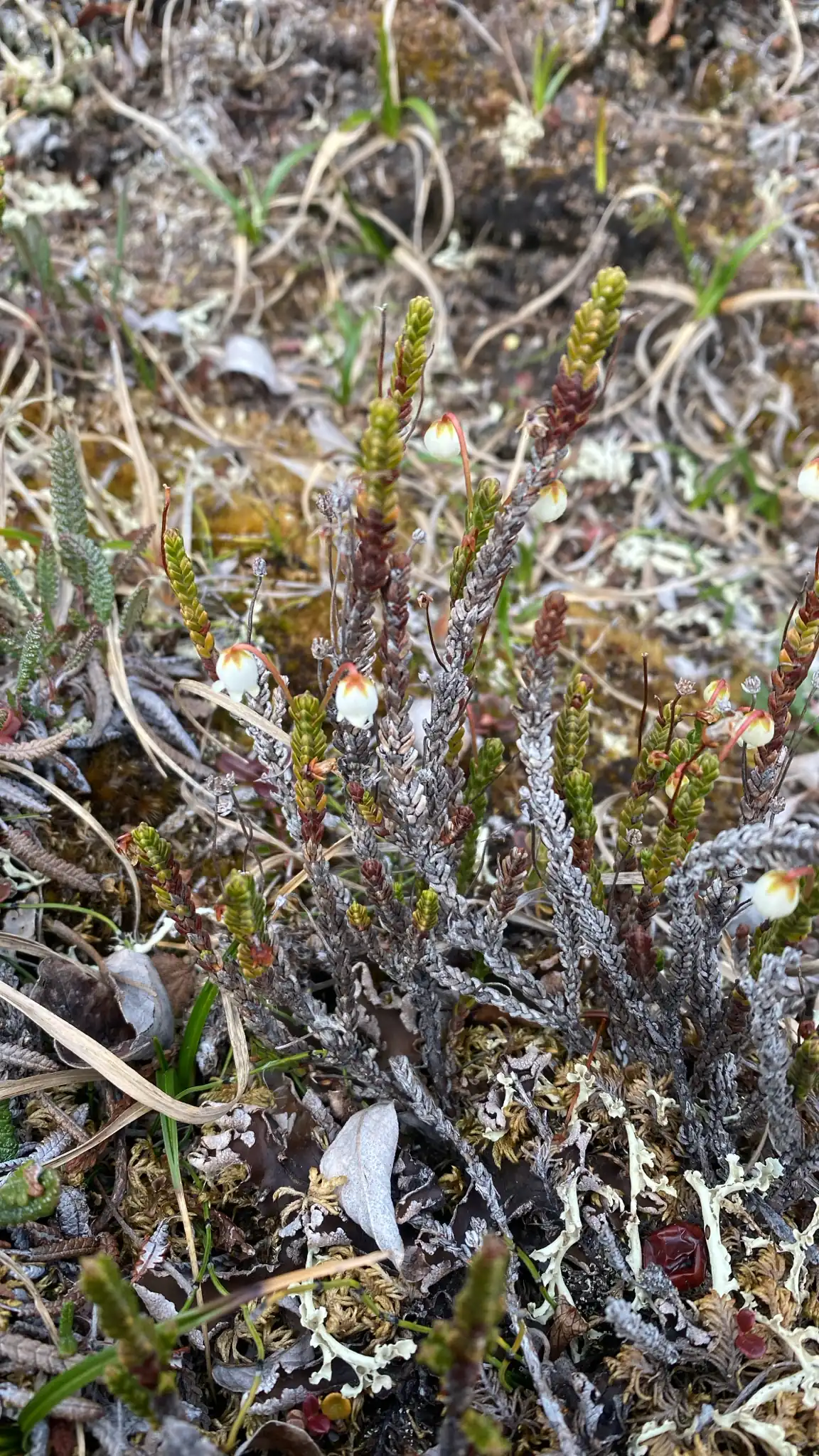
Cassiope tetragona, the white arctic mountain heather, is a low-growing, mat-forming evergreen dwarf shrub native to high-Arctic and alpine tundra regions. The stiff, much-branched stems are covered in tiny, scale-like leaves tightly overlapping in four distinct rows, giving the foliage a characteristic square, four-angled appearance.
In late spring or summer, nodding, bell-shaped white flowers arise singly from the leaf axils on slender, curved stems. The foliage contains high levels of resin, making both green and dry stems highly flammable, a property historically utilized as fuel in arctic environments.
Uses & Benefits:
Essentials
At a Glance
Plant Type
Shrub
Height
12"
Width
12"
Light
Full Sun, Partial Sun
Zones
4, 5, 6
Water
Low to Moderate
Humidity
Low
Lifespan
Perennial
Native To
North America, Europe, Asia
Toxicity
Non-toxic
Bloom period
Late spring – Mid summer
In flower about 3 months of the year
Planting
How to Grow
- Select a planting site in full sun to partial shade that remains cool during summer.
- Prepare a soil mixture of coarse sand, gravel, and acidic organic matter to ensure exceptional drainage.
- Position the plant with the crown slightly elevated above the surrounding soil level to prevent water accumulation.
- Apply a thick layer of granite grit or gravel mulch around the base to insulate the roots and keep them cool.
- Provide regular, light watering during dry spells, ensuring the soil never becomes waterlogged or stagnant.
Pro Tip
Plant in a cool, sharply drained mineral scree or rock crevice with a gravel mulch to keep the root run cool and prevent collar rot during summer. Amateurs often fail by treating this species like standard garden heather; it requires protection from baking summer heat and must have excellent drainage combined with consistent winter snow cover or artificial insulation to prevent desiccation from freezing winds.
Keep It Thriving
Care Guide
Do
- Plant in sharply drained, gravelly, or sandy acidic soils.
- Protect the root zone from high summer temperatures using a mineral mulch.
- Ensure winter protection or snow cover to shield foliage from drying winds.
Don't
- Do not plant in heavy clay, rich loam, or poorly drained wet soils.
- Do not prune hard into old, leafless woody stems, as they lack latent buds and will not regenerate.
- Do not apply high-nitrogen chemical fertilizers.
Seasonal Care Calendar
| Task | Jan | Feb | Mar | Apr | May | Jun | Jul | Aug | Sep | Oct | Nov | Dec |
|---|---|---|---|---|---|---|---|---|---|---|---|---|
| Fertilize | ||||||||||||
| Pest Check | ||||||||||||
| Propagate | ||||||||||||
| Prune | ||||||||||||
| Winter Prep |
Watch Out For
Pests & Diseases
Common Pests
Common Diseases
In the Garden
Landscape Uses & Companions
Landscape Uses
Multiply
Propagation Methods
Good to Know
Common Questions
White Arctic Mountain Heather questions
What zones can White Arctic Mountain Heather grow in?
White Arctic Mountain Heather is hardy in USDA Zones 4–6. Inside that range it survives winter in the ground; outside it, grow it as an annual or a container plant you protect.
Is White Arctic Mountain Heather deer resistant?
Yes — White Arctic Mountain Heather is rated deer-resistant. Deer typically pass it over, though extreme hunger can override any plant's defenses.
When does White Arctic Mountain Heather bloom?
White Arctic Mountain Heather typically blooms in late spring through mid summer. Exact timing shifts a week or two with your zone — Sow's bloom calendar maps it to your garden.
Does White Arctic Mountain Heather need full sun?
White Arctic Mountain Heather does best in full sun to part shade. In hot climates, afternoon shade keeps blooms fresher longer.
Keep exploring
Explore the genus
Hardy in your zone?
Grow White Arctic Mountain Heather with confidence
See it in a design of your actual yard, get zone-matched care reminders, and track it season by season in your garden journal.