The Story
Plant Bio
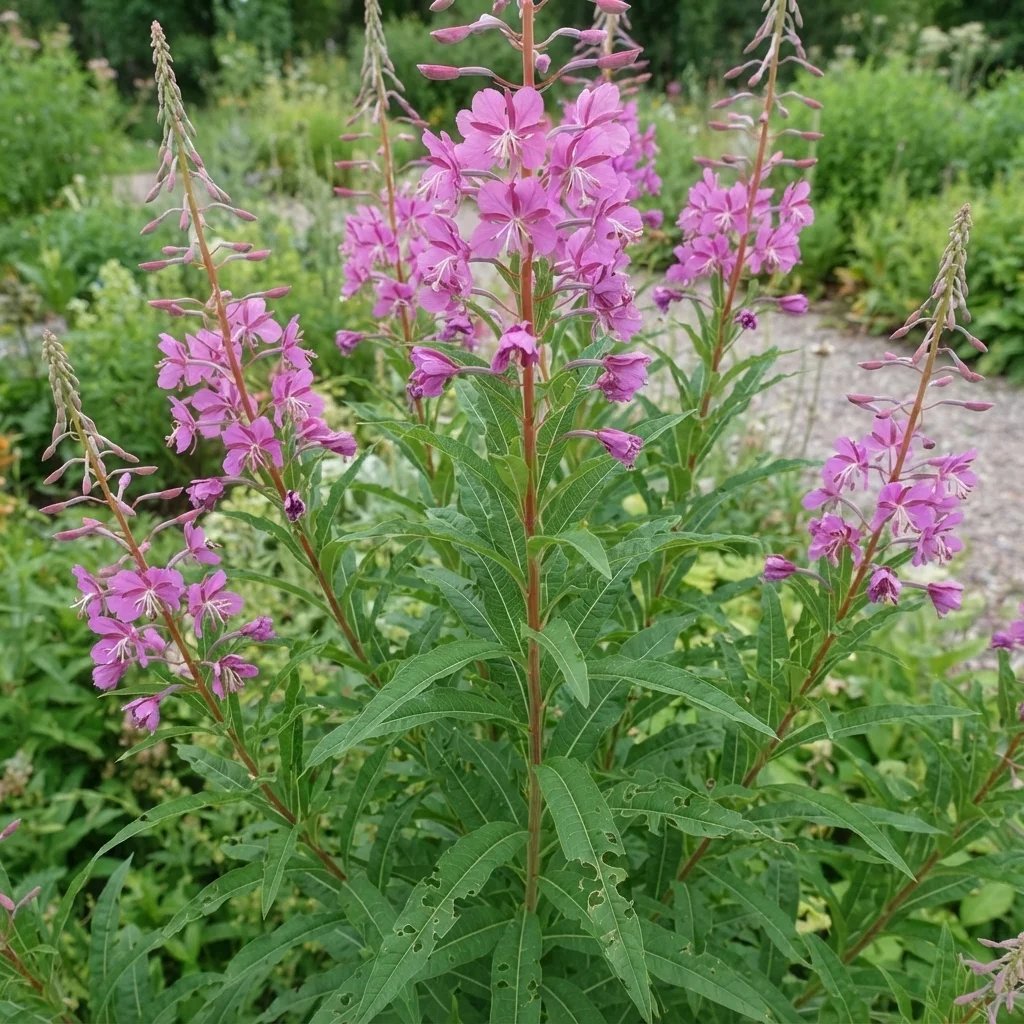
Chamaenerion angustifolium, commonly known as fireweed, is a vigorous herbaceous perennial native across the temperate Northern Hemisphere, characterized by its erect stems and narrow, lanceolate leaves. In summer, it produces long, terminal racemes of magenta to pink flowers that open progressively from the base upward.
This species spreads aggressively via an extensive network of underground rhizomes, making it an exceptional colonizer of disturbed or fire-cleared soils. Each plant produces up to 80,000 wind-dispersed seeds equipped with fine, silky hairs that aid in long-distance distribution.
Uses & Benefits:
Essentials
At a Glance
Plant Type
Perennial
Height
79"
Width
39"
Light
Full Sun, Partial Sun
Zones
4, 5, 6, 7
Water
Moderate
Humidity
Moderate to High
Lifespan
Perennial
Native To
North America, Europe, Asia
Toxicity
Non-toxic
Bloom period
Summer – Fall
In flower about 6 months of the year
Marketplace
Where to Buy
Shipping costs Year-round shipping Free shipping
Planting
How to Grow
- Select a planting site in full sun to partial shade with moist, well-drained soil, though poor or clay soils are also tolerated.
- Install a physical root barrier at least 12 inches deep if planting near other perennials to contain the spreading rhizomes.
- Water regularly after planting to keep the soil consistently moist until the root system and rhizomes are fully established.
- Refrain from applying high-nitrogen fertilizers, which stimulate weak, floppy stems rather than robust upright growth.
Pro Tip
Plant this species strictly within root barriers or isolate it in large naturalized meadows, as the subterranean rhizomes will quickly overwhelm companion plants in standard perennial borders.
Keep It Thriving
Care Guide
Do
- Cut stems back to ground level in late winter or early spring before new growth emerges.
- Remove spent flower spikes before they set seed to prevent aggressive self-sowing.
- Isolate plantings in naturalized meadows or wild gardens where they can spread freely.
Don't
- Do not plant in small, mixed perennial borders without physical root containment.
- Do not over-fertilize, as excess nutrients cause the tall flower stems to flop.
- Do not allow the soil to dry out completely during prolonged summer droughts to avoid foliage scorch.
Seasonal Care Calendar
| Task | Jan | Feb | Mar | Apr | May | Jun | Jul | Aug | Sep | Oct | Nov | Dec |
|---|---|---|---|---|---|---|---|---|---|---|---|---|
| Deadhead | ||||||||||||
| Divide | ||||||||||||
| Pest Check | ||||||||||||
| Spring Cleanup |
Watch Out For
Pests & Diseases
Common Pests
Common Diseases
In the Garden
Landscape Uses & Companions
Landscape Uses
Multiply
Propagation Methods
Good to Know
Common Questions
Fireweed questions
What zones can Fireweed grow in?
Fireweed is hardy in USDA Zones 4–7. Inside that range it survives winter in the ground; outside it, grow it as an annual or a container plant you protect.
Is Fireweed deer resistant?
Not reliably. Deer may browse Fireweed, especially tender spring growth — plan on repellents or fencing where pressure is high.
When does Fireweed bloom?
Fireweed typically blooms in summer through fall. Exact timing shifts a week or two with your zone — Sow's bloom calendar maps it to your garden.
Does Fireweed need full sun?
Fireweed does best in full sun to part shade. In hot climates, afternoon shade keeps blooms fresher longer.
Is Fireweed drought tolerant?
Yes — once established (usually after the first full season), Fireweed handles dry spells with minimal watering. Water deeply its first year to build the root system that makes that possible.
Keep exploring
Explore the genus
Hardy in your zone?
Grow Fireweed with confidence
See it in a design of your actual yard, get zone-matched care reminders, and track it season by season in your garden journal.