
The Story
Plant Bio
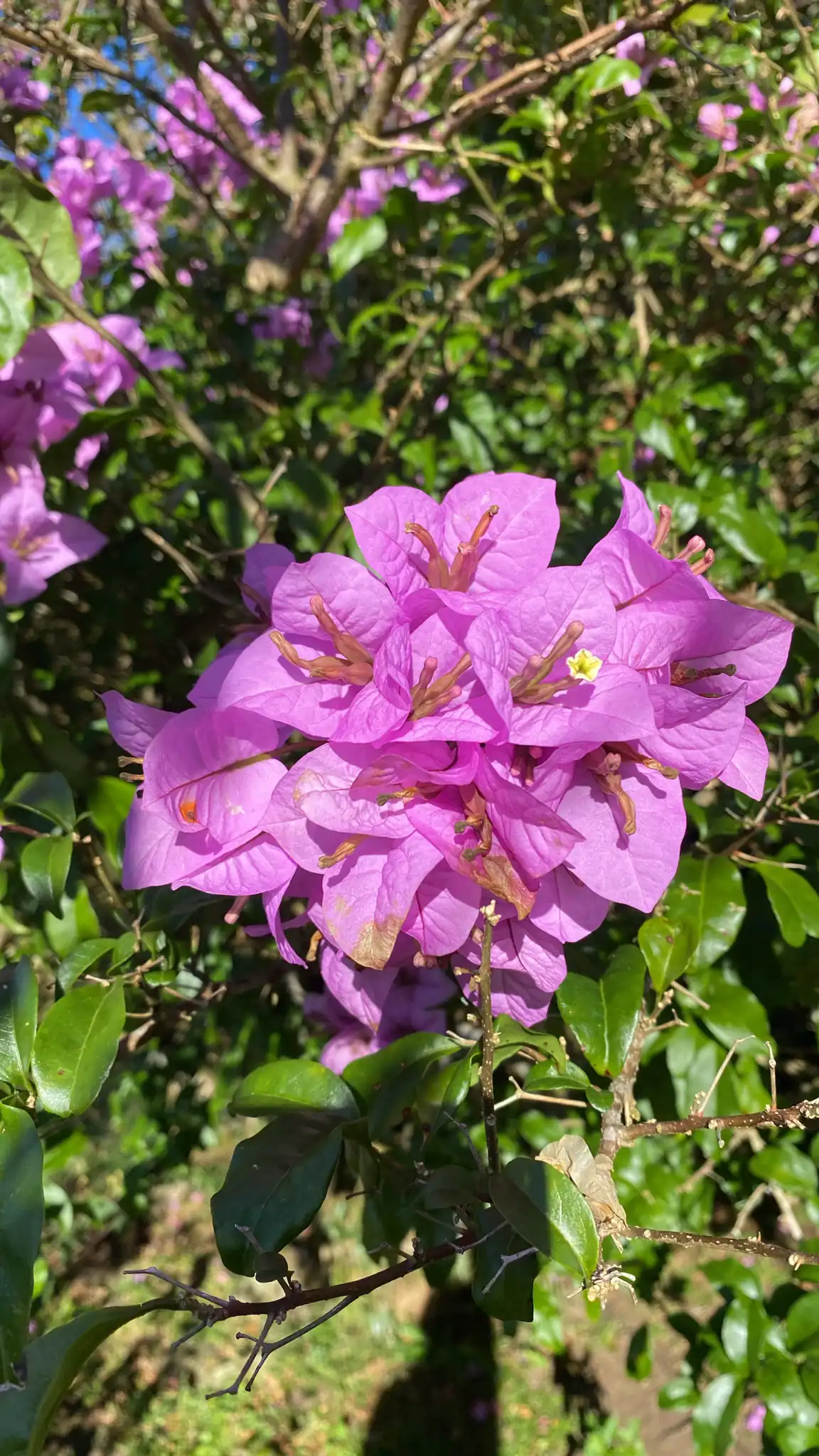
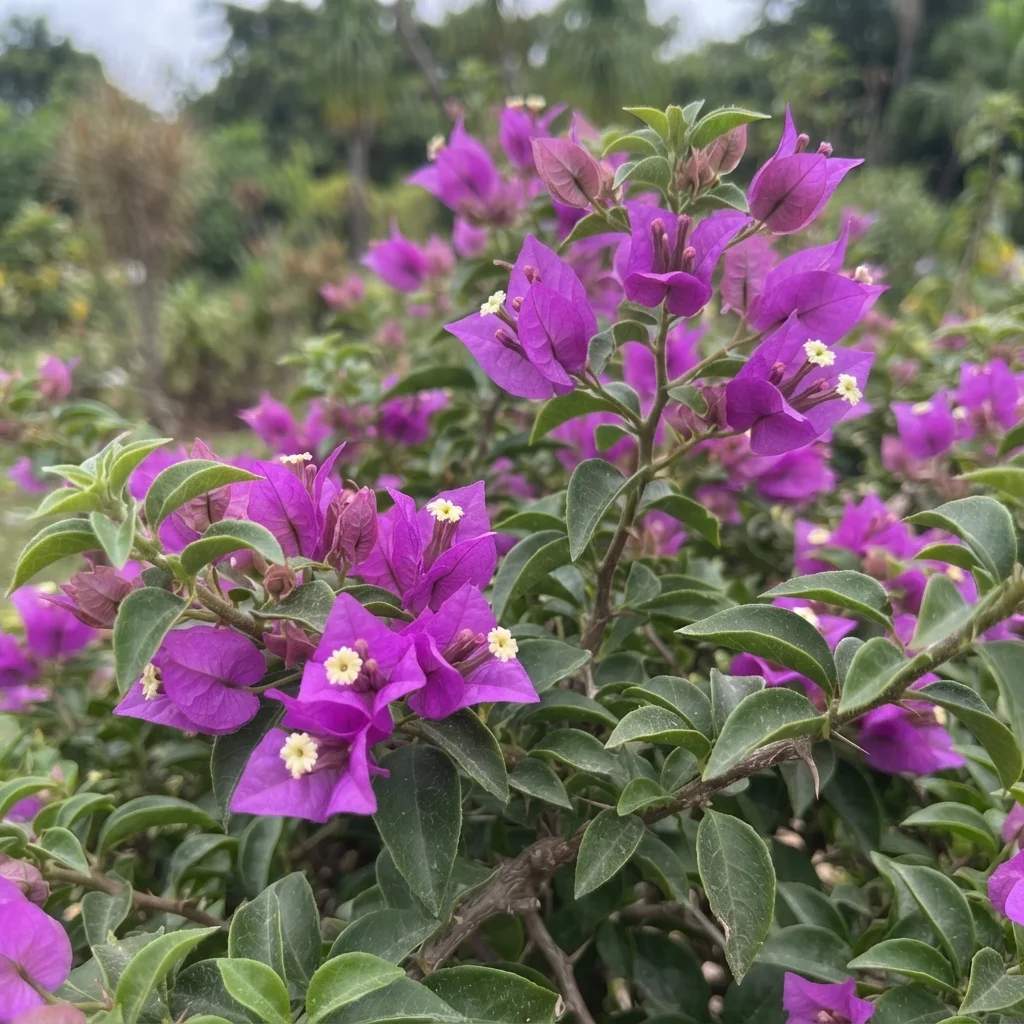
Bougainvillea glabra is a vigorous, scrambling evergreen woody vine native to Brazil, equipped with sharp, curved thorns in the leaf axils. It produces glossy green, ovate leaves and small, tubular cream flowers enveloped by papery, intensely colored bracts from spring through fall.
This species is highly valued for its exceptional drought tolerance and resilience in coastal environments with high salt spray. Unlike many tropical climbers, it performs best under slight moisture stress, which triggers a more profuse display of its colorful bracts.
Uses & Benefits:
Essentials
At a Glance
Plant Type
Vine
Height
354"
Width
118"
Light
Full Sun, Partial Sun
Zones
9, 10
Water
Low
Humidity
Moderate
Lifespan
Perennial
Native To
South America (Brazil)
Toxicity
Skin Irritant (sap/thorns)
Planting
How to Grow
- Select a planting site in full sun with sharp-draining sandy or loamy soil.
- Water deeply but infrequently, allowing the soil to dry out completely between waterings.
- Apply a low-nitrogen, high-potassium fertilizer sparingly during the active growing season.
- Prune hard immediately after a flowering flush, cutting lateral branches back to two or three buds to shape.
Pro Tip
To maximize the display of colorful bracts, restrict water and fertilizer once the plant is established; over-watering and high-nitrogen feeding stimulate lush green foliage at the expense of blooms.
Keep It Thriving
Care Guide
Do
- Grow in full sun to ensure maximum bract coloration.
- Allow the soil to dry out thoroughly between watering cycles.
- Use a slow-release, low-nitrogen fertilizer to promote flowering over foliage.
- Wear thick gloves when handling to protect against sharp thorns.
Don't
- Do not over-water or allow the roots to sit in waterlogged soil.
- Do not shear into old, leafless wood, as it will fail to produce new shoots.
- Do not over-fertilize, which suppresses the colorful bracts in favor of green leaves.
- Do not plant near high-traffic walkways where the thorns can cause injury.
Seasonal Care Calendar
| Task | Jan | Feb | Mar | Apr | May | Jun | Jul | Aug | Sep | Oct | Nov | Dec |
|---|---|---|---|---|---|---|---|---|---|---|---|---|
| Fertilize | ||||||||||||
| Pest Check | ||||||||||||
| Propagate | ||||||||||||
| Prune | ||||||||||||
| Winter Prep |
Watch Out For
Pests & Diseases
Common Pests
Common Diseases
In the Garden
Landscape Uses & Companions
Landscape Uses
Companion Plants
Multiply
Propagation Methods
Good to Know
Common Questions
Bougainvillea questions
What zones can Bougainvillea grow in?
Bougainvillea is hardy in USDA Zones 9–10. Inside that range it survives winter in the ground; outside it, grow it as an annual or a container plant you protect.
Is Bougainvillea deer resistant?
Yes — Bougainvillea is rated deer-resistant. Deer typically pass it over, though extreme hunger can override any plant's defenses.
When does Bougainvillea bloom?
Bougainvillea typically blooms in spring through fall. Exact timing shifts a week or two with your zone — Sow's bloom calendar maps it to your garden.
Does Bougainvillea need full sun?
Bougainvillea does best in full sun to part shade. In hot climates, afternoon shade keeps blooms fresher longer.
Is Bougainvillea drought tolerant?
Yes — once established (usually after the first full season), Bougainvillea handles dry spells with minimal watering. Water deeply its first year to build the root system that makes that possible.
More Bougainvillea to compare
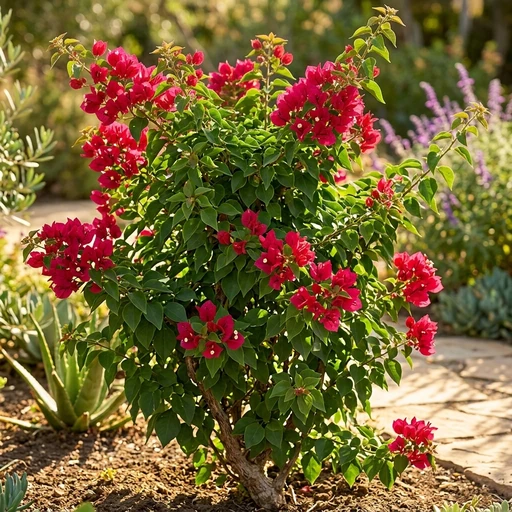
Barbara Karst Bougainvillea
Bougainvillea x hybrida 'Barbara Karst'
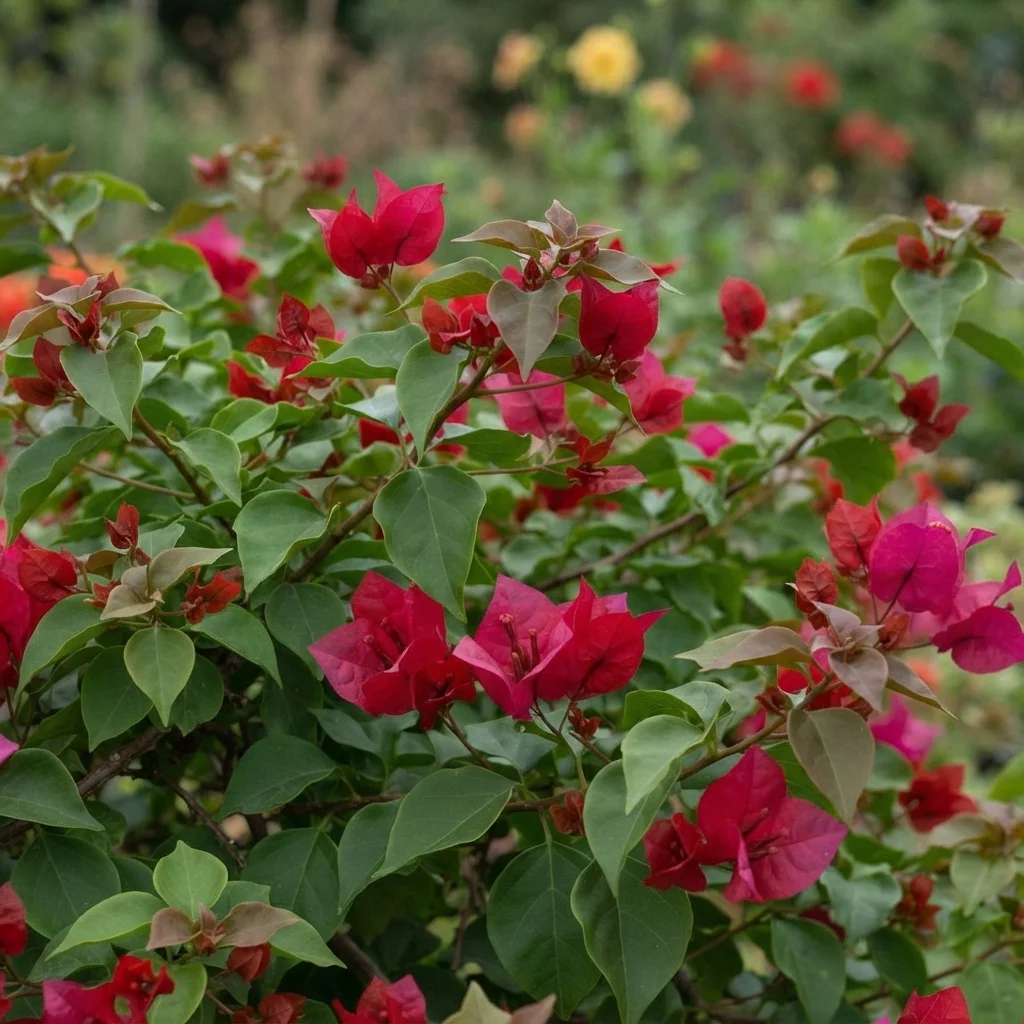
Scarlet O'Hara Bougainvillea
Bougainvillea glabra 'Scarlett O'Hara'
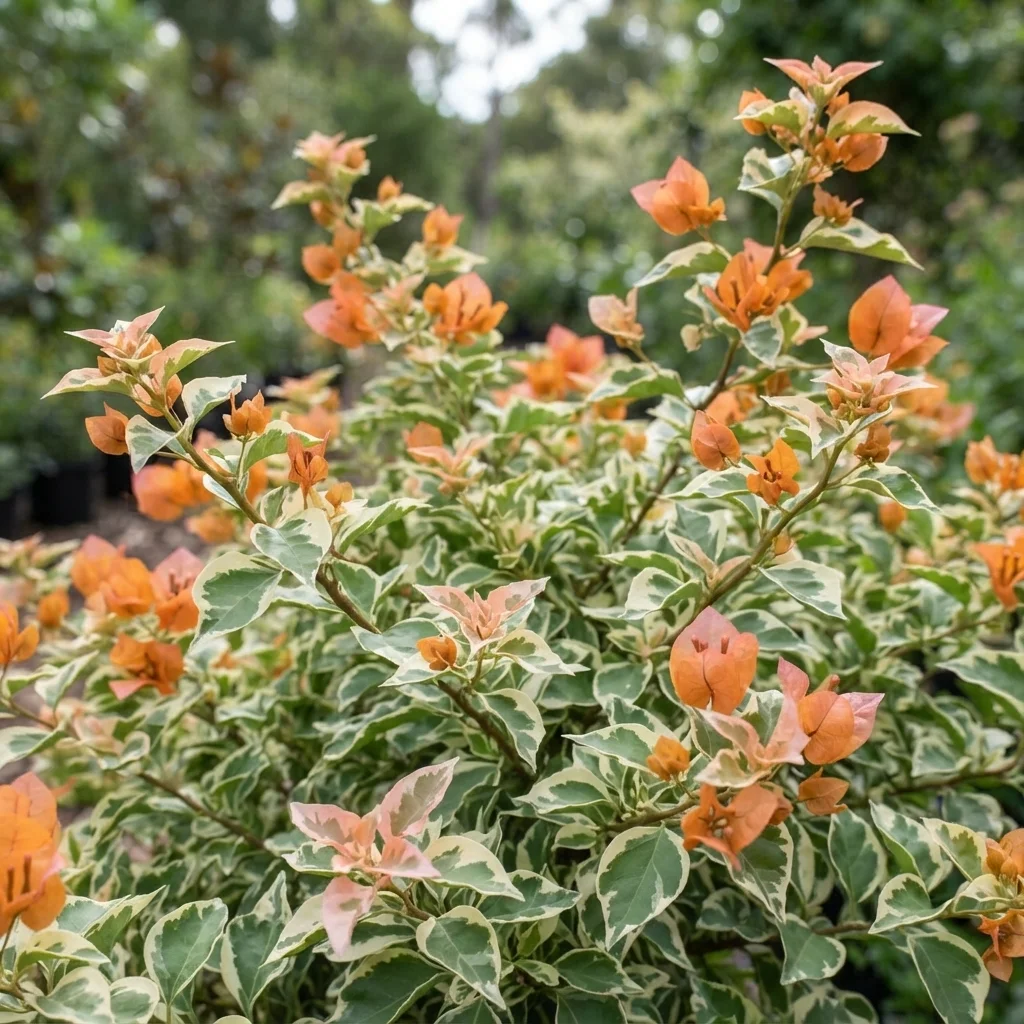
Bengal Orange Bougainvillea
Bougainvillea x hybrida 'Bengal Orange'
Great Bougainvillea
Bougainvillea spectabilis
Keep exploring
Explore the genus
Hardy in your zone?
Grow Bougainvillea with confidence
See it in a design of your actual yard, get zone-matched care reminders, and track it season by season in your garden journal.