

The Story
Plant Bio
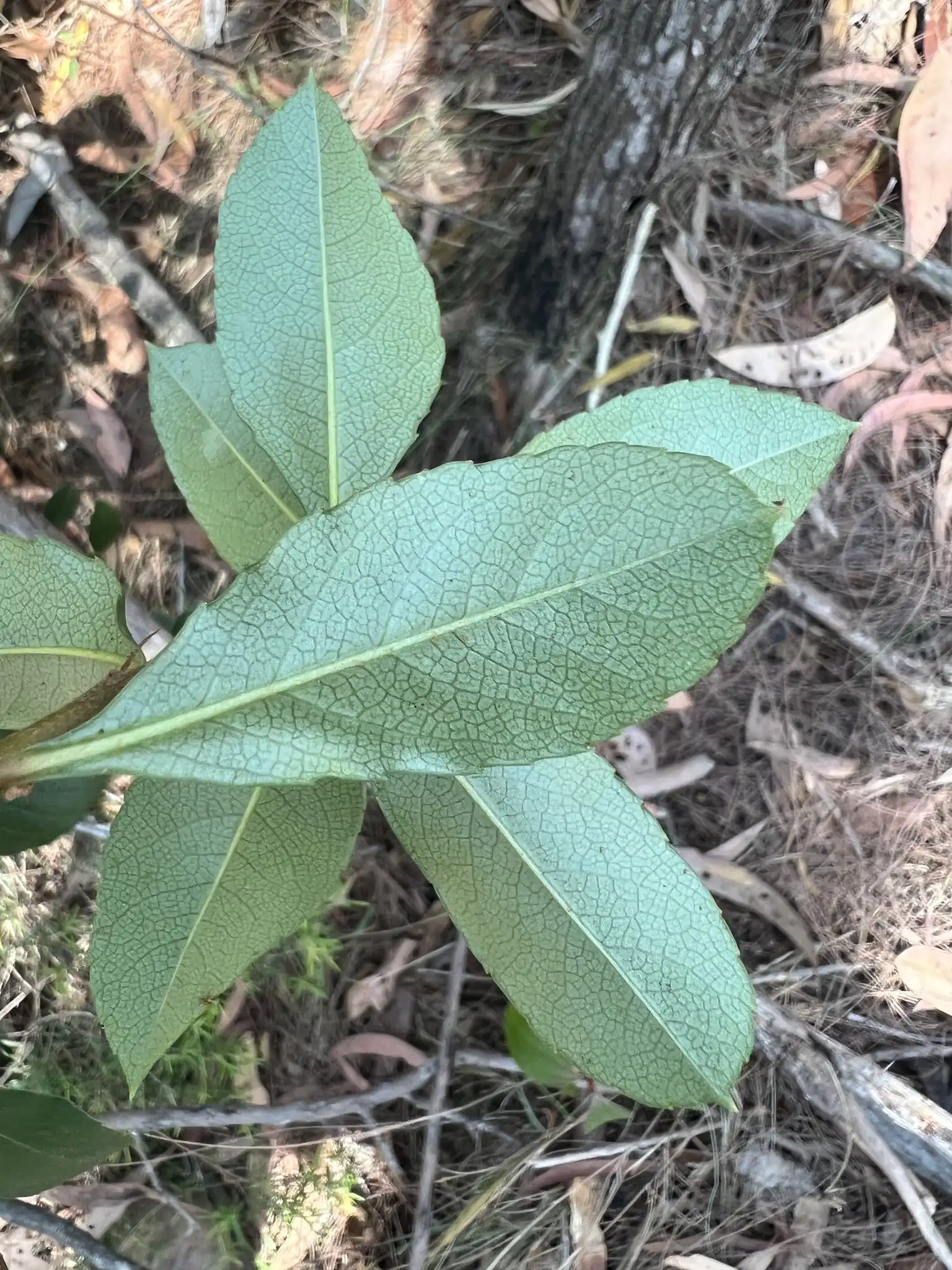
Rhaphiolepis indica, Indian hawthorn, is a compact broadleaf evergreen shrub from South China, Indo-China and temperate East Asia, forming a dense rounded mound about 4 to 6 ft tall and wide. Growth is rapid but the habit stays neat without pruning. Fragrant pink to white flower panicles open in spring above leathery dark foliage.
It is one of the most salt- and drought-tolerant evergreens for hot coastal gardens, holding up to wind and reflected heat beside pools and paving. Small purplish-black berries follow the flowers and persist into winter. Deer browse it readily, so it is a poor choice where deer pressure is high.
Uses & Benefits:
Essentials
At a Glance
Plant Type
Shrub
Height
60 inches
Width
60 inches
Light
Full Sun, Partial Sun
Zones
8, 9, 10
Water
Low once established; drought tolerant
Humidity
Tolerates coastal humidity and salt air
Lifespan
Moderate; often 15 to 20 years before leaf spot tells
Native To
South China, Indo-China and temperate East Asia
Toxicity
No significant toxicity reported
Marketplace
Where to Buy
Shipping costs Year-round shipping Free shipping
Planting
How to Grow
- Choose a site in full sun; shade brings on leaf spot.
- Plant into well-drained soil of almost any pH, including sand.
- Space plants at least 4 ft apart so air moves between them.
- Water in well and keep moist through the first season only.
- Water at the base, never over the foliage.
- Prune lightly straight after flowering if shaping is needed.
Pro Tip
Crowding and overhead irrigation are what turn Entomosporium leaf spot from a nuisance into defoliation; spacing beats spraying.
Keep It Thriving
Care Guide
Do
- Plant it in full sun with free air movement ☀️
- Water at ground level to keep the leaves dry 💧
- Use it where salt spray and reflected heat defeat other shrubs 🌊
- Clear and bin fallen spotted leaves 🍂
Don't
- Do not plant it in shade or in a crowded block ❌
- Do not use overhead irrigation on the foliage ❌
- Do not plant it where deer pressure is heavy ❌
Seasonal Care Calendar
| Task | Jan | Feb | Mar | Apr | May | Jun | Jul | Aug | Sep | Oct | Nov | Dec |
|---|---|---|---|---|---|---|---|---|---|---|---|---|
| Leaf Spot Sanitation | ||||||||||||
| Prune After Flowering |
Watch Out For
Pests & Diseases
Common Pests
Common Diseases
In the Garden
Landscape Uses & Companions
Landscape Uses
Companion Plants
Multiply
Propagation Methods
Good to Know
Common Questions
Indian Hawthorn questions
What zones can Indian Hawthorn grow in?
Indian Hawthorn is hardy in USDA Zones 8–10. Inside that range it survives winter in the ground; outside it, grow it as an annual or a container plant you protect.
Is Indian Hawthorn deer resistant?
Yes — Indian Hawthorn is rated deer-resistant. Deer typically pass it over, though extreme hunger can override any plant's defenses.
When does Indian Hawthorn bloom?
Indian Hawthorn typically blooms in spring, fragrant pink to white through late spring. Exact timing shifts a week or two with your zone — Sow's bloom calendar maps it to your garden.
Does Indian Hawthorn need full sun?
Indian Hawthorn does best in full sun to part shade. In hot climates, afternoon shade keeps blooms fresher longer.
Is Indian Hawthorn drought tolerant?
Yes — once established (usually after the first full season), Indian Hawthorn handles dry spells with minimal watering. Water deeply its first year to build the root system that makes that possible.
More Rhaphiolepis to compare
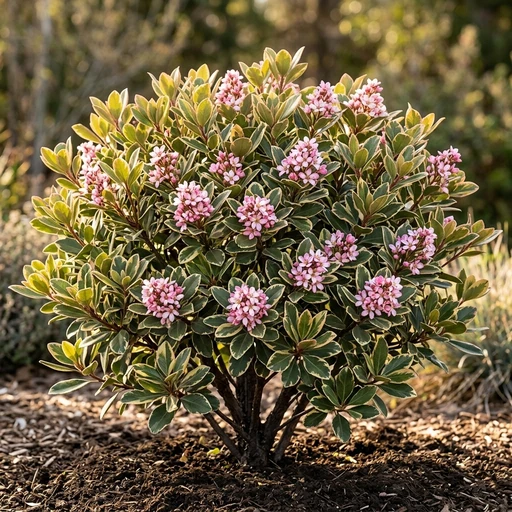
Pinkie Indian Hawthorn
Rhaphiolepis indica 'Pinkie'
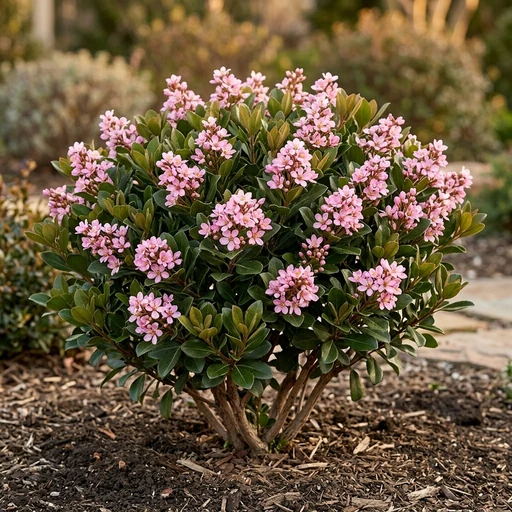
Pink Lady Indian Hawthorn
Rhaphiolepis indica 'Pink Lady'
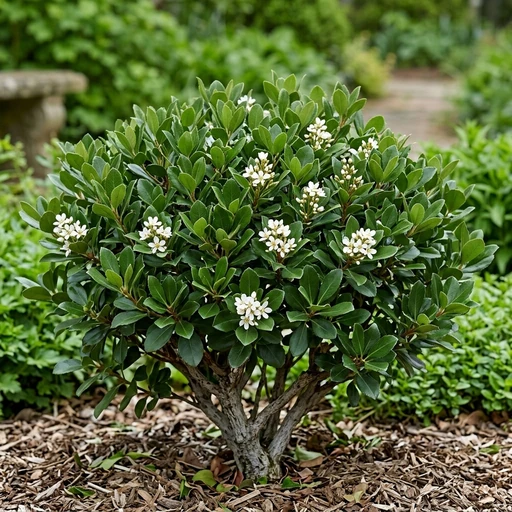
Snow White Indian Hawthorn
Rhaphiolepis indica 'Snow White'
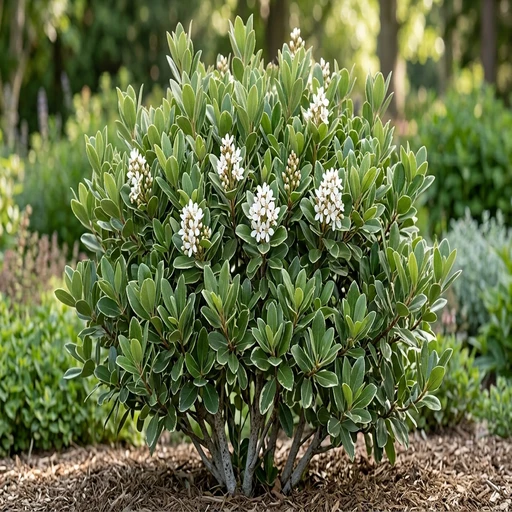
Clara Indian Hawthorn
Rhaphiolepis indica 'Clara'
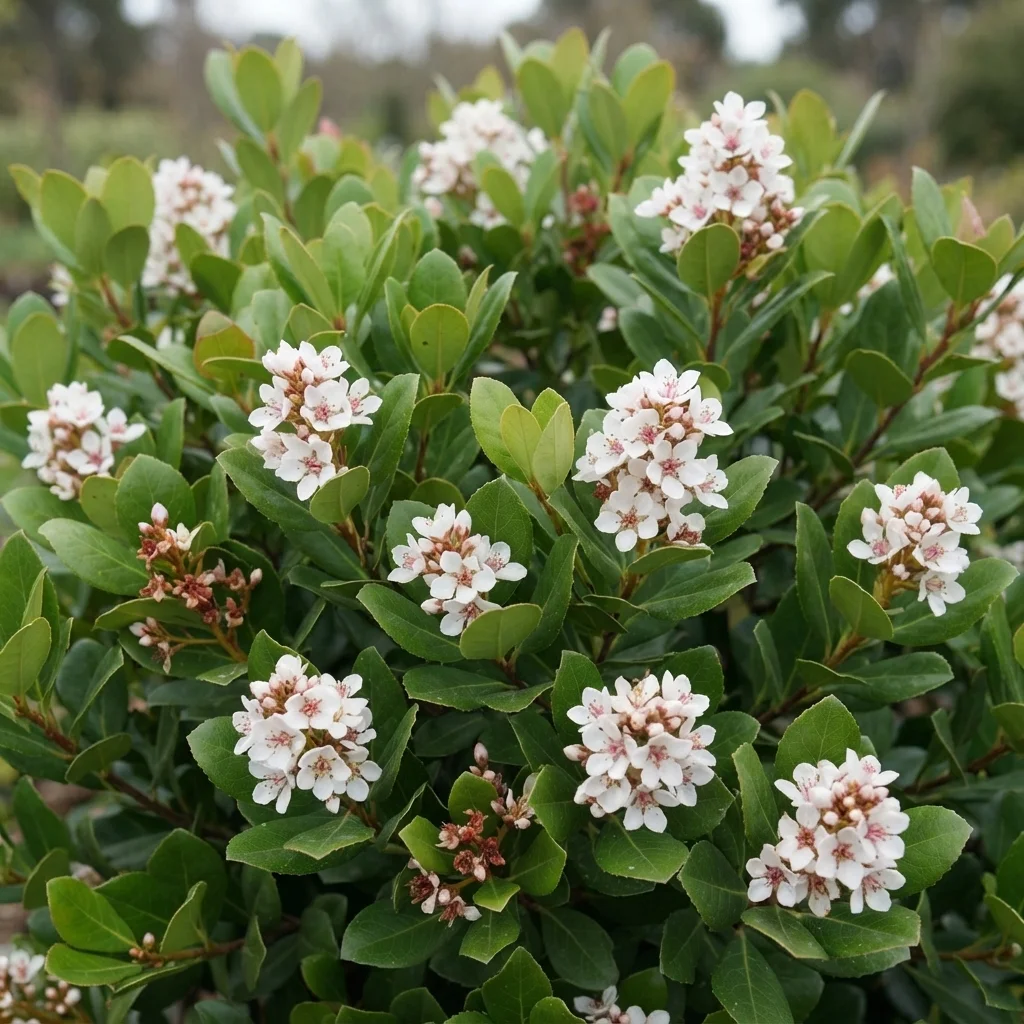
Indian Hawthorn 'Oriental Pearl'
Rhaphiolepis indica 'Oriental Pearl'
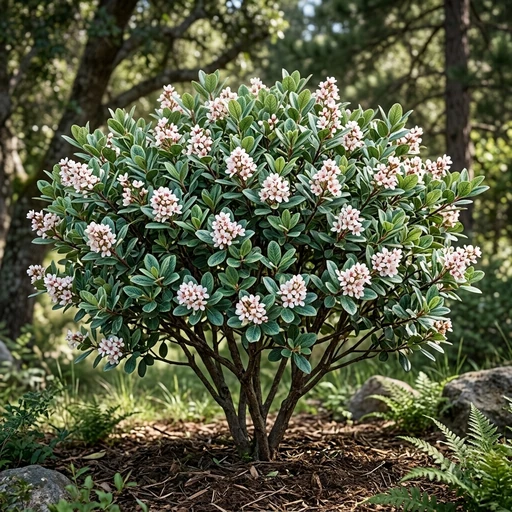
Eleanor Taber Indian Hawthorne
Rhaphiolepis indica 'Conor'
Keep exploring
Explore the genus
Hardy in your zone?
Grow Indian Hawthorn with confidence
See it in a design of your actual yard, get zone-matched care reminders, and track it season by season in your garden journal.