


The Story
Plant Bio
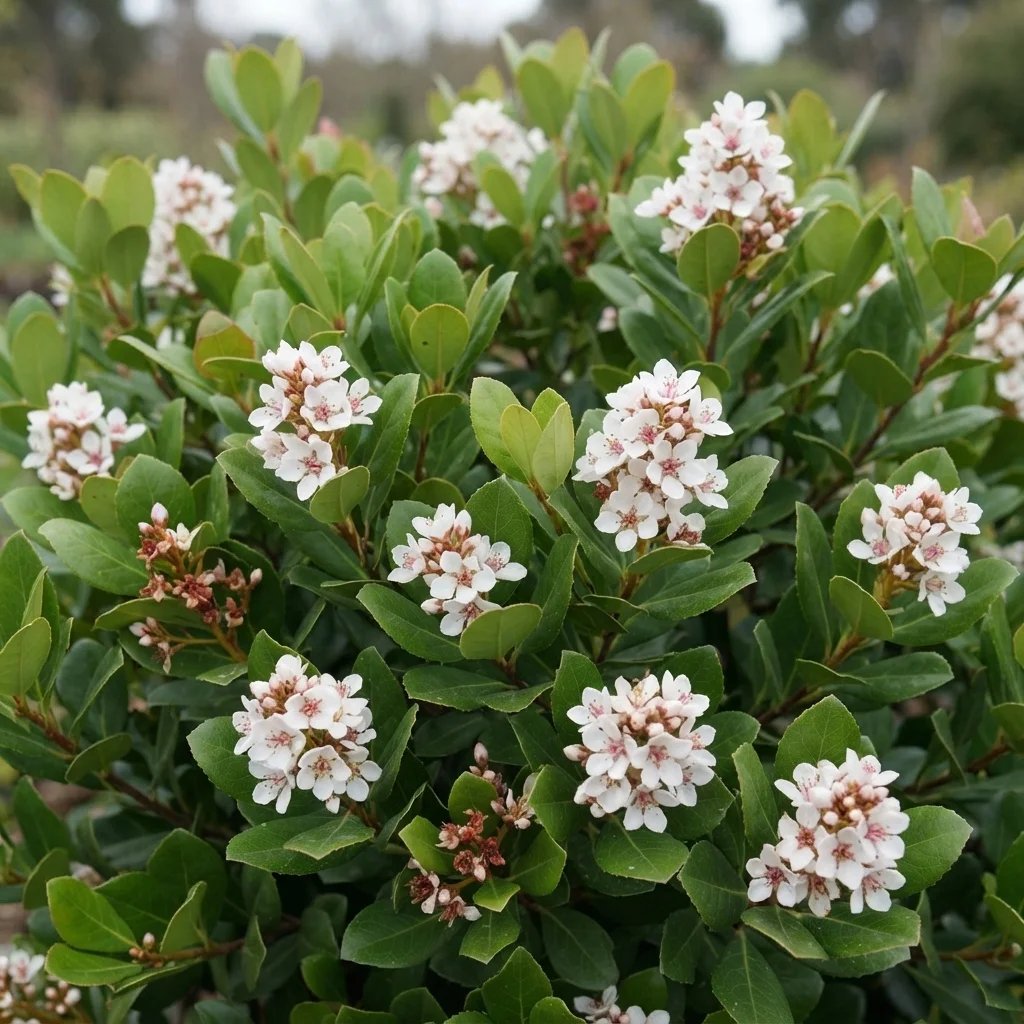
Rhaphiolepis indica, the Indian hawthorn, is a dense evergreen shrub native to mainland Asia that forms a naturally rounded mound. The species is highly valued in warm climates for its leathery, dark green foliage and terminal clusters of star-shaped flowers that emerge in spring.
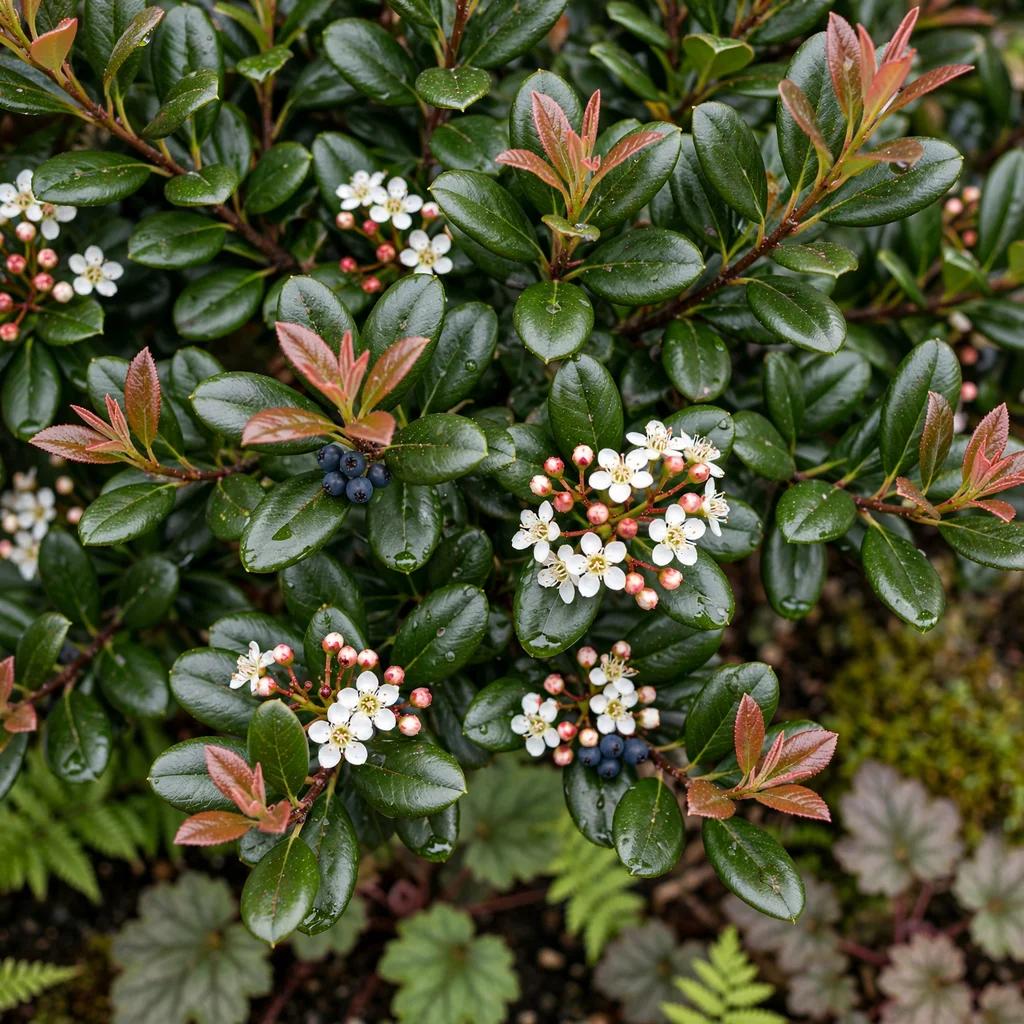
'Oriental Pearl' is a compact, low-growing cultivar that reaches only two to three feet in height and requires virtually no pruning to maintain its neat, domed shape. Its pure white flowers open from soft pink buds, contrasting against new foliage that emerges with a distinct bronze-copper tint.
Uses & Benefits:
Essentials
At a Glance
Plant Type
Shrub
Height
30"
Width
36"
Light
Full Sun, Partial Sun
Zones
7, 8, 9, 10
Water
Low to moderate
Humidity
High tolerance
Lifespan
Perennial
Native To
Mainland Asia (southern China)
Toxicity
Non-toxic (seeds contain minor cyanogenic glycosides if ingested in large quantities)
Bloom period
Spring
In flower about 3 months of the year
Planting
How to Grow
- Select a planting site that receives at least six hours of direct sunlight daily to maximize flowering and foliage health.
- Dig a hole twice as wide as the root ball but no deeper, ensuring the top of the root ball sits slightly above the surrounding soil level.
- Backfill with native soil, firm gently, and water deeply to settle the roots without adding soil amendments.
- Apply a two-inch layer of organic mulch around the base, keeping it clear of the main stems to prevent rot.
Pro Tip
Plant in baking full sun and use drip irrigation rather than overhead watering; keeping the foliage dry is the most effective way to prevent Entomosporium leaf spot.
Keep It Thriving
Care Guide
Do
- Water deeply but infrequently once established, allowing the soil to dry out between waterings.
- Plant in a location with excellent air circulation to minimize fungal leaf diseases.
- Apply a balanced, slow-release fertilizer once a year in early spring as new growth begins.
Don't
- Do not use overhead sprinklers, as wet foliage highly encourages Entomosporium leaf spot.
- Do not prune heavily into old, bare wood, which lacks active buds and recovers very slowly.
- Do not plant in low-lying, poorly drained areas where water tends to collect.
Seasonal Care Calendar
| Task | Jan | Feb | Mar | Apr | May | Jun | Jul | Aug | Sep | Oct | Nov | Dec |
|---|---|---|---|---|---|---|---|---|---|---|---|---|
| Fertilize | ||||||||||||
| Mulch | ||||||||||||
| Pest Check | ||||||||||||
| Prune |
Watch Out For
Pests & Diseases
Common Pests
Common Diseases
In the Garden
Landscape Uses & Companions
Landscape Uses
Companion Plants
Multiply
Propagation Methods
Good to Know
Common Questions
India Hawthorn questions
What zones can India Hawthorn grow in?
India Hawthorn is hardy in USDA Zones 7–10. Inside that range it survives winter in the ground; outside it, grow it as an annual or a container plant you protect.
Is India Hawthorn deer resistant?
Yes — India Hawthorn is rated deer-resistant. Deer typically pass it over, though extreme hunger can override any plant's defenses.
When does India Hawthorn bloom?
India Hawthorn typically blooms in spring through spring. Exact timing shifts a week or two with your zone — Sow's bloom calendar maps it to your garden.
Does India Hawthorn need full sun?
India Hawthorn does best in full sun to part shade. In hot climates, afternoon shade keeps blooms fresher longer.
Is India Hawthorn drought tolerant?
Yes — once established (usually after the first full season), India Hawthorn handles dry spells with minimal watering. Water deeply its first year to build the root system that makes that possible.
More Rhaphiolepis to compare
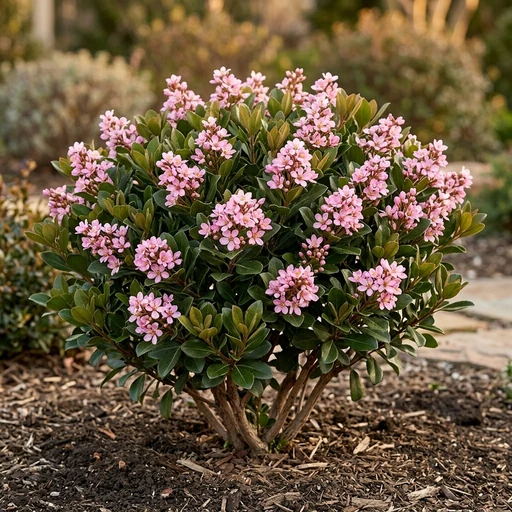
Pink Lady Indian Hawthorn
Rhaphiolepis indica 'Pink Lady'
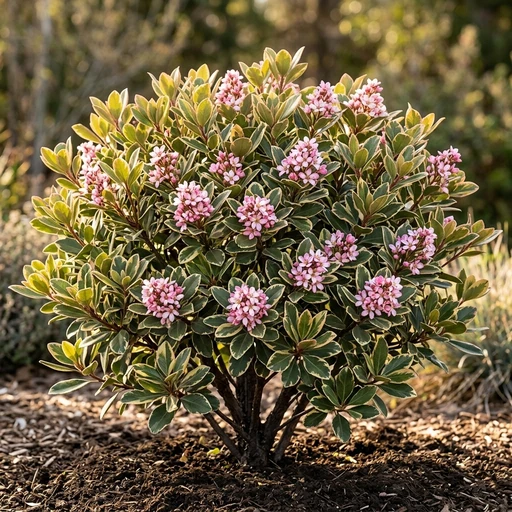
Pinkie Indian Hawthorn
Rhaphiolepis indica 'Pinkie'
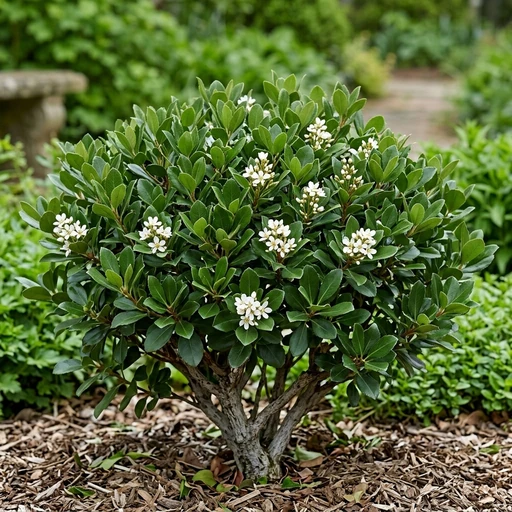
Snow White Indian Hawthorn
Rhaphiolepis indica 'Snow White'
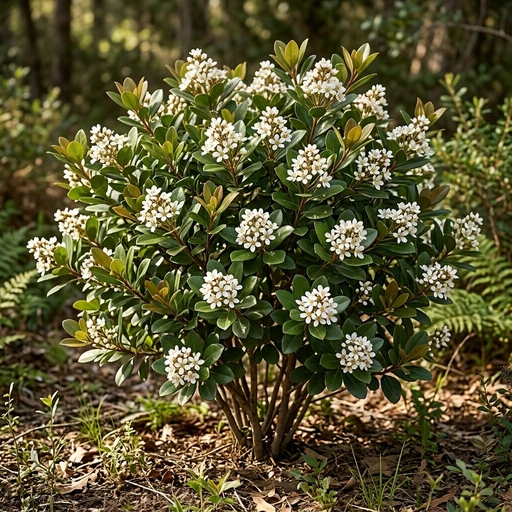
Indian Hawthorn
Rhaphiolepis indica
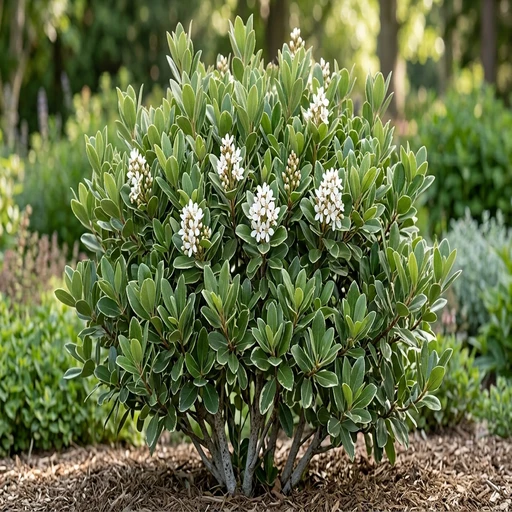
Clara Indian Hawthorn
Rhaphiolepis indica 'Clara'
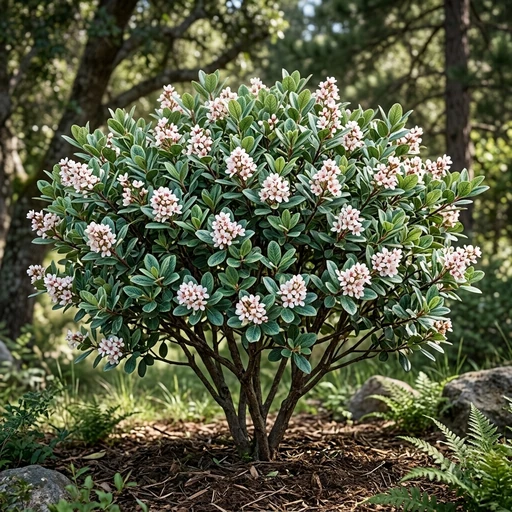
Eleanor Taber Indian Hawthorne
Rhaphiolepis indica 'Conor'
Keep exploring
Explore the genus
Hardy in your zone?
Grow India Hawthorn with confidence
See it in a design of your actual yard, get zone-matched care reminders, and track it season by season in your garden journal.