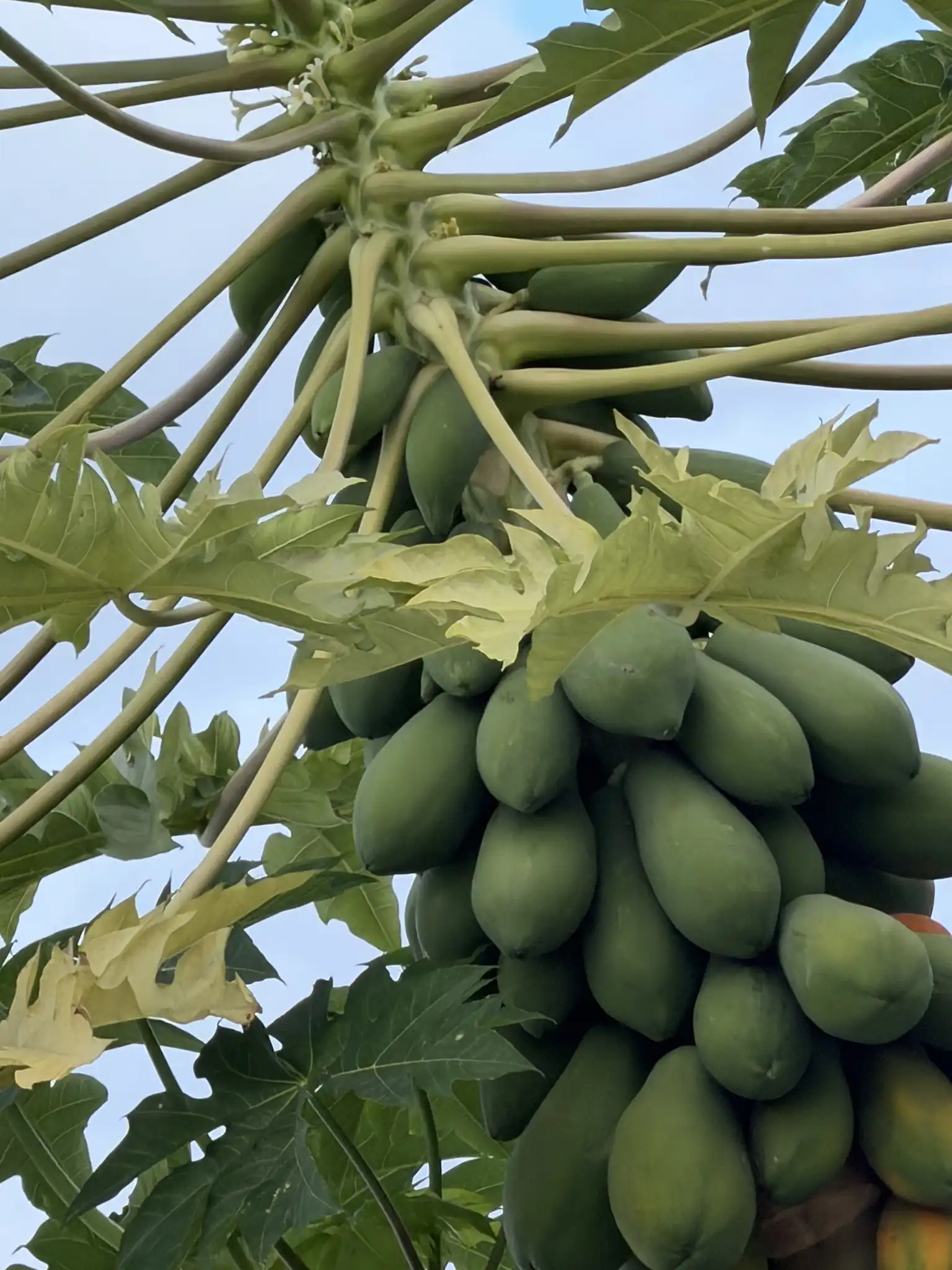
The Story
Plant Bio
Carica papaya is a fast-growing, single-stemmed herbaceous tree with a soft, hollow succulent trunk topped by a spiraling crown of deeply palmate-lobed leaves. Fragrant, yellowish-white flowers emerge directly from the leaf axils, giving way to large, fleshy edible fruits in frost-free climates.
This species requires exceptionally sharp soil drainage, as standing water quickly induces fatal Phytophthora root rot. Plants are often dioecious, meaning both male and female specimens must be planted together to ensure successful pollination and fruit set unless self-pollinating hermaphrodite selections are grown.
Uses & Benefits:
Essentials
At a Glance
Plant Type
Fruit Vegetable
Height
240"
Width
120"
Light
Full Sun
Zones
9, 10
Water
Moderate
Humidity
High
Lifespan
Short-lived perennial
Native To
Tropical America
Toxicity
Skin Irritant
Bloom period
Spring – Autumn
In flower about 9 months of the year
Marketplace
Where to Buy
Shipping costs Year-round shipping Free shipping
Planting
How to Grow
- Select a planting site in full sun with deep, fertile, and exceptionally well-draining soil.
- Incorporate generous amounts of organic compost to provide the rich nutrients required for rapid growth.
- Plant multiple seedlings close together to guarantee a mix of male and female plants for pollination.
- Water deeply but infrequently, allowing the top few inches of soil to dry completely between applications.
Pro Tip
Never cut back into old, leafless wood; the soft, hollow trunk lacks the capacity to heal properly and invites destructive fungal pathogens.
Keep It Thriving
Care Guide
Do
- Plant in mounded beds or raised mounds to maximize drainage and prevent waterlogging.
- Apply a balanced, slow-release organic fertilizer every four to six weeks during the warm growing season.
- Remove dead or diseased lower leaves cleanly at the stem to maintain airflow.
Don't
- Never allow standing water to collect around the base of the trunk.
- Do not prune the main growing tip unless the plant is damaged and branching is desired.
- Avoid planting single specimens unless they are certified self-pollinating hermaphrodite cultivars.
Seasonal Care Calendar
| Task | Jan | Feb | Mar | Apr | May | Jun | Jul | Aug | Sep | Oct | Nov | Dec |
|---|---|---|---|---|---|---|---|---|---|---|---|---|
| Fertilize | ||||||||||||
| Harvest | ||||||||||||
| Pest Check | ||||||||||||
| Winter Prep |
Watch Out For
Pests & Diseases
Common Pests
Common Diseases
In the Garden
Landscape Uses & Companions
Landscape Uses
Companion Plants
Multiply
Propagation Methods
Good to Know
Common Questions
Papaya questions
What zones can Papaya grow in?
Papaya is hardy in USDA Zones 9–10. Inside that range it survives winter in the ground; outside it, grow it as an annual or a container plant you protect.
Is Papaya deer resistant?
Not reliably. Deer may browse Papaya, especially tender spring growth — plan on repellents or fencing where pressure is high.
When does Papaya bloom?
Papaya typically blooms in spring through autumn. Exact timing shifts a week or two with your zone — Sow's bloom calendar maps it to your garden.
Does Papaya need full sun?
Papaya does best in full sun (6+ hours).
Keep exploring
Explore the genus
Hardy in your zone?
Grow Papaya with confidence
See it in a design of your actual yard, get zone-matched care reminders, and track it season by season in your garden journal.