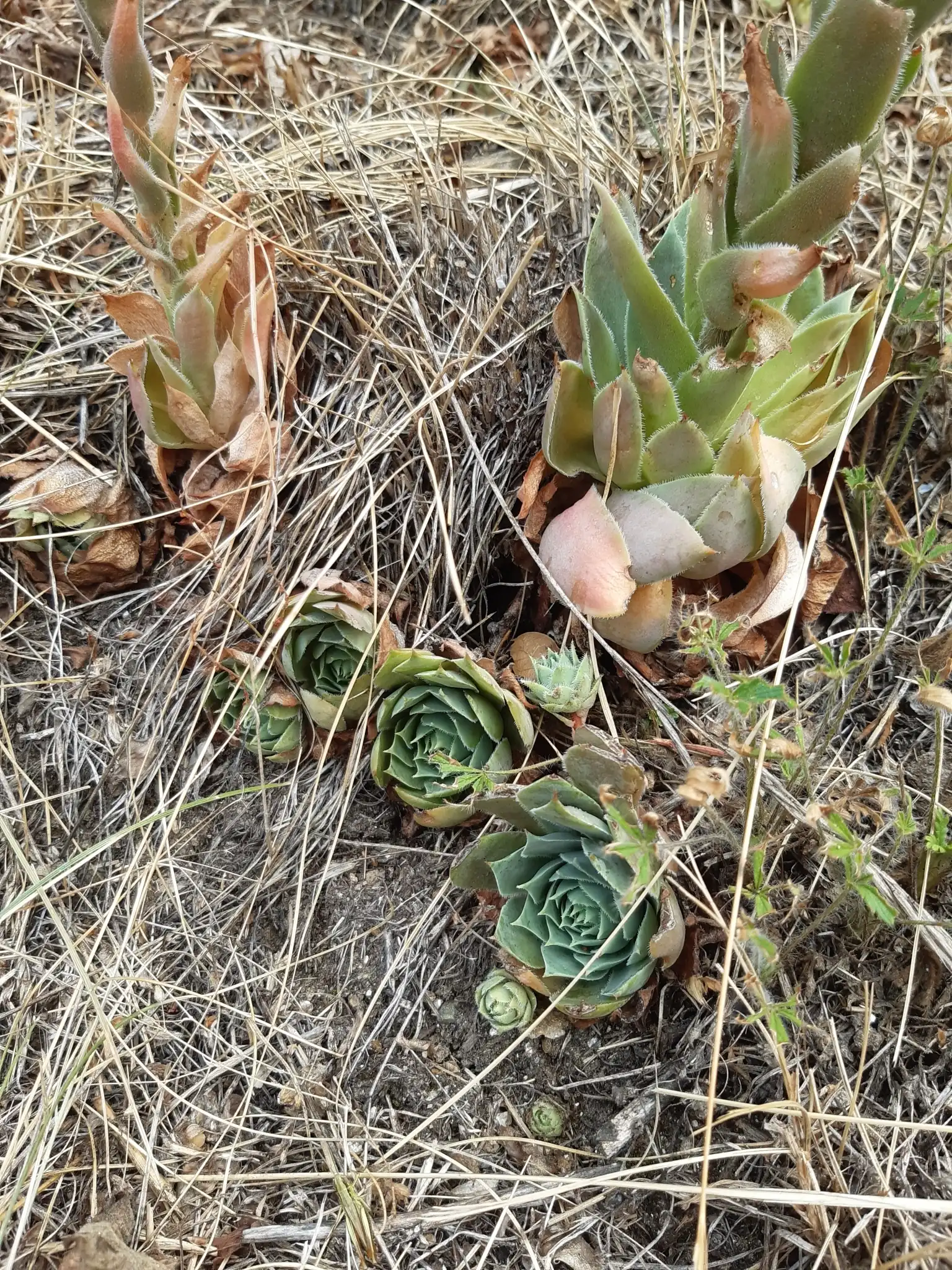
10 named cultivars
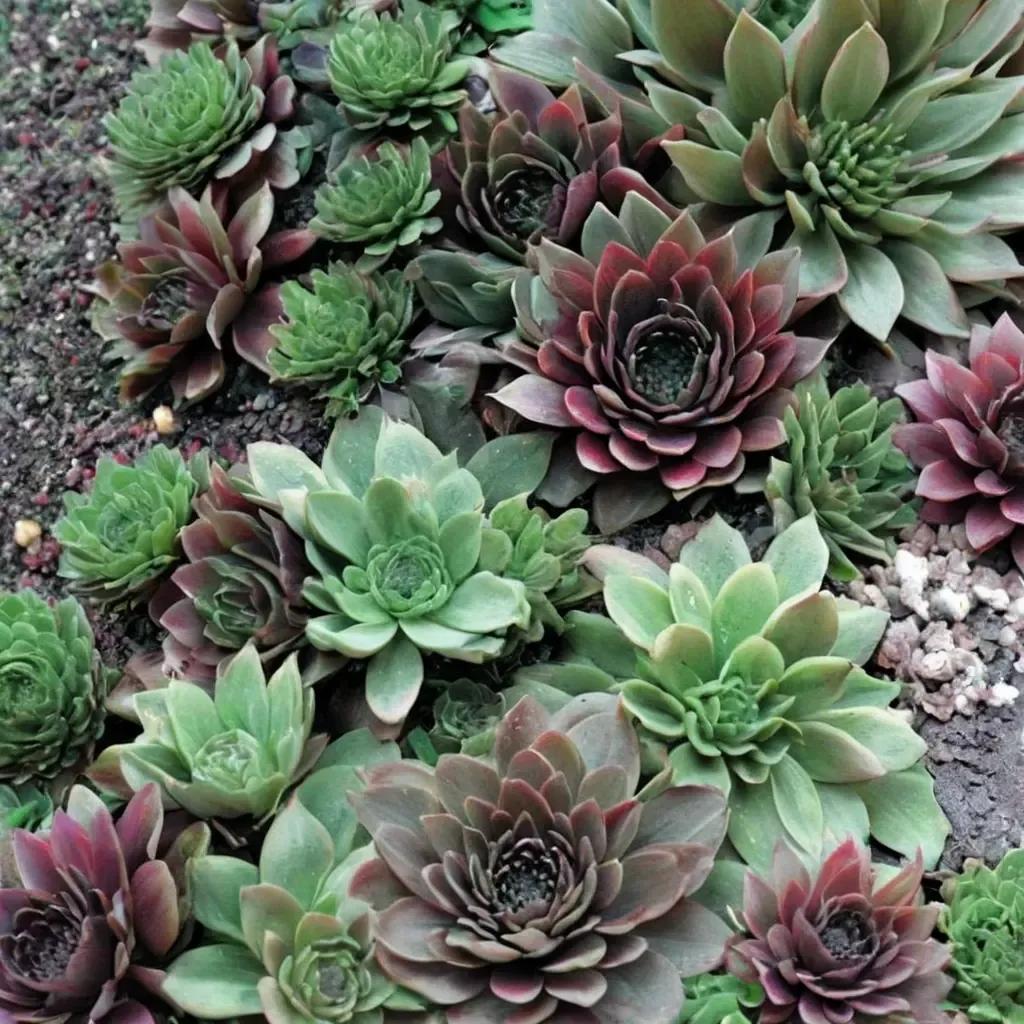 ‘Mix’Hens and Chicks
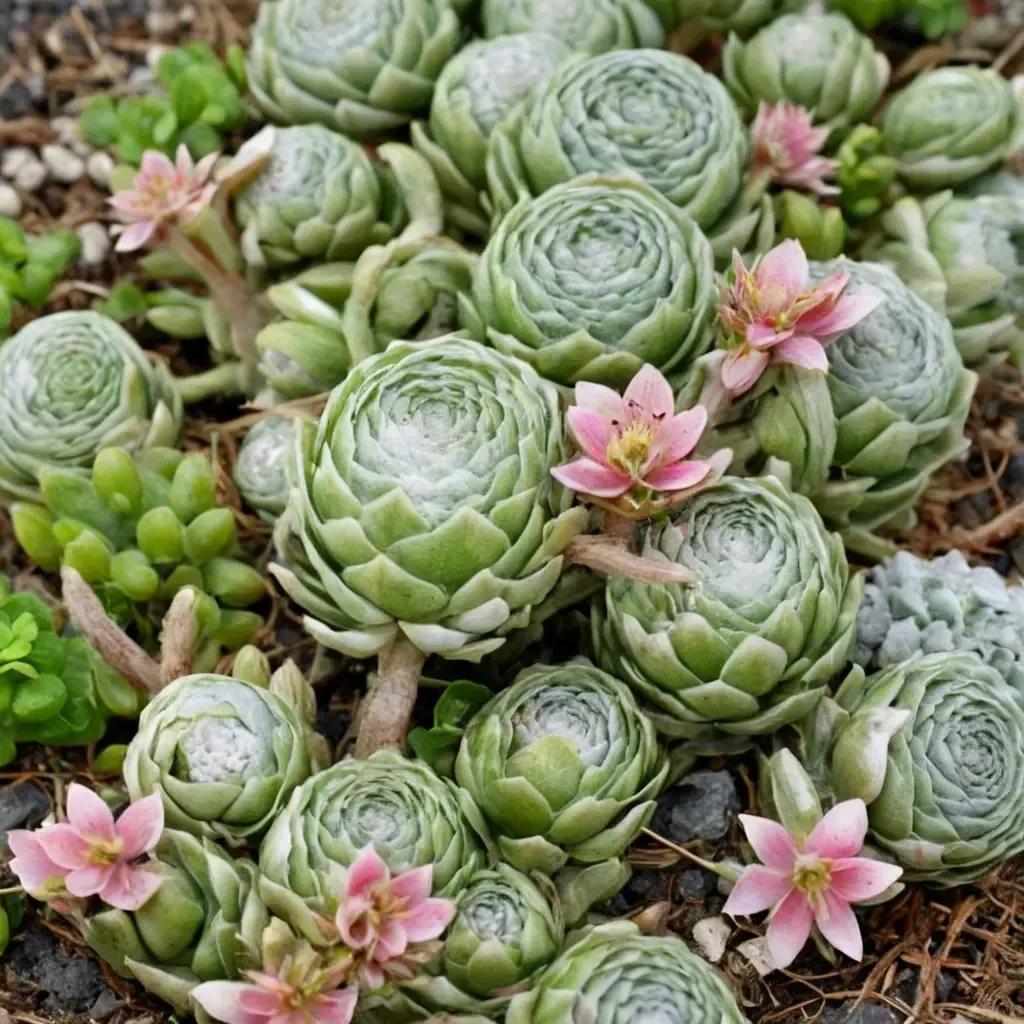 ‘Cobweb’Cobweb Houseleek
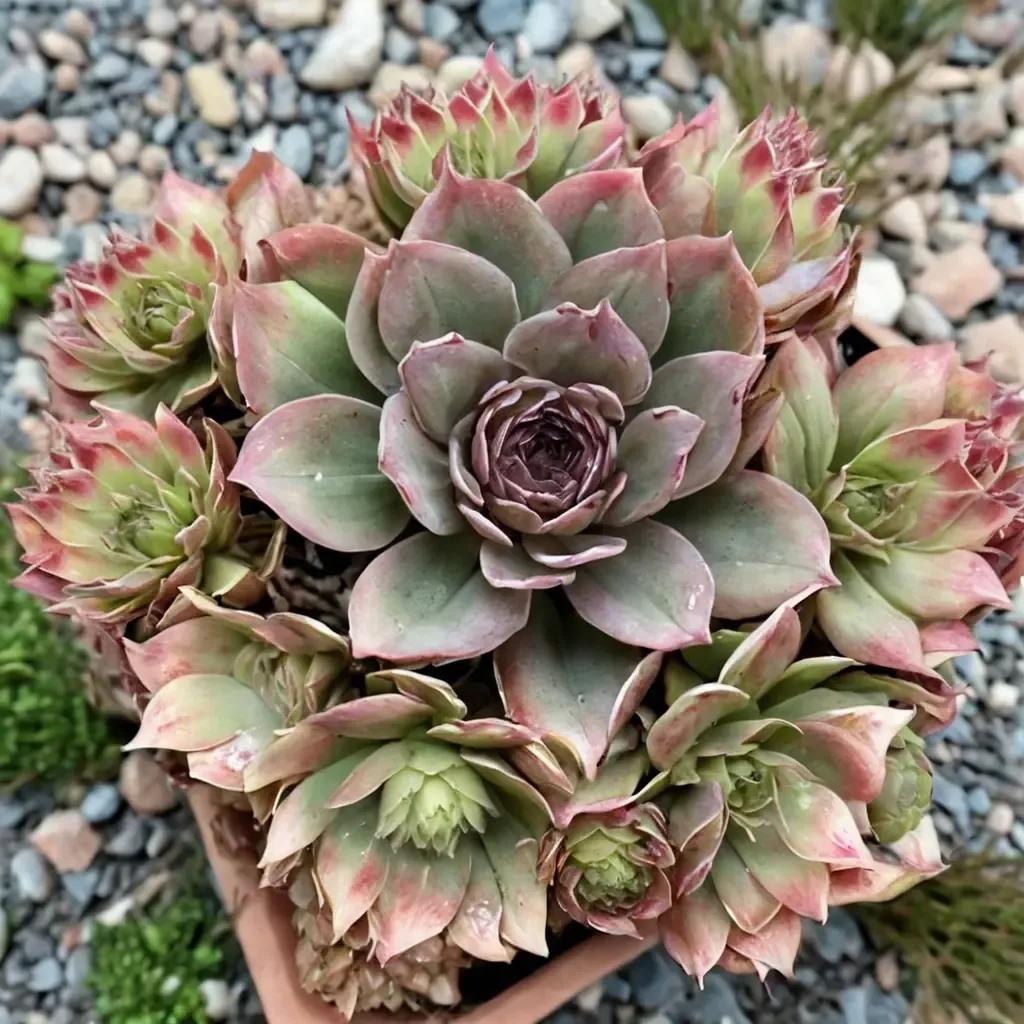 ‘Dynamo Hens n Chicks’Dynamo Hens and Chicks
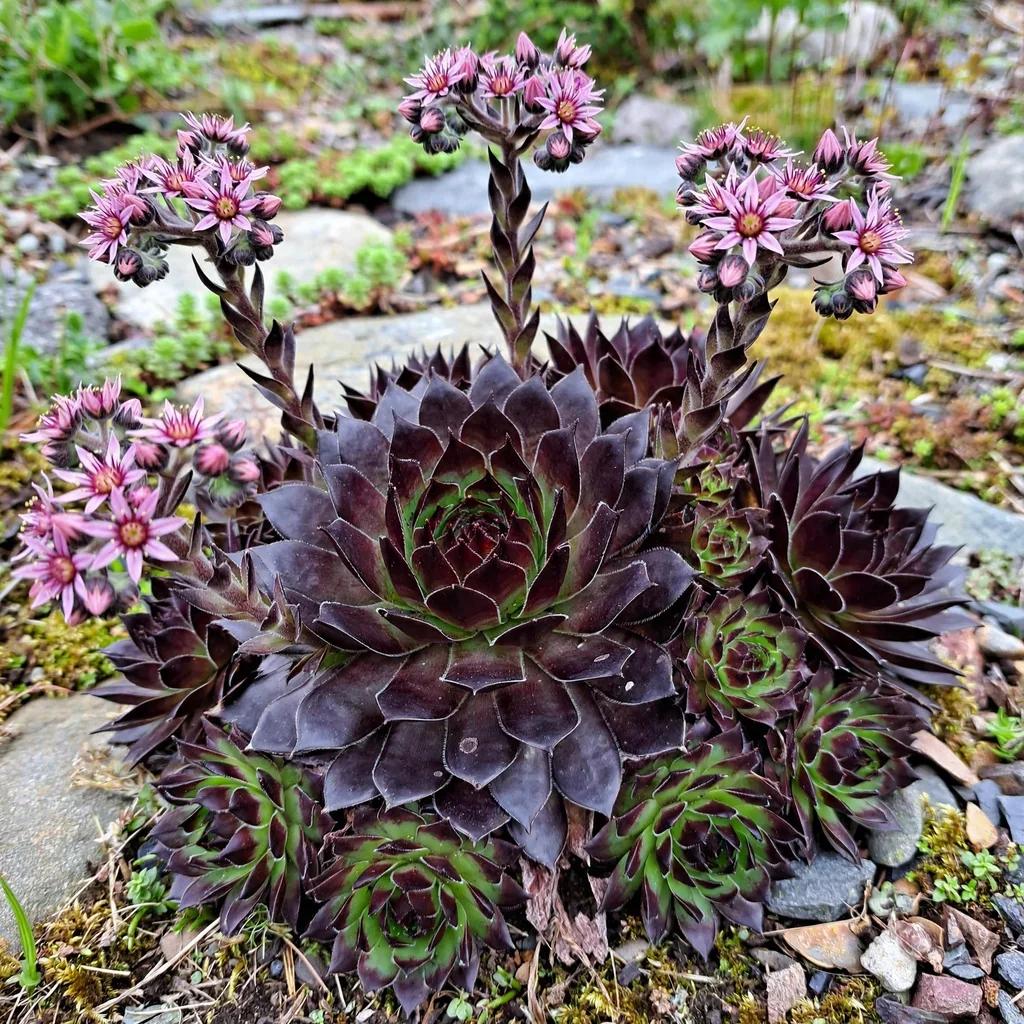 ‘Black’Black Hens and Chicks
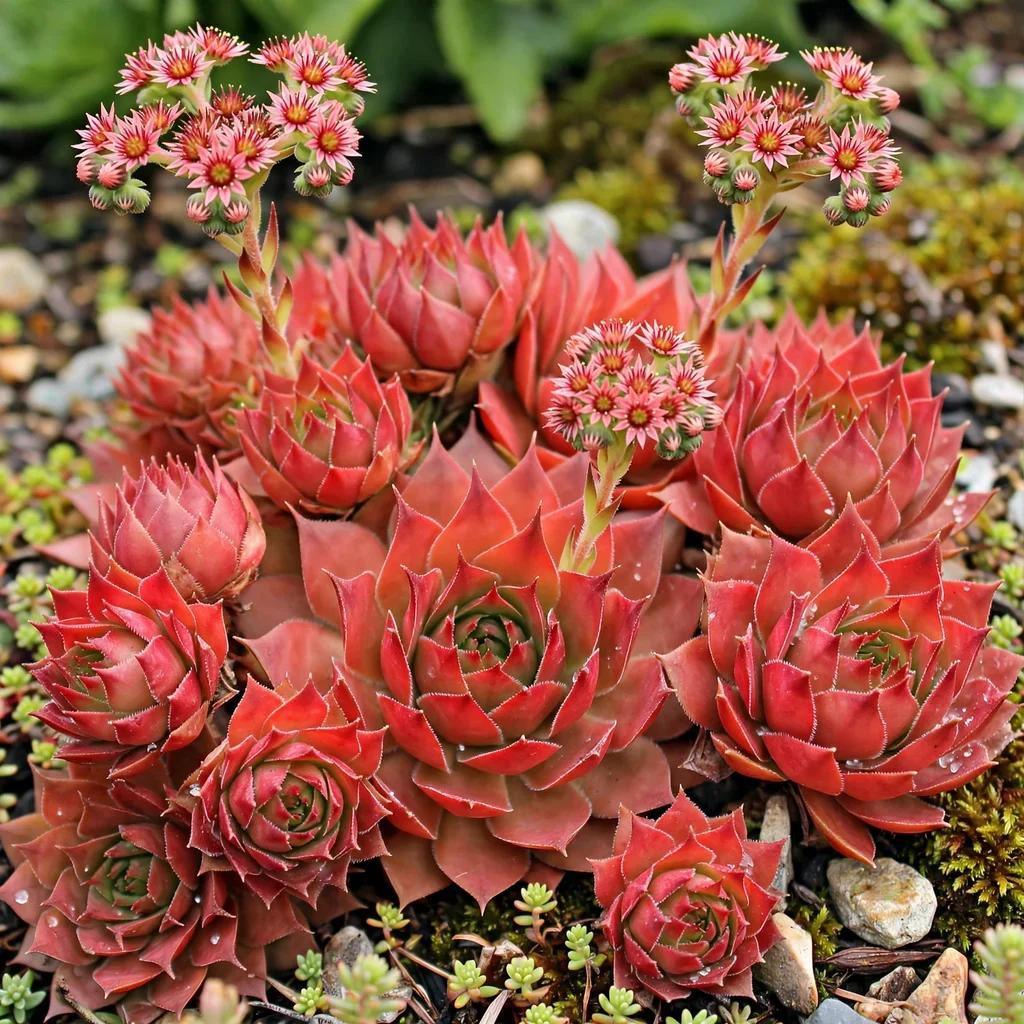 ‘Coral Red’Coral Red Hens and Chicks
 ‘Forest Frost’Forest Frost Hens and Chicks
 ‘Peggy’Hens and Chicks 'Peggy'
 ‘Green Wheel’Green Wheel Hens and Chicks
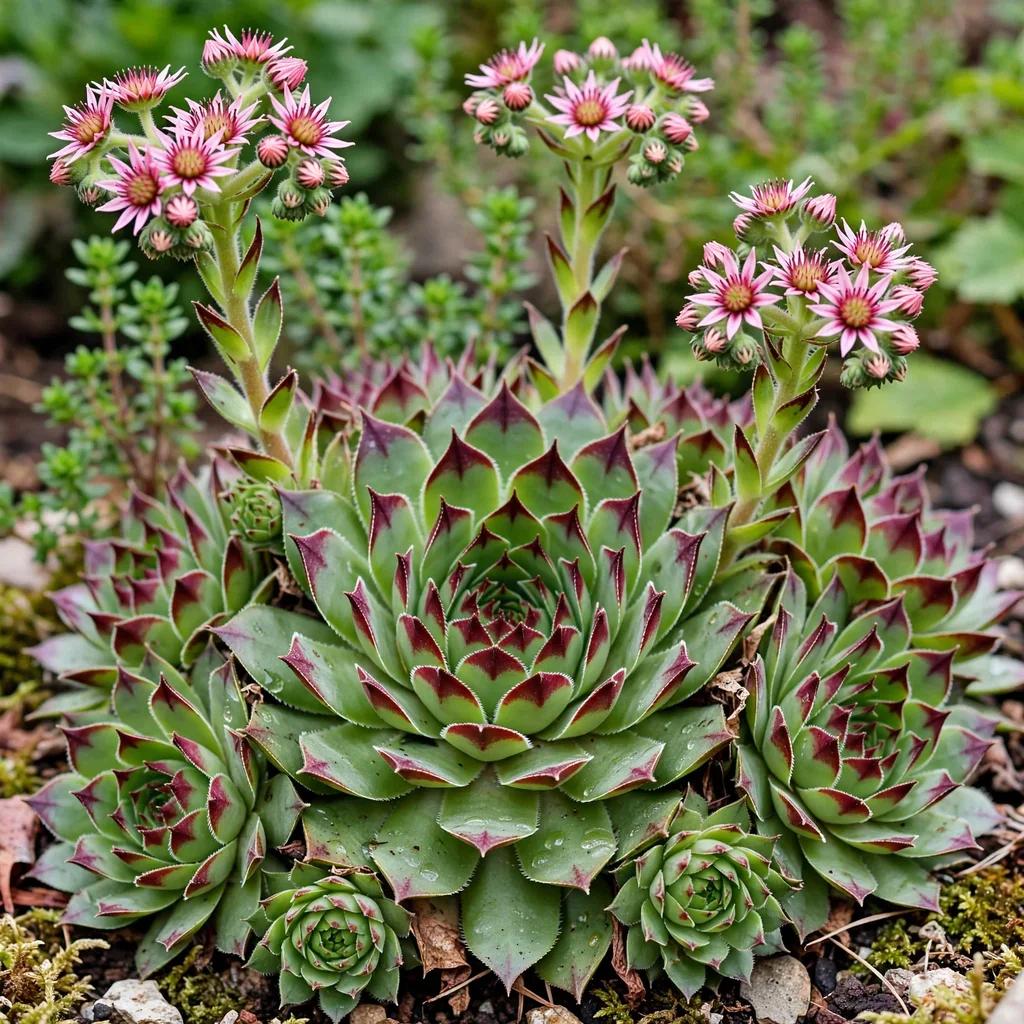 ‘Carmen’Carmen Hens and Chicks
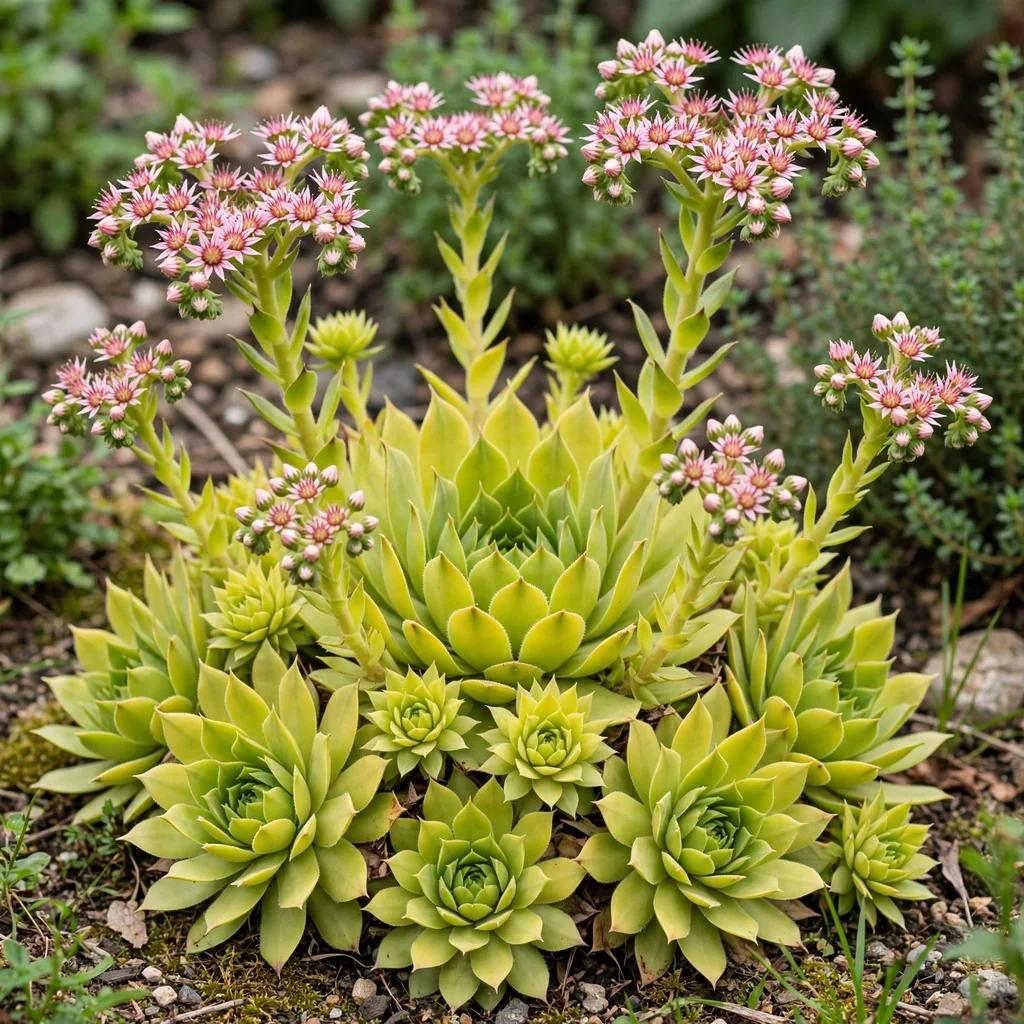 ‘Gold Nugget’Gold Nugget Hens and Chicks
The Story
Plant Bio
Sempervivum tectorum, hen and chicks, is a low evergreen succulent native to southern Europe, forming flat rosettes three to four inches across. Thick fleshy pointed leaves, often tipped purple, spread horizontally, and each rosette produces offsets around its base — the chicks that give the plant its common name and its steady spread across a surface.
Each individual rosette is monocarpic: it flowers once on a short stalk, sets seed and dies, but the surrounding offsets carry the colony on indefinitely. The species name means 'of roofs' — it was traditionally planted on European roofs, and it genuinely survives in almost no soil, which is why it works in wall crevices and shallow containers.
Uses & Benefits:
Essentials
At a Glance
Plant Type
Cactus Succulent
Height
4"
Width
12"
Light
Full Sun, Partial Sun
Zones
4, 5, 6, 7, 8, 9
Water
Low
Humidity
Low
Lifespan
Perennial
Native To
Southern Europe
Toxicity
Non-toxic
Planting
How to Grow
- Plant in spring in very sharply drained gritty soil.
- Choose full sun to partial shade.
- Set rosettes shallowly; do not bury the crown.
- Water sparingly; it needs almost none.
- Detach offsets to spread the colony.
- Keep winter moisture off the rosettes.
Pro Tip
Grow it in grit rather than compost — it survives on almost nothing, and rich damp soil is what kills it.
Keep It Thriving
Care Guide
Do
- Plant in gritty, sharply drained soil 🪨
- Detach offsets to propagate 🌱
- Use it in walls, troughs and shallow pots 🏺
- Keep winter wet off the crowns ❄️
Don't
- Plant in rich or moisture-retentive compost ❌
- Overwater ❌
- Panic when a flowering rosette dies ❌
Seasonal Care Calendar
| Task | Jan | Feb | Mar | Apr | May | Jun | Jul | Aug | Sep | Oct | Nov | Dec |
|---|---|---|---|---|---|---|---|---|---|---|---|---|
| Monitor |
Watch Out For
Pests & Diseases
Common Pests
Common Diseases
In the Garden
Landscape Uses & Companions
Landscape Uses
Companion Plants
Multiply
Propagation Methods
Good to Know
Common Questions
Hens and Chicks questions
What zones can Hens and Chicks grow in?
Hens and Chicks is hardy in USDA Zones 4–9. Inside that range it survives winter in the ground; outside it, grow it as an annual or a container plant you protect.
Is Hens and Chicks deer resistant?
Yes — Hens and Chicks is rated deer-resistant. Deer typically pass it over, though extreme hunger can override any plant's defenses.
When does Hens and Chicks bloom?
Hens and Chicks typically blooms in summer through late summer. Exact timing shifts a week or two with your zone — Sow's bloom calendar maps it to your garden.
Does Hens and Chicks need full sun?
Hens and Chicks does best in full sun to part shade. In hot climates, afternoon shade keeps blooms fresher longer.
Is Hens and Chicks drought tolerant?
Yes — once established (usually after the first full season), Hens and Chicks handles dry spells with minimal watering. Water deeply its first year to build the root system that makes that possible.
More Sempervivum to compare
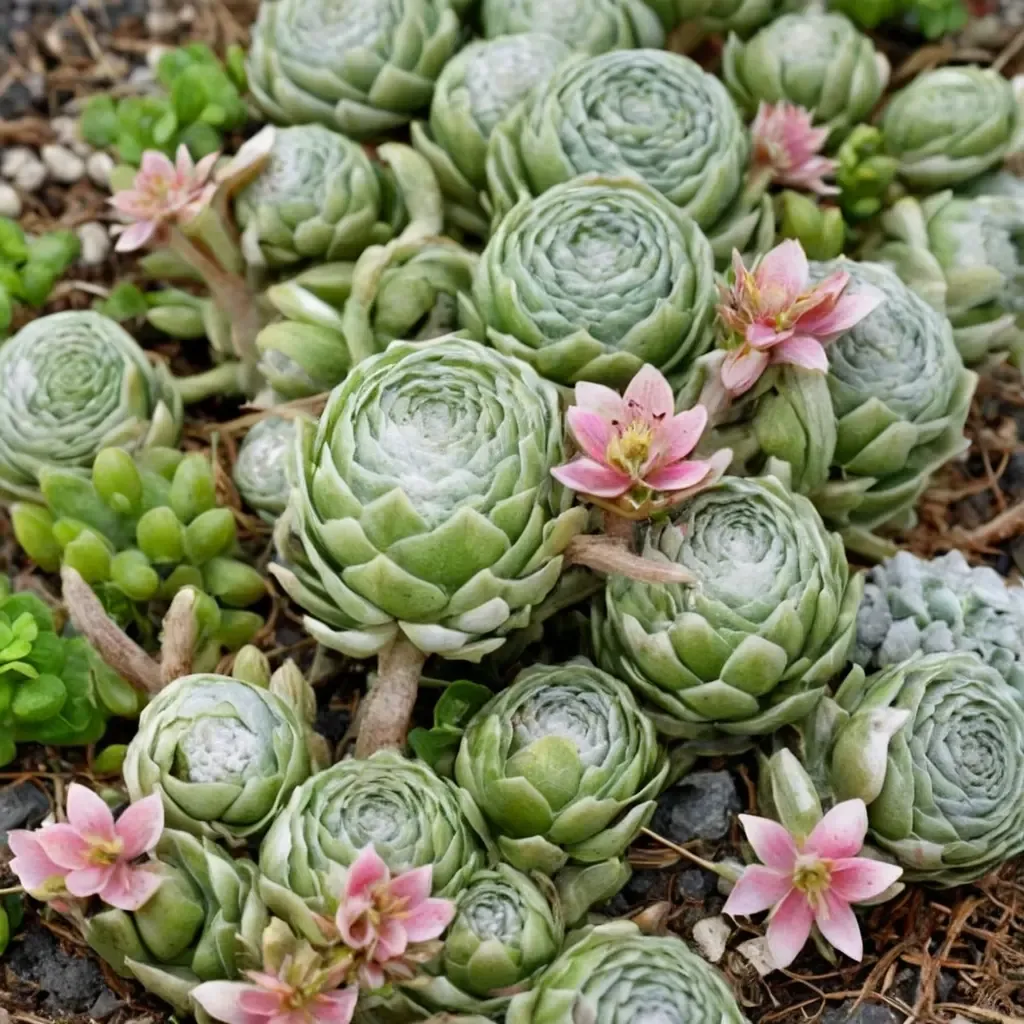
Cobweb Houseleek
Sempervivum tectorum 'Cobweb'
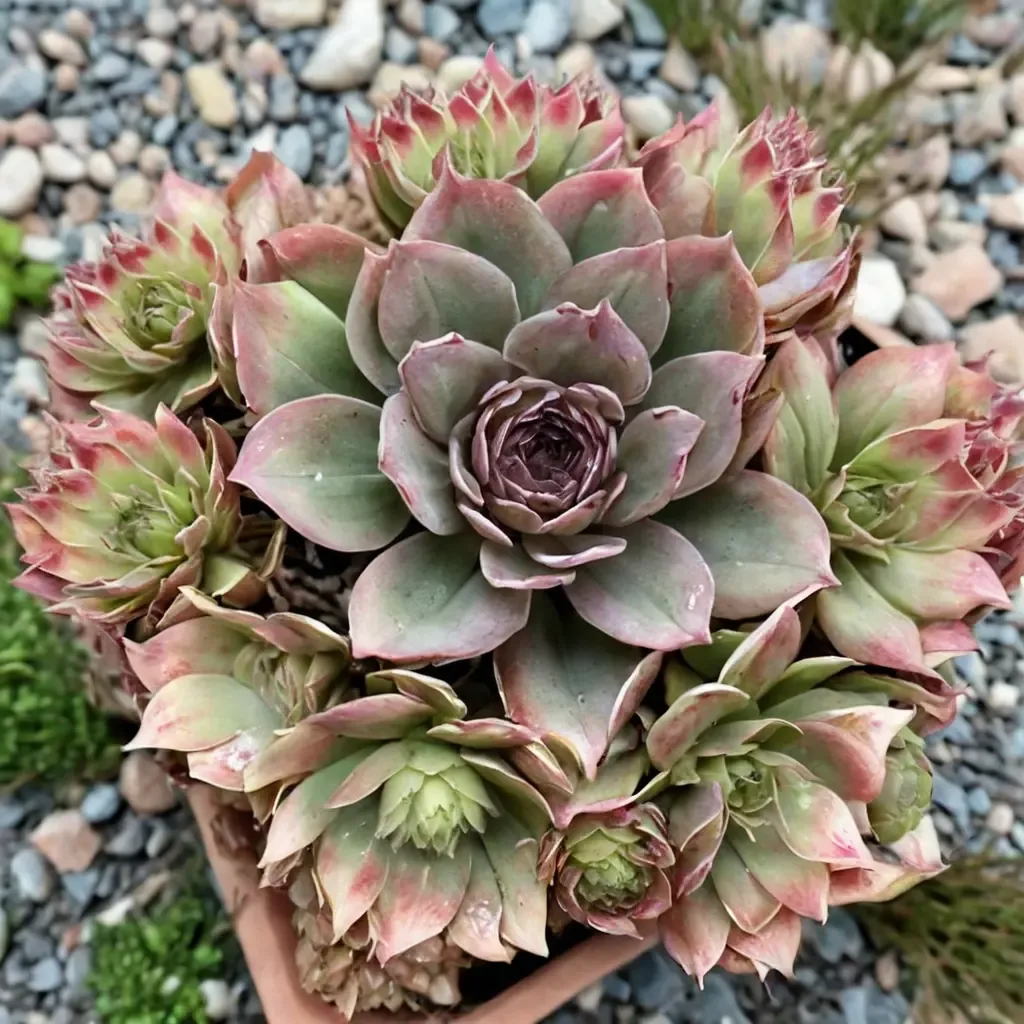
Dynamo Hens and Chicks
Sempervivum tectorum 'Dynamo Hens n Chicks'
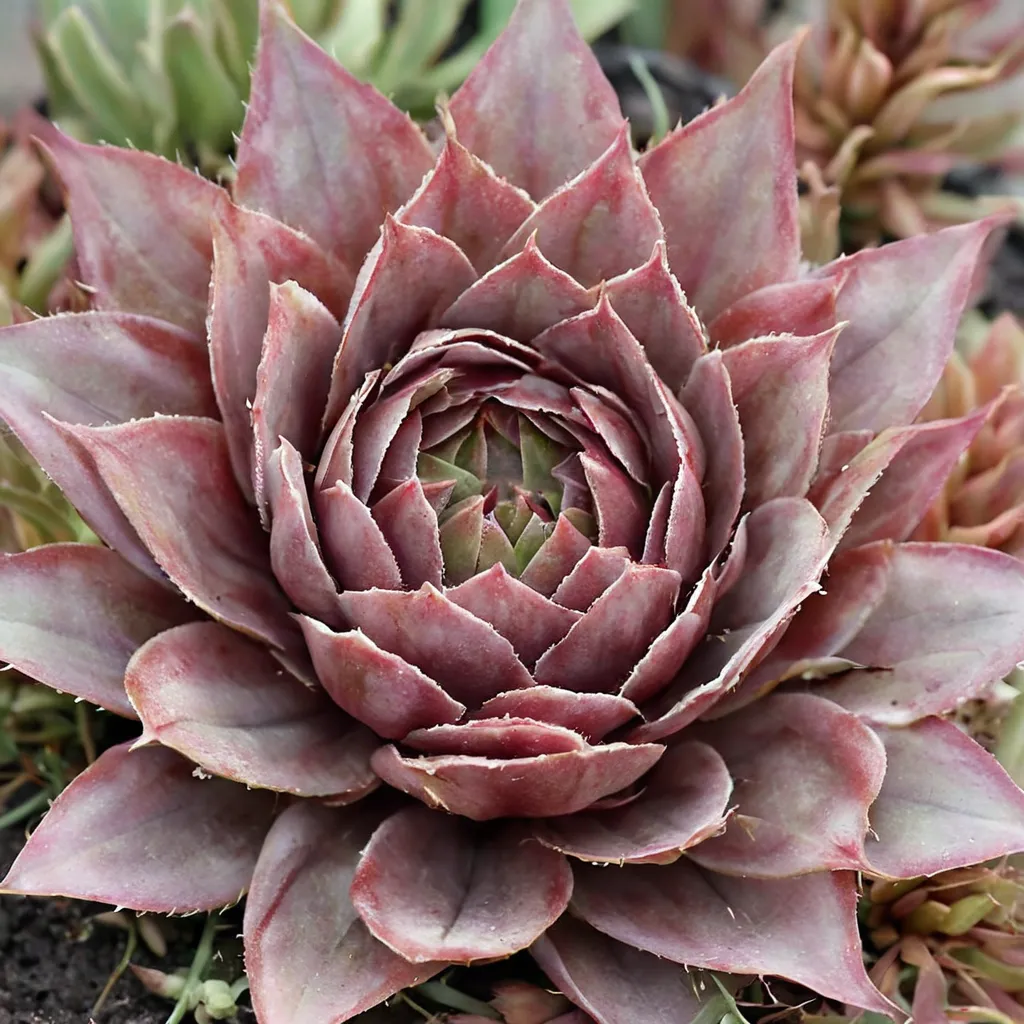
Sempervivum Red Beauty
Sempervivum x hybrida 'Red Beauty'
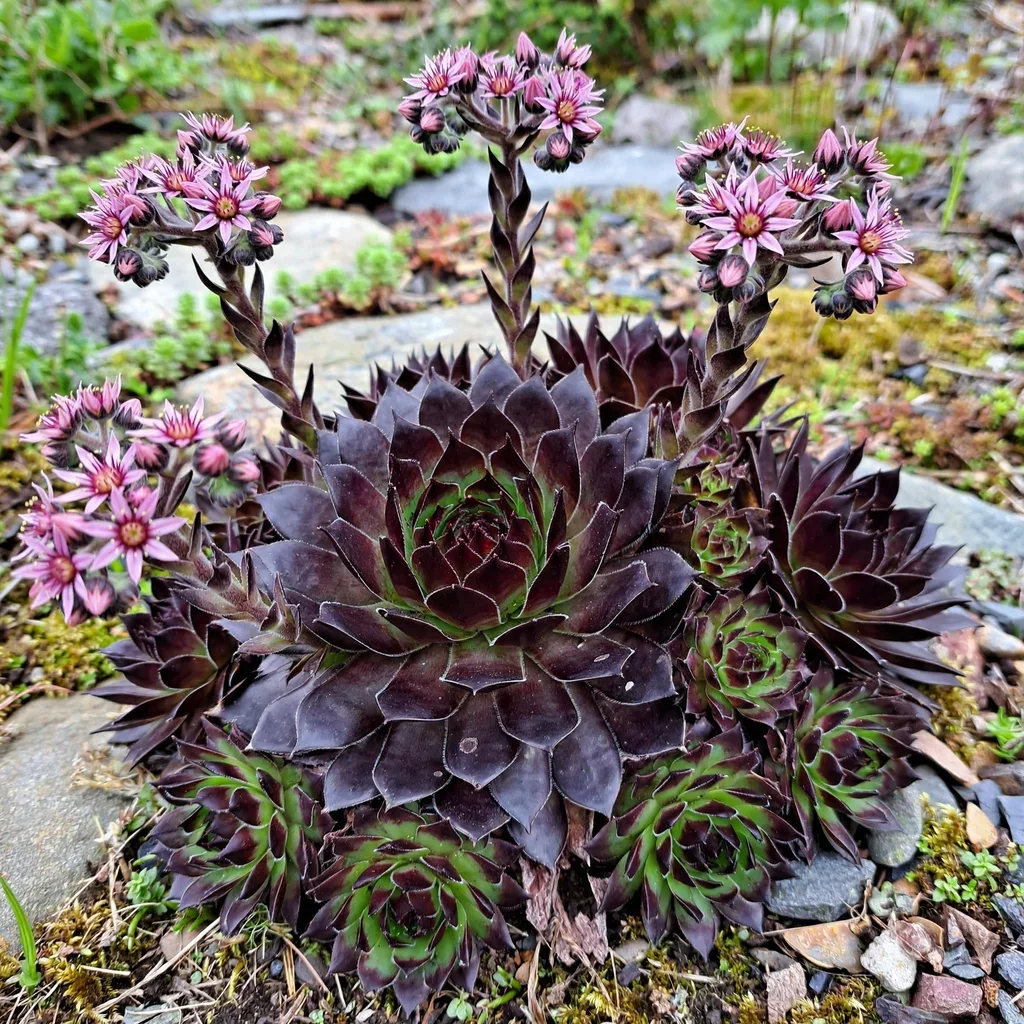
Black Hens and Chicks
Sempervivum tectorum 'Black'
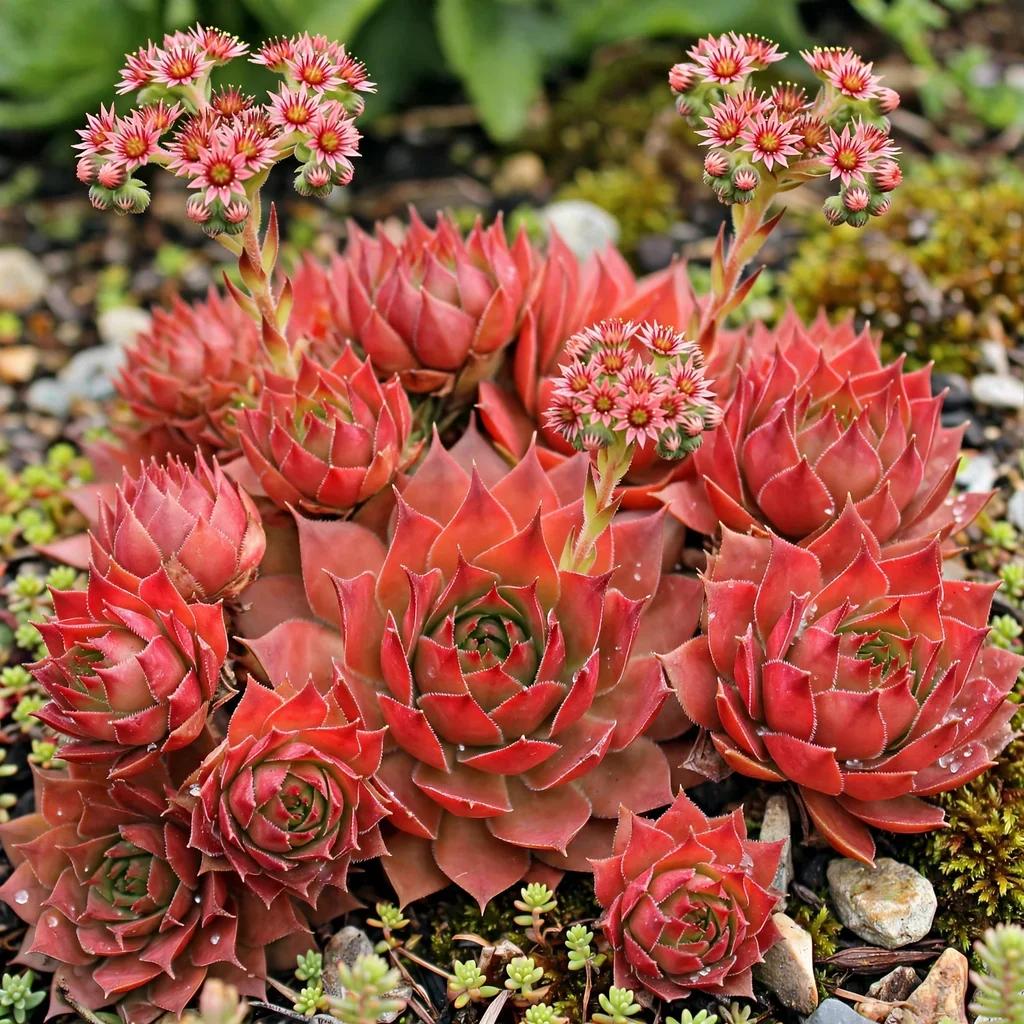
Coral Red Hens and Chicks
Sempervivum tectorum 'Coral Red'
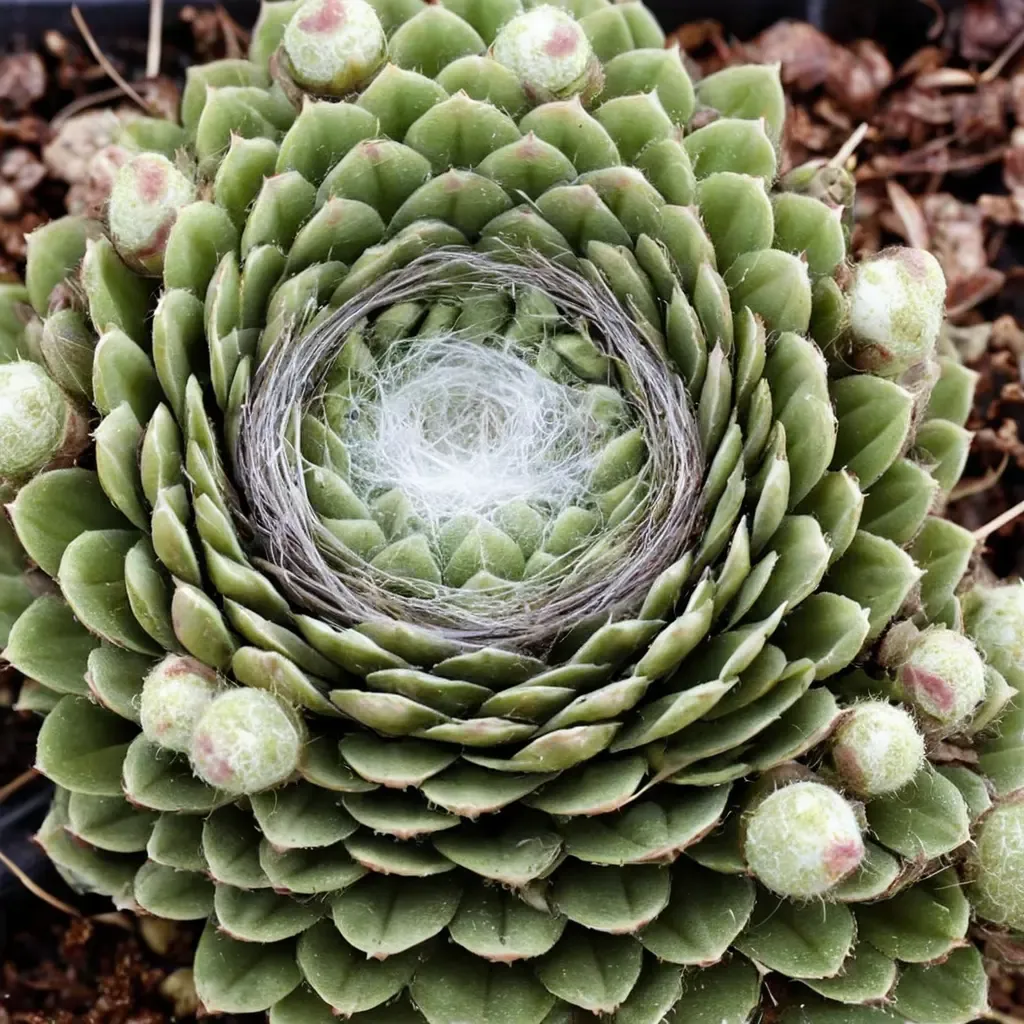
Forest Frost Hens and Chicks
Sempervivum tectorum 'Forest Frost'
Keep exploring
Explore the genus
Grow Hens and Chicks with confidence
See it in a design of your actual yard, get zone-matched care reminders, and track it season by season in your garden journal.