The Story
Plant Bio
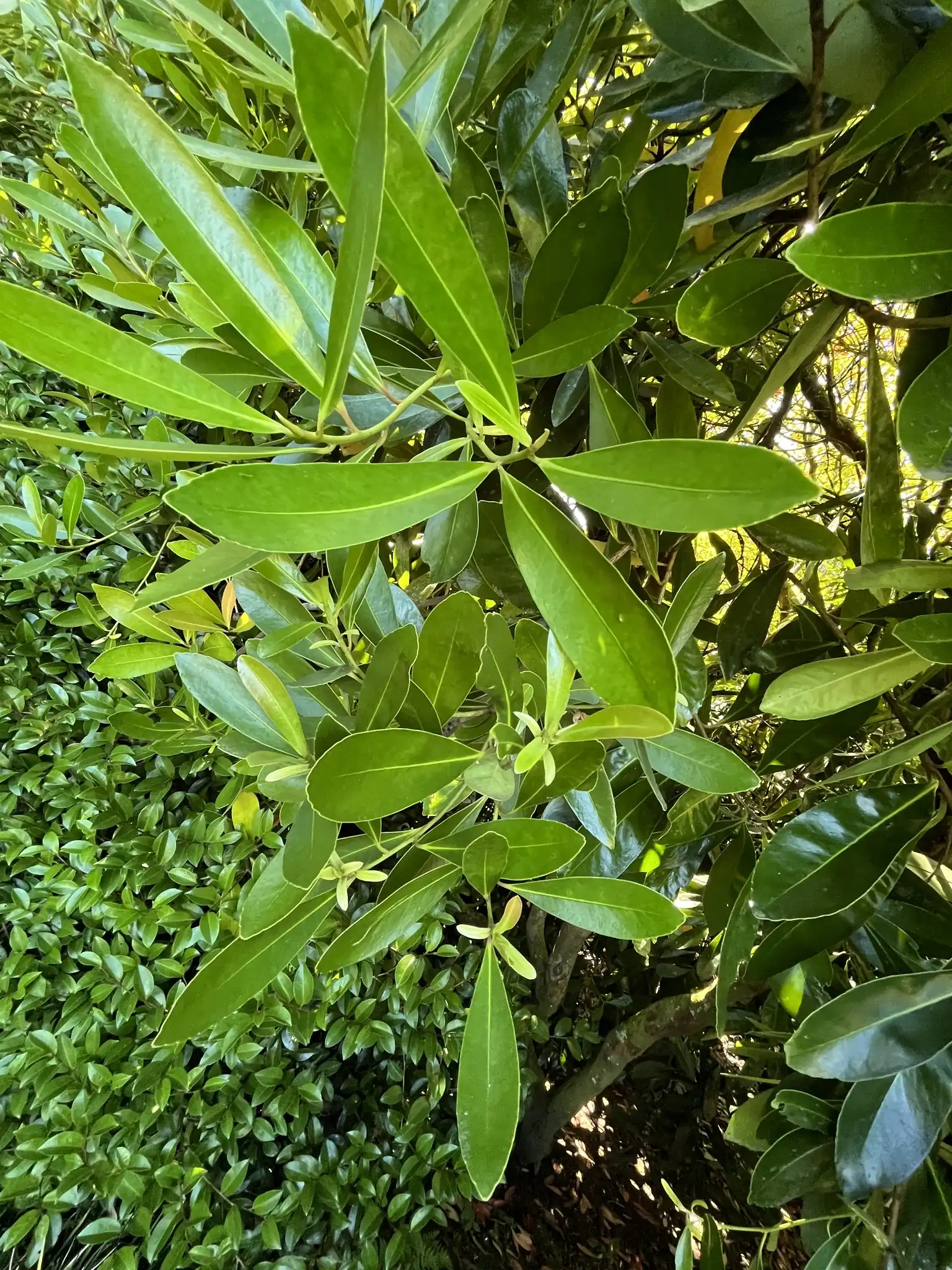
Corynocarpus laevigatus, commonly known as New Zealand laurel, is a dense, upright evergreen tree that reaches heights of thirty to fifty feet in mild coastal gardens. It features large, leathery, oblong leaves with a highly polished, dark green surface that provides a thick, structural canopy year-round.
The inconspicuous, greenish-cream flowers emerge on erect panicles in spring, followed by large, orange-fleshed fruits containing a single seed. Both the fruit pulp and the kernel contain karakin, a highly toxic glucoside that poses severe safety risks to humans and pets if ingested raw.
Uses & Benefits:
Essentials
At a Glance
Plant Type
Tree
Height
400"
Width
350"
Light
Full Sun, Partial Sun, Shade
Zones
9, 10
Water
Low to moderate
Humidity
High
Lifespan
Long-lived
Native To
New Zealand
Toxicity
Highly toxic to humans and pets
Bloom period
Spring
In flower about 3 months of the year
Planting
How to Grow
- Select a planting site with well-draining sandy or loamy soil in full sun to deep shade.
- Dig a hole twice as wide as the root ball and of equal depth to prevent settling.
- Backfill with native soil, press firmly to eliminate air pockets, and water deeply to settle the roots.
- Apply a thick layer of organic mulch around the base, keeping it clear of the trunk to prevent rot.
Pro Tip
Prune only to shape or manage canopy size, avoiding heavy shearing into old, leafless wood which lacks the active buds needed for rapid recovery.
Keep It Thriving
Care Guide
Do
- Water regularly during the first two growing seasons to establish a deep root system.
- Wear gloves when handling or pruning to avoid contact with any sap or fallen fruit.
- Plant in a sheltered microclimate if growing near the limit of its frost tolerance.
Don't
- Do not plant near dog runs, livestock pastures, or children's play areas due to the highly toxic seeds.
- Do not shear the outer canopy heavily, as this removes the glossy foliage and exposes bare inner branches.
- Do not allow the soil to remain waterlogged, which can trigger root decline.
Seasonal Care Calendar
| Task | Jan | Feb | Mar | Apr | May | Jun | Jul | Aug | Sep | Oct | Nov | Dec |
|---|---|---|---|---|---|---|---|---|---|---|---|---|
| Pest Check | ||||||||||||
| Propagate | ||||||||||||
| Prune | ||||||||||||
| Winter Prep |
Watch Out For
Pests & Diseases
Common Pests
Common Diseases
In the Garden
Landscape Uses & Companions
Landscape Uses
Companion Plants
Multiply
Propagation Methods
Good to Know
Common Questions
New Zealand Laurel questions
What zones can New Zealand Laurel grow in?
New Zealand Laurel is hardy in USDA Zones 9–10. Inside that range it survives winter in the ground; outside it, grow it as an annual or a container plant you protect.
When does New Zealand Laurel bloom?
New Zealand Laurel typically blooms in spring through spring. Exact timing shifts a week or two with your zone — Sow's bloom calendar maps it to your garden.
Does New Zealand Laurel need full sun?
New Zealand Laurel does best in full sun to part shade. In hot climates, afternoon shade keeps blooms fresher longer.
Is New Zealand Laurel drought tolerant?
Yes — once established (usually after the first full season), New Zealand Laurel handles dry spells with minimal watering. Water deeply its first year to build the root system that makes that possible.
Keep exploring
Explore the genus
Hardy in your zone?
Grow New Zealand Laurel with confidence
See it in a design of your actual yard, get zone-matched care reminders, and track it season by season in your garden journal.