The Story
Plant Bio
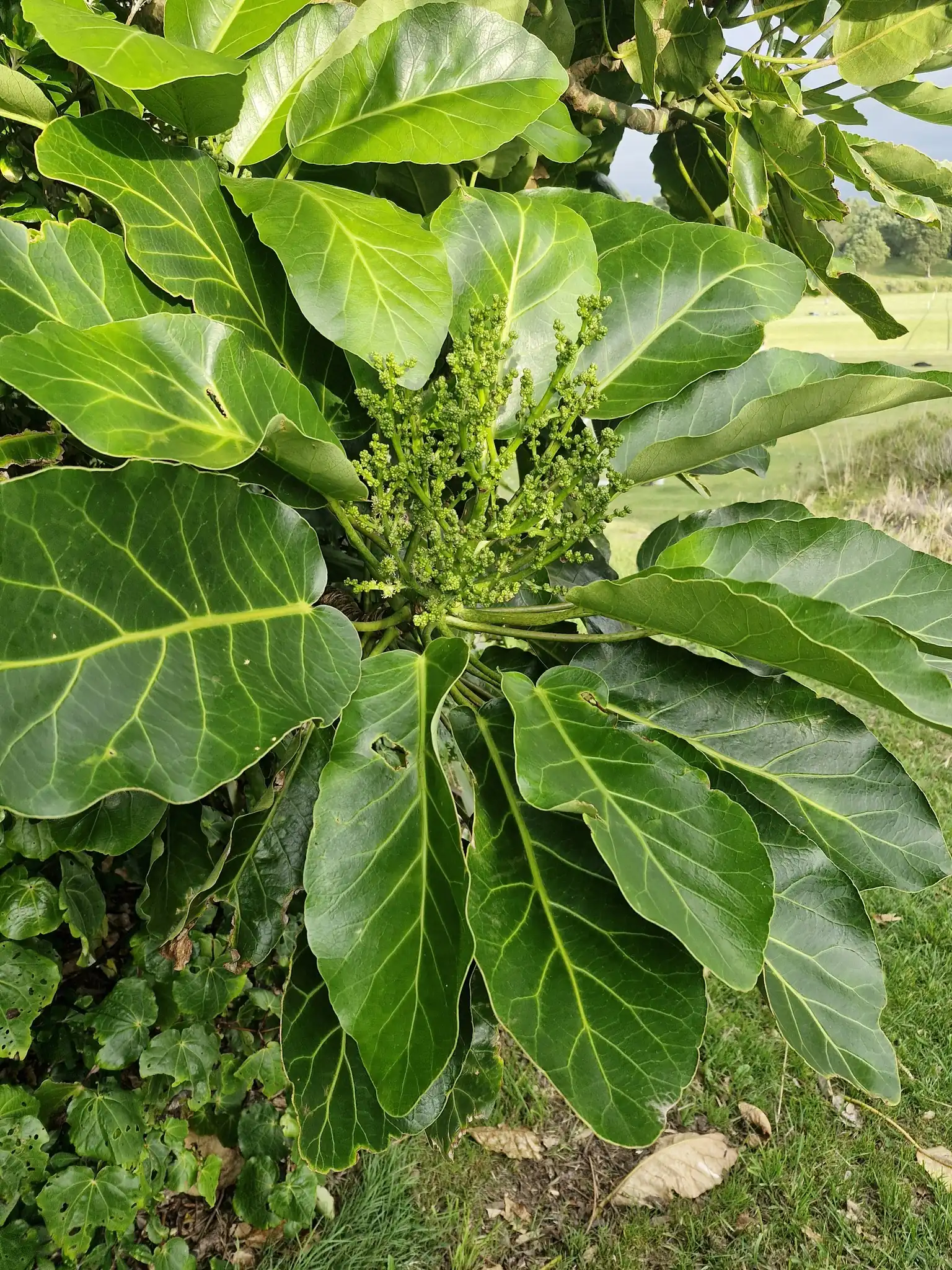
Meryta sinclairii is a small evergreen tree native to the Three Kings Islands of New Zealand, characterized by a rounded, compact crown and thick, brittle branches. The foliage consists of exceptionally large, leathery, paddle-shaped glossy green leaves that crowd at the ends of the branchlets.
The massive leaves can reach up to twenty inches in length, emerging as bright green before maturing to a deep, lustrous shade. In fall and winter, the tree produces erect terminal panicles of small, greenish-white flowers.
Uses & Benefits:
Essentials
At a Glance
Plant Type
Tree
Height
315"
Width
197"
Light
Full Sun, Partial Sun
Zones
9, 10
Water
Moderate
Humidity
High
Lifespan
Long-lived
Native To
New Zealand
Toxicity
Non-toxic
Bloom period
Fall – Winter
In flower about 6 months of the year
Planting
How to Grow
- Select a planting site with full sun to partial shade and excellent soil drainage.
- Dig a hole twice as wide as the root ball and of equal depth, ensuring the soil is loose.
- Gently settle the plant into the hole, keeping the soil level even with the nursery container line.
- Water thoroughly to settle the soil, then establish a regular watering schedule until the root system is established.
Pro Tip
Never cut back hard into old, leafless wood, as the plant lacks the ability to regenerate from bare stems; restrict pruning to removing dead or broken branches.
Keep It Thriving
Care Guide
Do
- Water regularly to maintain consistent soil moisture, especially during dry spells.
- Apply a balanced, slow-release fertilizer lightly in the spring.
- Plant in a sheltered coastal location to protect the large leaves from severe wind damage.
Don't
- Do not allow the soil to become waterlogged, as the roots are highly susceptible to rot.
- Do not prune hard into old, leafless wood.
- Do not over-fertilize, which can stress the plant.
Seasonal Care Calendar
| Task | Jan | Feb | Mar | Apr | May | Jun | Jul | Aug | Sep | Oct | Nov | Dec |
|---|---|---|---|---|---|---|---|---|---|---|---|---|
| Fertilize | ||||||||||||
| Pest Check | ||||||||||||
| Prune | ||||||||||||
| Winter Prep |
Watch Out For
Pests & Diseases
Common Pests
Common Diseases
In the Garden
Landscape Uses & Companions
Landscape Uses
Companion Plants
Multiply
Propagation Methods
Good to Know
Common Questions
Puka questions
What zones can Puka grow in?
Puka is hardy in USDA Zones 9–10. Inside that range it survives winter in the ground; outside it, grow it as an annual or a container plant you protect.
When does Puka bloom?
Puka typically blooms in fall through winter. Exact timing shifts a week or two with your zone — Sow's bloom calendar maps it to your garden.
Does Puka need full sun?
Puka does best in full sun to part shade. In hot climates, afternoon shade keeps blooms fresher longer.
Is Puka drought tolerant?
Yes — once established (usually after the first full season), Puka handles dry spells with minimal watering. Water deeply its first year to build the root system that makes that possible.
Keep exploring
Explore the genus
Hardy in your zone?
Grow Puka with confidence
See it in a design of your actual yard, get zone-matched care reminders, and track it season by season in your garden journal.