
Garden hybrid
This is a garden hybrid, bred from more than one wild species, so it has no single species page of its own.
The Story
Plant Bio
A vigorous hybrid pear tree, resulting from a cross between a European and an Asian pear, known for its heavy production of large, crisp fruit.
'Kieffer' is highly resistant to fire blight, making it a reliable choice in areas where this disease is prevalent. The fruit is firm and excellent for canning, baking, and preserves.
Uses & Benefits:
Bred from more than one wild species, so it has no species page of its own.
Essentials
At a Glance
Plant Type
Tree
Height
240"
Width
240"
Light
Full Sun
Zones
4, 5, 6, 7, 8, 9
Water
Moderate
Humidity
Moderate
Lifespan
30-50 years
Native To
Hybrid
Toxicity
Non-toxic
Bloom period
Mid-spring – Late spring
In flower about 2 months of the year
Marketplace
Where to Buy
Shipping costs Year-round shipping Free shipping
Planting
How to Grow
- Choose a location with at least six hours of direct sunlight daily.
- Dig a hole twice as wide and just as deep as the root ball.
- Amend heavy clay or poor soil with compost before planting.
- Set the tree in the hole, ensuring the graft union is above soil level.
- Backfill the hole with native soil, firming it gently around the roots.
- Water thoroughly after planting and apply a 2-3 inch layer of mulch.
Pro Tip
Plant with another pear variety like 'Bartlett' for improved pollination and heavier fruit set, though 'Kieffer' is partially self-fertile.
Keep It Thriving
Care Guide
Do
- Provide consistent water, especially during fruit development.
- Prune annually in late winter to remove dead wood and improve structure.
- Thin fruit clusters in early summer to encourage larger individual pears.
- Monitor regularly for signs of pests and diseases.
- Test soil pH and amend if necessary to maintain a slightly acidic level.
Don't
- Do not over-fertilize with nitrogen, which can promote weak growth.
- Avoid planting in poorly drained soil where roots can rot.
- Don't allow grass or weeds to compete within the tree's dripline.
- Never prune heavily in summer, as it can stress the tree.
- Do not wait for pears to ripen on the tree; harvest firm and ripen indoors.
Seasonal Care Calendar
| Task | Jan | Feb | Mar | Apr | May | Jun | Jul | Aug | Sep | Oct | Nov | Dec |
|---|---|---|---|---|---|---|---|---|---|---|---|---|
| Fertilize | ||||||||||||
| Harvest | ||||||||||||
| Prune | ||||||||||||
| Spray |
Watch Out For
Pests & Diseases
Common Pests
Common Diseases
In the Garden
Landscape Uses & Companions
Landscape Uses
Companion Plants
Multiply
Propagation Methods
Good to Know
Common Questions
Kieffer Pear questions
What zones can Kieffer Pear grow in?
Kieffer Pear is hardy in USDA Zones 4–9. Inside that range it survives winter in the ground; outside it, grow it as an annual or a container plant you protect.
Is Kieffer Pear deer resistant?
Not reliably. Deer may browse Kieffer Pear, especially tender spring growth — plan on repellents or fencing where pressure is high.
When does Kieffer Pear bloom?
Kieffer Pear typically blooms in mid-spring through late spring. Exact timing shifts a week or two with your zone — Sow's bloom calendar maps it to your garden.
Does Kieffer Pear need full sun?
Kieffer Pear does best in full sun (6+ hours).
Is Kieffer Pear drought tolerant?
Yes — once established (usually after the first full season), Kieffer Pear handles dry spells with minimal watering. Water deeply its first year to build the root system that makes that possible.
More Pyrus to compare
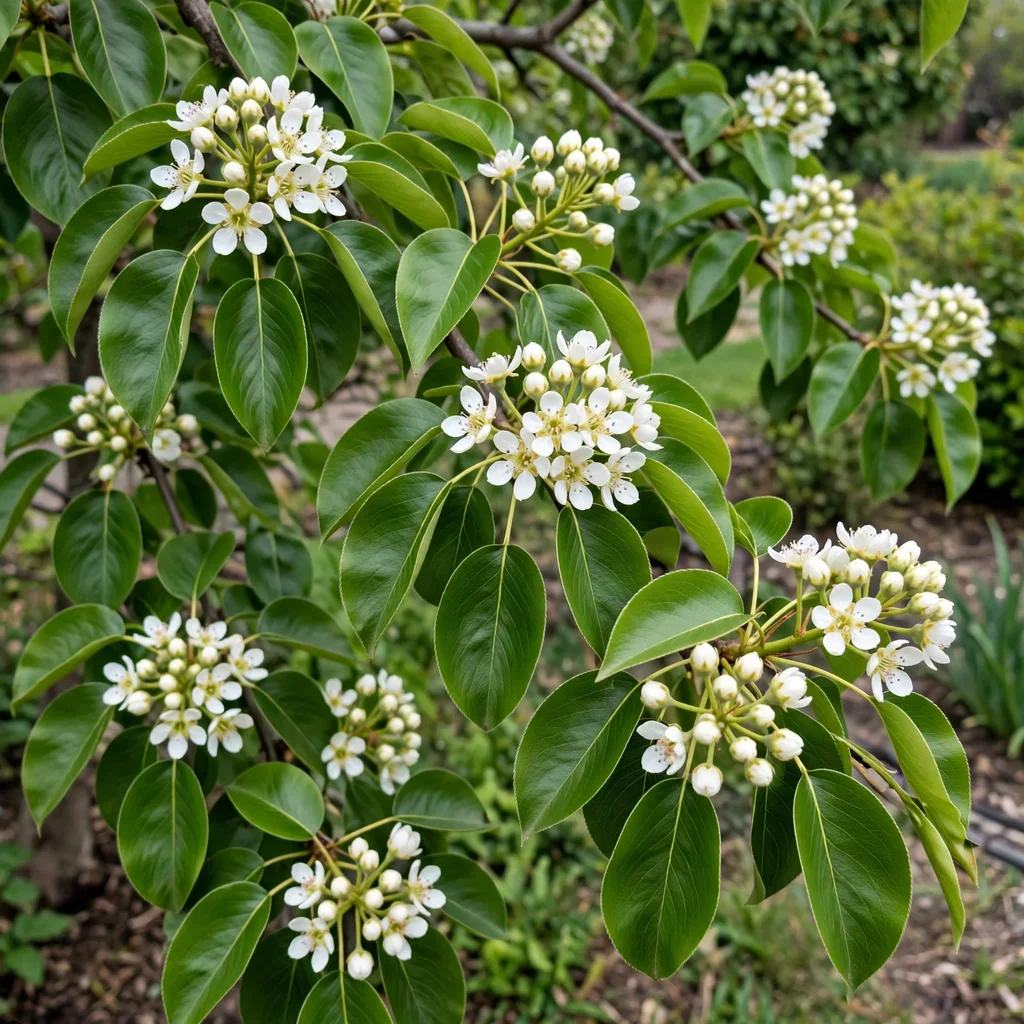
Drippin' Honey Pear
Pyrus calleryana 'Drippin' Honey'
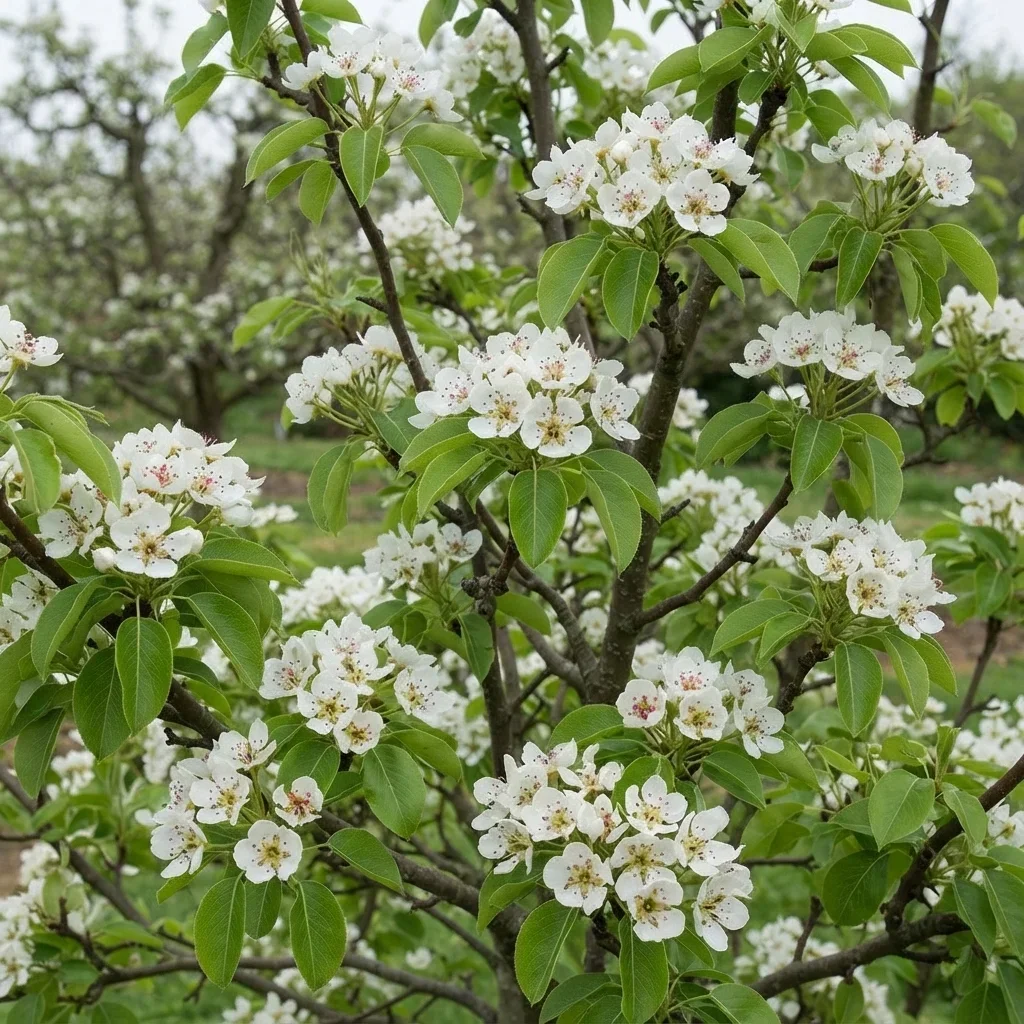
Bartlett Pear
Pyrus communis 'Bartlett'
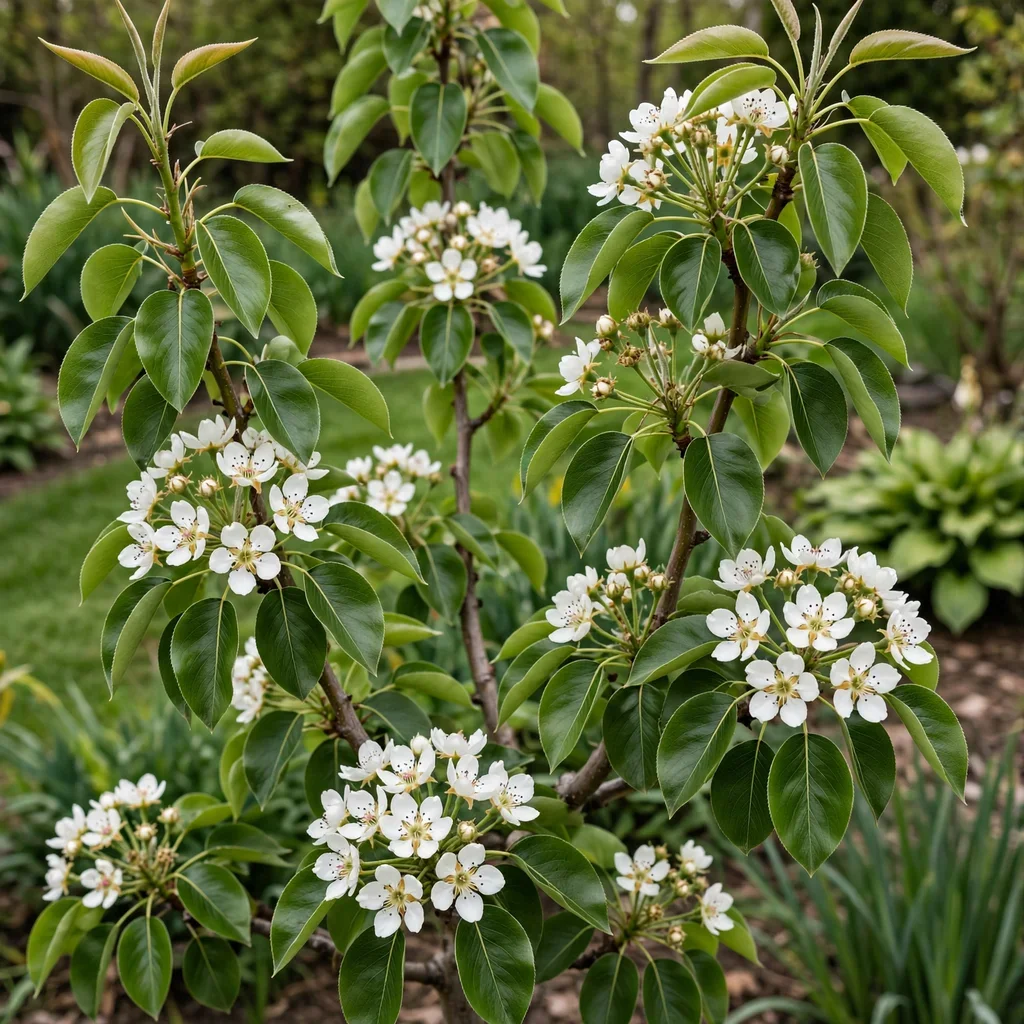
Apricot Sugar Pear
Pyrus communis 'Apricot Sugar Pearls Reachables'
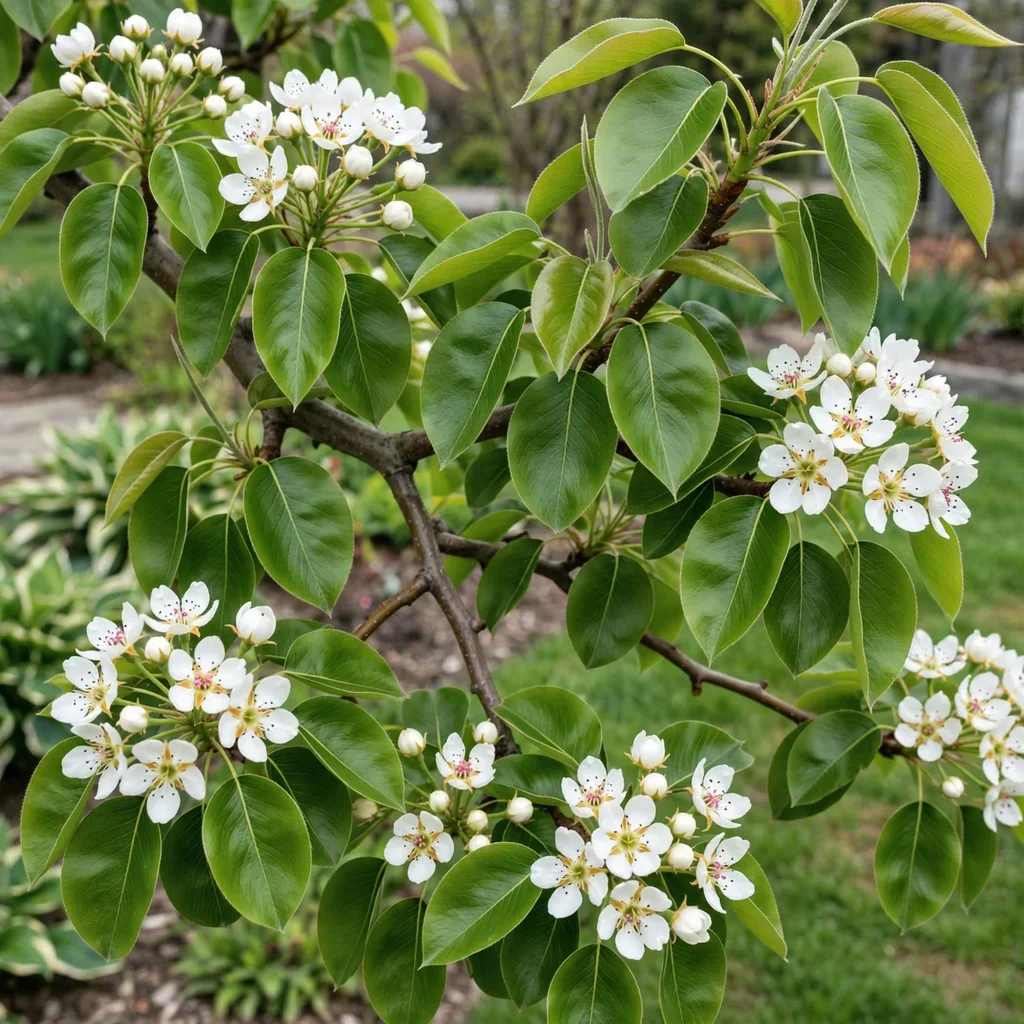
Crisp 'n Sweet Pear
Pyrus communis 'Crisp 'n Sweet'
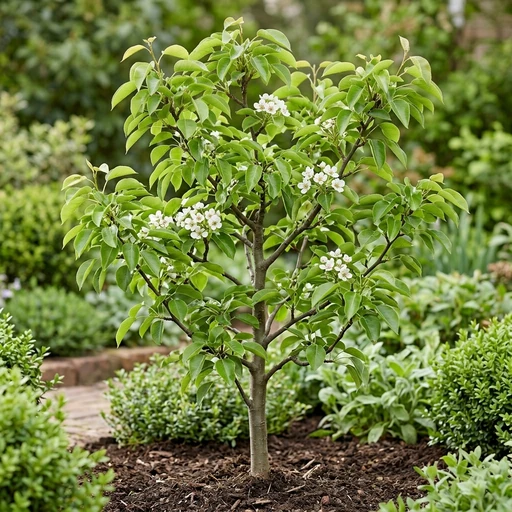
Hosui Asian Pear
Pyrus pyrifolia 'Hosui'
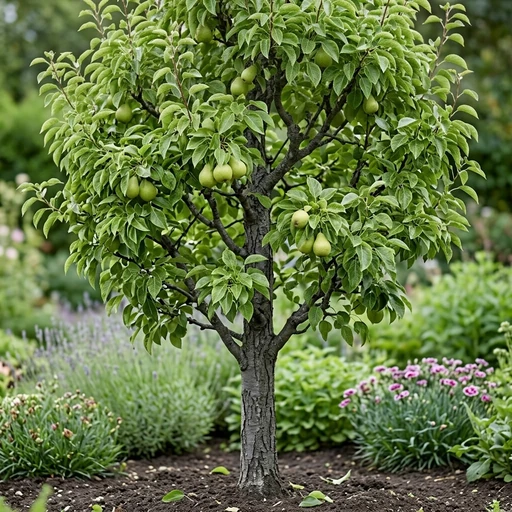
Moonglow Pear
Pyrus communis 'Moonglow'
Keep exploring
Explore the genus
Grow Kieffer Pear with confidence
See it in a design of your actual yard, get zone-matched care reminders, and track it season by season in your garden journal.