The Story
Plant Bio
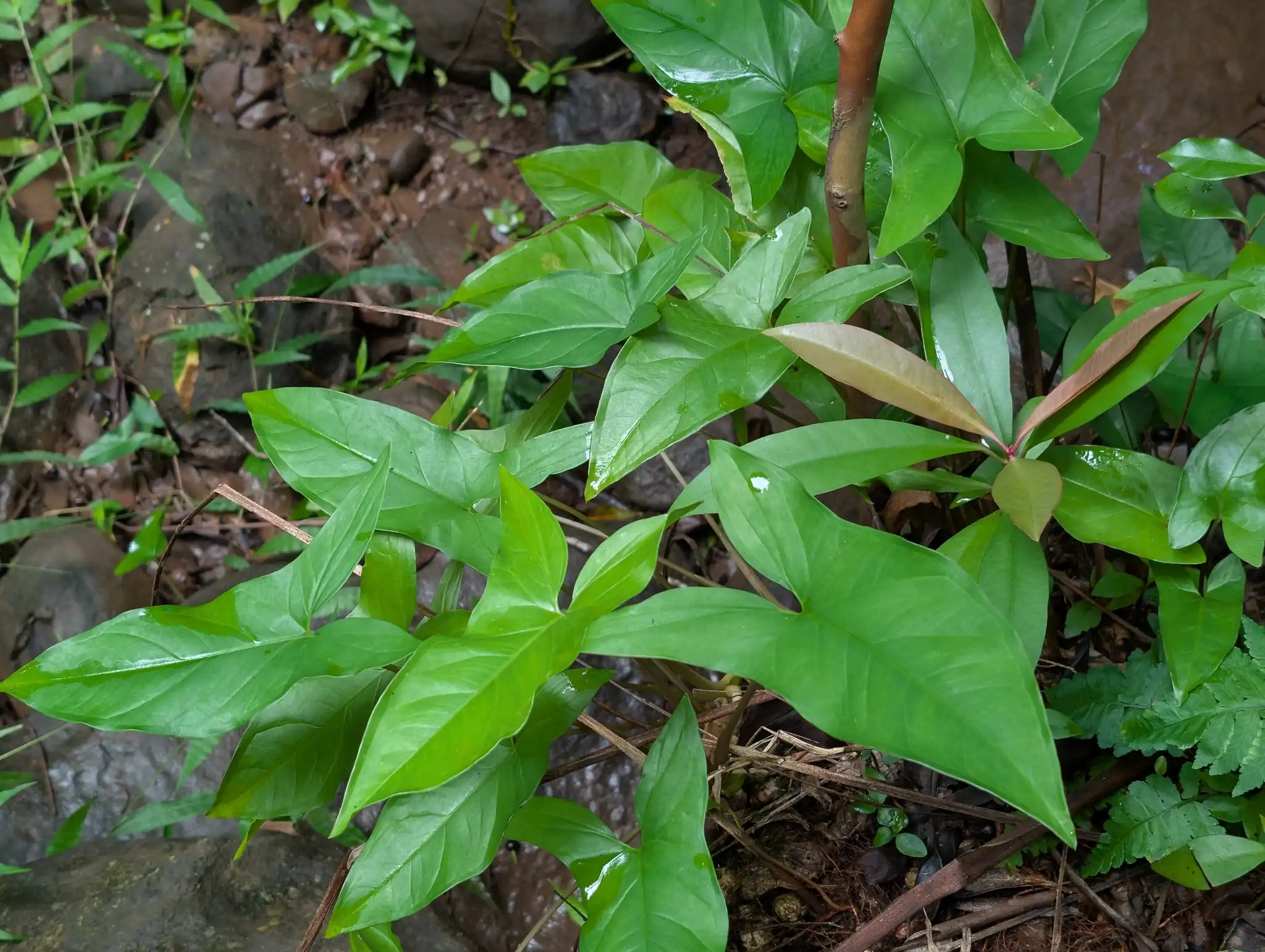
Syngonium podophyllum is an evergreen hemiepiphytic vine from Central and South America, widely grown indoors for its creeping or climbing habit. The juvenile foliage is distinctly arrow-shaped and often variegated, but transitions to deeply lobed, multi-leaflet mature leaves as the stems climb via aerial roots.
The species exhibits extreme heteroblasty, meaning the juvenile and mature leaf forms look so different they are frequently mistaken for separate species. In cultivation, the plant rarely produces its greenish-white spathe-and-spadix inflorescences, remaining a strictly foliage-focused subject.
Uses & Benefits:
Essentials
At a Glance
Plant Type
Tropical
Height
60"
Width
40"
Light
Partial Sun, Shade
Zones
10
Water
Medium
Humidity
High (60% or higher)
Lifespan
Perennial
Native To
Central and South America
Toxicity
Toxic if ingested; contains calcium oxalate crystals
Bloom period
Summer
In flower about 3 months of the year
Planting
How to Grow
- Select a container with excellent drainage and fill with a rich, organic, peat-based potting mix.
- Position the plant in bright, indirect light, avoiding direct afternoon sun which scorches the foliage.
- Water thoroughly when the top inch of soil feels dry, ensuring excess water drains away completely.
- Provide a moss pole or trellis if climbing growth is desired, or allow stems to trail from a hanging basket.
Pro Tip
Prune leggy stems just above a leaf node in spring to encourage bushy growth; cutting back too hard into old, leafless woody stems can prevent new nodes from activating.
Keep It Thriving
Care Guide
Do
- Keep ambient humidity high, ideally above sixty percent, to prevent leaf tip browning.
- Wipe the leaves periodically with a damp cloth to remove dust and maintain photosynthesis.
- Apply a balanced water-soluble fertilizer at half strength monthly during spring and summer.
Don't
- Do not overwater or allow the pot to sit in standing water, which rapidly induces root rot.
- Avoid placing variegated cultivars in deep shade, as they will revert to solid green.
- Do not handle the plant or prune without gloves if you have sensitive skin, as the sap causes irritation.
Seasonal Care Calendar
| Task | Jan | Feb | Mar | Apr | May | Jun | Jul | Aug | Sep | Oct | Nov | Dec |
|---|---|---|---|---|---|---|---|---|---|---|---|---|
| Fertilize | ||||||||||||
| Pest Check | ||||||||||||
| Prune | ||||||||||||
| Winter Prep |
Watch Out For
Pests & Diseases
Common Pests
Common Diseases
In the Garden
Landscape Uses & Companions
Landscape Uses
Companion Plants
Multiply
Propagation Methods
Good to Know
Common Questions
Arrowhead Vine questions
What zones can Arrowhead Vine grow in?
Arrowhead Vine is hardy in USDA Zone 10. Inside that range it survives winter in the ground; outside it, grow it as an annual or a container plant you protect.
Is Arrowhead Vine deer resistant?
Yes — Arrowhead Vine is rated deer-resistant. Deer typically pass it over, though extreme hunger can override any plant's defenses.
When does Arrowhead Vine bloom?
Arrowhead Vine typically blooms in summer through summer. Exact timing shifts a week or two with your zone — Sow's bloom calendar maps it to your garden.
Does Arrowhead Vine need full sun?
Arrowhead Vine does best in part shade.
Keep exploring
Explore the genus
Hardy in your zone?
Grow Arrowhead Vine with confidence
See it in a design of your actual yard, get zone-matched care reminders, and track it season by season in your garden journal.