1 named cultivar

The Story
Plant Bio
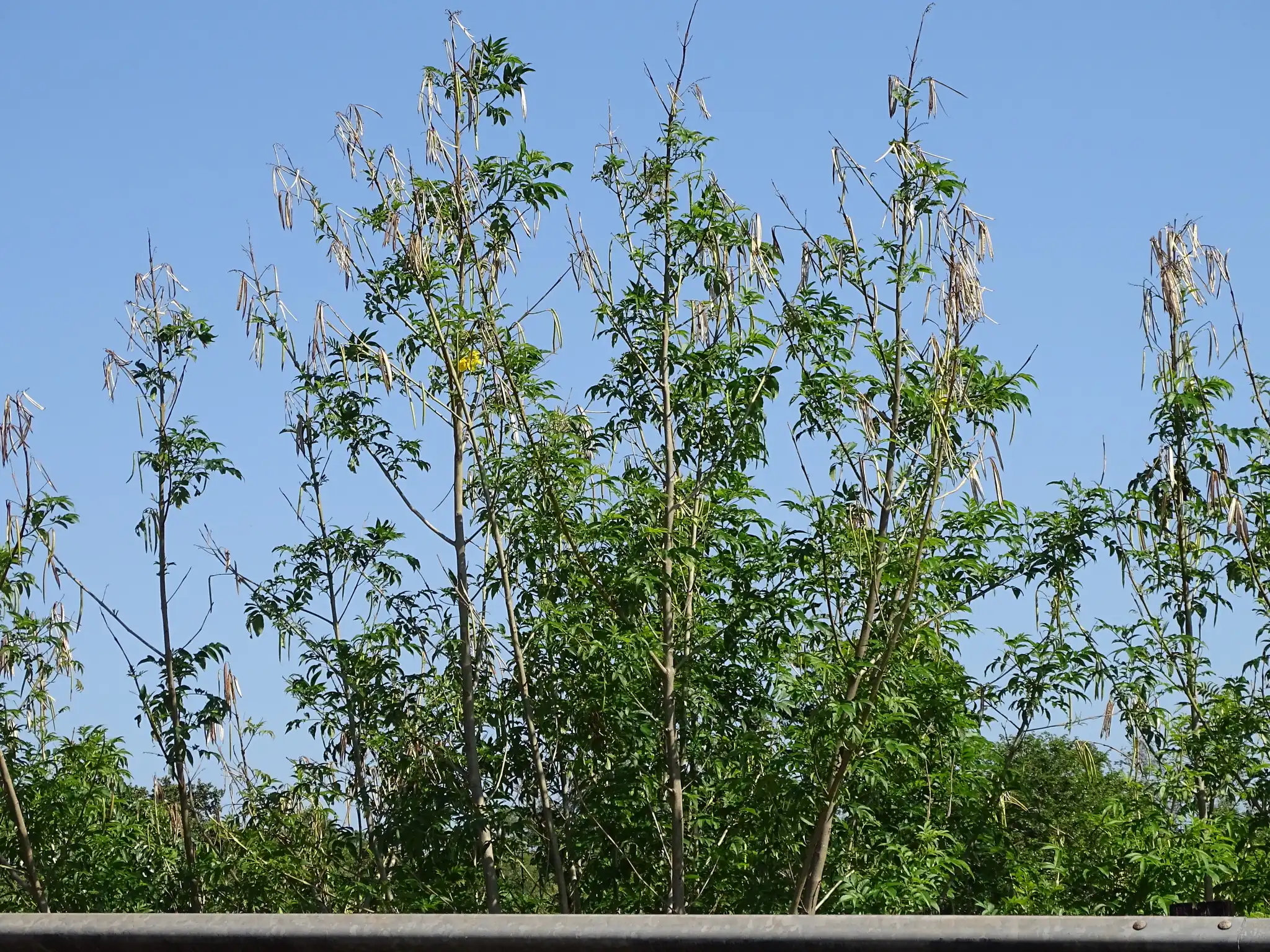
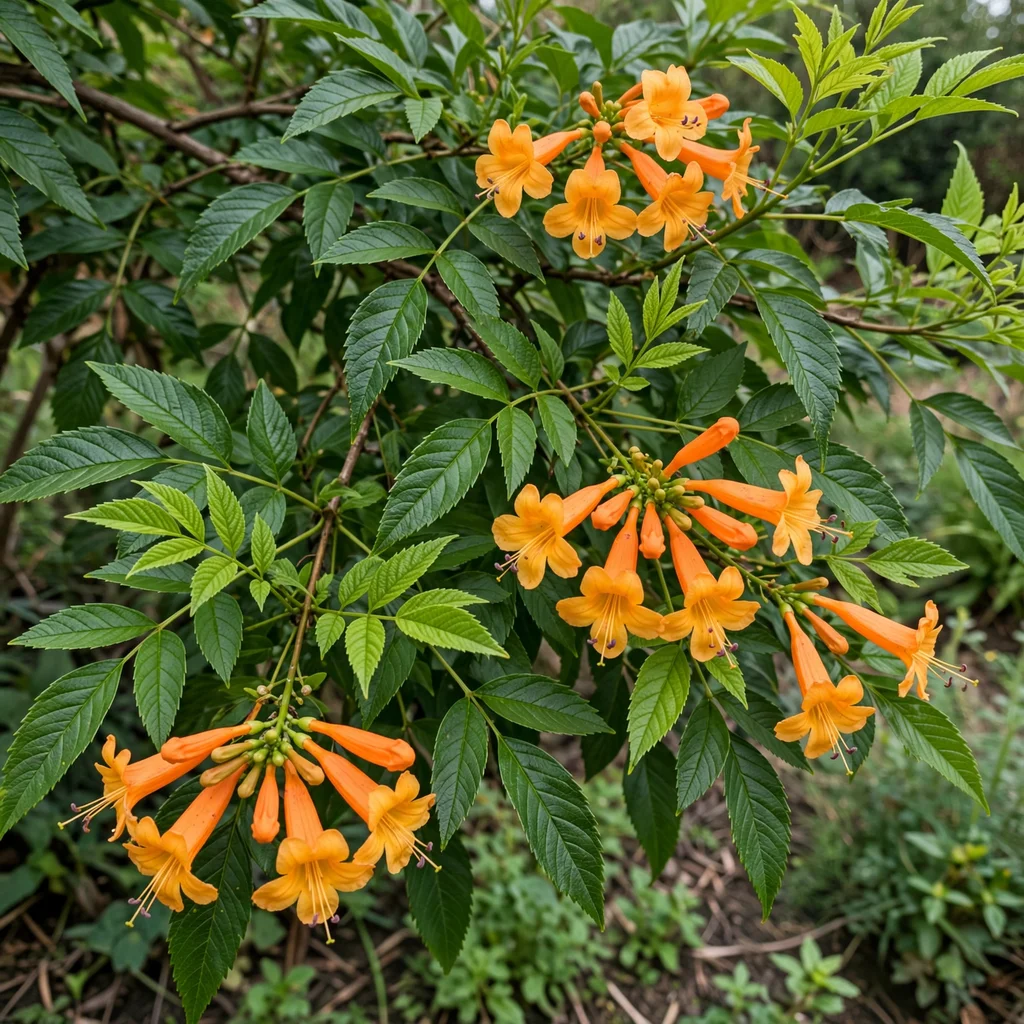
Tecoma stans, yellow bells or esperanza, is a broadleaf evergreen shrub or small tree native from the southwestern United States through the tropical Americas, reaching three to twenty-five feet depending on climate and pruning. Bright green pinnate leaves clothe thin green twigs that redden with age, and clusters of trumpet-shaped golden-yellow flowers open from spring to autumn.
It flowers on new wood almost continuously in heat, so the harder you cut it back the more it blooms — in frost-free gardens it is usually pruned annually to keep it shrubby rather than letting it reach tree size. In colder zones it dies to the ground and returns, behaving as a perennial. Hummingbirds work it heavily, and it is the state flower of the US Virgin Islands.
Uses & Benefits:
Essentials
At a Glance
Plant Type
Shrub
Height
144"
Width
60"
Light
Full Sun, Partial Sun
Zones
6, 7, 8, 9
Water
Low
Humidity
Low
Lifespan
Perennial
Native To
Southwestern United States to the tropical Americas
Toxicity
Non-toxic
Planting
How to Grow
- Plant in full sun in freely drained soil.
- Water while establishing, then only in drought.
- Cut back hard in late winter to keep it shrubby.
- Deadhead spent clusters to prolong flowering.
- Expect it to die back and return in zone 8.
- Avoid rich feeding, which favours leaf over flower.
Pro Tip
It flowers on new growth, so hard annual pruning increases the display rather than costing it — the opposite of most flowering shrubs.
Keep It Thriving
Care Guide
Do
- Give it full sun and heat ☀️
- Cut it back hard each late winter ✂️
- Deadhead to keep flowers coming 🌼
- Plant it where hummingbirds visit 🐦
Don't
- Feed it richly ❌
- Let it sit in wet soil ❌
- Expect flowers in shade ❌
Seasonal Care Calendar
| Task | Jan | Feb | Mar | Apr | May | Jun | Jul | Aug | Sep | Oct | Nov | Dec |
|---|---|---|---|---|---|---|---|---|---|---|---|---|
| Enjoy | ||||||||||||
| Prune |
Watch Out For
Pests & Diseases
Common Pests
Common Diseases
In the Garden
Landscape Uses & Companions
Landscape Uses
Companion Plants
Multiply
Propagation Methods
Good to Know
Common Questions
Yellow Bells questions
What zones can Yellow Bells grow in?
Yellow Bells is hardy in USDA Zones 6–9. Inside that range it survives winter in the ground; outside it, grow it as an annual or a container plant you protect.
Is Yellow Bells deer resistant?
Yes — Yellow Bells is rated deer-resistant. Deer typically pass it over, though extreme hunger can override any plant's defenses.
When does Yellow Bells bloom?
Yellow Bells typically blooms in spring to fall through late summer. Exact timing shifts a week or two with your zone — Sow's bloom calendar maps it to your garden.
Does Yellow Bells need full sun?
Yellow Bells does best in full sun to part shade. In hot climates, afternoon shade keeps blooms fresher longer.
Is Yellow Bells drought tolerant?
Yes — once established (usually after the first full season), Yellow Bells handles dry spells with minimal watering. Water deeply its first year to build the root system that makes that possible.
More Tecoma to compare
Keep exploring
Explore the genus
Hardy in your zone?
Grow Yellow Bells with confidence
See it in a design of your actual yard, get zone-matched care reminders, and track it season by season in your garden journal.