The Story
Plant Bio
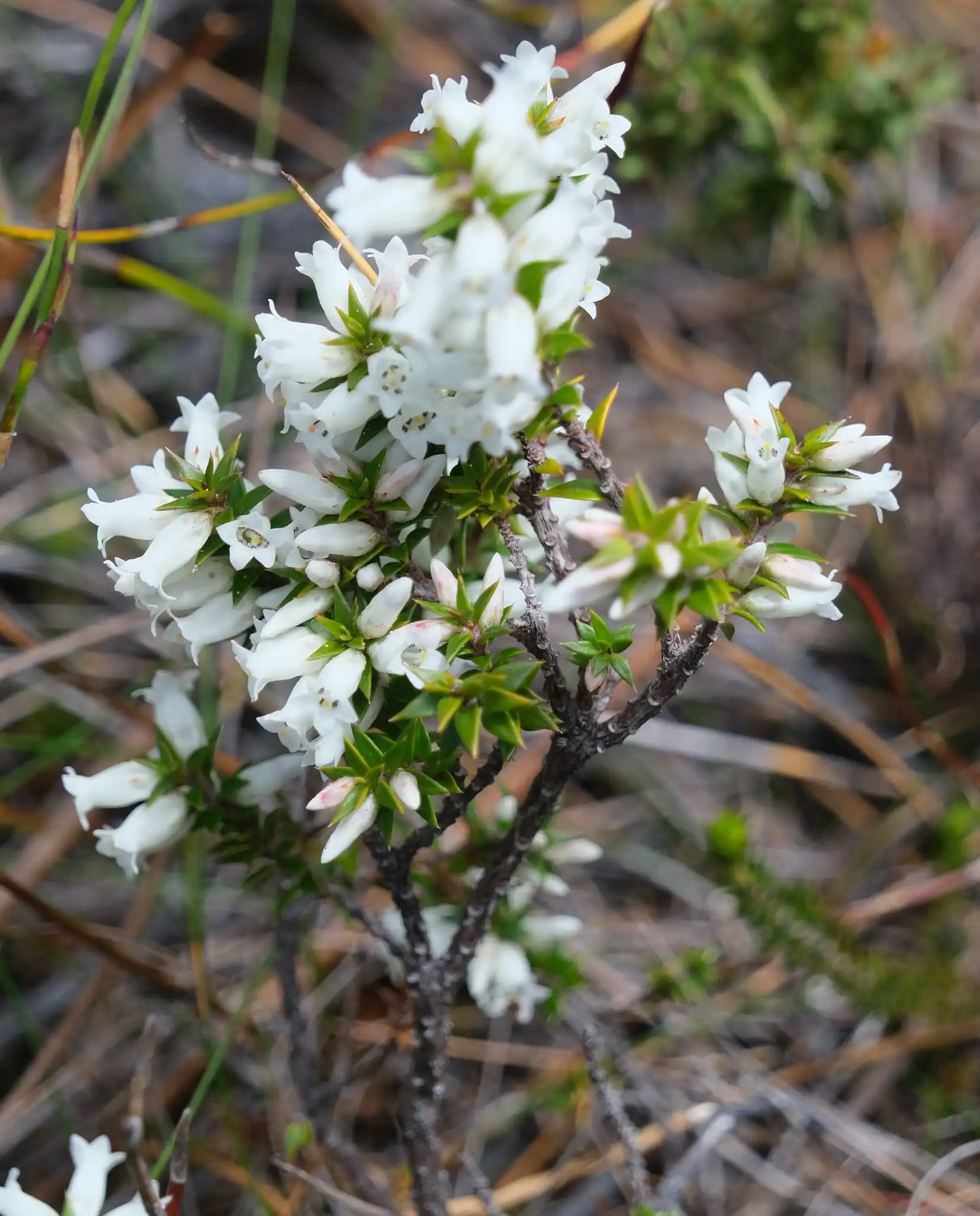
Epacris impressa, the common heath, is an upright, evergreen Australian shrub reaching about three feet in height, with stiff, wiry stems and rigid, sharply pointed leaves. The tubular, bell-shaped flowers feature five distinct indentations near the base and line the upper branches in dense, one-sided spikes from fall through spring.
This species is distinguished by its highly variable flower color, which ranges from pure white to deep crimson across wild populations. The rigid foliage features characteristic impressed veins on the upper leaf surfaces, often taking on bronze or reddish tints on new growth.
Uses & Benefits:
Essentials
At a Glance
Plant Type
Shrub
Height
39"
Width
24"
Light
Full Sun, Partial Sun
Zones
8, 9, 10
Water
Low to moderate
Humidity
Low
Lifespan
Multi-year
Native To
Australia
Toxicity
Non-toxic
Bloom period
Winter – Spring
In flower about 6 months of the year
Planting
How to Grow
- Plant in an acidic, sandy or sandy-loam soil mix with a pH between 4.5 and 6.0.
- Select a site with full sun to partial shade, providing light dappled shade in hotter climates to protect the shallow root system.
- Ensure exceptional drainage, as heavy or waterlogged soils quickly trigger fatal root rot.
- Water regularly during dry summer periods to keep the shallow roots from drying out completely.
Pro Tip
Never treat this species like a standard acid-loving shrub by adding rich compost or standard phosphorus-heavy fertilizers, which cause rapid root toxicity and death.
Keep It Thriving
Care Guide
Do
- Provide exceptional soil drainage to prevent root rot.
- Protect young plants from frost until they are fully established.
- Prune lightly immediately after flowering to maintain a bushy habit.
Don't
- Do not apply standard garden fertilizers containing phosphorus.
- Do not prune hard into old, leafless woody stems.
- Do not allow the shallow root zone to dry out completely during summer.
- Do not disturb the root system once planted.
Seasonal Care Calendar
| Task | Jan | Feb | Mar | Apr | May | Jun | Jul | Aug | Sep | Oct | Nov | Dec |
|---|---|---|---|---|---|---|---|---|---|---|---|---|
| Fertilize | ||||||||||||
| Pest Check | ||||||||||||
| Prune | ||||||||||||
| Winter Prep |
Watch Out For
Pests & Diseases
Common Pests
Common Diseases
In the Garden
Landscape Uses & Companions
Landscape Uses
Companion Plants
Multiply
Propagation Methods
Good to Know
Common Questions
Common Heath questions
What zones can Common Heath grow in?
Common Heath is hardy in USDA Zones 8–10. Inside that range it survives winter in the ground; outside it, grow it as an annual or a container plant you protect.
Is Common Heath deer resistant?
Not reliably. Deer may browse Common Heath, especially tender spring growth — plan on repellents or fencing where pressure is high.
When does Common Heath bloom?
Common Heath typically blooms in winter through spring. Exact timing shifts a week or two with your zone — Sow's bloom calendar maps it to your garden.
Does Common Heath need full sun?
Common Heath does best in full sun to part shade. In hot climates, afternoon shade keeps blooms fresher longer.
Keep exploring
Explore the genus
Hardy in your zone?
Grow Common Heath with confidence
See it in a design of your actual yard, get zone-matched care reminders, and track it season by season in your garden journal.