The Story
Plant Bio
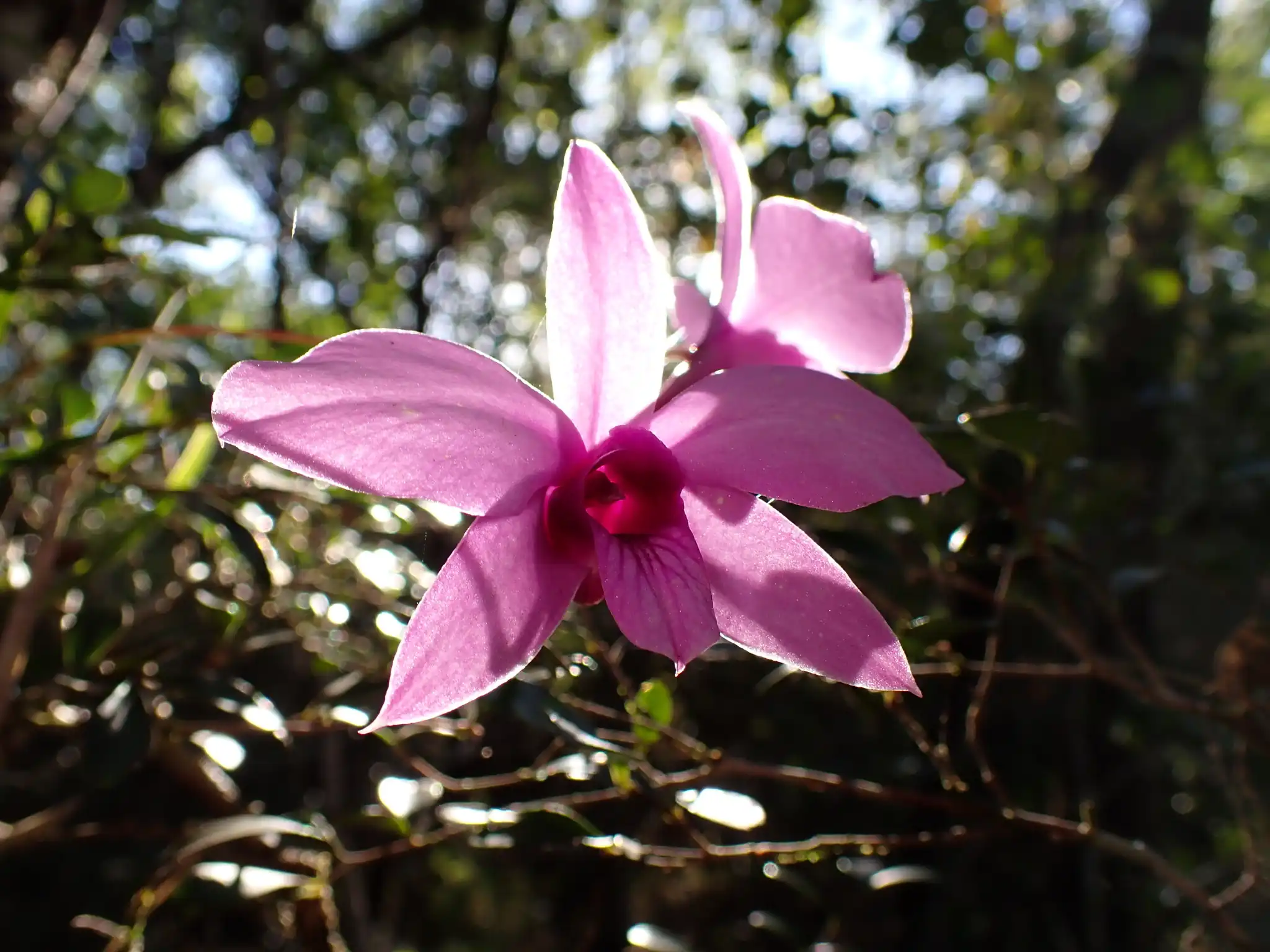
Dendrobium bigibbum is an epiphytic or lithophytic perennial orchid that forms slender clumps of erect, cylindrical pseudobulbs. The foliage consists of three to five narrow-ovate, green leaves restricted to the upper third of the stem, often displaying purplish margins.
During fall and winter, terminal racemes produce two to twenty flat, lilac-purple to mauve flowers with a characteristically darker purple labellum. This species is native to tropical regions of Oceania and requires a distinct dry winter dormancy period to thrive.
Uses & Benefits:
Essentials
At a Glance
Plant Type
Perennial
Height
47"
Width
12"
Light
Partial Sun, Shade
Zones
10
Water
Moderate in summer, dry in winter
Humidity
High (50% to 80%)
Lifespan
Perennial
Native To
Oceania (Australia, Indonesia, New Guinea)
Toxicity
Non-toxic
Bloom period
Fall – Winter
In flower about 6 months of the year
Planting
How to Grow
- Plant in an exceptionally free-draining, coarse epiphyte mix containing bark, charcoal, perlite, and coconut coir.
- Position in bright indirect light or filtered morning sun, maintaining high humidity between fifty and eighty percent.
- Water regularly during the active summer growth phase, allowing the medium to dry slightly between waterings.
- Reduce watering significantly during the cool fall and winter dormancy period to prevent root rot.
Pro Tip
Never prune away old, leafless green or gray pseudobulbs, as these back-bulbs serve as critical water and nutrient storage organs that sustain new growth.
Keep It Thriving
Care Guide
Do
- Keep the plant in a highly humid environment with good air circulation.
- Allow the potting medium to dry out almost completely during the winter rest period.
- Repot only every two to three years when the potting medium begins to break down.
Don't
- Never let the roots sit in stagnant water or poorly drained potting soil.
- Do not cut off leafless green pseudobulbs, even if they appear untidy.
- Avoid exposing the plant to temperatures below fifty-five degrees Fahrenheit or any frost.
Seasonal Care Calendar
| Task | Jan | Feb | Mar | Apr | May | Jun | Jul | Aug | Sep | Oct | Nov | Dec |
|---|---|---|---|---|---|---|---|---|---|---|---|---|
| Fertilize | ||||||||||||
| Pest Check | ||||||||||||
| Prune | ||||||||||||
| Winter Prep |
Watch Out For
Pests & Diseases
Common Pests
Common Diseases
In the Garden
Landscape Uses & Companions
Landscape Uses
Companion Plants
Multiply
Propagation Methods
Good to Know
Common Questions
Cooktown Orchid questions
What zones can Cooktown Orchid grow in?
Cooktown Orchid is hardy in USDA Zone 10. Inside that range it survives winter in the ground; outside it, grow it as an annual or a container plant you protect.
When does Cooktown Orchid bloom?
Cooktown Orchid typically blooms in fall through winter. Exact timing shifts a week or two with your zone — Sow's bloom calendar maps it to your garden.
Does Cooktown Orchid need full sun?
Cooktown Orchid does best in part shade.
Is Cooktown Orchid drought tolerant?
Yes — once established (usually after the first full season), Cooktown Orchid handles dry spells with minimal watering. Water deeply its first year to build the root system that makes that possible.
More Dendrobium to compare
Keep exploring
Explore the genus
Hardy in your zone?
Grow Cooktown Orchid with confidence
See it in a design of your actual yard, get zone-matched care reminders, and track it season by season in your garden journal.