The Story
Plant Bio
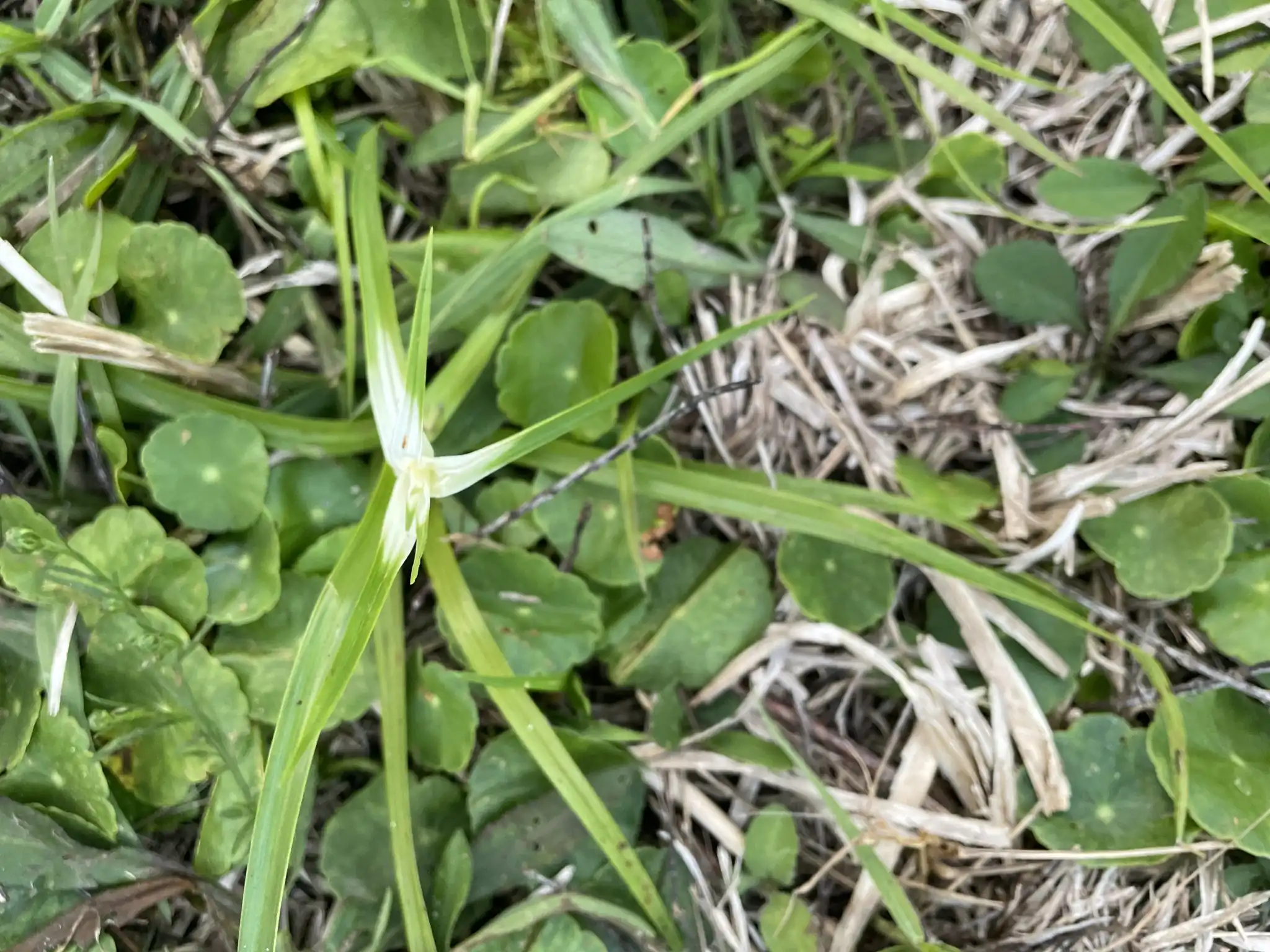
Rhynchospora colorata, known as starrush whitetop, is a rhizomatous perennial sedge native to damp coastal plains and wetlands of the Americas. It produces erect, three-angled stems up to 24 inches tall above narrow, grass-like leaf blades that spread into dense clumps via creeping rhizomes.
The primary ornamental feature is the terminal head of small creamy flowers subtended by four to seven long, leaf-like bracts that are stark white at the base with green tips. Unlike wind-pollinated sedges, these white, star-like bracts attract butterflies, native bees, and other insect pollinators throughout late spring and summer.
Uses & Benefits:
Essentials
At a Glance
Plant Type
Perennial
Height
24"
Width
36"
Light
Full Sun, Partial Sun
Zones
7, 8, 9, 10
Water
High / Wet
Humidity
High
Lifespan
Perennial
Native To
North America, Central America, South America, West Indies
Toxicity
Non-toxic
Bloom period
Late spring – Summer
In flower about 4 months of the year
Marketplace
Where to Buy
Shipping costs Year-round shipping Free shipping
Planting
How to Grow
- Select a site in full sun to partial shade that remains wet or features saturated, poorly drained soil.
- Plant bare-root divisions or potted plugs at the same soil depth they were growing in their containers.
- Submerge or water heavily immediately after planting to ensure complete root contact with saturated soil.
- Maintain high moisture levels year-round, permitting standing water up to two inches deep around the base.
Pro Tip
Keep the root zone consistently saturated or submerged in shallow standing water; allowing the crown to dry out causes foliage collapse and dieback.
Keep It Thriving
Care Guide
Do
- Keep soil saturated or covered with shallow water at all times.
- Plant in full sun to maximize the contrast of the white leaf bracts.
- Trim back dead winter foliage in early spring before new growth begins.
Don't
- Do not allow the soil matrix to dry out completely around established roots.
- Do not prune live green structural stems back hard to the soil level mid-season.
- Do not apply heavy fertilizers, as rich organic or wet soils supply adequate nutrients.
Seasonal Care Calendar
| Task | Jan | Feb | Mar | Apr | May | Jun | Jul | Aug | Sep | Oct | Nov | Dec |
|---|---|---|---|---|---|---|---|---|---|---|---|---|
| Divide | ||||||||||||
| Pest Check | ||||||||||||
| Spring Cleanup | ||||||||||||
| Winter Prep |
Watch Out For
Pests & Diseases
Common Pests
Common Diseases
In the Garden
Landscape Uses & Companions
Landscape Uses
Multiply
Propagation Methods
Good to Know
Common Questions
Starrush Whitetop questions
What zones can Starrush Whitetop grow in?
Starrush Whitetop is hardy in USDA Zones 7–10. Inside that range it survives winter in the ground; outside it, grow it as an annual or a container plant you protect.
When does Starrush Whitetop bloom?
Starrush Whitetop typically blooms in late spring through summer. Exact timing shifts a week or two with your zone — Sow's bloom calendar maps it to your garden.
Does Starrush Whitetop need full sun?
Starrush Whitetop does best in full sun to part shade. In hot climates, afternoon shade keeps blooms fresher longer.
Keep exploring
Explore the genus
Hardy in your zone?
Grow Starrush Whitetop with confidence
See it in a design of your actual yard, get zone-matched care reminders, and track it season by season in your garden journal.