The Story
Plant Bio
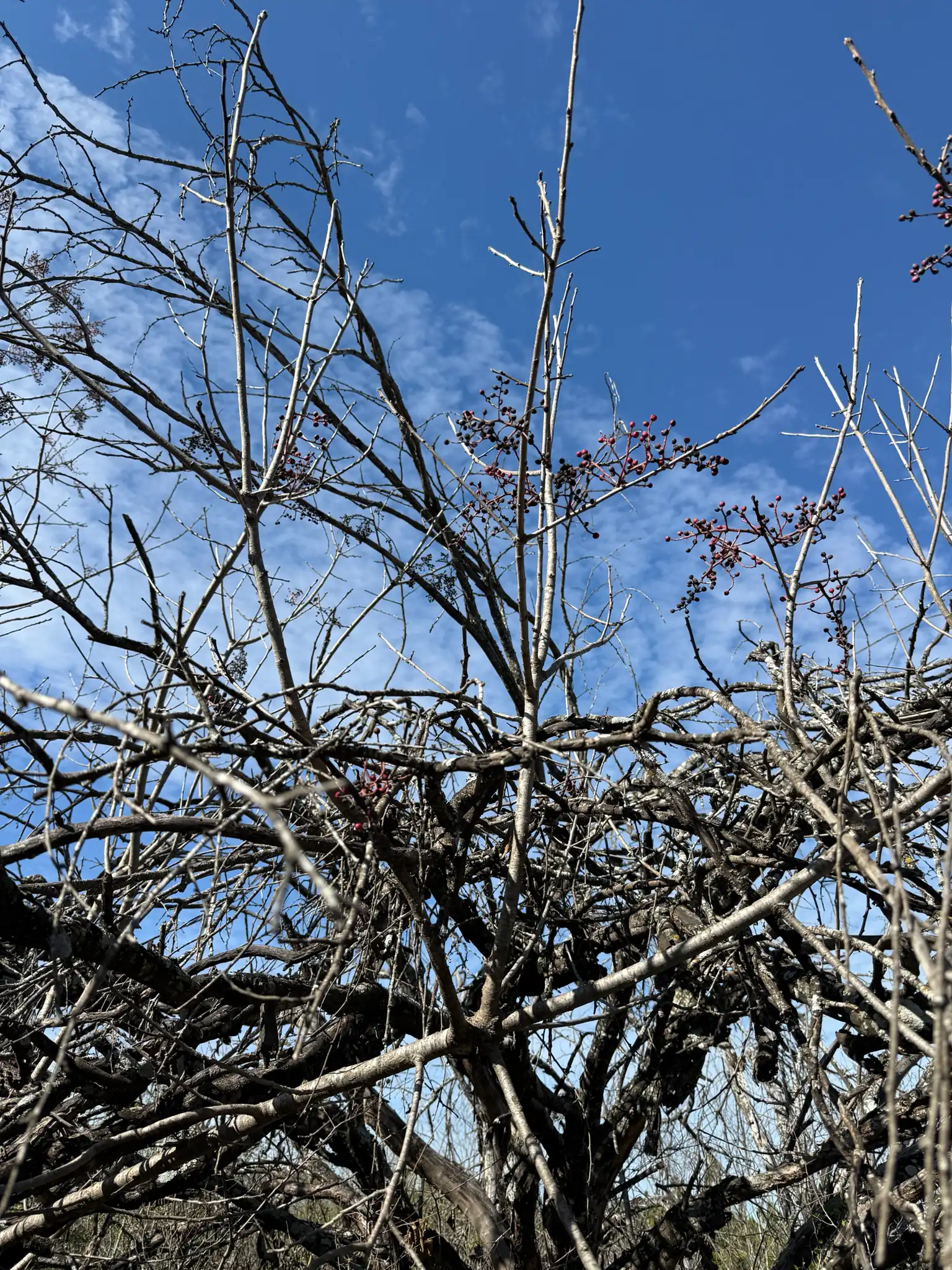
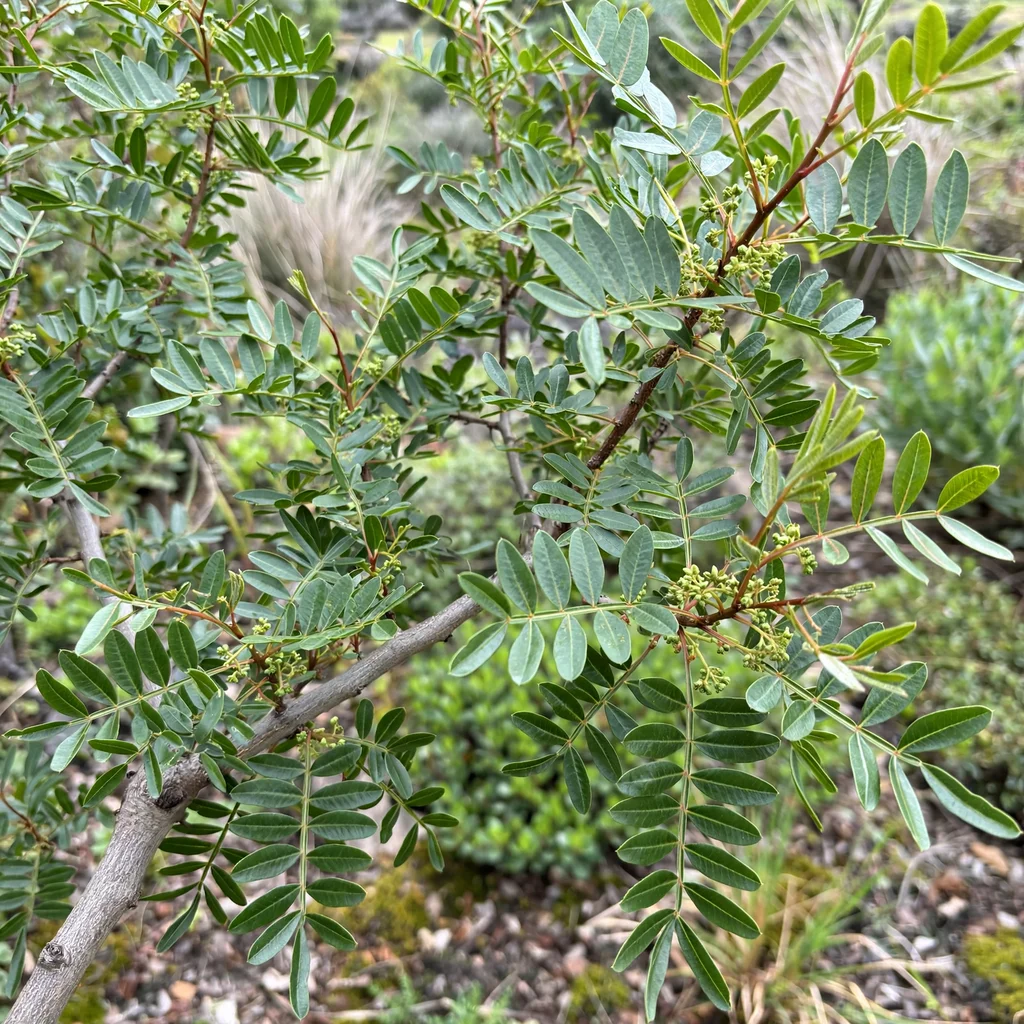
Pistacia chinensis, the Chinese pistache, is a deciduous tree that develops a rounded, symmetrical, and spreading canopy reaching up to thirty-five feet in height. The alternate, pinnately compound leaves feature ten to twelve lanceolate leaflets that emerge with a bronze tint before maturing to a deep, glossy green.
This dioecious species produces inconspicuous greenish to yellowish-red flowers in spring, with female trees bearing small red fruits that ripen to blue-purple. In fall, the foliage consistently transitions to brilliant shades of orange, red, and yellow, even in warmer climates.
Uses & Benefits:
Essentials
At a Glance
Plant Type
Tree
Height
417"
Width
417"
Light
Full Sun
Zones
6, 7, 8, 9
Water
Low
Humidity
Moderate
Native To
China, Taiwan
Toxicity
Mild skin irritant
Bloom period
Spring
In flower about 3 months of the year
Marketplace
Where to Buy
Shipping costs Year-round shipping Free shipping
Planting
How to Grow
- Select a planting site in full sun with well-drained soil, as the tree tolerates clay, loam, or sand.
- Dig a hole twice as wide as the root ball and of equal depth, ensuring the root flare sits level with the surrounding soil.
- Backfill with native soil without amendments, tamp down lightly, and water thoroughly to settle the roots.
- Apply a layer of organic mulch around the base, keeping it clear of the trunk, and water regularly until established.
Pro Tip
Prune young trees annually in late winter to establish a single central leader; aggressive pruning into old, leafless wood results in poor recovery.
Keep It Thriving
Care Guide
Do
- Prune structurally during late winter dormancy to maintain a strong central leader.
- Ensure the planting location has excellent drainage to prevent root rot.
- Water deeply but infrequently once the root system is established.
Don't
- Do not prune aggressively into old, leafless wood.
- Avoid overwatering or planting in low-lying areas where water pools.
- Do not apply heavy fertilizer unless the tree shows clear signs of stunted growth.
Seasonal Care Calendar
| Task | Jan | Feb | Mar | Apr | May | Jun | Jul | Aug | Sep | Oct | Nov | Dec |
|---|---|---|---|---|---|---|---|---|---|---|---|---|
| Fertilize | ||||||||||||
| Pest Check | ||||||||||||
| Prune | ||||||||||||
| Winter Prep |
Watch Out For
Pests & Diseases
Common Pests
Common Diseases
In the Garden
Landscape Uses & Companions
Landscape Uses
Companion Plants
Multiply
Propagation Methods
Good to Know
Common Questions
Chinese Pistache questions
What zones can Chinese Pistache grow in?
Chinese Pistache is hardy in USDA Zones 6–9. Inside that range it survives winter in the ground; outside it, grow it as an annual or a container plant you protect.
When does Chinese Pistache bloom?
Chinese Pistache typically blooms in spring through spring. Exact timing shifts a week or two with your zone — Sow's bloom calendar maps it to your garden.
Does Chinese Pistache need full sun?
Chinese Pistache does best in full sun (6+ hours).
Is Chinese Pistache drought tolerant?
Yes — once established (usually after the first full season), Chinese Pistache handles dry spells with minimal watering. Water deeply its first year to build the root system that makes that possible.
More Pistacia to compare
Keep exploring
Explore the genus
Hardy in your zone?
Grow Chinese Pistache with confidence
See it in a design of your actual yard, get zone-matched care reminders, and track it season by season in your garden journal.