The Story
Plant Bio
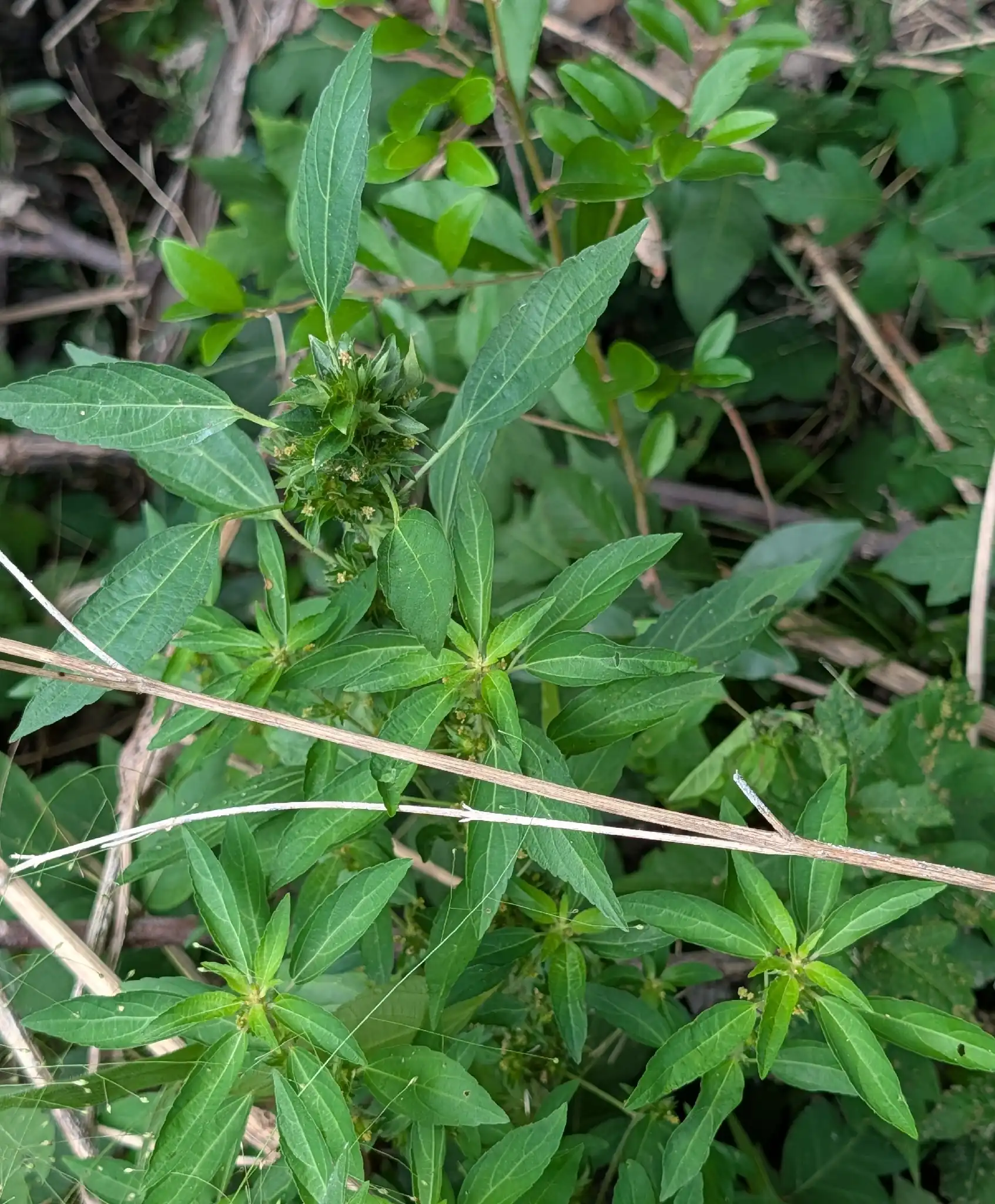
Acalypha virginica is an erect, slender summer annual native to eastern and central North America, characterized by its branched, pubescent stems and deep taproot. The simple, alternate leaves feature crenate-serrate margins and frequently develop coppery-green or purplish-bronze tones when exposed to high light or fall temperatures.
The inconspicuous, apetalous flowers are unisexual and arranged in axillary or terminal spikes, distinguished by large, deeply lobed leafy bracts with nine to fifteen segments. These bracts persist into fall, sheltering small dry capsules that provide forage for native seed-eating birds.
Uses & Benefits:
Essentials
At a Glance
Plant Type
Annual
Height
36"
Width
24"
Light
Full Sun, Partial Sun
Zones
4, 5, 6, 7, 8, 9
Water
Medium
Humidity
Medium to high
Lifespan
Annual
Native To
North America
Toxicity
Skin irritant, toxic if ingested
Bloom period
Summer – Autumn
In flower about 6 months of the year
Planting
How to Grow
- Sow seeds directly into moist, well-drained soil in a full sun to partial shade location after all danger of frost has passed.
- Maintain consistent soil moisture during the germination and early establishment phases to prevent leaf scorch.
- Pinch back terminal shoots on young plants to promote lateral branching and a denser growth habit.
- Allow the plants to flower and set seed naturally in late summer to ensure self-sowing for the following season.
Pro Tip
Pinch the growing tips of young plants early in the season to encourage a bushier, more branched habit and prevent the stems from becoming overly leggy.
Keep It Thriving
Care Guide
Do
- Wear gloves when handling the plant to avoid contact with the irritating milky sap.
- Provide consistent moisture in sandy soils to prevent foliage damage.
- Allow the dry seed capsules to persist into winter to feed local songbirds.
Don't
- Do not over-fertilize, as excess nutrients encourage weak, floppy stem growth.
- Do not plant in poorly drained, waterlogged sites where roots may rot.
- Do not mistake emerging seedlings for invasive weeds before they develop their characteristic coppery foliage.
Seasonal Care Calendar
| Task | Jan | Feb | Mar | Apr | May | Jun | Jul | Aug | Sep | Oct | Nov | Dec |
|---|---|---|---|---|---|---|---|---|---|---|---|---|
| Pest Check | ||||||||||||
| Pinch | ||||||||||||
| Plant | ||||||||||||
| Propagate |
Watch Out For
Pests & Diseases
Common Pests
Common Diseases
In the Garden
Landscape Uses & Companions
Landscape Uses
Companion Plants
Multiply
Propagation Methods
Good to Know
Common Questions
Virginia Three-Seeded Mercury questions
What zones can Virginia Three-Seeded Mercury grow in?
Virginia Three-Seeded Mercury is hardy in USDA Zones 4–9. Inside that range it survives winter in the ground; outside it, grow it as an annual or a container plant you protect.
Is Virginia Three-Seeded Mercury deer resistant?
Not reliably. Deer may browse Virginia Three-Seeded Mercury, especially tender spring growth — plan on repellents or fencing where pressure is high.
When does Virginia Three-Seeded Mercury bloom?
Virginia Three-Seeded Mercury typically blooms in summer through autumn. Exact timing shifts a week or two with your zone — Sow's bloom calendar maps it to your garden.
Does Virginia Three-Seeded Mercury need full sun?
Virginia Three-Seeded Mercury does best in full sun to part shade. In hot climates, afternoon shade keeps blooms fresher longer.
More Acalypha to compare
Keep exploring
Explore the genus
Grow Virginia Three-Seeded Mercury with confidence
See it in a design of your actual yard, get zone-matched care reminders, and track it season by season in your garden journal.