The Story
Plant Bio
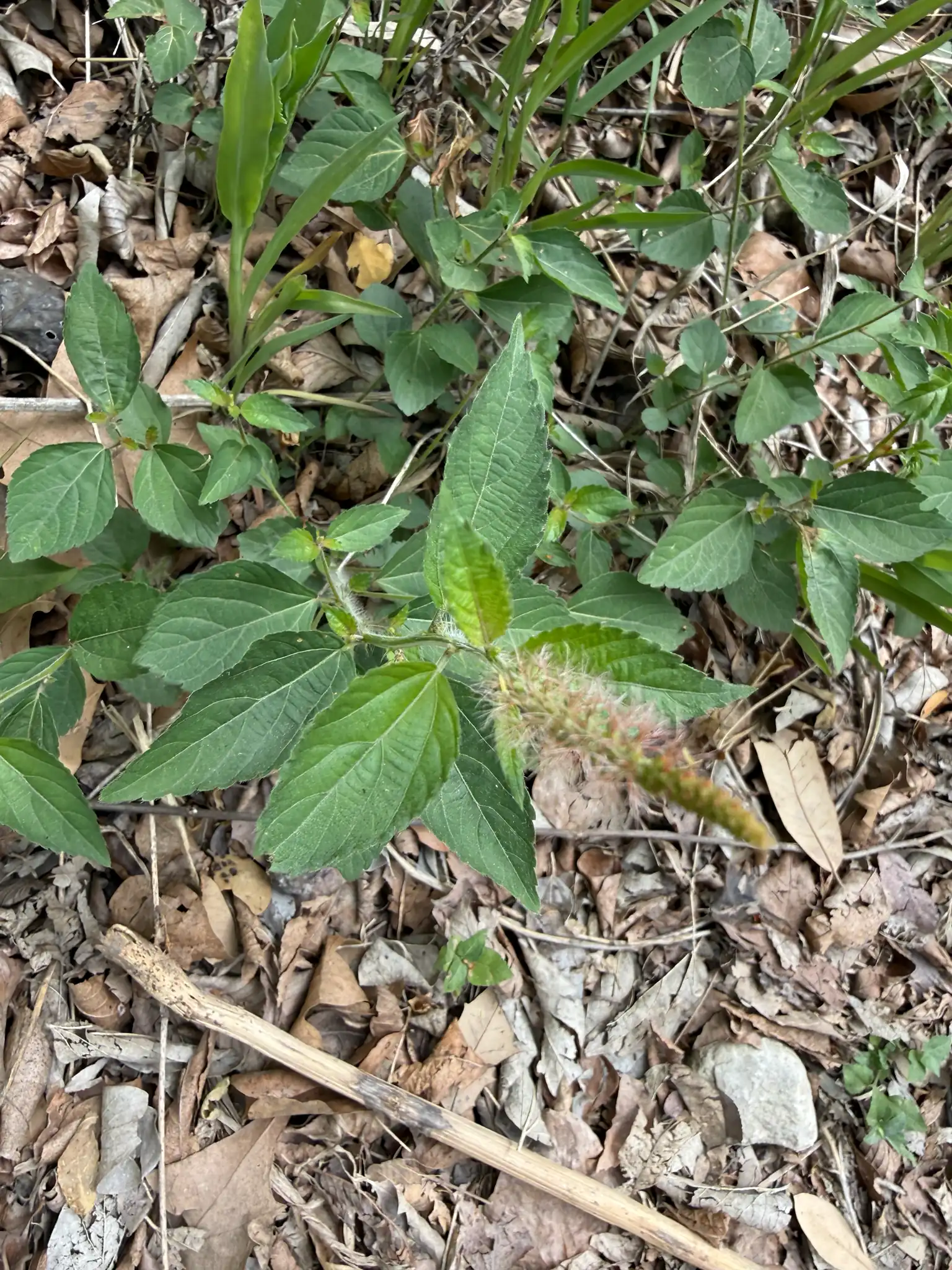
Acalypha phleoides is an erect, subshrubby perennial native to the arid and semi-arid regions of the southwestern United States and Mexico, growing from a woody root crown. The plant produces multiple stems clad in textured, rhombic-ovate green leaves that develop bronze or copper tones under intense sun or environmental stress.
The terminal spikes feature prominent, bright red, thread-like styles on the lower female flowers, contrasted by reddish-brown male bracts above to create a fuzzy, colorful inflorescence. This species demands exceptionally sharp drainage and thrives in rocky, limestone-based soils where tropical members of the genus would quickly fail.
Uses & Benefits:
Essentials
At a Glance
Plant Type
Perennial
Height
20"
Width
18"
Light
Full Sun, Partial Sun
Zones
8, 9, 10
Water
Low
Humidity
Low to moderate
Lifespan
Perennial
Native To
North and Central America
Toxicity
Toxic if ingested; sap causes skin irritation
Bloom period
Spring – Autumn
In flower about 9 months of the year
Planting
How to Grow
- Select a planting site with full sun to partial shade and exceptionally well-drained, sandy or rocky soil.
- Dig a hole twice the width of the root ball and set the plant so the crown sits level with the surrounding soil.
- Water sparingly during the establishment phase, allowing the soil to dry out completely between waterings.
- Apply a thin layer of gravel mulch around the base to prevent moisture retention near the stem crown.
Pro Tip
Amateurs often overwater this species expecting the moisture needs of tropical greenhouse copperleafs; it requires dry, mineral-rich soils and will rot rapidly if planted in heavy, waterlogged clay.
Keep It Thriving
Care Guide
Do
- Plant in highly permeable, limestone-based or sandy soils.
- Cut stems back near ground level in late winter to stimulate fresh basal growth.
- Provide full sun to maximize the copper and bronze foliage tones.
Don't
- Do not overwater or plant in heavy clay without significant drainage modification.
- Do not apply high-nitrogen fertilizers, which cause weak, leggy growth.
- Do not prune continuously during the active spring and summer growing seasons.
- Avoid contact with the milky sap, which causes skin irritation.
Seasonal Care Calendar
| Task | Jan | Feb | Mar | Apr | May | Jun | Jul | Aug | Sep | Oct | Nov | Dec |
|---|---|---|---|---|---|---|---|---|---|---|---|---|
| Fertilize | ||||||||||||
| Pest Check | ||||||||||||
| Propagate | ||||||||||||
| Prune |
Watch Out For
Pests & Diseases
Common Pests
Common Diseases
In the Garden
Landscape Uses & Companions
Landscape Uses
Companion Plants
Multiply
Propagation Methods
Good to Know
Common Questions
Shrubby Copperleaf questions
What zones can Shrubby Copperleaf grow in?
Shrubby Copperleaf is hardy in USDA Zones 8–10. Inside that range it survives winter in the ground; outside it, grow it as an annual or a container plant you protect.
Is Shrubby Copperleaf deer resistant?
Not reliably. Deer may browse Shrubby Copperleaf, especially tender spring growth — plan on repellents or fencing where pressure is high.
When does Shrubby Copperleaf bloom?
Shrubby Copperleaf typically blooms in spring through autumn. Exact timing shifts a week or two with your zone — Sow's bloom calendar maps it to your garden.
Does Shrubby Copperleaf need full sun?
Shrubby Copperleaf does best in full sun to part shade. In hot climates, afternoon shade keeps blooms fresher longer.
Is Shrubby Copperleaf drought tolerant?
Yes — once established (usually after the first full season), Shrubby Copperleaf handles dry spells with minimal watering. Water deeply its first year to build the root system that makes that possible.
More Acalypha to compare
Keep exploring
Explore the genus
Hardy in your zone?
Grow Shrubby Copperleaf with confidence
See it in a design of your actual yard, get zone-matched care reminders, and track it season by season in your garden journal.