The Story
Plant Bio
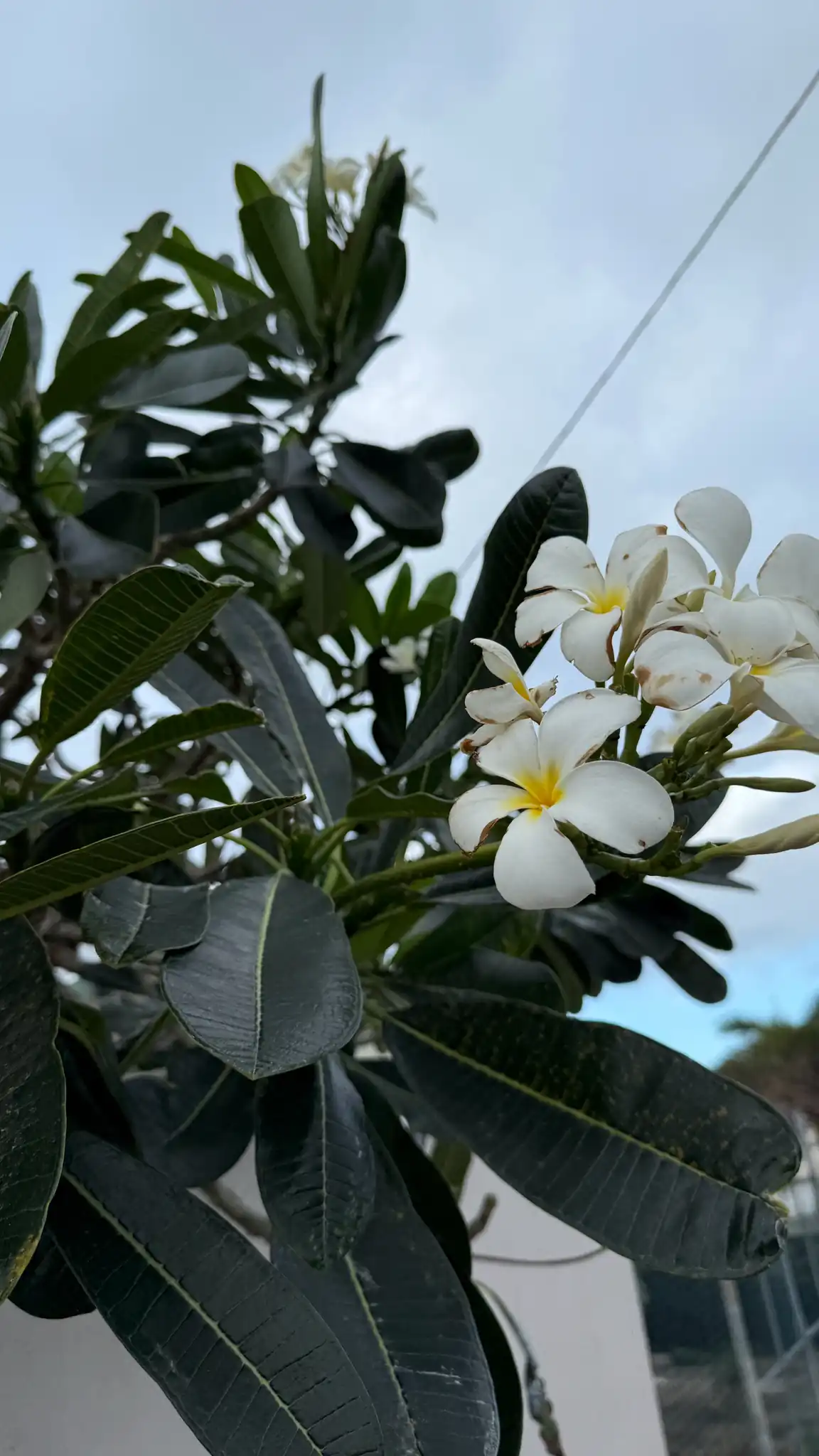
Plumeria obtusa, the Singapore frangipani, is a small, open-branching tropical tree with a thick, gnarled trunk and fleshy branches containing toxic milky sap. The glossy, dark green leaves are narrow and obovate with distinctly blunt tips, remaining semi-evergreen to evergreen depending on winter moisture levels.
This species is distinguished by its terminal clusters of highly fragrant, five-petaled white flowers that feature a bright yellow center. Unlike other frangipani species, the foliage lacks sharp tips and maintains a deep, polished luster throughout the growing season.
Uses & Benefits:
Essentials
At a Glance
Plant Type
Tree
Height
144"
Width
120"
Light
Full Sun, Partial Sun
Zones
10
Water
Low
Humidity
High
Lifespan
Long-lived
Native To
Central America, Bahamas, Greater Antilles, Southern Florida
Toxicity
Toxic to humans and pets (milky sap)
Bloom period
Spring – Fall
In flower about 9 months of the year
Planting
How to Grow
- Plant in a highly porous, fast-draining medium such as a sandy loam or a cactus potting mix.
- Position in a location receiving at least six hours of direct daily sunlight to ensure reliable blooming.
- Water deeply but infrequently, letting the substrate dry out entirely before applying water again.
- Bring container-grown specimens indoors before overnight temperatures drop below 34°F (1°C).
Pro Tip
Allow the soil to dry out completely between waterings; keeping the root zone continuously moist triggers immediate, fatal root rot.
Keep It Thriving
Care Guide
Do
- Let the soil dry out completely between waterings.
- Use a high-phosphorus fertilizer during the active spring and summer growing seasons.
- Wear gloves when pruning to avoid contact with the irritating milky sap.
- Provide full sun exposure to maximize flower production.
Don't
- Do not overwater or allow the pot to sit in standing water.
- Do not prune heavily into old, leafless woody stems where nodes cannot regenerate.
- Do not fertilize during the winter dormancy period.
- Do not expose the plant to freezing temperatures or frost.
Seasonal Care Calendar
| Task | Jan | Feb | Mar | Apr | May | Jun | Jul | Aug | Sep | Oct | Nov | Dec |
|---|---|---|---|---|---|---|---|---|---|---|---|---|
| Fertilize | ||||||||||||
| Pest Check | ||||||||||||
| Prune | ||||||||||||
| Winter Prep |
Watch Out For
Pests & Diseases
Common Pests
Common Diseases
In the Garden
Landscape Uses & Companions
Landscape Uses
Companion Plants
Multiply
Propagation Methods
Good to Know
Common Questions
Singapore Frangipani questions
What zones can Singapore Frangipani grow in?
Singapore Frangipani is hardy in USDA Zone 10. Inside that range it survives winter in the ground; outside it, grow it as an annual or a container plant you protect.
Is Singapore Frangipani deer resistant?
Yes — Singapore Frangipani is rated deer-resistant. Deer typically pass it over, though extreme hunger can override any plant's defenses.
When does Singapore Frangipani bloom?
Singapore Frangipani typically blooms in spring through fall. Exact timing shifts a week or two with your zone — Sow's bloom calendar maps it to your garden.
Does Singapore Frangipani need full sun?
Singapore Frangipani does best in full sun to part shade. In hot climates, afternoon shade keeps blooms fresher longer.
Is Singapore Frangipani drought tolerant?
Yes — once established (usually after the first full season), Singapore Frangipani handles dry spells with minimal watering. Water deeply its first year to build the root system that makes that possible.
More Plumeria to compare
Keep exploring
Explore the genus
Hardy in your zone?
Grow Singapore Frangipani with confidence
See it in a design of your actual yard, get zone-matched care reminders, and track it season by season in your garden journal.