The Story
Plant Bio
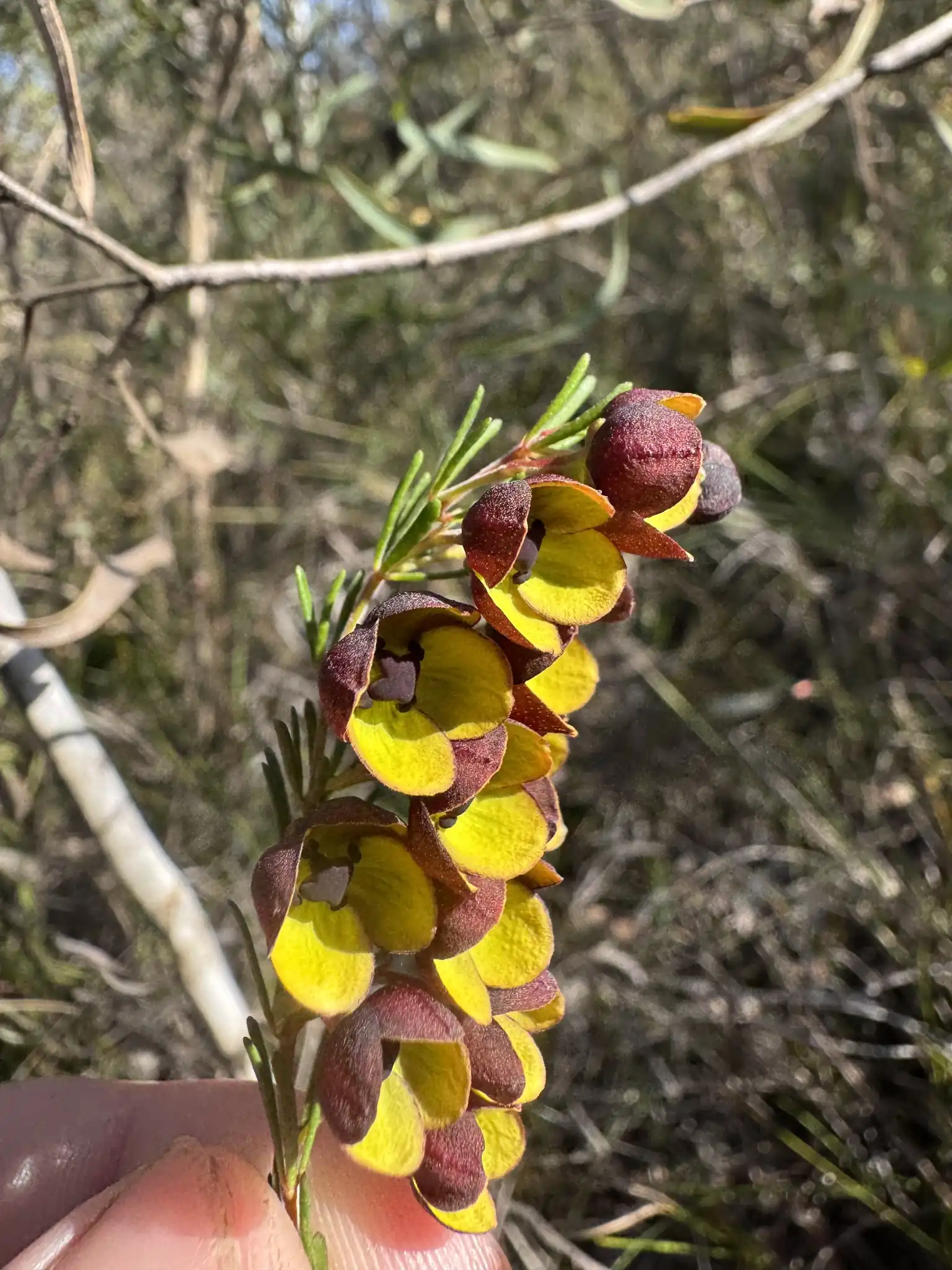
Boronia megastigma, the brown boronia, is an upright, slender evergreen shrub reaching two to five feet in height, with fine, narrow leaves that release a powerful, sweet fragrance when crushed. The small, cup-shaped flowers are pendant, displaying a deep chocolate-brown exterior and a contrasting bright yellow interior throughout spring.
This species is highly prized for its intense floral scent, which carries exceptionally well on the breeze. Cultivated selections include 'Lutea' with pure yellow blooms, 'Jack Maguire's Red' with reddish tones, and 'Harlequin' featuring striped petals.
Uses & Benefits:
Essentials
At a Glance
Plant Type
Shrub
Height
60"
Width
40"
Light
Full Sun, Partial Sun
Zones
8, 9, 10
Water
Medium
Humidity
Moderate
Lifespan
Short-lived (3-5 years)
Native To
Australia
Toxicity
Skin Irritant
Bloom period
Spring
In flower about 3 months of the year
Planting
How to Grow
- Select a planting site with full sun to partial shade, ensuring afternoon shade in hot climates to keep the root zone cool.
- Prepare a planting bed with sandy loam or light, organic-rich soil that provides exceptional, rapid drainage.
- Plant with the crown slightly elevated above the surrounding soil level to prevent water pooling around the stem.
- Apply a thick layer of organic mulch over the root zone, keeping it clear of the main stem, to maintain cool, even soil moisture.
Pro Tip
Prune the stems back by one-third immediately after spring flowering; cutting into old, leafless brown wood will kill the branch and often the entire plant.
Keep It Thriving
Care Guide
Do
- Water regularly to keep the soil consistently moist but never waterlogged.
- Provide afternoon shade in hot, dry climates to protect the delicate foliage.
- Apply a low-phosphorus fertilizer formulated for sensitive native plants very sparingly in spring.
Don't
- Do not prune into old, bare wood, as the plant cannot regenerate from old stems.
- Do not allow the root zone to dry out completely, which causes rapid and irreversible collapse.
- Do not plant in heavy clay or poorly drained soils that hold water.
Seasonal Care Calendar
| Task | Jan | Feb | Mar | Apr | May | Jun | Jul | Aug | Sep | Oct | Nov | Dec |
|---|---|---|---|---|---|---|---|---|---|---|---|---|
| Fertilize | ||||||||||||
| Pest Check | ||||||||||||
| Prune | ||||||||||||
| Winter Prep |
Watch Out For
Pests & Diseases
Common Pests
Common Diseases
In the Garden
Landscape Uses & Companions
Landscape Uses
Companion Plants
Multiply
Propagation Methods
Good to Know
Common Questions
Brown Boronia questions
What zones can Brown Boronia grow in?
Brown Boronia is hardy in USDA Zones 8–10. Inside that range it survives winter in the ground; outside it, grow it as an annual or a container plant you protect.
When does Brown Boronia bloom?
Brown Boronia typically blooms in spring through spring. Exact timing shifts a week or two with your zone — Sow's bloom calendar maps it to your garden.
Does Brown Boronia need full sun?
Brown Boronia does best in full sun to part shade. In hot climates, afternoon shade keeps blooms fresher longer.
More Boronia to compare
Keep exploring
Explore the genus
Hardy in your zone?
Grow Brown Boronia with confidence
See it in a design of your actual yard, get zone-matched care reminders, and track it season by season in your garden journal.