The Story
Plant Bio
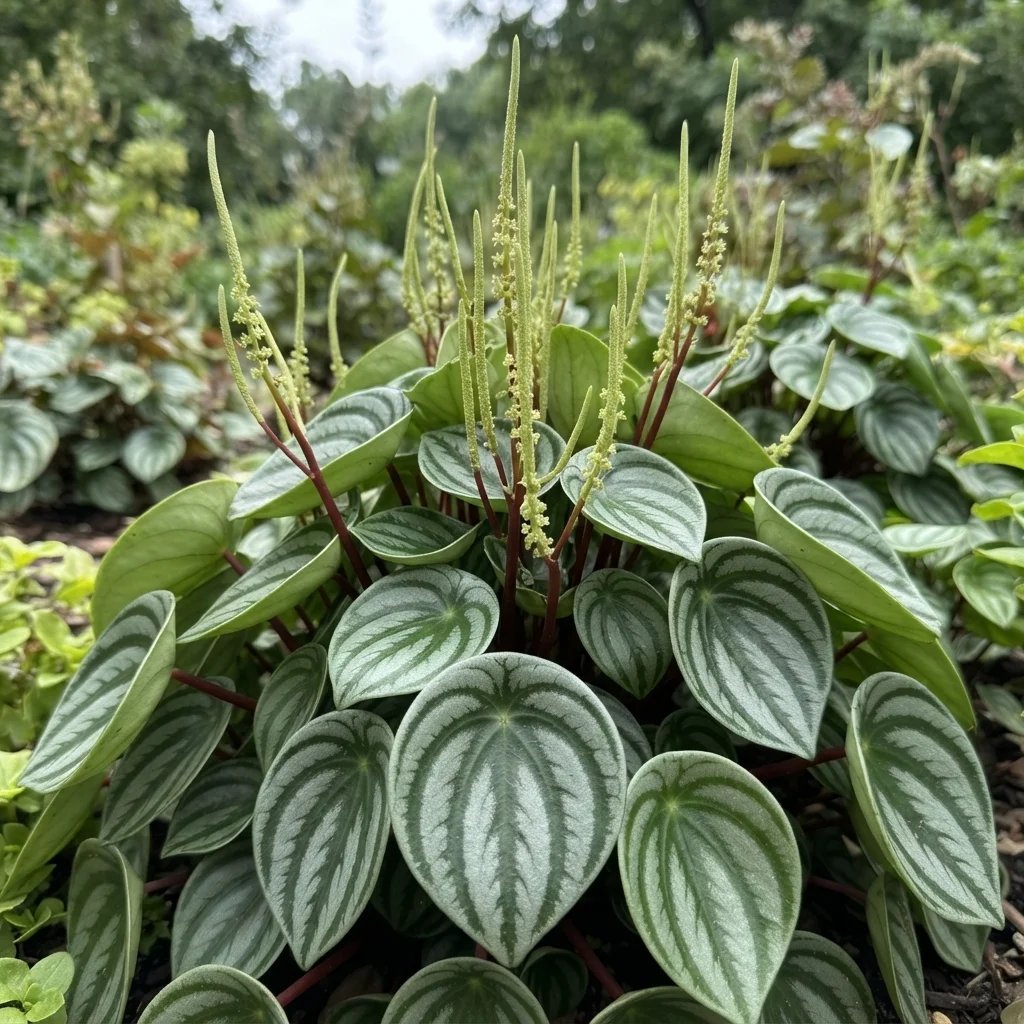
Peperomia argyraea is a compact, nearly stemless evergreen perennial native to South America, characterized by its rosette-forming, bushy growth habit. The peltate, asymmetrical oval leaves feature curved silver and dark green stripes resembling a watermelon rind, supported by vivid red petioles.
The foliage texture is slightly fleshy and moisture-retaining, with new growth emerging with the same distinct variegation and red stem coloration as mature leaves. In summer, the plant produces tiny, inconspicuous pale green flowers clustered on dense, slender, upright spikes that rise above the foliage.
Uses & Benefits:
Essentials
At a Glance
Plant Type
Tropical
Height
12"
Width
16"
Light
Partial Sun, Shade
Zones
10
Water
Low to moderate
Humidity
High
Lifespan
Perennial
Native To
South America
Toxicity
Non-toxic
Bloom period
Late spring – Summer
In flower about 4 months of the year
Planting
How to Grow
- Select a loose, well-draining organic potting mix, such as a blend of standard indoor soil, peat or coco coir, and perlite.
- Position the container in a location that receives bright, indirect indoor sunlight, avoiding direct hot sun which scorches the foliage.
- Water thoroughly only when the top few inches of soil have dried, ensuring the pot never sits in a waterlogged catchment saucer.
- Maintain high humidity around the plant using pebble trays or grouping, keeping ambient temperatures strictly above 10 °C (50 °F).
Pro Tip
Prevent leaf tip browning by watering exclusively with chlorine- and fluoride-free or filtered water, and allow the potting medium to dry out significantly between waterings to avoid stem rot.
Keep It Thriving
Care Guide
Do
- Allow the plant to become slightly root-bound before considering repotting.
- Snip away spent, withered flower spikes cleanly at the base.
- Apply a dilute, balanced liquid houseplant fertilizer once a month during spring and summer.
Don't
- Do not cut into old, leafless wood when cleaning up the plant.
- Never fertilize during the autumn or winter months.
- Avoid using hard tap water or chemical-heavy water which causes salt buildup.
Seasonal Care Calendar
| Task | Jan | Feb | Mar | Apr | May | Jun | Jul | Aug | Sep | Oct | Nov | Dec |
|---|---|---|---|---|---|---|---|---|---|---|---|---|
| Fertilize | ||||||||||||
| Pest Check | ||||||||||||
| Propagate | ||||||||||||
| Prune |
Watch Out For
Pests & Diseases
Common Pests
Common Diseases
In the Garden
Landscape Uses & Companions
Landscape Uses
Companion Plants
Multiply
Propagation Methods
Good to Know
Common Questions
Watermelon Peperomia questions
What zones can Watermelon Peperomia grow in?
Watermelon Peperomia is hardy in USDA Zone 10. Inside that range it survives winter in the ground; outside it, grow it as an annual or a container plant you protect.
When does Watermelon Peperomia bloom?
Watermelon Peperomia typically blooms in late spring through summer. Exact timing shifts a week or two with your zone — Sow's bloom calendar maps it to your garden.
Does Watermelon Peperomia need full sun?
Watermelon Peperomia does best in part shade.
Is Watermelon Peperomia drought tolerant?
Yes — once established (usually after the first full season), Watermelon Peperomia handles dry spells with minimal watering. Water deeply its first year to build the root system that makes that possible.
More Peperomia to compare
Keep exploring
Explore the genus
Hardy in your zone?
Grow Watermelon Peperomia with confidence
See it in a design of your actual yard, get zone-matched care reminders, and track it season by season in your garden journal.