The Story
Plant Bio
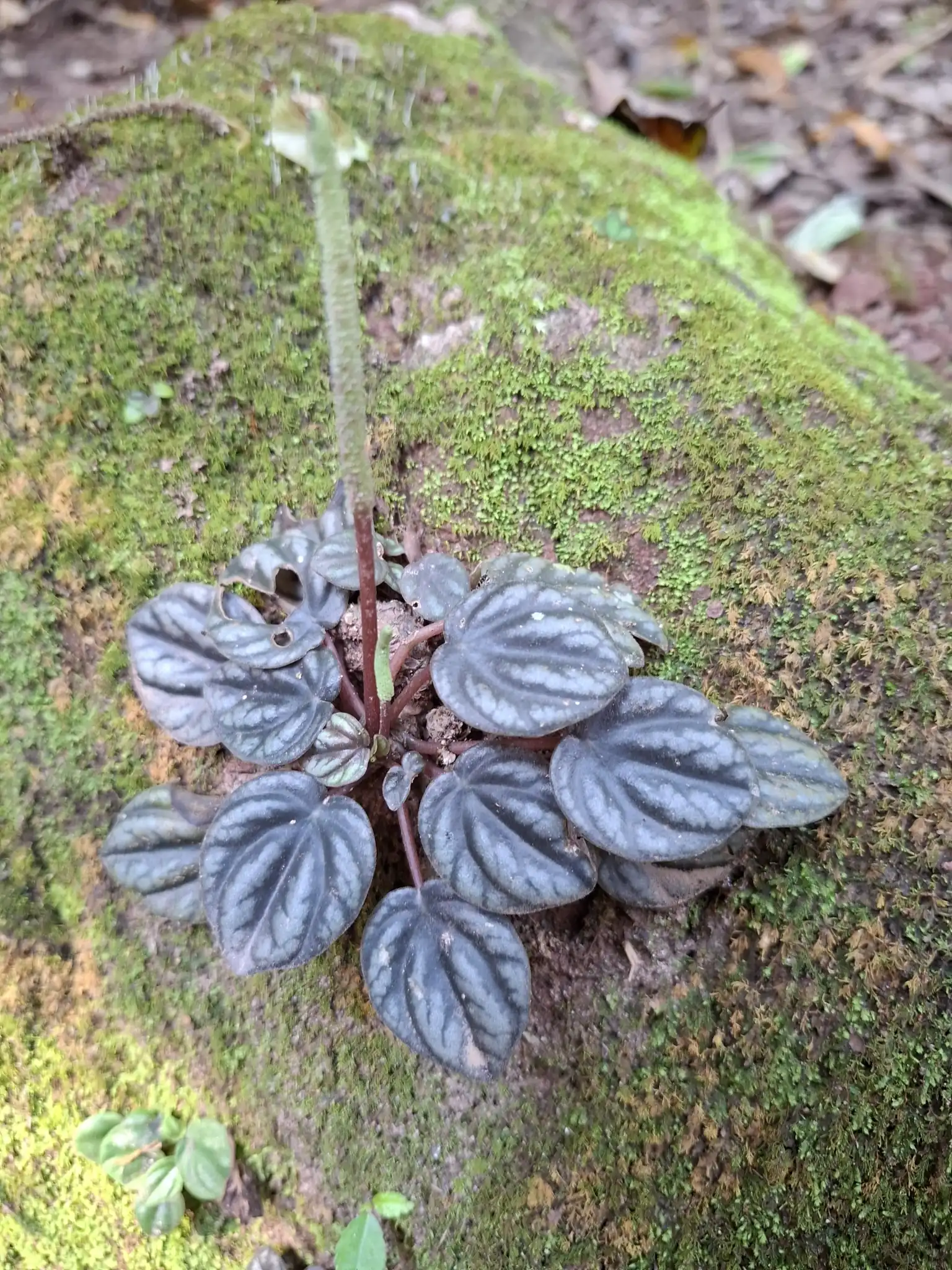
Peperomia caperata is a compact, mound-forming evergreen perennial native to the shaded floors of southeastern Brazilian rainforests. It is characterized by deeply corrugated, heart-shaped leaves held on thin petioles, producing slender, cream-colored flowering spikes that resemble mouse tails.
The highly textured foliage features prominent ridges and deep wrinkles that trap light, creating a distinct play of shadow across the leaf surface. Cultivars range in color from rich forest green to deep burgundy, with new growth emerging in colors that match the mature parental foliage.
Uses & Benefits:
Essentials
At a Glance
Plant Type
Tropical
Height
8"
Width
8"
Light
Partial Sun, Shade
Water
Low to moderate
Humidity
High
Lifespan
Perennial
Native To
Southeast Brazil
Toxicity
Non-toxic
Bloom period
Summer – Autumn
In flower about 6 months of the year
Planting
How to Grow
- Select a loose, highly organic, peaty potting mix or a well-aerated epiphytic substrate to ensure rapid drainage.
- Position the plant in bright, indirect indoor light, avoiding direct afternoon sun which scorches the corrugated foliage.
- Water only when the top inch of the substrate feels dry to the touch, applying water directly to the soil line to keep the rosette dry.
- Maintain high humidity levels around the plant without misting the leaves directly, as trapped water in the leaf crevices invites crown rot.
Pro Tip
Allow the top inch of soil to dry out completely between waterings; as a semi-epiphytic lithophyte, this plant is highly susceptible to root rot if kept constantly wet.
Keep It Thriving
Care Guide
Do
- Water at the soil line to prevent water from pooling in the central crown.
- Use a highly aerated potting mix to facilitate rapid drainage.
- Provide bright, filtered light to maintain vibrant leaf coloration.
- Allow the top few centimeters of soil to dry out before watering again.
Don't
- Do not mist the heavily corrugated leaves, as stagnant water causes tissue decay.
- Do not let the pot sit in standing water, which triggers fatal root rot.
- Do not expose the plant to direct afternoon sunlight or freezing temperatures.
- Do not over-fertilize, as the plant is highly sensitive to salt accumulation.
Seasonal Care Calendar
| Task | Jan | Feb | Mar | Apr | May | Jun | Jul | Aug | Sep | Oct | Nov | Dec |
|---|---|---|---|---|---|---|---|---|---|---|---|---|
| Fertilize | ||||||||||||
| Pest Check | ||||||||||||
| Propagate | ||||||||||||
| Prune |
Watch Out For
Pests & Diseases
Common Pests
Common Diseases
In the Garden
Landscape Uses & Companions
Landscape Uses
Multiply
Propagation Methods
Good to Know
Common Questions
Emerald Ripple Peperomia questions
When does Emerald Ripple Peperomia bloom?
Emerald Ripple Peperomia typically blooms in summer through autumn. Exact timing shifts a week or two with your zone — Sow's bloom calendar maps it to your garden.
Does Emerald Ripple Peperomia need full sun?
Emerald Ripple Peperomia does best in part shade.
Is Emerald Ripple Peperomia drought tolerant?
Yes — once established (usually after the first full season), Emerald Ripple Peperomia handles dry spells with minimal watering. Water deeply its first year to build the root system that makes that possible.
More Peperomia to compare
Keep exploring
Explore the genus
Grow Emerald Ripple Peperomia with confidence
See it in a design of your actual yard, get zone-matched care reminders, and track it season by season in your garden journal.