The Story
Plant Bio
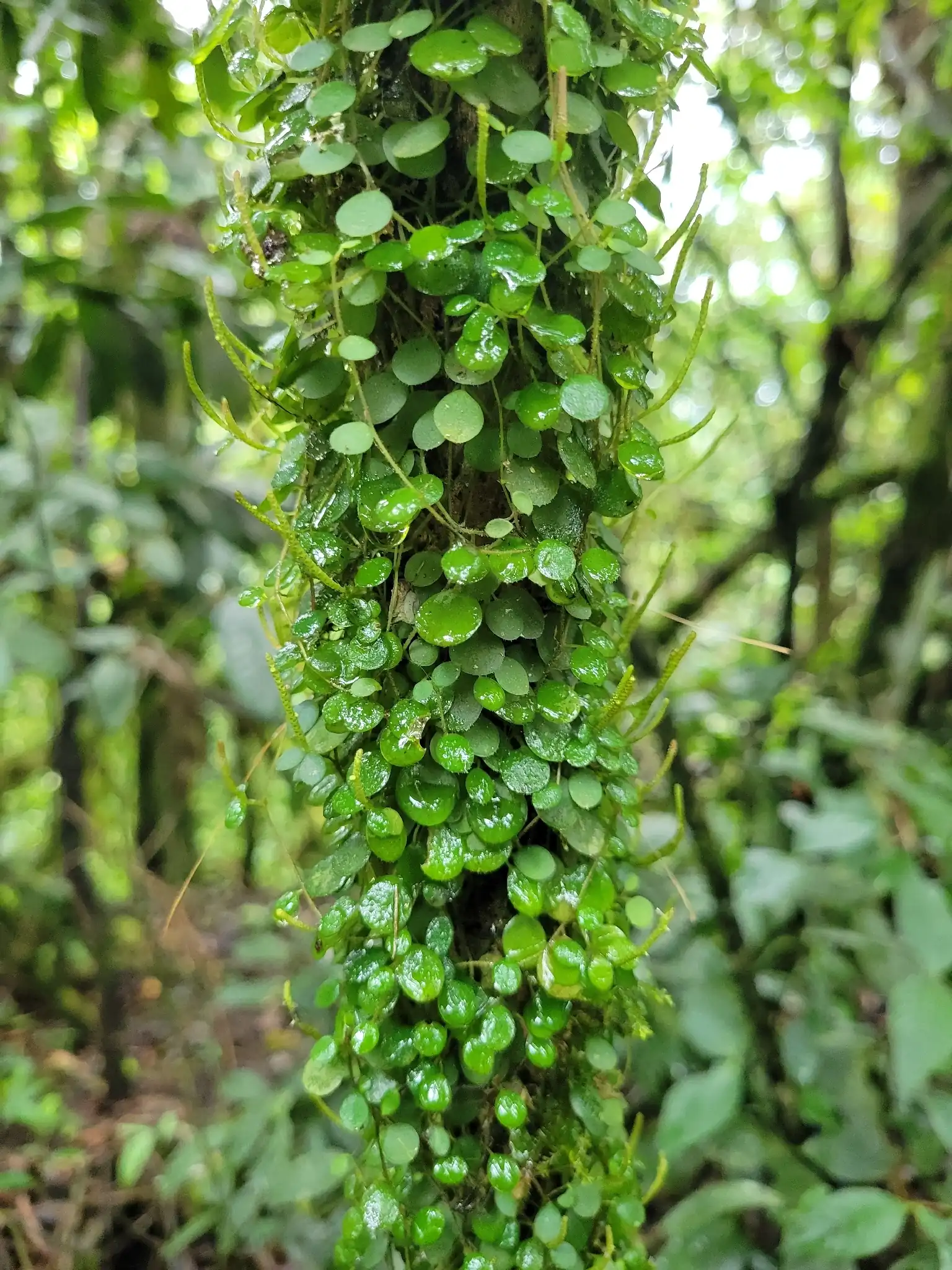
Peperomia rotundifolia, known commonly as trailing jade, is a creeping, evergreen epiphyte native to the tropical rainforests of Central and South America. In cultivation, it forms a low, dense mat of soft, trailing stems that root readily at the nodes and bear small, fleshy, orbicular leaves.
The succulent, jade-green foliage features subtle light green veining and measures less than an inch across, with new growth emerging in a contrasting bright green. Slender, rat-tail-like spikes of tiny, insignificant greenish-white flowers appear on mature plants during spring and summer.
Uses & Benefits:
Essentials
At a Glance
Plant Type
Tropical
Height
4"
Width
24"
Light
Partial Sun, Shade
Zones
10
Water
Moderate
Humidity
Moderate to High (40%-60%)
Lifespan
Perennial
Native To
Central and South America
Toxicity
Non-toxic
Bloom period
Spring – Summer
In flower about 6 months of the year
Planting
How to Grow
- Select a loose, highly aerated potting mix containing coarse perlite, orchid bark, and peat moss to ensure rapid drainage.
- Position the container in a spot that receives bright, indirect indoor light, avoiding direct afternoon sun which scorches the fleshy leaves.
- Water thoroughly only when the top half of the potting medium has dried out completely.
- Maintain moderate to high indoor humidity and protect the plant from cold drafts or temperatures below 50°F.
Pro Tip
Allow the potting medium to dry out halfway down the container before watering again; constant moisture suffocates the delicate, shallow root system and triggers basal rot.
Keep It Thriving
Care Guide
Do
- Use a container with ample drainage holes to prevent water from pooling around the roots.
- Prune leggy stems in spring to encourage a bushier, more compact growth habit.
- Apply a balanced liquid fertilizer diluted to half-strength monthly during spring and summer.
Don't
- Do not overwater or allow the pot to sit in a water-filled saucer.
- Never cut back hard into old, leafless woody stems as they fail to regenerate.
- Avoid placing the plant near air conditioning vents or drafty windows.
Seasonal Care Calendar
| Task | Jan | Feb | Mar | Apr | May | Jun | Jul | Aug | Sep | Oct | Nov | Dec |
|---|---|---|---|---|---|---|---|---|---|---|---|---|
| Fertilize | ||||||||||||
| Pest Check | ||||||||||||
| Propagate | ||||||||||||
| Prune |
Watch Out For
Pests & Diseases
Common Pests
Common Diseases
In the Garden
Landscape Uses & Companions
Landscape Uses
Companion Plants
Multiply
Propagation Methods
Good to Know
Common Questions
Trailing Jade questions
What zones can Trailing Jade grow in?
Trailing Jade is hardy in USDA Zone 10. Inside that range it survives winter in the ground; outside it, grow it as an annual or a container plant you protect.
When does Trailing Jade bloom?
Trailing Jade typically blooms in spring through summer. Exact timing shifts a week or two with your zone — Sow's bloom calendar maps it to your garden.
Does Trailing Jade need full sun?
Trailing Jade does best in part shade.
Is Trailing Jade drought tolerant?
Yes — once established (usually after the first full season), Trailing Jade handles dry spells with minimal watering. Water deeply its first year to build the root system that makes that possible.
More Peperomia to compare
Keep exploring
Explore the genus
Hardy in your zone?
Grow Trailing Jade with confidence
See it in a design of your actual yard, get zone-matched care reminders, and track it season by season in your garden journal.