The Story
Plant Bio
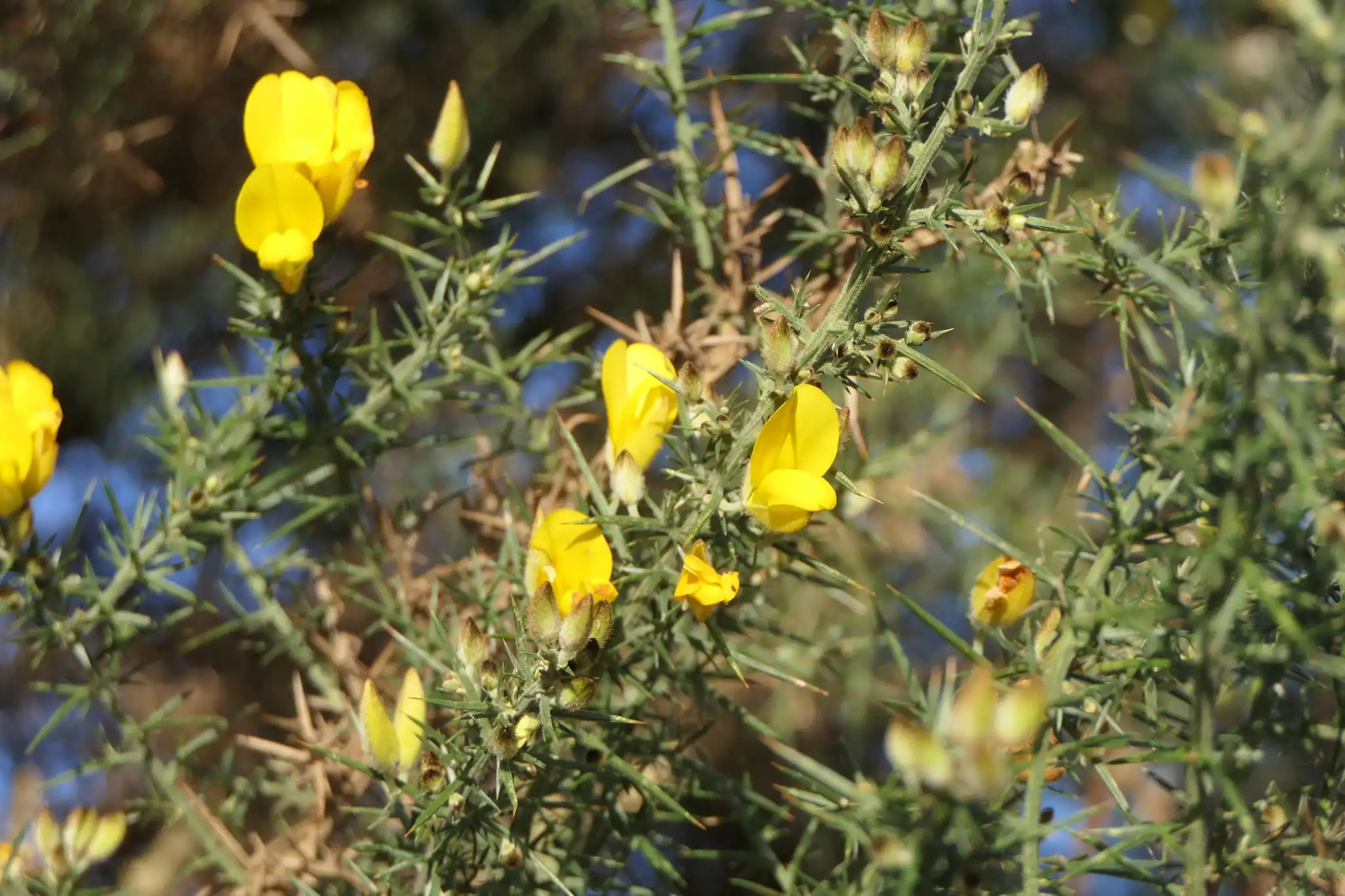
Ulex europaeus, the gorse, is an evergreen European shrub reaching three to ten feet in height, characterized by its rigid, densely branched form and formidable armor of sharp green spines. The bright yellow pea-like flowers emerge primarily in winter and spring, clustered tightly along the heavily modified, needle-like branches.
This species features leaves reduced to stiff, grooved spines up to an inch long, which minimize water loss and deter herbivores. A deep, extensive root system combined with nitrogen-fixing nodules allows it to thrive in highly acidic, nutrient-poor, and wind-swept coastal soils.
Uses & Benefits:
Essentials
At a Glance
Plant Type
Shrub
Height
118"
Width
118"
Light
Full Sun
Zones
6, 7, 8, 9
Water
Low
Humidity
Moderate to high
Lifespan
Perennial
Native To
Europe
Toxicity
Toxic seeds, mechanical injury from spines
Bloom period
Winter – Spring
In flower about 6 months of the year
Planting
How to Grow
- Select a site with full sun and exceptionally well-drained, poor, or sandy soil.
- Avoid adding any fertilizer or organic matter, as the plant fixes its own nitrogen.
- Wear heavy, puncture-resistant leather gloves and protective clothing when handling.
- Water sparingly only until established, after which the deep root system resists drought.
Pro Tip
Clearing adult top growth without treating the soil seedbank guarantees re-invasion, as the seeds remain viable in the ground for up to thirty years.
Keep It Thriving
Care Guide
Do
- Wear thick protective gear to prevent puncture wounds from the rigid spines.
- Ensure the planting site has excellent drainage to prevent root rot.
- Monitor surrounding soil for emerging seedlings from the persistent seedbank.
Don't
- Do not fertilize, as nutrient-rich soils are unnecessary and discourage natural form.
- Do not cut back into old, leafless wood, as bare stems fail to resprout.
- Do not plant near waterways or fire-prone areas due to high oil content and invasiveness.
Seasonal Care Calendar
| Task | Jan | Feb | Mar | Apr | May | Jun | Jul | Aug | Sep | Oct | Nov | Dec |
|---|---|---|---|---|---|---|---|---|---|---|---|---|
| Pest Check | ||||||||||||
| Prune | ||||||||||||
| Spring Cleanup |
Watch Out For
Pests & Diseases
Common Pests
Common Diseases
In the Garden
Landscape Uses & Companions
Landscape Uses
Companion Plants
Multiply
Propagation Methods
Good to Know
Common Questions
Gorse questions
What zones can Gorse grow in?
Gorse is hardy in USDA Zones 6–9. Inside that range it survives winter in the ground; outside it, grow it as an annual or a container plant you protect.
Is Gorse deer resistant?
Yes — Gorse is rated deer-resistant. Deer typically pass it over, though extreme hunger can override any plant's defenses.
When does Gorse bloom?
Gorse typically blooms in winter through spring. Exact timing shifts a week or two with your zone — Sow's bloom calendar maps it to your garden.
Does Gorse need full sun?
Gorse does best in full sun (6+ hours).
Is Gorse drought tolerant?
Yes — once established (usually after the first full season), Gorse handles dry spells with minimal watering. Water deeply its first year to build the root system that makes that possible.
Keep exploring
Explore the genus
Hardy in your zone?
Grow Gorse with confidence
See it in a design of your actual yard, get zone-matched care reminders, and track it season by season in your garden journal.