The Story
Plant Bio
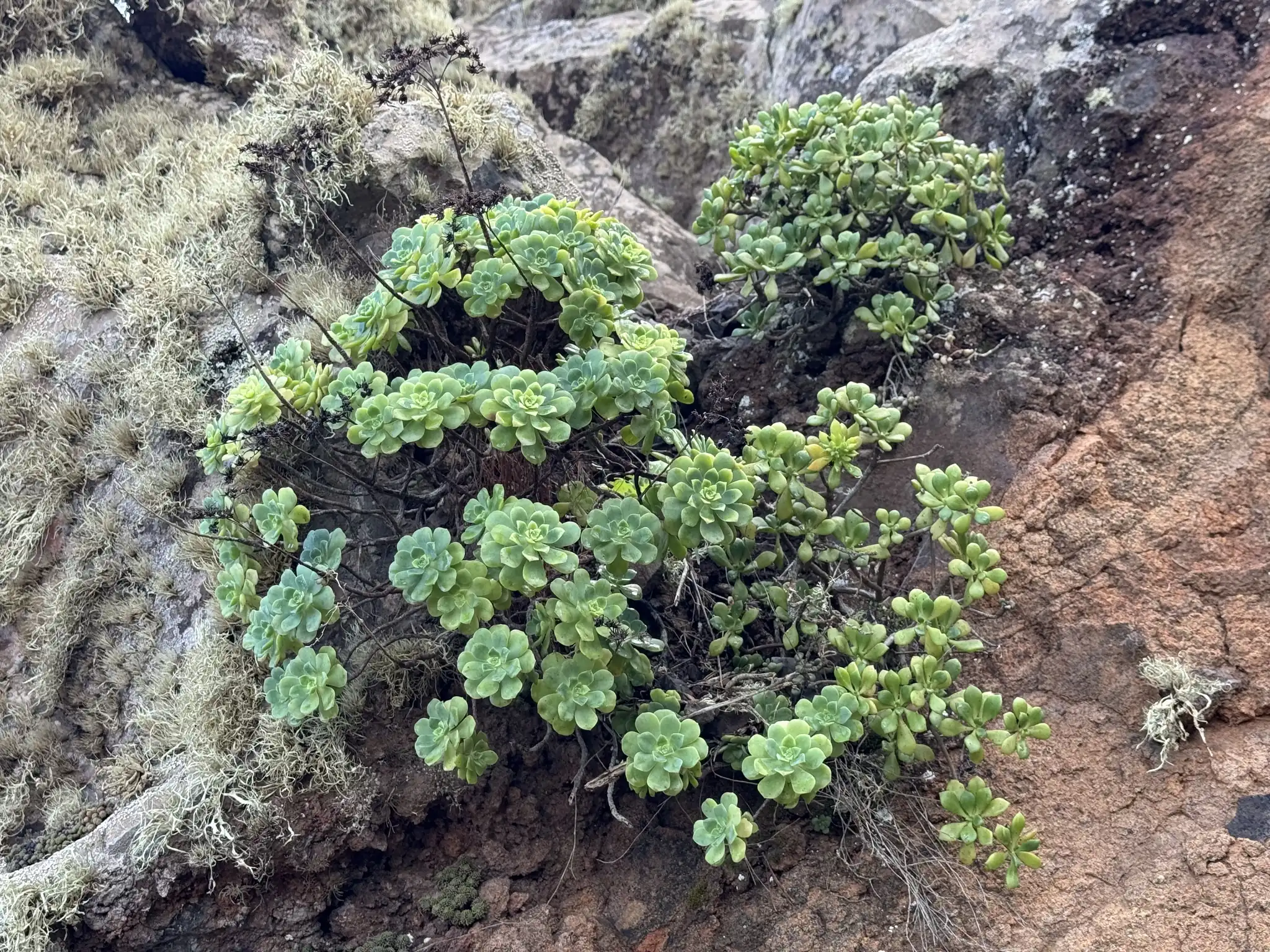
Aeonium castello-paivae is a compact, densely branching evergreen succulent that forms tight, multi-headed clumps of rosettes. The fleshy, pale green to blue-green leaves develop pink margins under bright light and produce a fine, powdery waxy bloom during summer dormancy.
This species is endemic to the island of La Gomera, producing small, white to creamy-white flowers on conical racemes from mature rosettes in spring and summer. Individual rosettes are monocarpic and die after flowering, but the surrounding offsets quickly fill the gap to maintain the dense mound.
Uses & Benefits:
Essentials
At a Glance
Plant Type
Cactus Succulent
Height
12"
Width
12"
Light
Full Sun, Partial Sun
Zones
9, 10
Water
Low
Humidity
Low
Lifespan
Perennial
Native To
La Gomera (Canary Islands)
Toxicity
Non-toxic
Bloom period
Spring – Summer
In flower about 6 months of the year
Planting
How to Grow
- Plant in a highly porous, gritty potting mix or sandy loam with a neutral to slightly acidic pH.
- Position the plant in full sun to partial shade, ensuring bright light to develop the pink leaf margins.
- Water deeply only when the soil has dried out completely, and withhold water almost entirely during the summer rest period.
- Protect the plant from freezing temperatures, as foliage damage occurs when temperatures drop below 25 degrees Fahrenheit.
Pro Tip
Amateurs frequently kill these plants by overwatering during their summer dormancy when active growth halts. Restrict watering significantly in summer, and provide light shade to prevent foliage scorch during intense midday heat.
Keep It Thriving
Care Guide
Do
- Provide sharp, excellent drainage to prevent root rot.
- Allow the soil to dry out completely between waterings.
- Move containers indoors or provide frost protection if temperatures threaten to drop below freezing.
Don't
- Do not water during the hot summer dormancy period when the plant is inactive.
- Do not cut into old, leafless woody stems when pruning, as new buds may fail to emerge.
- Do not allow the plant to sit in standing water or heavy, clay-rich soils.
Seasonal Care Calendar
| Task | Jan | Feb | Mar | Apr | May | Jun | Jul | Aug | Sep | Oct | Nov | Dec |
|---|---|---|---|---|---|---|---|---|---|---|---|---|
| Fertilize | ||||||||||||
| Pest Check | ||||||||||||
| Propagate | ||||||||||||
| Prune |
Watch Out For
Pests & Diseases
Common Pests
Common Diseases
In the Garden
Landscape Uses & Companions
Landscape Uses
Companion Plants
Multiply
Propagation Methods
Good to Know
Common Questions
Castello-Paiva's Aeonium questions
What zones can Castello-Paiva's Aeonium grow in?
Castello-Paiva's Aeonium is hardy in USDA Zones 9–10. Inside that range it survives winter in the ground; outside it, grow it as an annual or a container plant you protect.
When does Castello-Paiva's Aeonium bloom?
Castello-Paiva's Aeonium typically blooms in spring through summer. Exact timing shifts a week or two with your zone — Sow's bloom calendar maps it to your garden.
Does Castello-Paiva's Aeonium need full sun?
Castello-Paiva's Aeonium does best in full sun to part shade. In hot climates, afternoon shade keeps blooms fresher longer.
Is Castello-Paiva's Aeonium drought tolerant?
Yes — once established (usually after the first full season), Castello-Paiva's Aeonium handles dry spells with minimal watering. Water deeply its first year to build the root system that makes that possible.
More Aeonium to compare
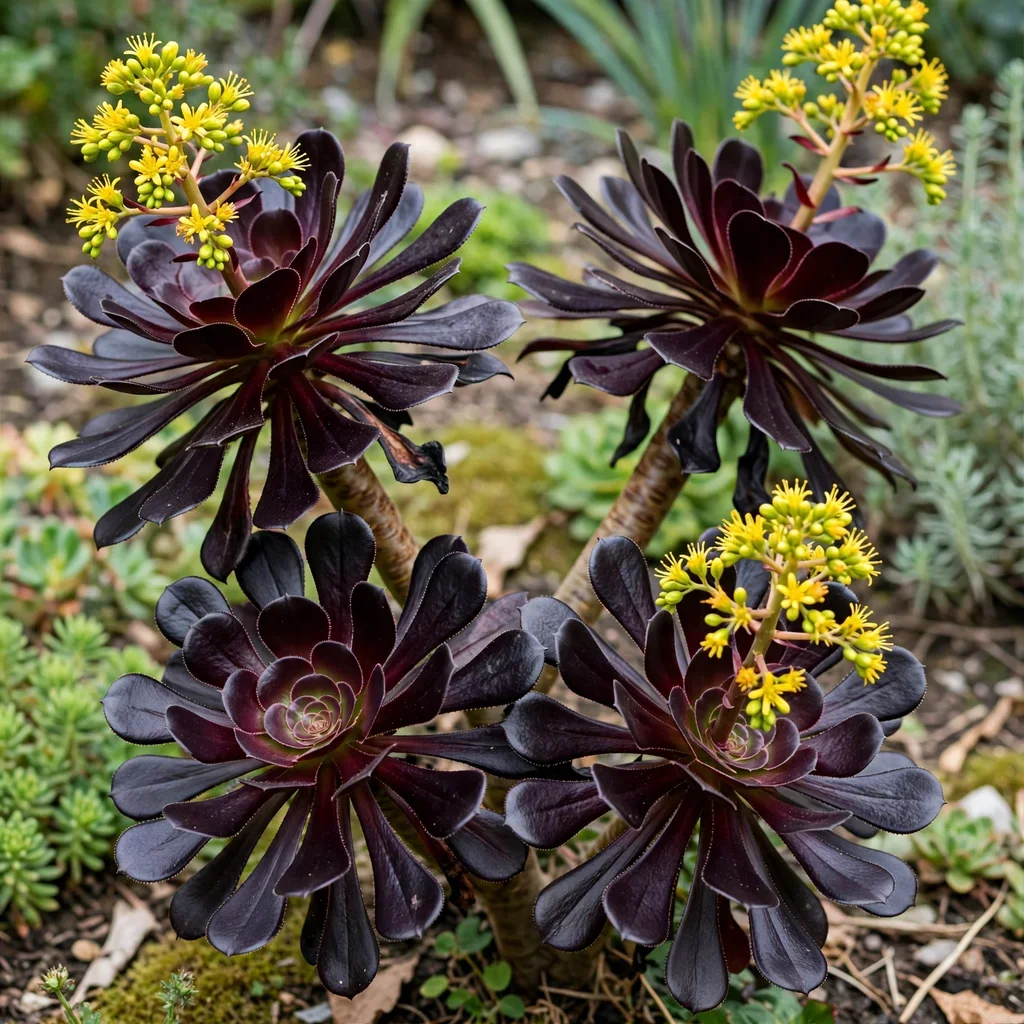
Black Rose Aeonium
Aeonium arboreum 'Zwartkop'
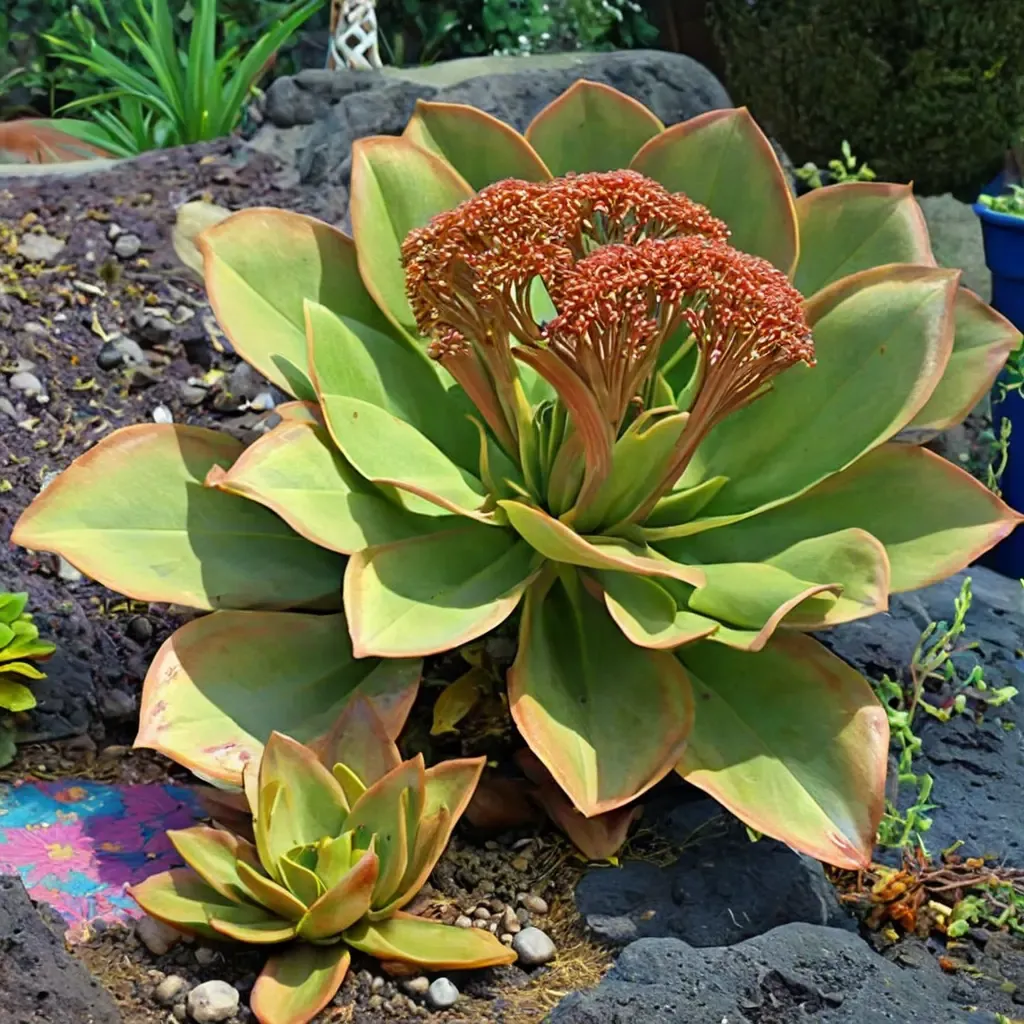
Noble Aeonium
Aeonium nobile
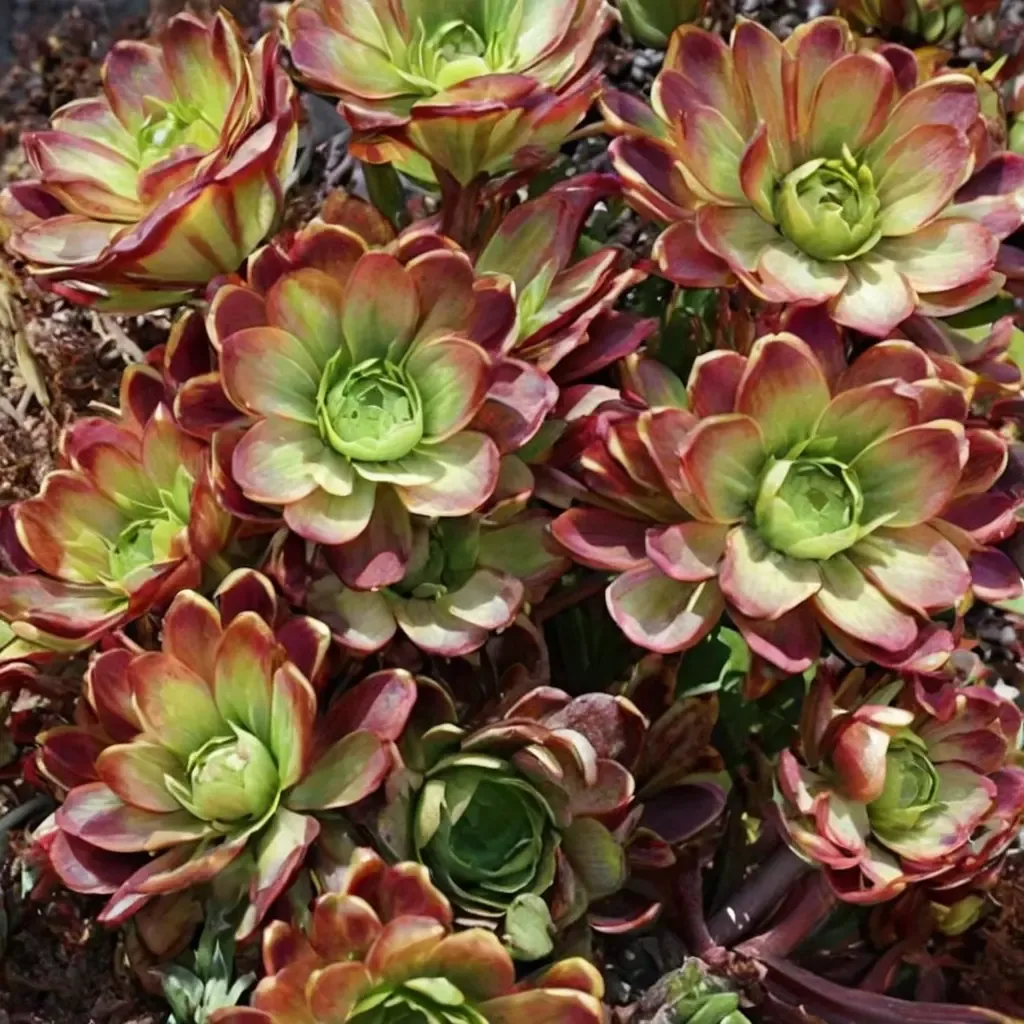
Jack Catlin aeonium Tree aeonium
Aeonium arboreum 'Jack Catlin'
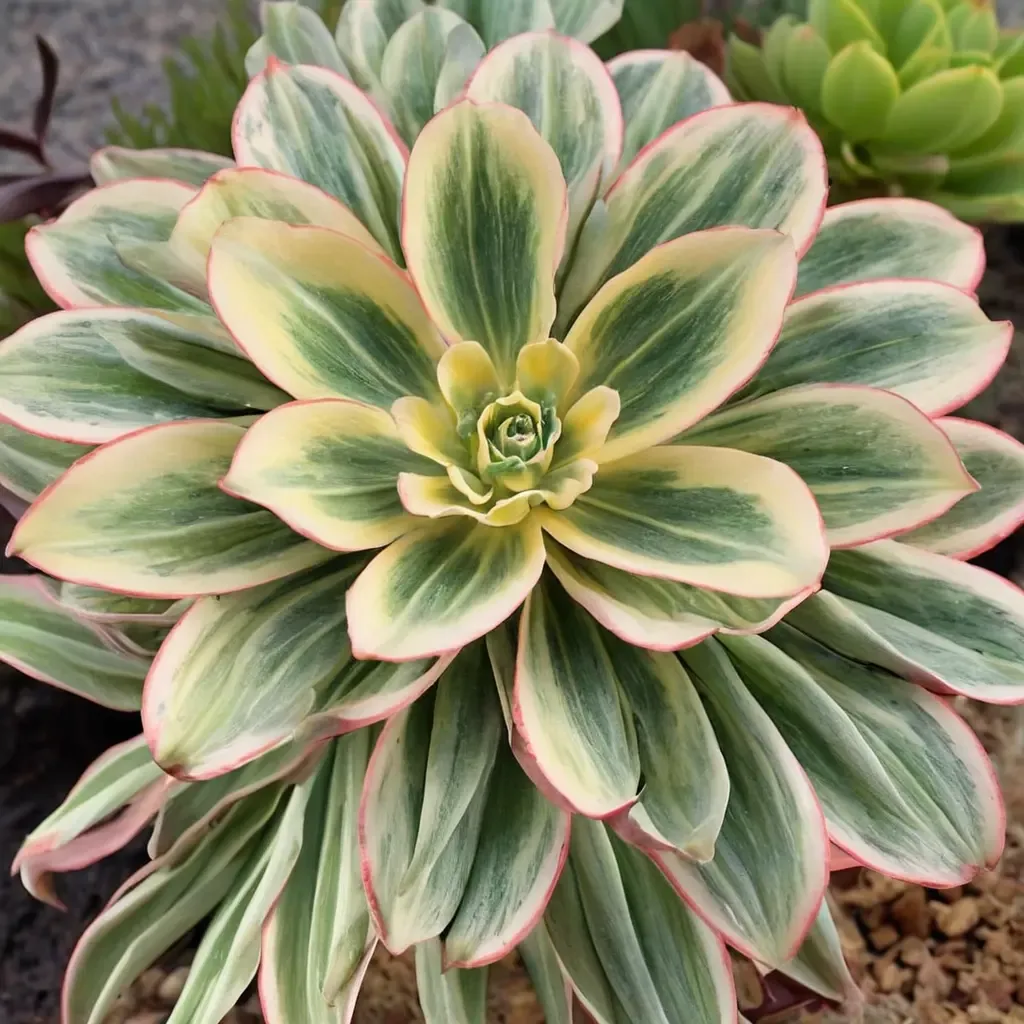
Sunburst Aeonium
Aeonium decorum 'Sunburst'
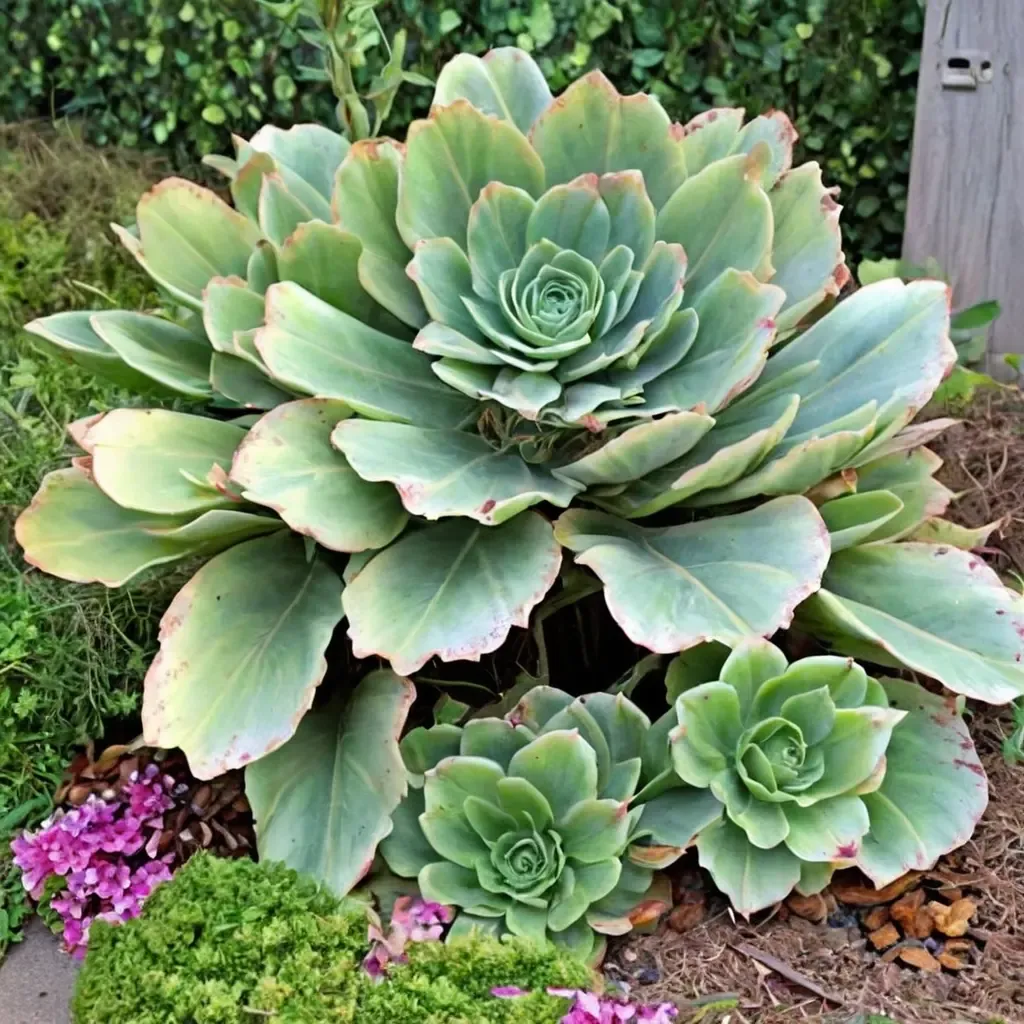
Tree Houseleek
Aeonium escobarii
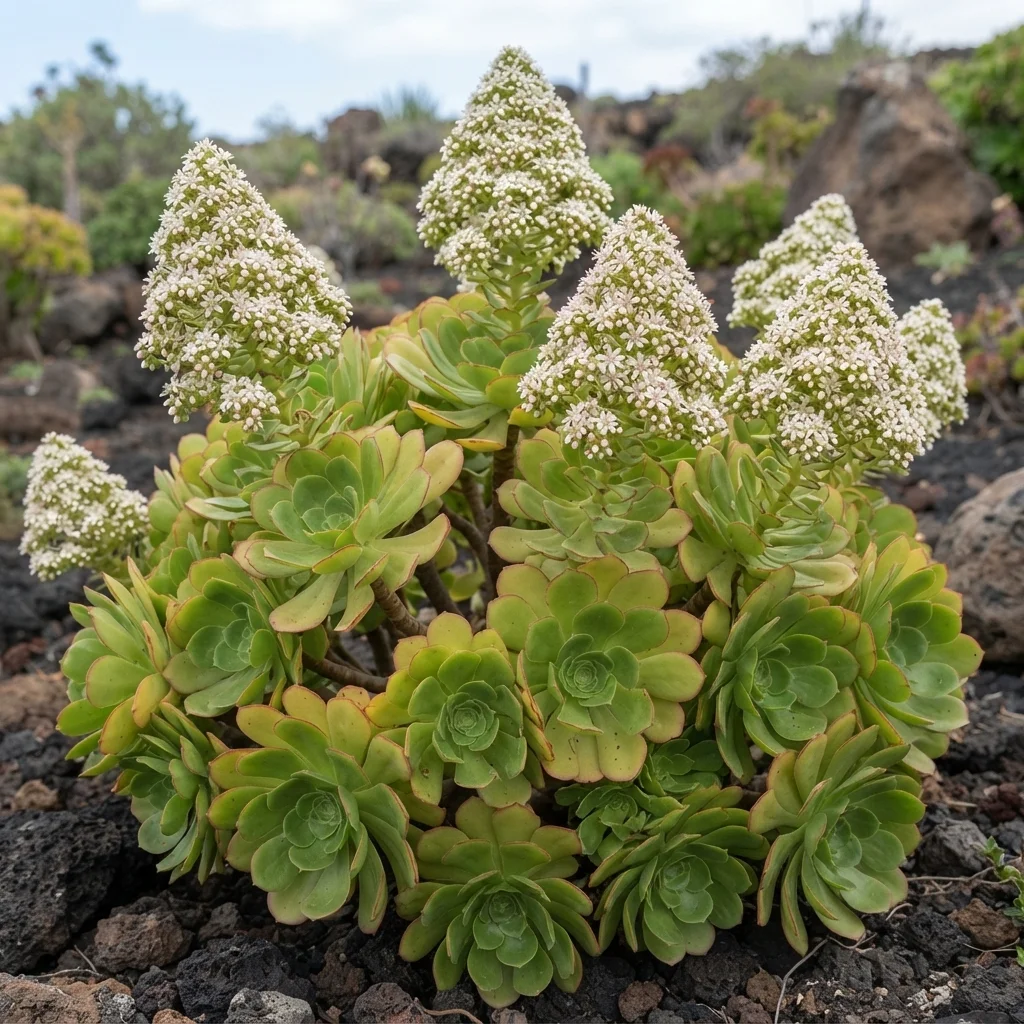
Lava-field aeonium
Aeonium lancerottense
Keep exploring
Explore the genus
Hardy in your zone?
Grow Castello-Paiva's Aeonium with confidence
See it in a design of your actual yard, get zone-matched care reminders, and track it season by season in your garden journal.