The Story
Plant Bio
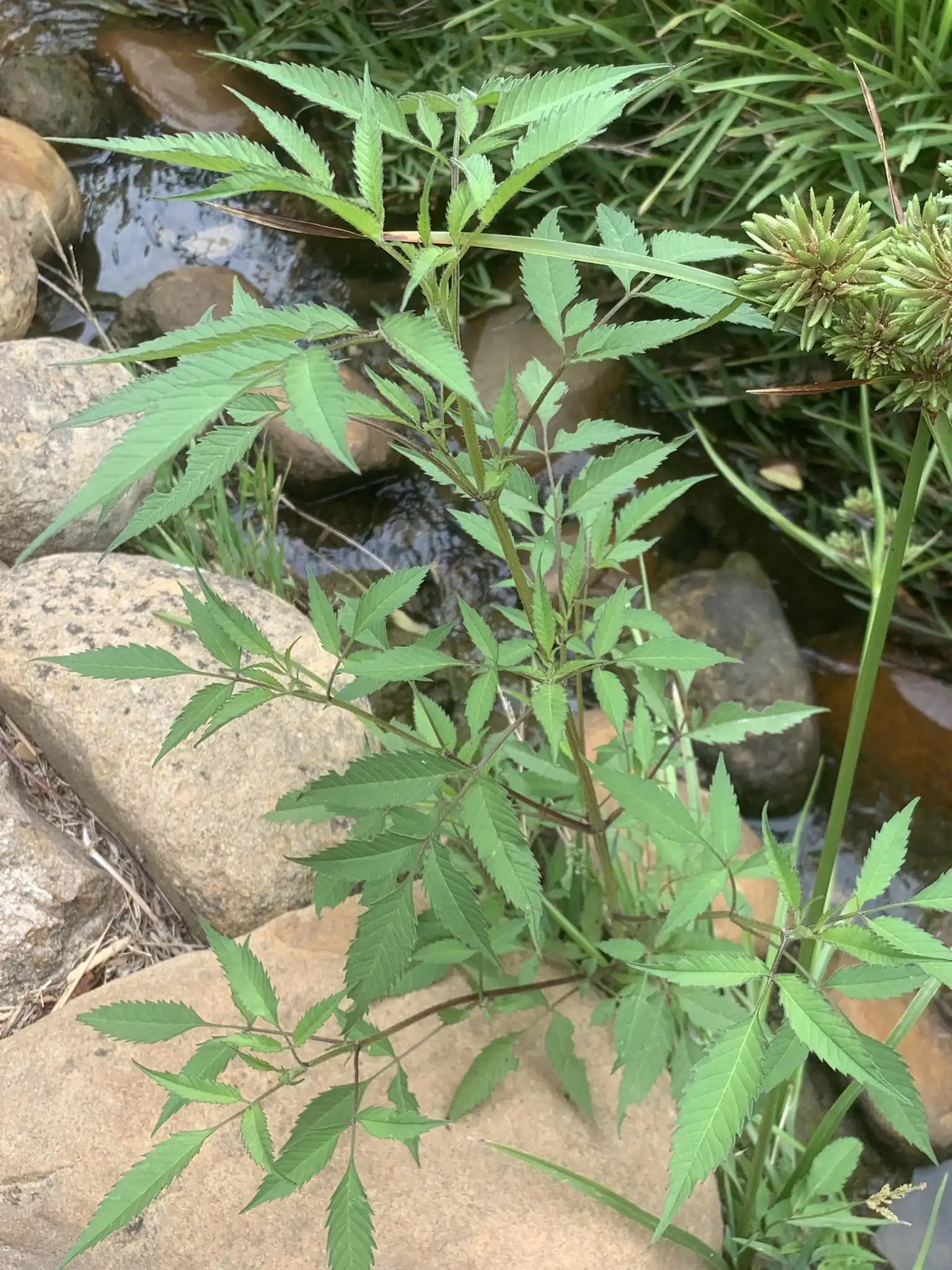
Bidens frondosa is an erect, branching annual herb native to North American wetlands, damp meadows, and disturbed sites. The square stems feature opposite, pinnately compound green leaves with sharply toothed margins and terminal flower heads composed of yellow to orange disc florets.
This species is characterized by its flat, dark brown achenes equipped with two barbed awns that cling aggressively to clothing and animal fur for seed dispersal. While highly beneficial to native pollinators, it requires careful seed management to prevent it from dominating moist garden spaces.
Uses & Benefits:
Essentials
At a Glance
Plant Type
Annual
Height
60"
Width
36"
Light
Full Sun, Partial Sun
Zones
4, 5, 6, 7, 8, 9
Water
High
Humidity
High
Lifespan
Annual
Native To
North America
Toxicity
Non-toxic
Bloom period
Summer – Fall
In flower about 6 months of the year
Planting
How to Grow
- Sow seeds directly onto damp soil in early spring after the final frost.
- Select a site in full sun to partial shade with moist to wet loamy, sandy, or clay soil.
- Water regularly to maintain high soil moisture levels, as plants wilt quickly under dry conditions.
- Monitor the area in subsequent springs to pull unwanted volunteer seedlings before they mature.
Pro Tip
Cut the entire plant down to the ground or deadhead the spent flower heads in late summer before the barbed seeds mature to prevent aggressive self-seeding.
Keep It Thriving
Care Guide
Do
- Keep the soil consistently moist to wet to support healthy growth.
- Deadhead the flower heads before they develop barbed seeds.
- Thin out dense patches of spring seedlings to maintain air circulation.
Don't
- Do not apply fertilizer, as excess nutrients cause weak, floppy stems.
- Do not allow the soil to dry out completely, which leads to rapid wilting.
- Do not prune into old, leafless wood because this is a soft-stemmed annual.
Seasonal Care Calendar
| Task | Jan | Feb | Mar | Apr | May | Jun | Jul | Aug | Sep | Oct | Nov | Dec |
|---|---|---|---|---|---|---|---|---|---|---|---|---|
| Deadhead | ||||||||||||
| Pest Check | ||||||||||||
| Plant | ||||||||||||
| Propagate |
Watch Out For
Pests & Diseases
Common Pests
Common Diseases
In the Garden
Landscape Uses & Companions
Landscape Uses
Companion Plants
Multiply
Propagation Methods
Good to Know
Common Questions
Devil's Beggarticks questions
What zones can Devil's Beggarticks grow in?
Devil's Beggarticks is hardy in USDA Zones 4–9. Inside that range it survives winter in the ground; outside it, grow it as an annual or a container plant you protect.
Is Devil's Beggarticks deer resistant?
Not reliably. Deer may browse Devil's Beggarticks, especially tender spring growth — plan on repellents or fencing where pressure is high.
When does Devil's Beggarticks bloom?
Devil's Beggarticks typically blooms in summer through fall. Exact timing shifts a week or two with your zone — Sow's bloom calendar maps it to your garden.
Does Devil's Beggarticks need full sun?
Devil's Beggarticks does best in full sun to part shade. In hot climates, afternoon shade keeps blooms fresher longer.
More Bidens to compare

Keep exploring
Explore the genus
Grow Devil's Beggarticks with confidence
See it in a design of your actual yard, get zone-matched care reminders, and track it season by season in your garden journal.