The Story
Plant Bio
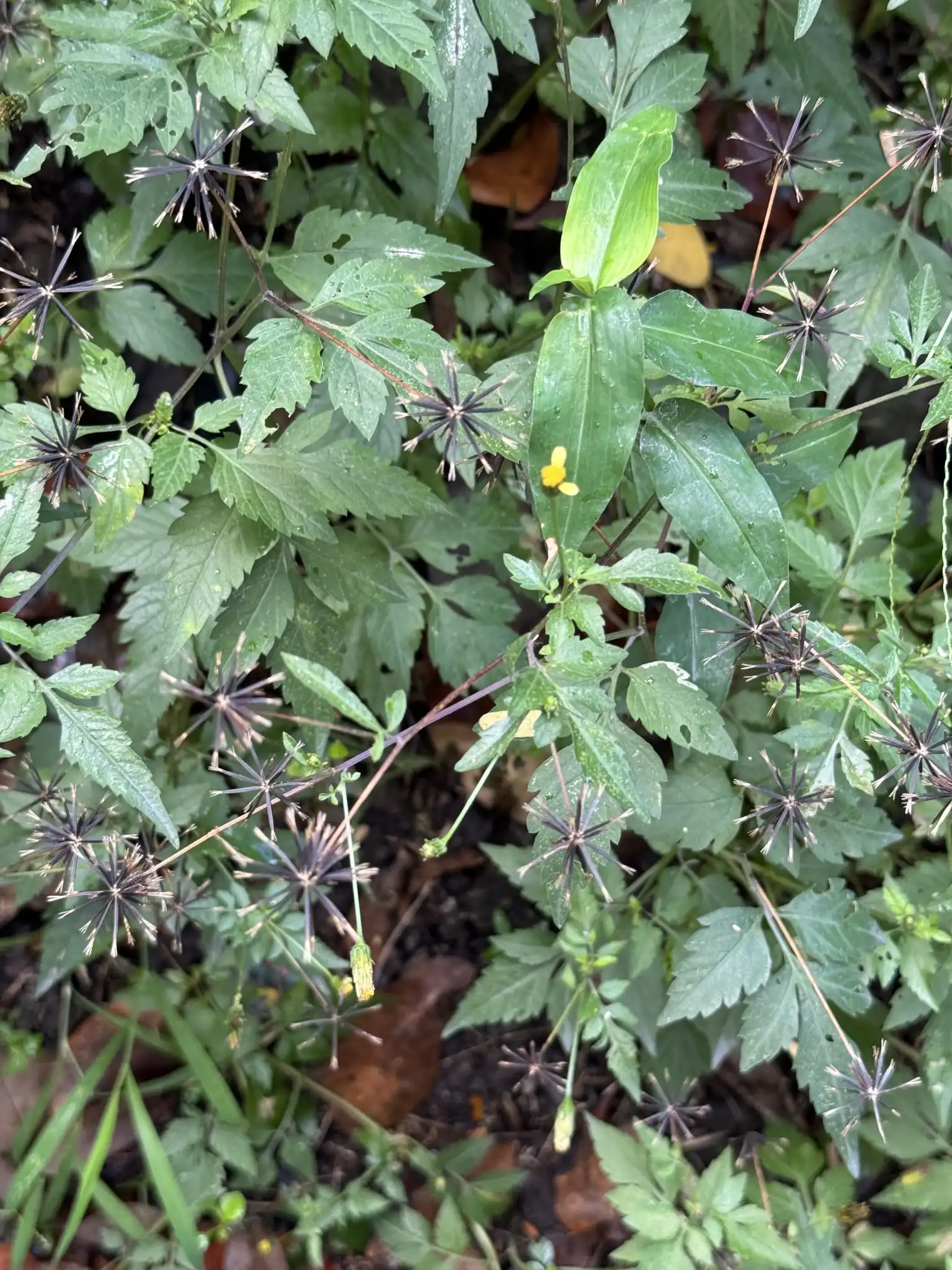
Bidens bipinnata, commonly known as Spanish needles, is an erect, branching annual herb native to eastern and central North America. It features deeply divided, fern-like dark green foliage and produces small, yellow flower heads throughout summer and fall.
The species is distinguished by its highly dissected, bipinnate leaves and its narrow, barbed seeds that cling tenaciously to passing animals and clothing. While serving as a native wildflower, its aggressive self-seeding habit often causes it to behave as a weed in disturbed garden soils.
Uses & Benefits:
Essentials
At a Glance
Plant Type
Annual
Height
60"
Width
24"
Light
Full Sun, Partial Sun
Zones
4, 5, 6, 7, 8, 9, 10
Water
Low to Moderate
Humidity
High
Lifespan
Annual
Native To
North America
Toxicity
Minor Contact Irritant / Ingestion Hazard
Bloom period
Summer – Fall
In flower about 6 months of the year
Planting
How to Grow
- Sow seeds directly into well-drained soil in spring once the threat of hard frost has passed.
- Select a site in full sun to partial shade with sandy, loamy, or rocky soil.
- Water moderately during establishment, then reduce frequency as the plant develops high drought tolerance.
- Deadhead the spent yellow flowers continuously if you wish to prevent the aggressive spread of the barbed seeds.
Pro Tip
Withhold all supplemental fertilizer to maintain a sturdy, upright form; excess nutrients cause the stems to become weak and floppy, requiring artificial staking.
Keep It Thriving
Care Guide
Do
- Grow in poor, well-drained soils to encourage compact, self-supporting growth.
- Wear gloves when handling the foliage to avoid potential skin irritation.
- Allow the plant to complete its annual cycle if naturalized self-seeding is desired.
Don't
- Do not apply nitrogen-rich fertilizers, which trigger weak, floppy stems.
- Do not plant in poorly drained or waterlogged soils where root rot can develop.
- Do not allow the seed heads to mature near paths or pet runs where the barbed awns will cling to fur and clothing.
Seasonal Care Calendar
| Task | Jan | Feb | Mar | Apr | May | Jun | Jul | Aug | Sep | Oct | Nov | Dec |
|---|---|---|---|---|---|---|---|---|---|---|---|---|
| Deadhead | ||||||||||||
| Pest Check | ||||||||||||
| Plant | ||||||||||||
| Spring Cleanup |
Watch Out For
Pests & Diseases
Common Pests
Common Diseases
In the Garden
Landscape Uses & Companions
Landscape Uses
Companion Plants
Multiply
Propagation Methods
Good to Know
Common Questions
Spanish Needles questions
What zones can Spanish Needles grow in?
Spanish Needles is hardy in USDA Zones 4–10. Inside that range it survives winter in the ground; outside it, grow it as an annual or a container plant you protect.
Is Spanish Needles deer resistant?
Not reliably. Deer may browse Spanish Needles, especially tender spring growth — plan on repellents or fencing where pressure is high.
When does Spanish Needles bloom?
Spanish Needles typically blooms in summer through fall. Exact timing shifts a week or two with your zone — Sow's bloom calendar maps it to your garden.
Does Spanish Needles need full sun?
Spanish Needles does best in full sun to part shade. In hot climates, afternoon shade keeps blooms fresher longer.
Is Spanish Needles drought tolerant?
Yes — once established (usually after the first full season), Spanish Needles handles dry spells with minimal watering. Water deeply its first year to build the root system that makes that possible.
More Bidens to compare

Keep exploring
Explore the genus
Grow Spanish Needles with confidence
See it in a design of your actual yard, get zone-matched care reminders, and track it season by season in your garden journal.