The Story
Plant Bio
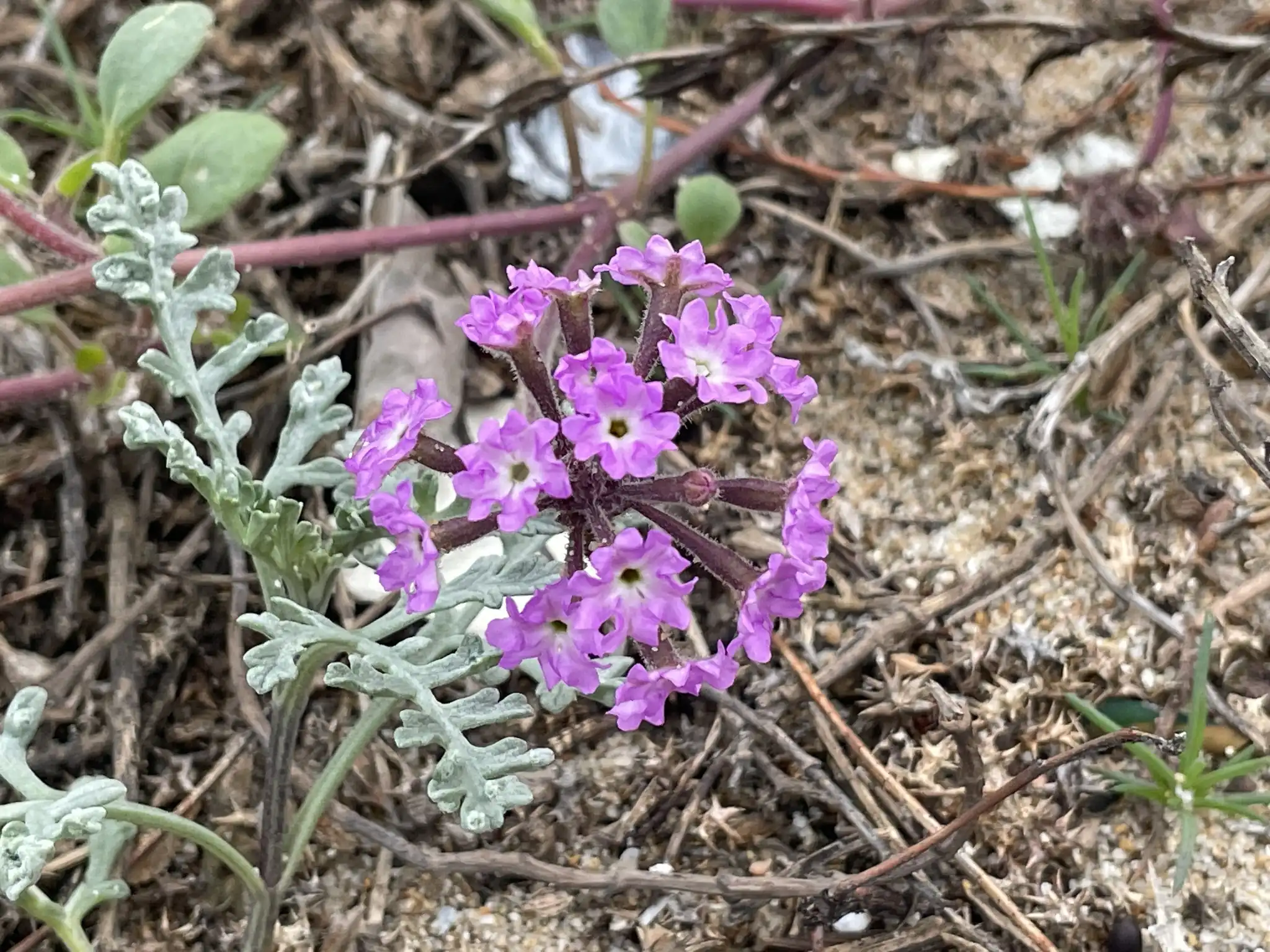
Abronia umbellata is a trailing groundcover native to western North American coastal dunes, forming low carpets of succulent, light green foliage on stems flushed with red or purple. Dense, head-like umbels of fragrant pink to purplish-pink calyx lobes bloom continuously from spring through fall.
The highly scented blooms release their perfume predominantly at night to attract nocturnal moth pollinators. Fleshy, thick leaves and a deep taproot allow the plant to thrive in nutrient-poor coastal sand and saline salt spray.
Uses & Benefits:
Essentials
At a Glance
Plant Type
Groundcover
Height
12"
Width
72"
Light
Full Sun
Zones
8, 9, 10
Water
Low
Humidity
Low
Lifespan
Perennial
Native To
Western North America
Toxicity
Non-toxic
Bloom period
Spring – Autumn
In flower about 9 months of the year
Planting
How to Grow
- Choose a full-sun site with lean, loose sandy soil or gravel.
- Excavate a hole deep enough to hold the taproot straight without curling.
- Settle the plant into place with a light watering, keeping the main crown above the soil line.
- Avoid fertilizers and organic mulches, keeping moisture minimal once established.
Pro Tip
Keep the root crown situated in sharp, pure sand and withhold heavy irrigation; organic matter and excessive summer moisture cause rapid stem and root rot.
Keep It Thriving
Care Guide
Do
- Grow in full sun and unamended, gritty sand
- Ensure flawless, fast soil drainage
- Allow the substrate to dry completely between waterings
Don't
- Do not prune into old, leafless woody stems
- Do not apply heavy fertilizers or organic compost
- Do not allow standing water or heavy clay near the root system
Seasonal Care Calendar
| Task | Jan | Feb | Mar | Apr | May | Jun | Jul | Aug | Sep | Oct | Nov | Dec |
|---|---|---|---|---|---|---|---|---|---|---|---|---|
| Pest Check | ||||||||||||
| Plant | ||||||||||||
| Propagate | ||||||||||||
| Prune |
Watch Out For
Pests & Diseases
Common Pests
Common Diseases
In the Garden
Landscape Uses & Companions
Landscape Uses
Companion Plants
Multiply
Propagation Methods
Good to Know
Common Questions
Pink Sand Verbena questions
What zones can Pink Sand Verbena grow in?
Pink Sand Verbena is hardy in USDA Zones 8–10. Inside that range it survives winter in the ground; outside it, grow it as an annual or a container plant you protect.
Is Pink Sand Verbena deer resistant?
Not reliably. Deer may browse Pink Sand Verbena, especially tender spring growth — plan on repellents or fencing where pressure is high.
When does Pink Sand Verbena bloom?
Pink Sand Verbena typically blooms in spring through autumn. Exact timing shifts a week or two with your zone — Sow's bloom calendar maps it to your garden.
Does Pink Sand Verbena need full sun?
Pink Sand Verbena does best in full sun (6+ hours).
Is Pink Sand Verbena drought tolerant?
Yes — once established (usually after the first full season), Pink Sand Verbena handles dry spells with minimal watering. Water deeply its first year to build the root system that makes that possible.
Keep exploring
Explore the genus
Hardy in your zone?
Grow Pink Sand Verbena with confidence
See it in a design of your actual yard, get zone-matched care reminders, and track it season by season in your garden journal.