Also known as Bindweed · 12 saves
Calystegia
Calystegia, the genus most gardeners know as bindweed. We track 4 varieties; the ones most used by real gardeners.
The 4 most-saved Calystegia varieties
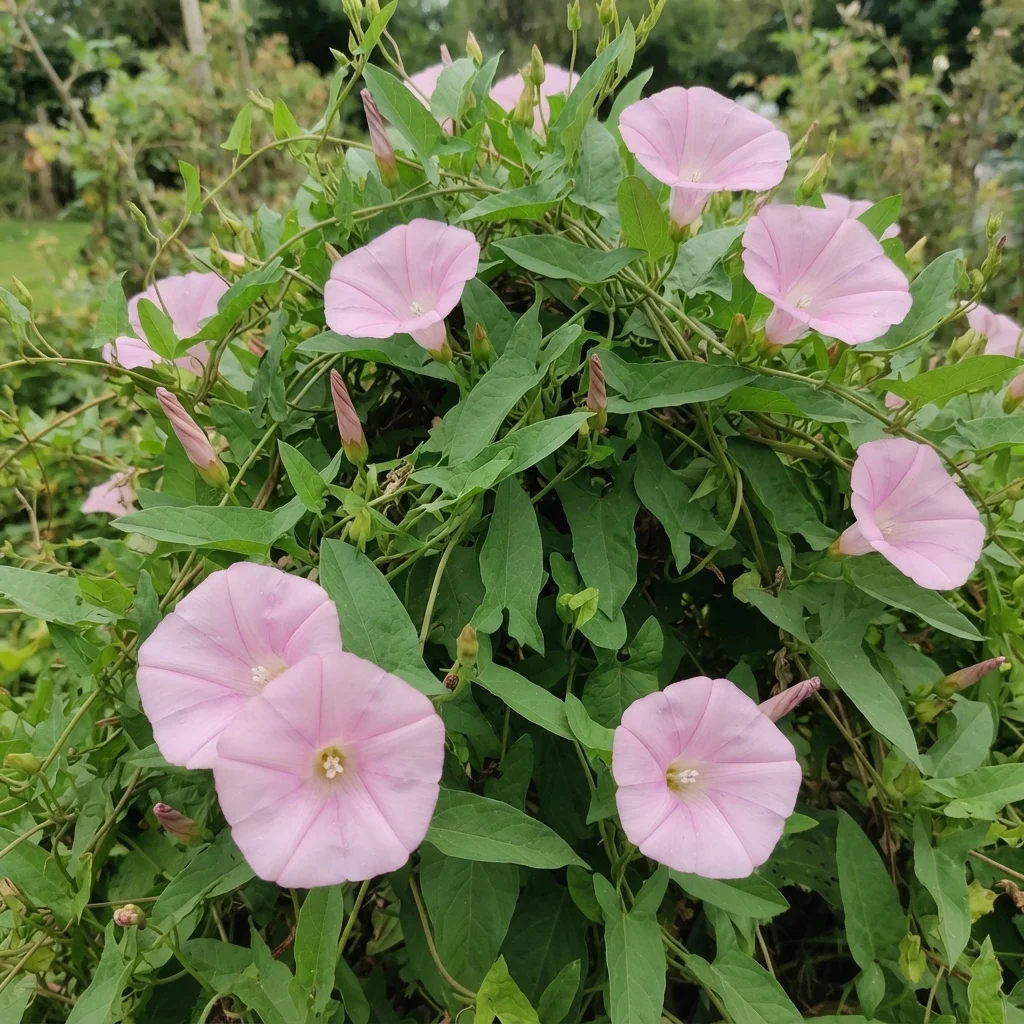
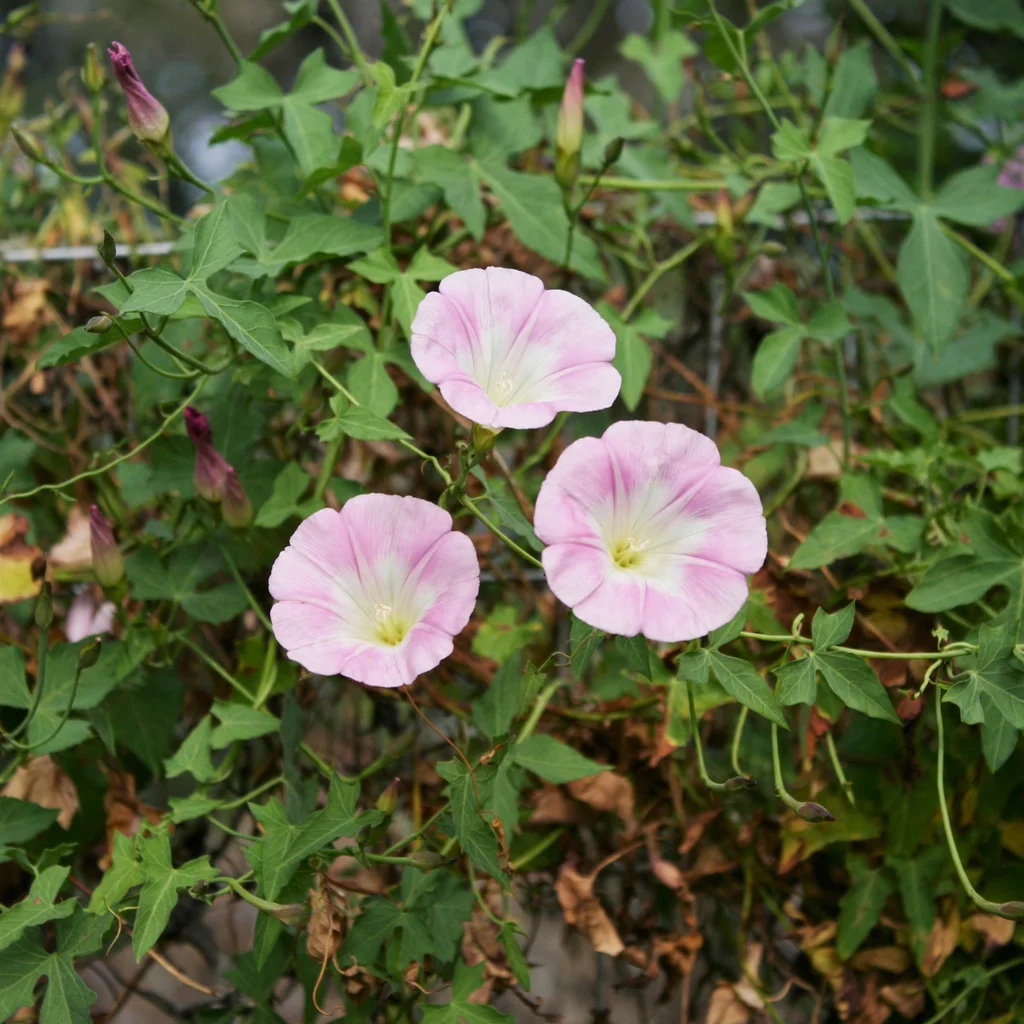
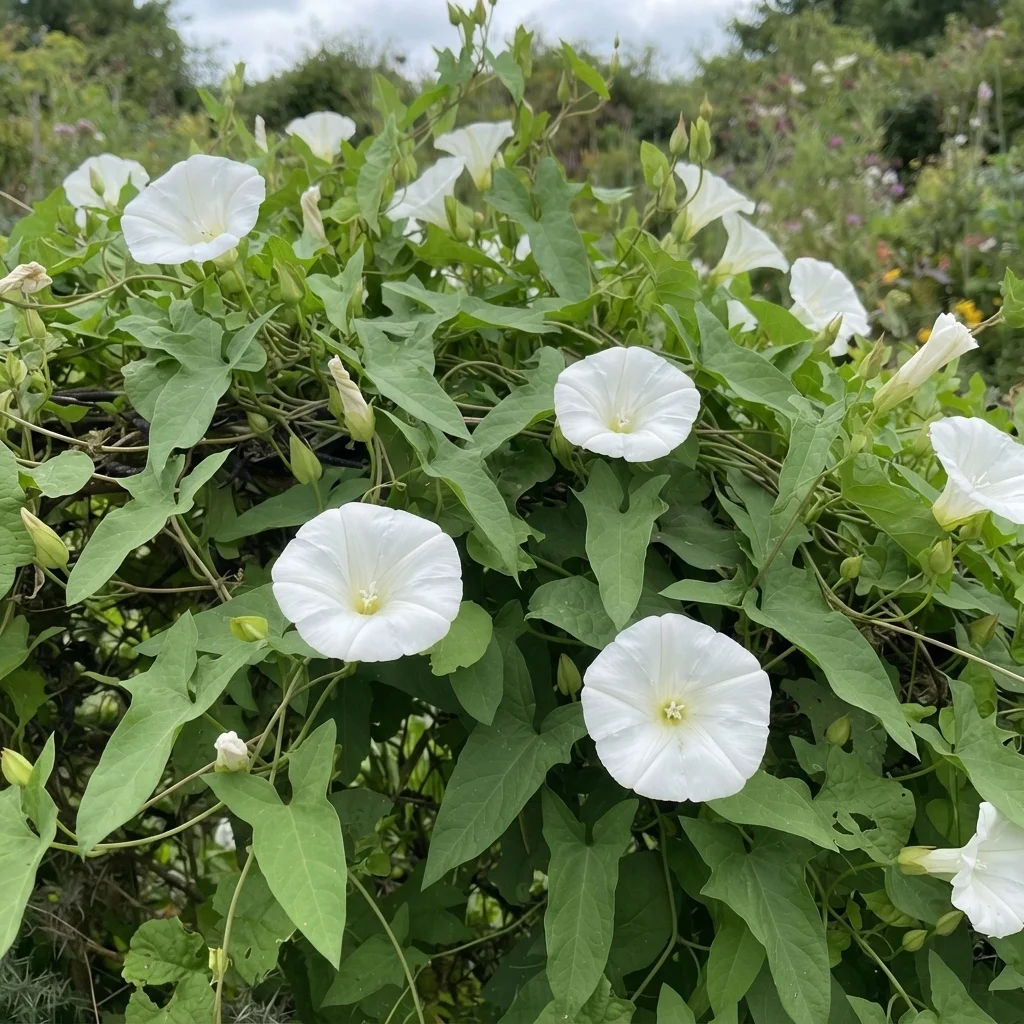
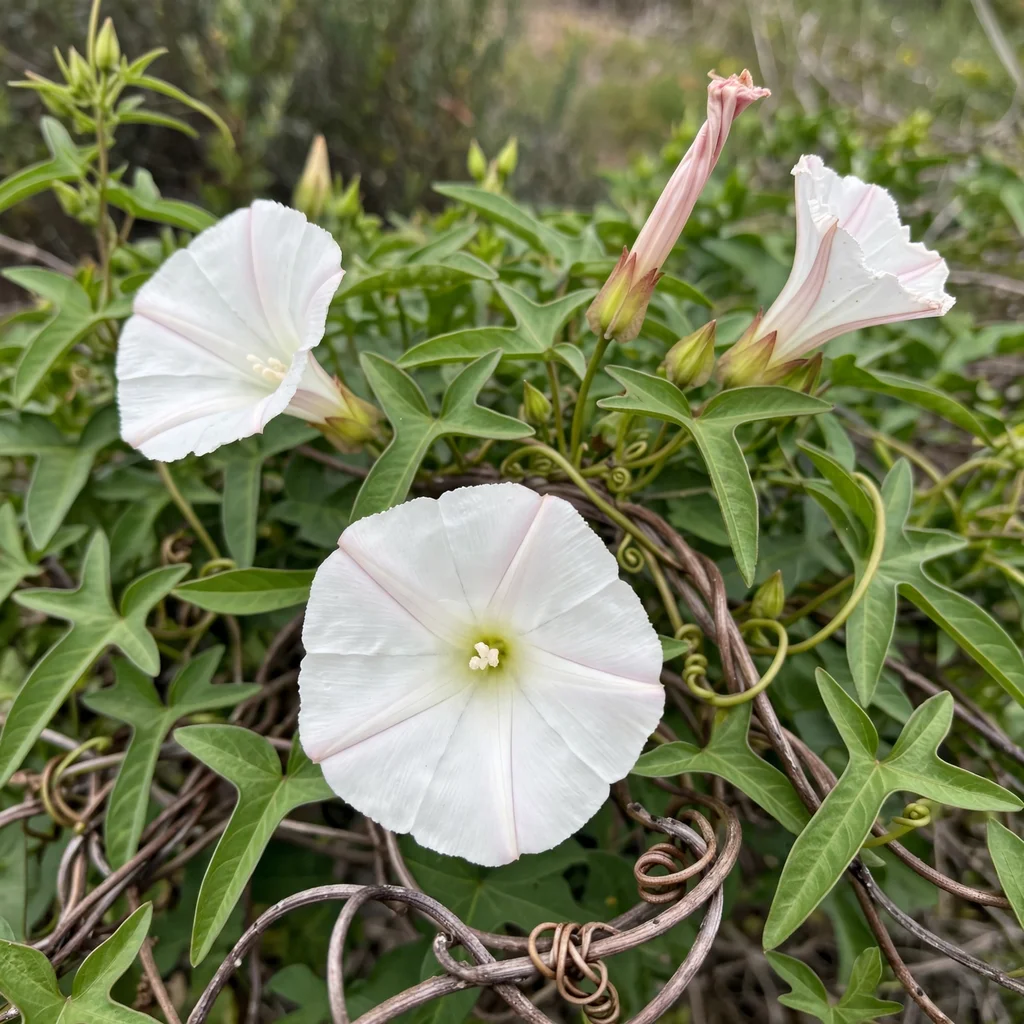
4 species of Calystegia
Each one is a parent of the varieties above.
Track your Calystegia in Sow
Save the Calystegia you grow and get care reminders timed to your zone.
How to grow Calystegia
Whats common across all Calystegia varieties in our catalog — drawn from the care records of the 4 most-grown of them.
The Calystegia year
- PruneFebruary and March100% of varieties
Cut back aggressive topgrowth regularly to prevent the vine from smothering adjacent plants.
- Check for PestsMay–July100% of varieties
Inspect the tender new shoots for aphids and signs of deer or rabbit browsing.
- PropagateMarch and April50% of varieties
Divide the creeping underground rhizomes in early spring if propagation is desired.
- MulchApril50% of varieties
Apply a thin mulch layer to hold soil moisture, keeping it back from the crown.


Do
- Dig deep to extract the entire root system when attempting eradication.
- Wear gloves when handling the plant to avoid skin irritation from the milky sap.
- Use physical root barriers to prevent the rhizomes from invading adjacent garden beds.
- Do provide a sturdy trellis or fence for the twining stems to climb.
- Do water deeply every one to two weeks in dry weather for best bloom.
Avoid
- Do not leave snapped root fragments in the soil, as they will rapidly resprout.
- Do not plant this species near delicate ornamentals that can be easily smothered by its vigorous growth.
- Do not compost the pulled stems or roots, which can survive and establish elsewhere.
- Do not plant beside small slow perennials it can overtop and smother.
What goes wrong with Calystegia
| Problem | What you'll see | What to do |
|---|---|---|
| Aphids | Distorted shoot tips and sticky honeydew on the foliage. | Wash the pests off with a strong spray of water or apply insecticidal soap. |
| Spider mites | Fine webbing and yellow stippling on the leaves under dry conditions. | Increase humidity around the foliage and apply horticultural oil if infestations persist. |
| Mammalian herbivores | Chewed tender young shoots and foliage from deer or rabbits. | Protect vulnerable areas with physical fencing or apply scent-based repellents. |
| Tortoise beetles | Small, clean-cut holes in the leaves. | Handpick beetles or apply organic neem oil to foliage. |
| Powdery mildew | White, powdery fungal patches on the upper leaf surfaces during humid weather. | Ensure adequate air circulation and remove heavily infected foliage. |
| Root rot | Yellowing leaves and wilting stems despite moist soil, caused by waterlogging. | Improve soil drainage and reduce watering frequency. |
| Leaf spot fungi | Brown or black spots on foliage, leading to premature leaf drop. | Remove affected leaves and clean up fallen debris in autumn. |
Making more Calystegia
Rhizome Division
- Locate a healthy section of the underground creeping rhizome.
- Exhume a segment containing at least one viable growth node.
- Plant the fragment into moist, well-draining soil at a shallow depth.
- Water consistently until new shoots emerge from the soil.
Division
- Lift a section of rootstock in early spring as new shoots emerge.
- Cut the rhizome into pieces each with roots and a shoot bud.
- Replant at the same depth against its new support and firm the soil.
- Water in well and keep evenly moist until new twining growth starts.
Calystegia questions
How many types of Calystegia are there?
The Sow catalog tracks 4 distinct Calystegia varieties. The most popular — ranked by 12 real gardeners — are shown first above.
What zones does Calystegia grow in?
Across its varieties, Calystegia covers USDA Zones 4–10. Individual varieties differ — each plant page lists its exact range, and Sow filters the catalog to your zone automatically.
When does Calystegia bloom?
Most Calystegia varieties bloom from spring to fall.
Which Calystegia should I choose?
Start from the most-saved varieties above — popularity across thousands of gardens is a strong signal of reliability — then filter by your zone and sun. In the Sow app you can preview any of them in a photo of your actual yard before you buy.