The Story
Plant Bio
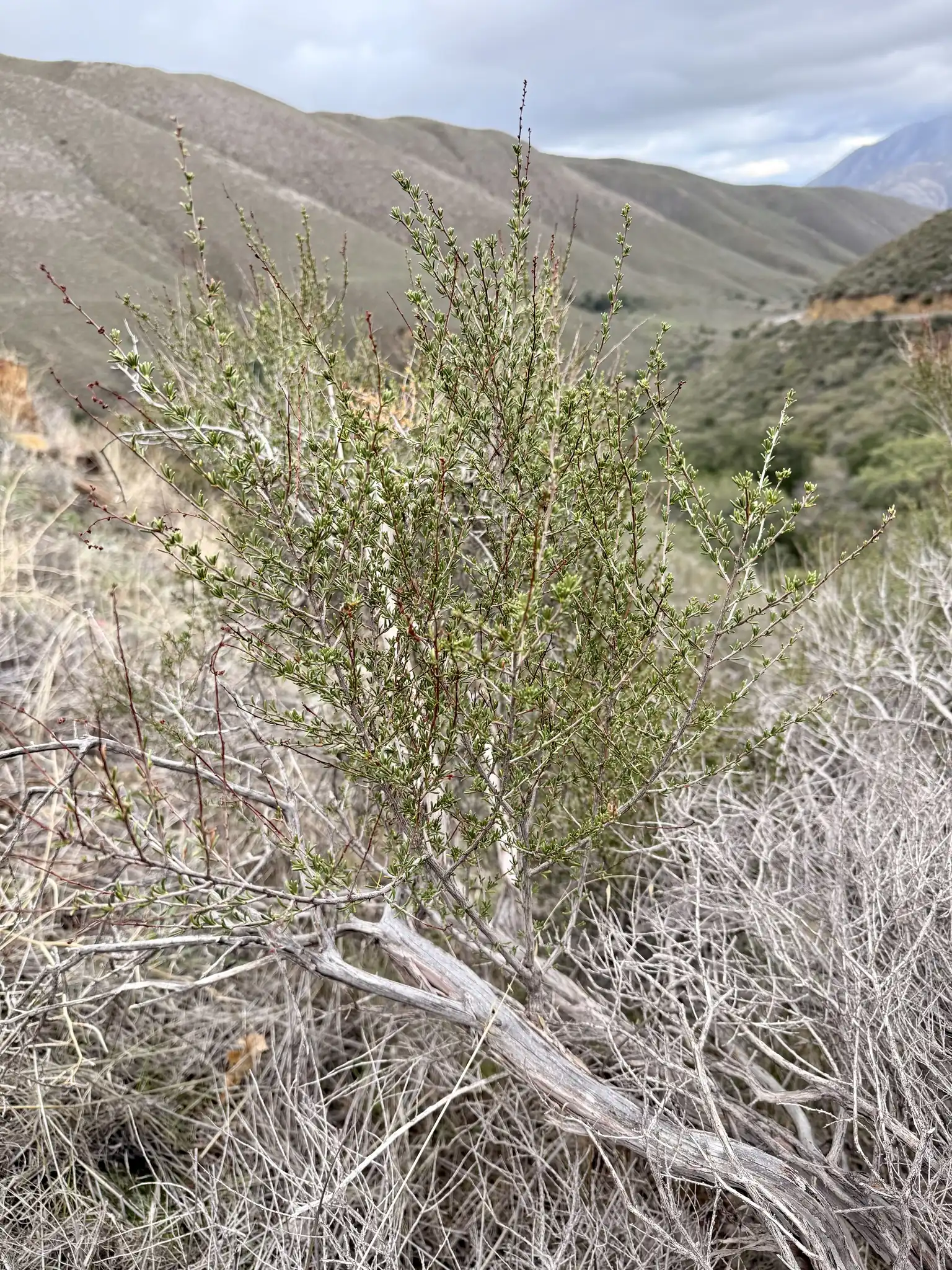
Adenostoma fasciculatum, commonly known as chamise, is an upright, multi-stemmed broadleaf evergreen shrub native to the dry chaparral slopes of western North America. It features needle-like dark green leaves arranged in tight clusters along resinous stems that turn gray and shreddy with age.
Dense pyramidal clusters of tiny white to creamy blossoms cover the branch tips from late winter into early summer. A large underground lignotuber allows the plant to resprout following wildfire, though its oily foliage makes it exceptionally flammable.
Uses & Benefits:
Essentials
At a Glance
Plant Type
Shrub
Height
120"
Width
96"
Light
Full Sun
Zones
8, 9, 10
Water
Low
Humidity
Low
Lifespan
Perennial
Native To
Western North America
Toxicity
Non-toxic (resins may irritate skin)
Bloom period
Spring – Early summer
In flower about 4 months of the year
Planting
How to Grow
- Select a site in full sun with gritty, sandy, or rocky soil that drains rapidly.
- Plant in autumn or early spring, placing the root crown flush with the soil line.
- Water deeply at planting and soak occasionally during the first summer to establish roots.
- Cease routine summer watering completely once established to prevent soil-borne pathogens.
Pro Tip
Never prune hard into old, leafless woody stems; chamise lacks dormant buds on aged wood and will fail to regenerate from hard cuts.
Keep It Thriving
Care Guide
Do
- Plant in sharply draining, lean soils
- Lightly tip-prune green growth after flowering
- Maintain defensible space around buildings due to high flammability
Don't
- Do not water established plants during hot summer months
- Do not prune into hard, leafless old wood
- Do not apply fertilizers or heavy organic mulches
Seasonal Care Calendar
| Task | Jan | Feb | Mar | Apr | May | Jun | Jul | Aug | Sep | Oct | Nov | Dec |
|---|---|---|---|---|---|---|---|---|---|---|---|---|
| Mulch | ||||||||||||
| Pest Check | ||||||||||||
| Prune | ||||||||||||
| Spring Cleanup |
Watch Out For
Pests & Diseases
Common Pests
Common Diseases
In the Garden
Landscape Uses & Companions
Landscape Uses
Multiply
Propagation Methods
Good to Know
Common Questions
Chamise questions
What zones can Chamise grow in?
Chamise is hardy in USDA Zones 8–10. Inside that range it survives winter in the ground; outside it, grow it as an annual or a container plant you protect.
Is Chamise deer resistant?
Not reliably. Deer may browse Chamise, especially tender spring growth — plan on repellents or fencing where pressure is high.
When does Chamise bloom?
Chamise typically blooms in spring through early summer. Exact timing shifts a week or two with your zone — Sow's bloom calendar maps it to your garden.
Does Chamise need full sun?
Chamise does best in full sun (6+ hours).
Is Chamise drought tolerant?
Yes — once established (usually after the first full season), Chamise handles dry spells with minimal watering. Water deeply its first year to build the root system that makes that possible.
Keep exploring
Explore the genus
Hardy in your zone?
Grow Chamise with confidence
See it in a design of your actual yard, get zone-matched care reminders, and track it season by season in your garden journal.