The Story
Plant Bio
Knightia excelsa, the rewarewa, is a tall, evergreen tree native to New Zealand that develops a strikingly narrow, columnar crown. In late spring and early summer, it produces dense, brush-like racemes of dull reddish-brown to bright red flowers that emit a strong, foetid odor up close.
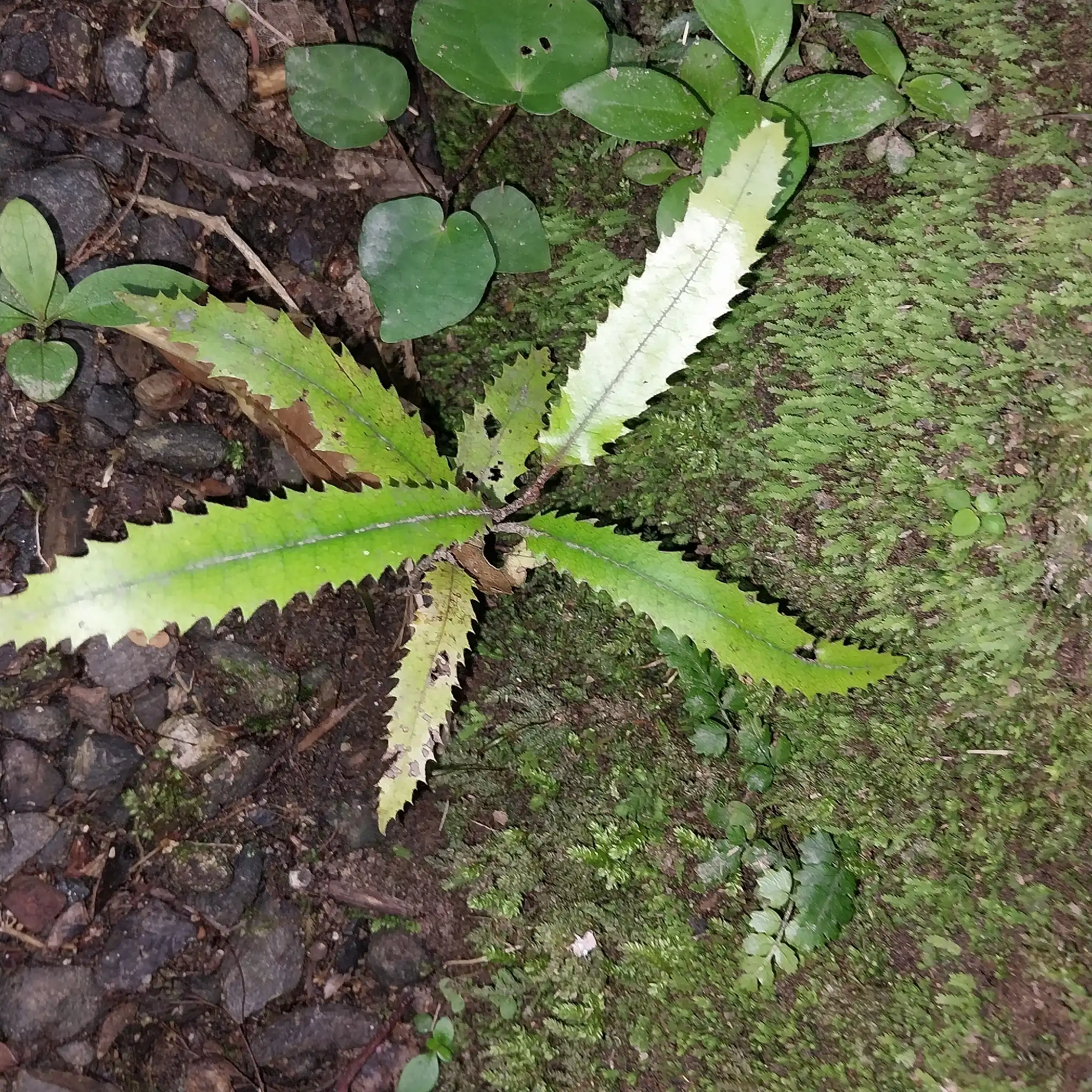
The foliage undergoes a dramatic transition, starting as long, serrated juvenile leaves before maturing into thick, rigid, dark green adult leaves with a pale rust-red felt underneath. New shoots and young growth are covered in a distinctive, velvety rust-red tomentum.
Uses & Benefits:
Essentials
At a Glance
Plant Type
Tree
Height
472"
Width
157"
Light
Full Sun, Partial Sun
Zones
9, 10
Water
Medium
Humidity
Medium
Lifespan
Long-lived
Native To
New Zealand
Toxicity
Non-toxic
Bloom period
Late spring – Early summer
In flower about 2 months of the year
Planting
How to Grow
- Select a planting site in full sun to partial shade with moist, well-drained soil.
- Dig a hole twice as wide as the root ball but no deeper, keeping the root collar level with the surrounding soil.
- Backfill with native soil, avoiding heavy organic amendments that can waterlog the root zone.
- Water deeply to settle the soil, and maintain consistent moisture during the first few growing seasons.
Pro Tip
Never prune hard into old, leafless wood as the tree lacks the capacity to regenerate from bare timber. Ensure sharp drainage to prevent fatal collar and root rots, and use only low-phosphorus fertilizers formulated for Proteaceae.
Keep It Thriving
Care Guide
Do
- Plant in a highly permeable soil mix to ensure rapid drainage.
- Apply a thick layer of organic mulch around the base to retain soil moisture.
- Use a low-phosphorus, slow-release fertilizer formulated for Proteaceae in spring.
Don't
- Do not prune hard into old, leafless wood as it will not regenerate.
- Do not allow the soil to dry out completely during active summer growth.
- Do not apply standard high-phosphorus commercial fertilizers.
Seasonal Care Calendar
| Task | Jan | Feb | Mar | Apr | May | Jun | Jul | Aug | Sep | Oct | Nov | Dec |
|---|---|---|---|---|---|---|---|---|---|---|---|---|
| Fertilize | ||||||||||||
| Mulch | ||||||||||||
| Pest Check | ||||||||||||
| Prune |
Watch Out For
Pests & Diseases
Common Pests
Common Diseases
In the Garden
Landscape Uses & Companions
Landscape Uses
Companion Plants
Multiply
Propagation Methods
Good to Know
Common Questions
Rewarewa questions
What zones can Rewarewa grow in?
Rewarewa is hardy in USDA Zones 9–10. Inside that range it survives winter in the ground; outside it, grow it as an annual or a container plant you protect.
Is Rewarewa deer resistant?
Not reliably. Deer may browse Rewarewa, especially tender spring growth — plan on repellents or fencing where pressure is high.
When does Rewarewa bloom?
Rewarewa typically blooms in late spring through early summer. Exact timing shifts a week or two with your zone — Sow's bloom calendar maps it to your garden.
Does Rewarewa need full sun?
Rewarewa does best in full sun to part shade. In hot climates, afternoon shade keeps blooms fresher longer.
Keep exploring
Explore the genus
Hardy in your zone?
Grow Rewarewa with confidence
See it in a design of your actual yard, get zone-matched care reminders, and track it season by season in your garden journal.