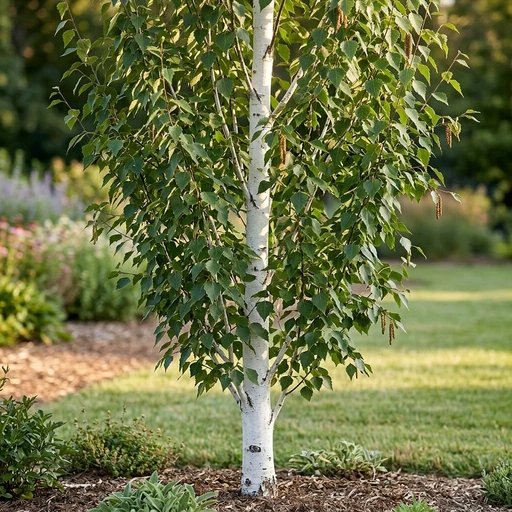
Species
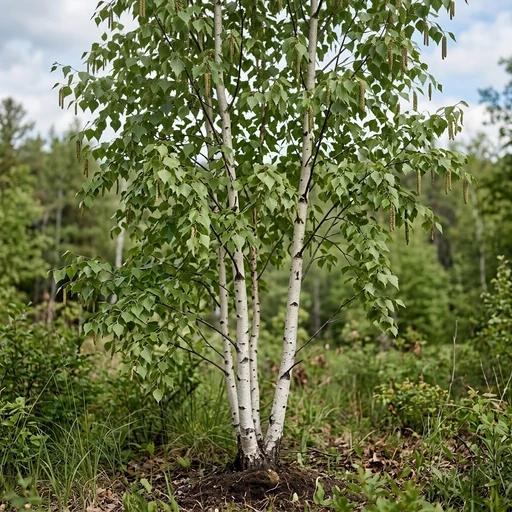 Betula populifoliaGray Birch
The Story
Plant Bio
Betula populifolia, or Gray Birch, is a fast-growing, relatively short-lived North American native tree. It is known for its slender form, often growing in multi-trunked clumps, and its chalky, non-peeling white bark.
'Whitespire Senior' is a cultivar selected for its superior resistance to the bronze birch borer, a devastating pest of many white-barked birch species. It maintains an upright, pyramidal form and bright white bark.
Uses & Benefits:
Essentials
At a Glance
Plant Type
Tree
Height
420"
Width
216"
Light
Full Sun, Partial Sun
Zones
4, 5, 6, 7
Water
Moderate
Humidity
Adaptable
Lifespan
Short-lived tree (20-40 years)
Native To
Eastern North America
Toxicity
Non-toxic
Bloom period
Early spring – Mid-spring
In flower about 2 months of the year
Planting
How to Grow
- Select a site in full sun with acidic, well-drained soil.
- Dig a hole two to three times the width of the root ball.
- Set the tree so the top of the root ball is slightly above grade.
- Backfill with native soil, watering to settle.
- Water deeply and regularly, especially during dry periods.
- Apply a 3-inch layer of organic mulch over the root zone.
Pro Tip
Keep the root zone cool and moist with a thick layer of organic mulch to mimic its native woodland environment and reduce stress.
Keep It Thriving
Care Guide
Do
- Mulch well to keep roots cool and conserve moisture.
- Provide supplemental water during summer droughts.
- Plant in a location with good air circulation.
- Prune only dead or damaged branches in late summer.
Don't
- Don't prune in spring, as birches 'bleed' sap heavily.
- Don't plant in high pH (alkaline) or heavily compacted soil.
- Avoid wounding the thin bark with mowers or string trimmers.
- Don't let the root zone dry out, especially in hot weather.
Seasonal Care Calendar
| Task | Jan | Feb | Mar | Apr | May | Jun | Jul | Aug | Sep | Oct | Nov | Dec |
|---|---|---|---|---|---|---|---|---|---|---|---|---|
| Mulch | ||||||||||||
| Pest Check | ||||||||||||
| Plant | ||||||||||||
| Prune |
Watch Out For
Pests & Diseases
Common Pests
Common Diseases
In the Garden
Landscape Uses & Companions
Landscape Uses
Multiply
Propagation Methods
Good to Know
Common Questions
Whitespire Senior Gray Birch questions
What zones can Whitespire Senior Gray Birch grow in?
Whitespire Senior Gray Birch is hardy in USDA Zones 4–7. Inside that range it survives winter in the ground; outside it, grow it as an annual or a container plant you protect.
Is Whitespire Senior Gray Birch deer resistant?
Yes — Whitespire Senior Gray Birch is rated deer-resistant. Deer typically pass it over, though extreme hunger can override any plant's defenses.
When does Whitespire Senior Gray Birch bloom?
Whitespire Senior Gray Birch typically blooms in early spring through mid-spring. Exact timing shifts a week or two with your zone — Sow's bloom calendar maps it to your garden.
Does Whitespire Senior Gray Birch need full sun?
Whitespire Senior Gray Birch does best in full sun to part shade. In hot climates, afternoon shade keeps blooms fresher longer.
Is Whitespire Senior Gray Birch drought tolerant?
Yes — once established (usually after the first full season), Whitespire Senior Gray Birch handles dry spells with minimal watering. Water deeply its first year to build the root system that makes that possible.
More Betula to compare
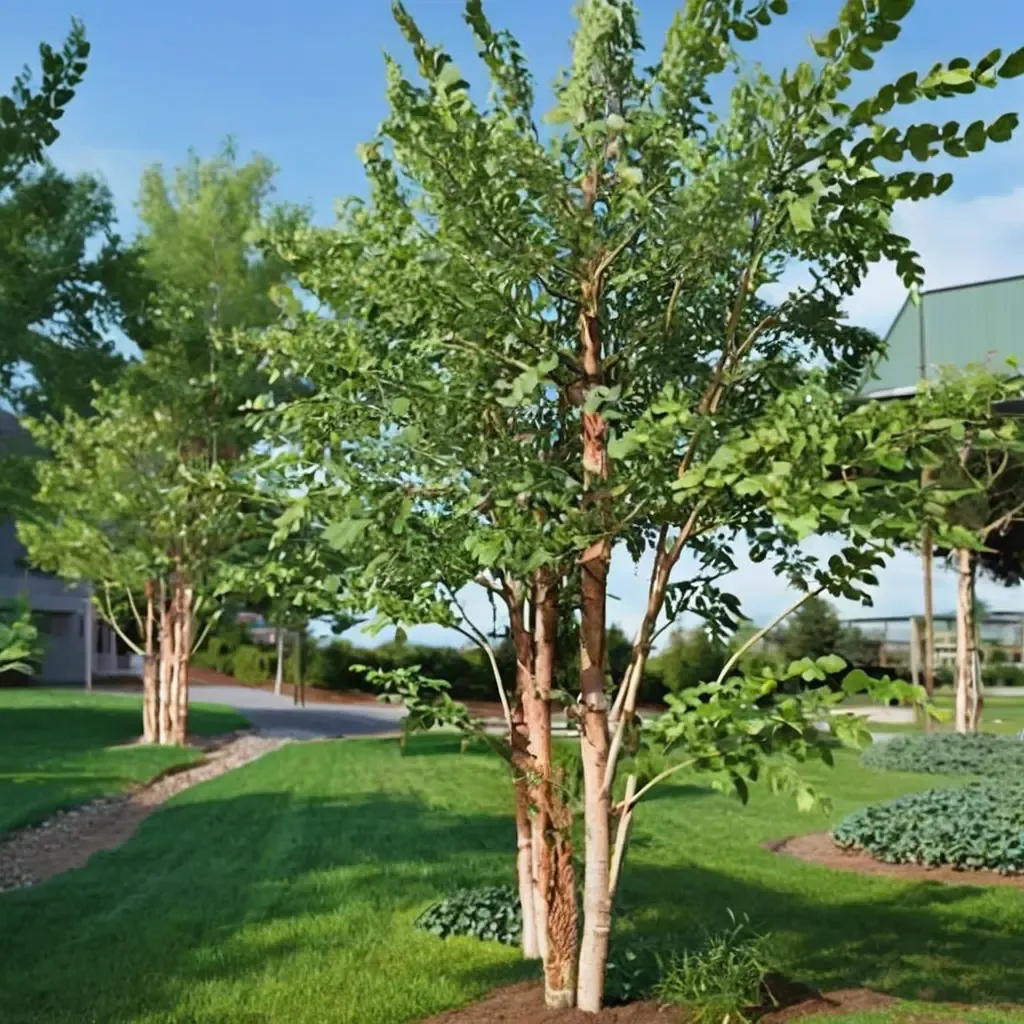
River Birch
Betula nigra
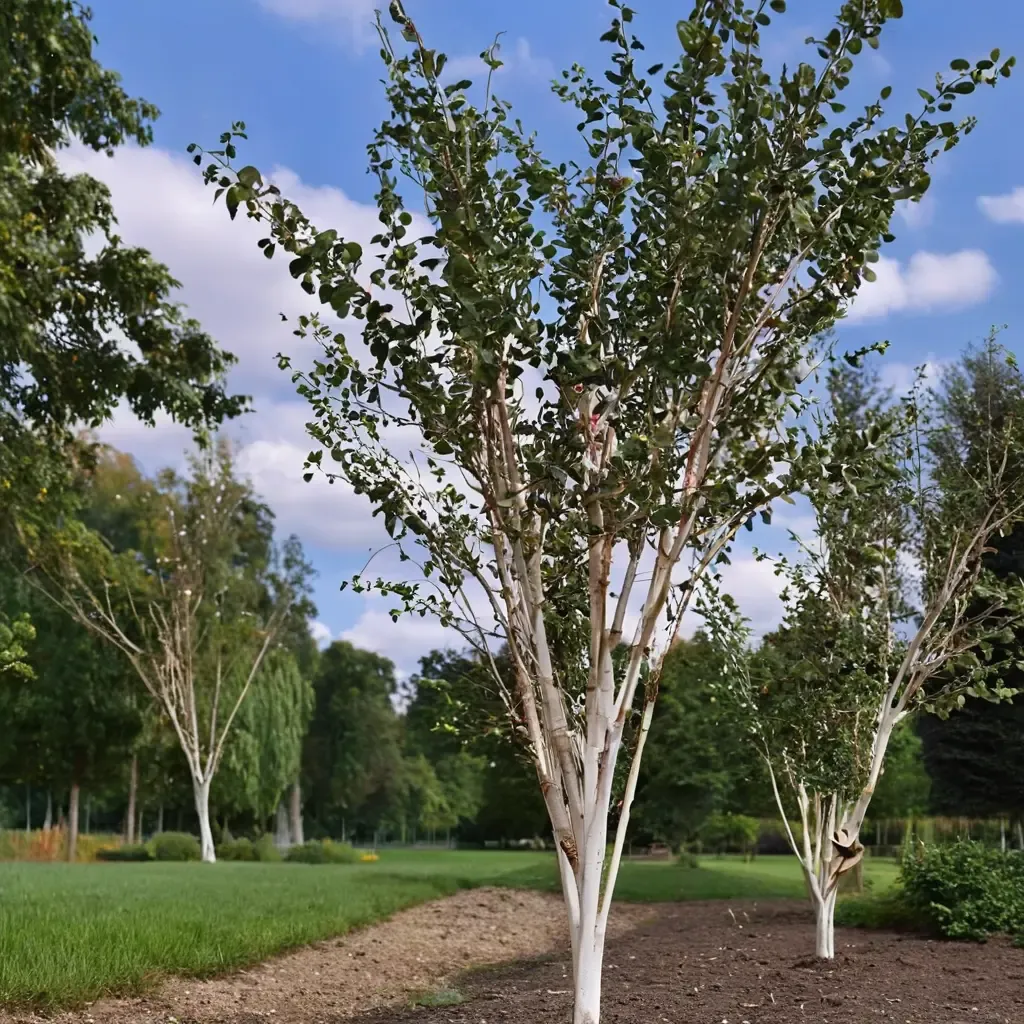
Himalayan Birch
Betula utilis
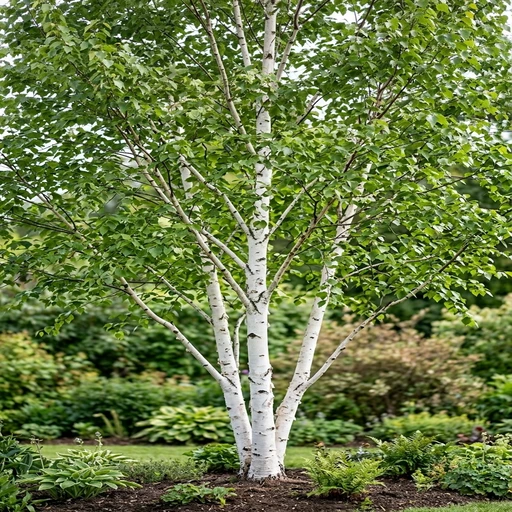
Paper Birch
Betula papyrifera
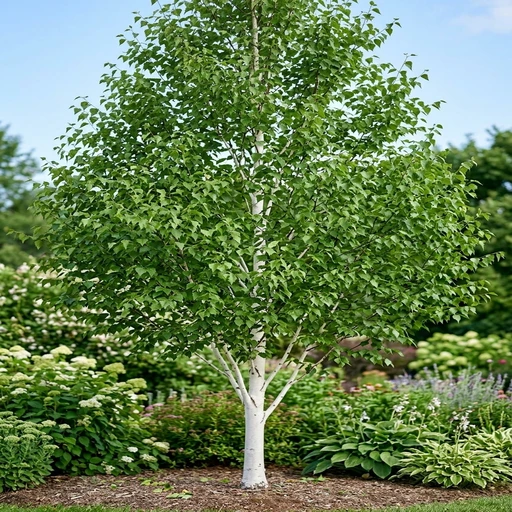
Whitespire Birch
Betula platyphylla 'Whitespire'
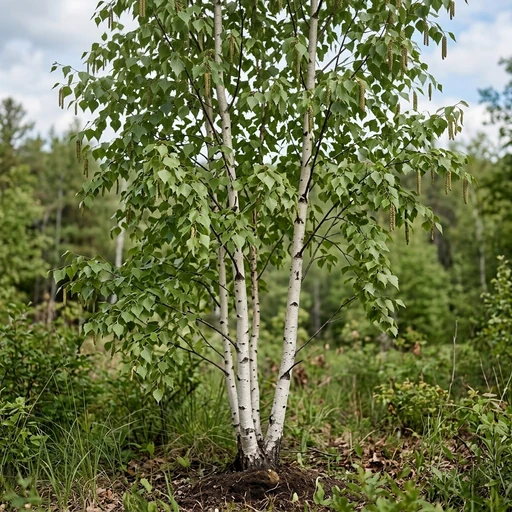
Gray Birch
Betula populifolia
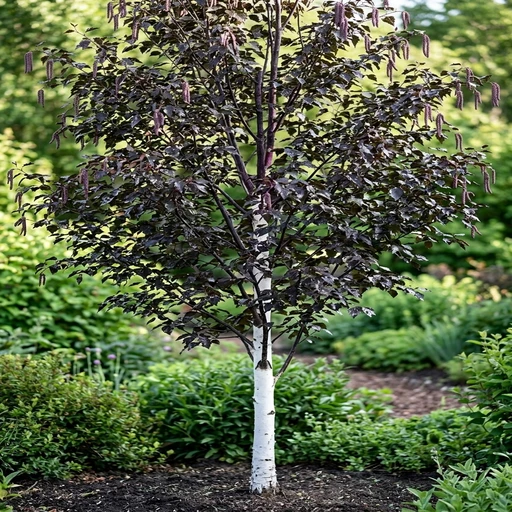
Birch
Betula x hybrida 'Royal Frost'
Keep exploring
Explore the genus
Hardy in your zone?
Grow Whitespire Senior Gray Birch with confidence
See it in a design of your actual yard, get zone-matched care reminders, and track it season by season in your garden journal.