The Story
Plant Bio
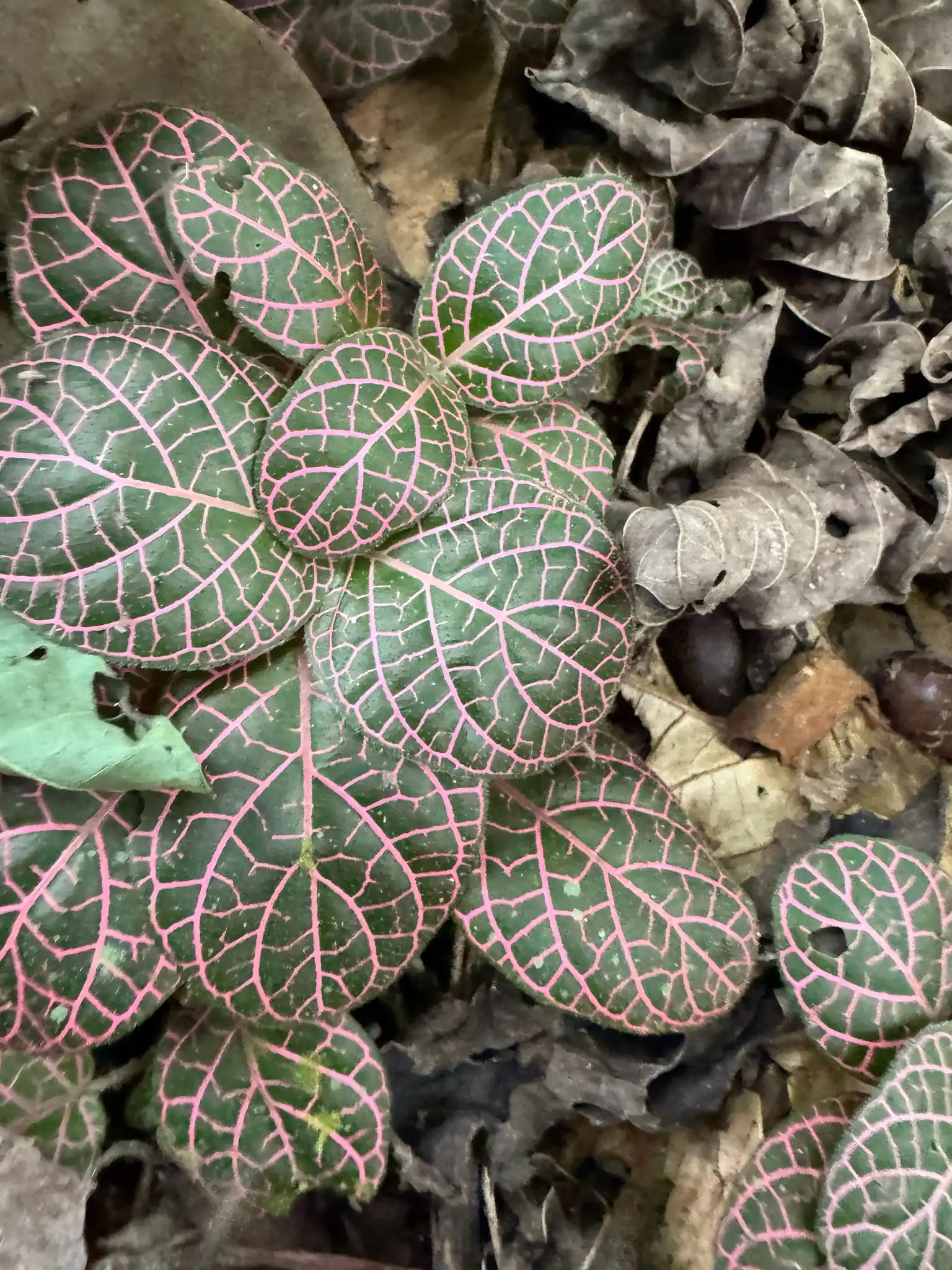
Fittonia albivenis is a low-growing, creeping evergreen perennial native to the tropical rainforests of South America, where it forms dense mats on the shaded forest floor. The species is defined by its opposite, oval leaves decorated with a highly contrasting, intricate network of veins that run to the leaf margins.
The species features intensely colored venation in shades of silver, white, pink, or deep red that emerges on new growth and persists through maturity. Small, insignificant white to yellowish-white flowers occasionally appear on upright quadrangular spikes, though the plant is primarily grown for its striking foliage.
Uses & Benefits:
Essentials
At a Glance
Plant Type
Tropical
Height
8"
Width
18"
Light
Partial Sun, Shade
Water
High
Humidity
High (above 50-60%)
Lifespan
Perennial
Native To
South America (Colombia and Peru)
Toxicity
Non-toxic
Bloom period
Summer – Fall
In flower about 6 months of the year
Planting
How to Grow
- Select a shallow pot with excellent drainage holes and fill it with a humus-rich, moisture-retentive, slightly acidic potting mix.
- Place the plant in a location that receives medium to low indirect light or bright shade, avoiding any direct sunlight which scorches the leaves.
- Water thoroughly whenever the top of the soil begins to feel dry, keeping the medium evenly moist but never waterlogged.
- Maintain high humidity above 50 percent by misting regularly, using a pebble tray, or placing the plant in a terrarium environment.
Pro Tip
Pinch back the growing tips every four to six weeks during spring and summer to maintain a dense, bushy habit; cutting back into old, bare, leafless woody stems will fail to stimulate new growth.
Keep It Thriving
Care Guide
Do
- Pinch back active growing tips regularly to encourage a compact, bushy shape.
- Keep the soil consistently moist to prevent dramatic wilting.
- Use a diluted, half-strength balanced liquid fertilizer once every four to six weeks in spring and summer.
- Provide high humidity to prevent leaf margins from browning.
Don't
- Do not place the plant in direct sunlight, which bleaches and burns the foliage.
- Do not overwater or allow the pot to sit in standing water, which causes rapid root rot.
- Do not prune back into old, bare, leafless woody stems.
- Do not fertilize during the winter months when growth slows.
Seasonal Care Calendar
| Task | Jan | Feb | Mar | Apr | May | Jun | Jul | Aug | Sep | Oct | Nov | Dec |
|---|---|---|---|---|---|---|---|---|---|---|---|---|
| Fertilize | ||||||||||||
| Pest Check | ||||||||||||
| Pinch | ||||||||||||
| Propagate |
Watch Out For
Pests & Diseases
Common Pests
Common Diseases
In the Garden
Landscape Uses & Companions
Landscape Uses
Companion Plants
Multiply
Propagation Methods
Good to Know
Common Questions
Nerve Plant questions
Is Nerve Plant deer resistant?
Not reliably. Deer may browse Nerve Plant, especially tender spring growth — plan on repellents or fencing where pressure is high.
When does Nerve Plant bloom?
Nerve Plant typically blooms in summer through fall. Exact timing shifts a week or two with your zone — Sow's bloom calendar maps it to your garden.
Does Nerve Plant need full sun?
Nerve Plant does best in part shade.
Keep exploring
Explore the genus
Grow Nerve Plant with confidence
See it in a design of your actual yard, get zone-matched care reminders, and track it season by season in your garden journal.