The Story
Plant Bio
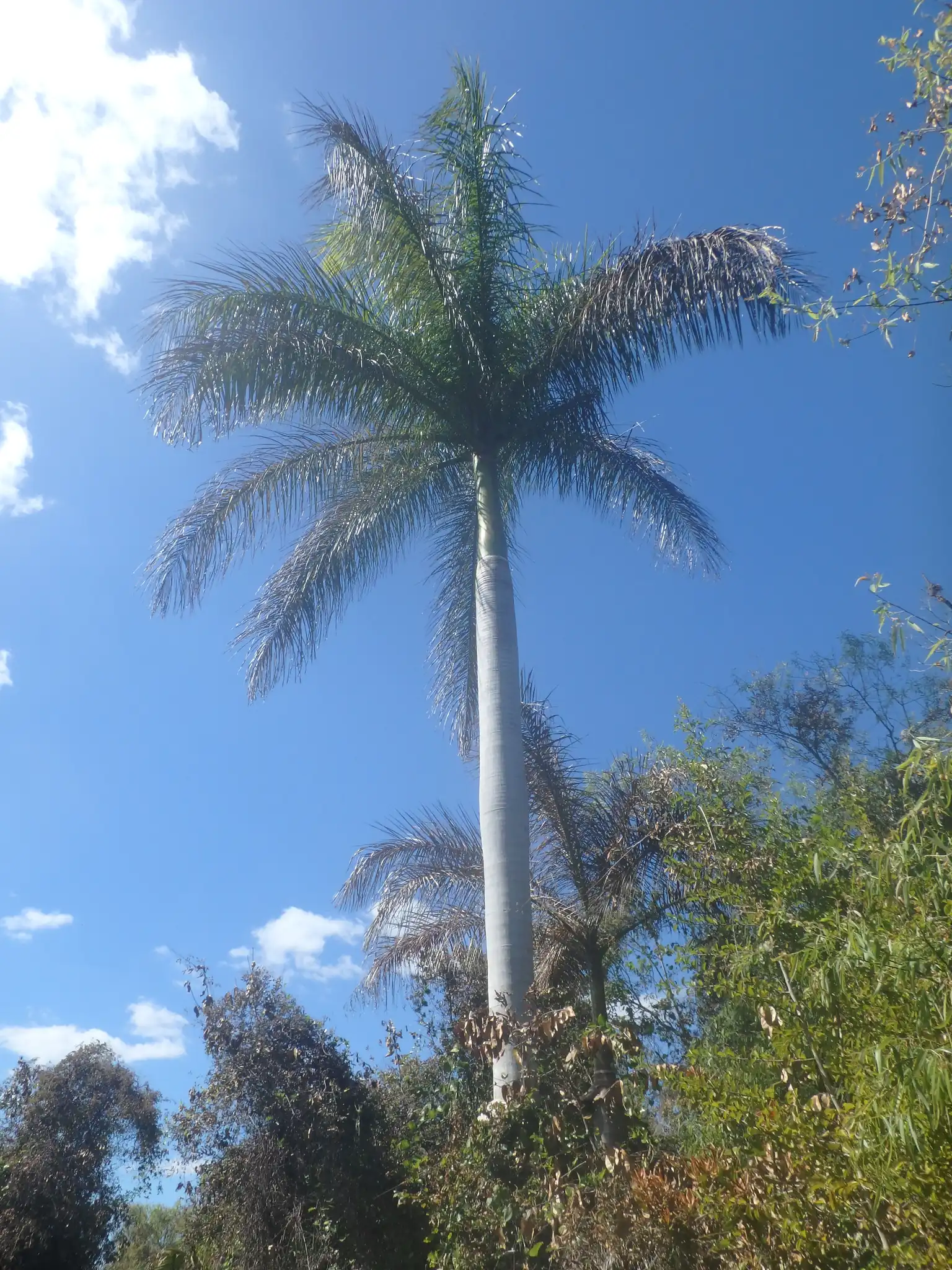
Roystonea regia, the Cuban royal palm, is a fast-growing solitary palm native to South Florida, the Caribbean, and Central America, developing a smooth greyish-white trunk topped by a bright green crownshaft. It produces large pinnate fronds up to thirteen feet long with dark green leaflets radiating in multiple planes along a drooping rachis.
This species is notable for its self-cleaning habit, shedding yellowing fronds automatically alongside massive broom-like flowering panicles that emerge beneath the crownshaft. The base or middle of the columnar trunk often develops a distinct swelling as the tree matures.
Uses & Benefits:
Essentials
At a Glance
Plant Type
Tree
Height
787"
Width
240"
Light
Full Sun
Zones
10
Water
Moderate
Humidity
High
Lifespan
Long-lived
Native To
North America, Caribbean
Toxicity
Fruit pulp contains irritating calcium oxalate crystals
Bloom period
Spring – Summer
In flower about 6 months of the year
Planting
How to Grow
- Select a site in full sun with high overhead clearance and well-draining soil free of excessive root-zone salinity.
- Dig a hole twice as wide as the root ball and equal in depth, ensuring the root collar sits flush with the surrounding grade.
- Backfill with native soil, water deeply to eliminate air pockets, and apply a three-inch layer of organic mulch around the base.
- Irrigate regularly during the first growing season to establish the root system before reducing watering frequency.
Pro Tip
Ensure adequate potassium, manganese, and boron supplementation to prevent leaf-tip frizzling, and never cut into the green crownshaft when trimming old fronds.
Keep It Thriving
Care Guide
Do
- Plant in full sun in well-draining soil with adequate clearance for mature height and canopy spread.
- Apply palm-specific micronutrient fertilizer containing manganese and boron quarterly during active growth.
- Allow spent fronds to fall naturally or trim only fully dead, brown foliage below the crownshaft.
Don't
- Do not handle fresh fruit pulp with bare hands, as calcium oxalate crystals cause severe skin irritation.
- Never trim green fronds or cut into the bright green crownshaft trunk structure.
- Do not plant directly adjacent to pedestrian paths where falling 50-pound fronds create overhead hazards.
Seasonal Care Calendar
| Task | Jan | Feb | Mar | Apr | May | Jun | Jul | Aug | Sep | Oct | Nov | Dec |
|---|---|---|---|---|---|---|---|---|---|---|---|---|
| Fertilize | ||||||||||||
| Mulch | ||||||||||||
| Pest Check | ||||||||||||
| Prune |
Watch Out For
Pests & Diseases
Common Pests
Common Diseases
In the Garden
Landscape Uses & Companions
Landscape Uses
Multiply
Propagation Methods
Good to Know
Common Questions
Cuban Royal Palm questions
What zones can Cuban Royal Palm grow in?
Cuban Royal Palm is hardy in USDA Zone 10. Inside that range it survives winter in the ground; outside it, grow it as an annual or a container plant you protect.
When does Cuban Royal Palm bloom?
Cuban Royal Palm typically blooms in spring through summer. Exact timing shifts a week or two with your zone — Sow's bloom calendar maps it to your garden.
Does Cuban Royal Palm need full sun?
Cuban Royal Palm does best in full sun (6+ hours).
Is Cuban Royal Palm drought tolerant?
Yes — once established (usually after the first full season), Cuban Royal Palm handles dry spells with minimal watering. Water deeply its first year to build the root system that makes that possible.
Keep exploring
Explore the genus
Hardy in your zone?
Grow Cuban Royal Palm with confidence
See it in a design of your actual yard, get zone-matched care reminders, and track it season by season in your garden journal.