The Story
Plant Bio
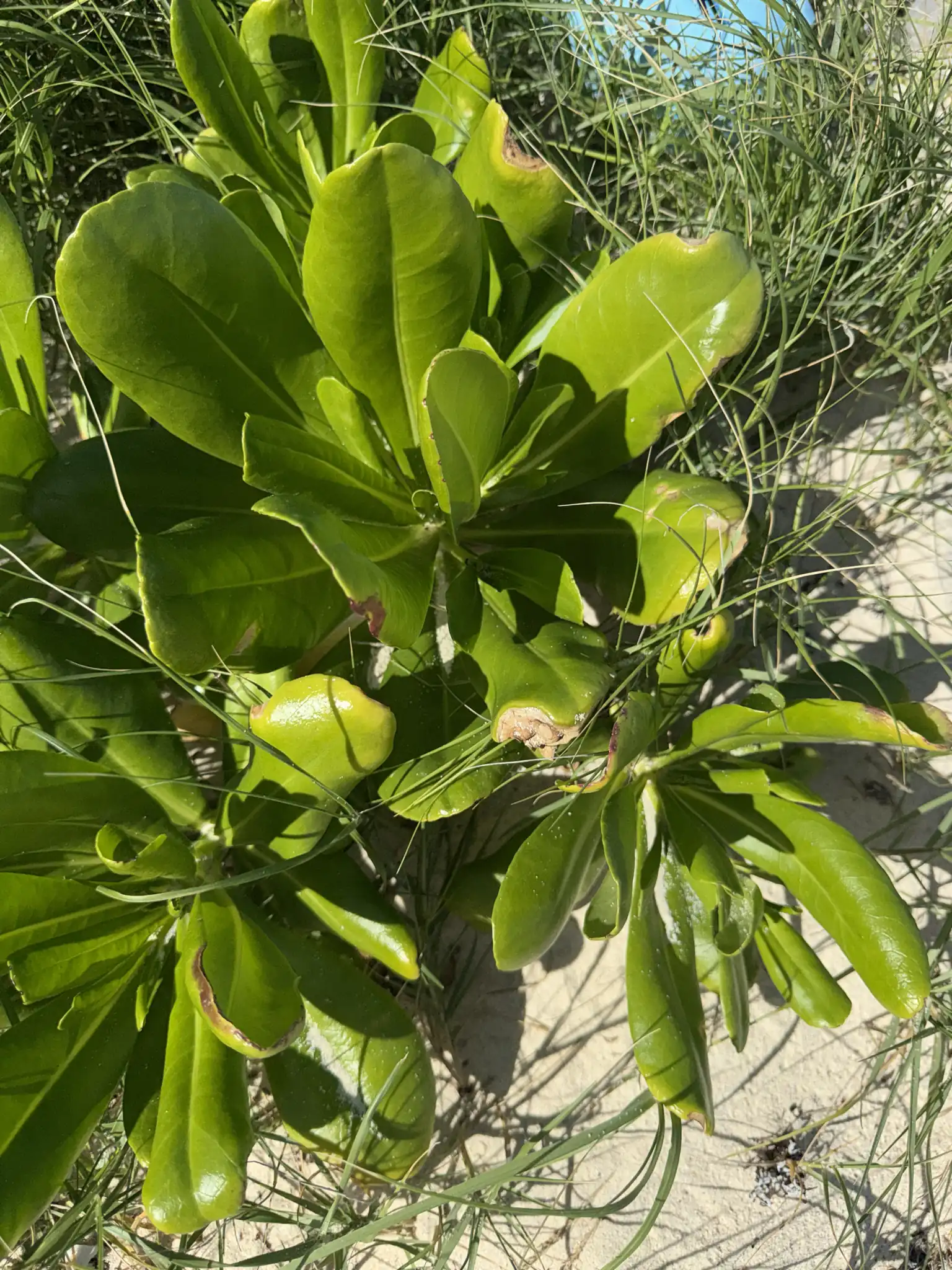
Scaevola taccada is a dense, upright, evergreen shrub native to coastal strands and ocean beaches throughout the Indo-Pacific Basin. The plant features succulent, soft-wooded stems that readily root upon contact with the ground, forming thickets along sandy shores.
This species is distinguished by its glossy, bright green leaves with curled-under margins and small tufts of pale hairs in the leaf axils. The white to cream flowers exhibit a distinct half-flower shape, with all five petals fused and split down one side.
Uses & Benefits:
Essentials
At a Glance
Plant Type
Shrub
Height
118"
Width
177"
Light
Full Sun, Partial Sun
Zones
10
Water
Low
Humidity
High
Lifespan
Long-lived
Native To
Indo-Pacific Basin
Toxicity
Non-toxic
Bloom period
Year round
In flower about 12 months of the year
Planting
How to Grow
- Select a planting site in full sun with highly draining sandy, rocky, or organic soil.
- Dig a hole twice the width of the root ball and set the plant at its original container depth.
- Water deeply immediately after planting to settle the soil around the roots.
- Establish a minimal watering schedule, allowing the soil to dry completely between applications.
Pro Tip
Prune selectively by hand rather than using mechanical hedge trimmers, which shred the succulent stems and leave unsightly brown edges. Avoid cutting back into old, leafless wood, as it lacks the capacity to regenerate new growth.
Keep It Thriving
Care Guide
Do
- Grow in full sun to maintain a dense, compact growth habit.
- Ensure the soil drains rapidly to prevent root rot.
- Prune stems by hand to maintain shape and control spread.
Don't
- Do not over-fertilize, which causes lanky, weak vegetative growth.
- Do not allow the soil to remain waterlogged or stagnant.
- Do not cut back into old, leafless wood when pruning.
Seasonal Care Calendar
| Task | Jan | Feb | Mar | Apr | May | Jun | Jul | Aug | Sep | Oct | Nov | Dec |
|---|---|---|---|---|---|---|---|---|---|---|---|---|
| Fertilize | ||||||||||||
| Pest Check | ||||||||||||
| Propagate | ||||||||||||
| Prune |
Watch Out For
Pests & Diseases
Common Pests
Common Diseases
In the Garden
Landscape Uses & Companions
Landscape Uses
Multiply
Propagation Methods
Good to Know
Common Questions
Beach naupaka questions
What zones can Beach naupaka grow in?
Beach naupaka is hardy in USDA Zone 10. Inside that range it survives winter in the ground; outside it, grow it as an annual or a container plant you protect.
Is Beach naupaka deer resistant?
Not reliably. Deer may browse Beach naupaka, especially tender spring growth — plan on repellents or fencing where pressure is high.
When does Beach naupaka bloom?
Beach naupaka typically blooms in year round through year round. Exact timing shifts a week or two with your zone — Sow's bloom calendar maps it to your garden.
Does Beach naupaka need full sun?
Beach naupaka does best in full sun to part shade. In hot climates, afternoon shade keeps blooms fresher longer.
Is Beach naupaka drought tolerant?
Yes — once established (usually after the first full season), Beach naupaka handles dry spells with minimal watering. Water deeply its first year to build the root system that makes that possible.
More Scaevola to compare
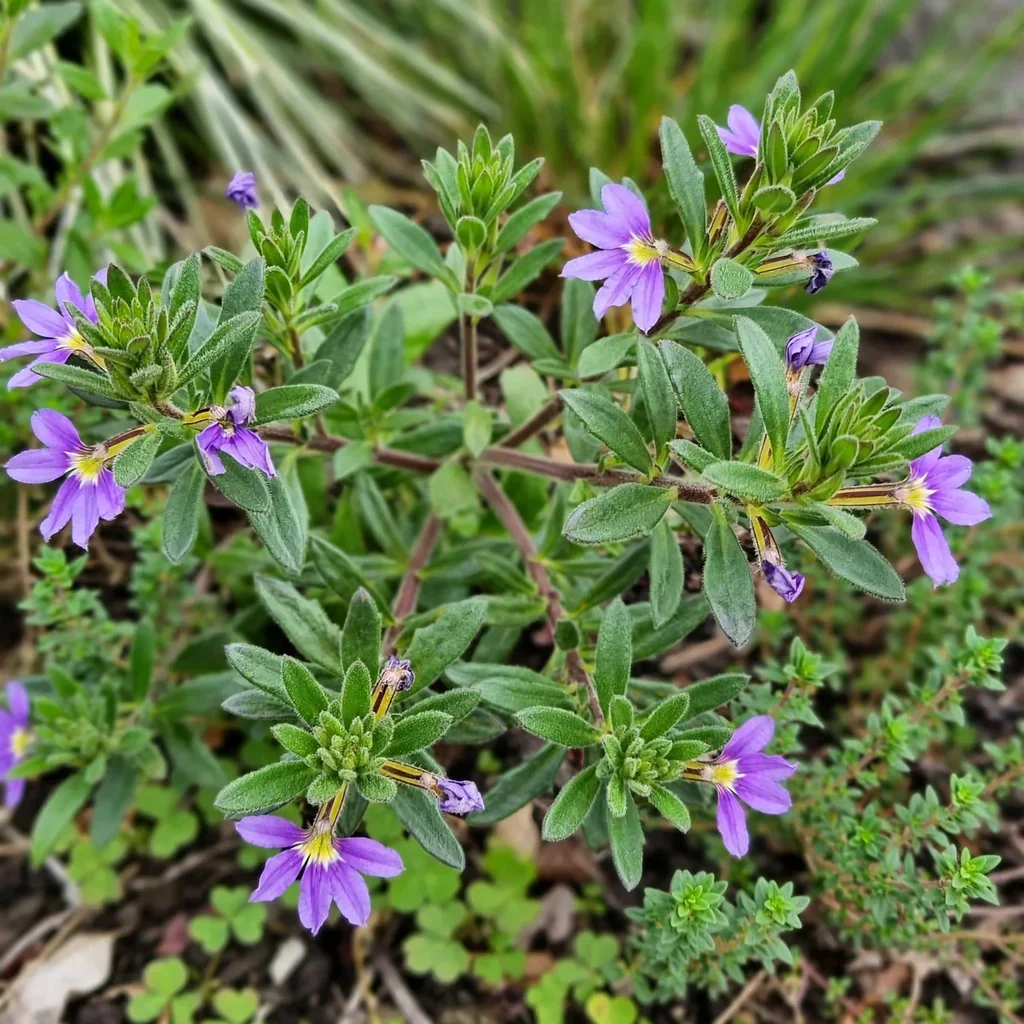
Fan Flower
Scaevola aemula
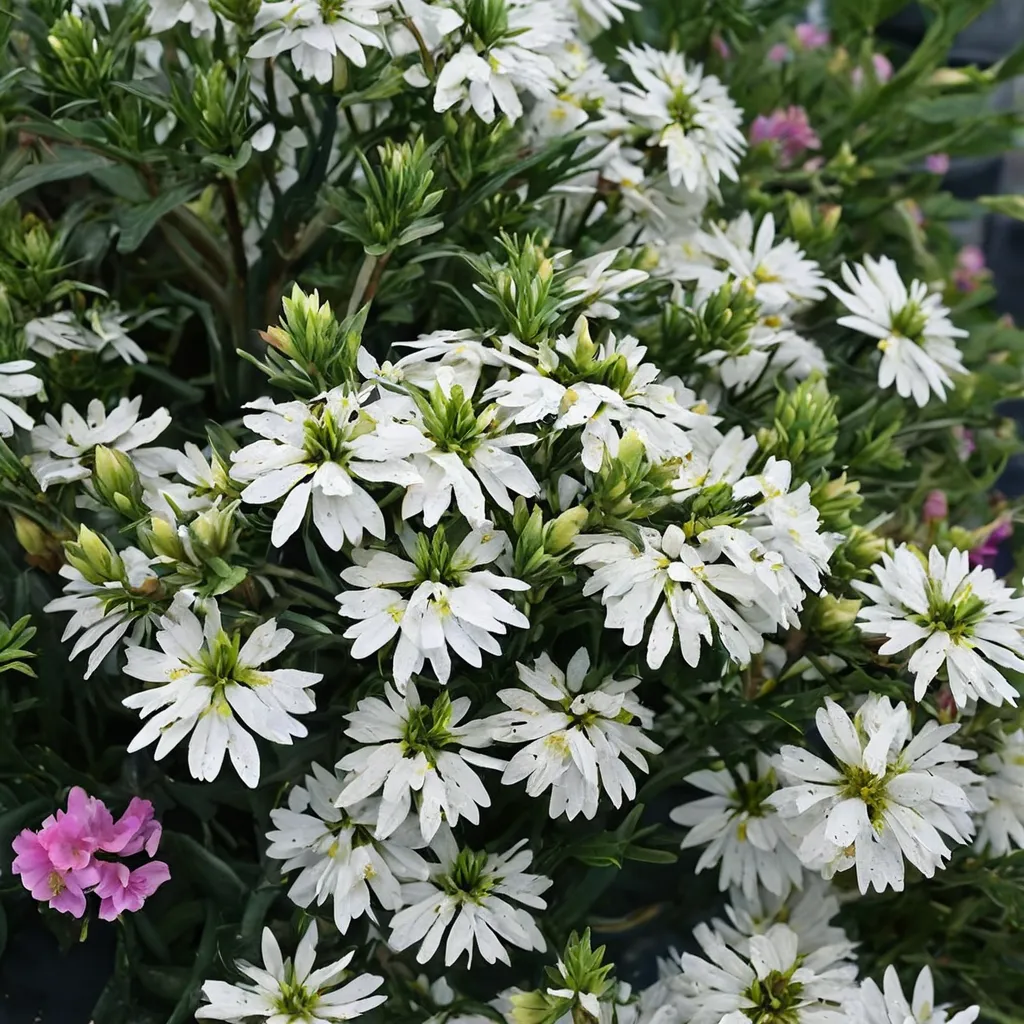
Fan Flower Whirlwind White
Scaevola aemula 'Whirlwind White'
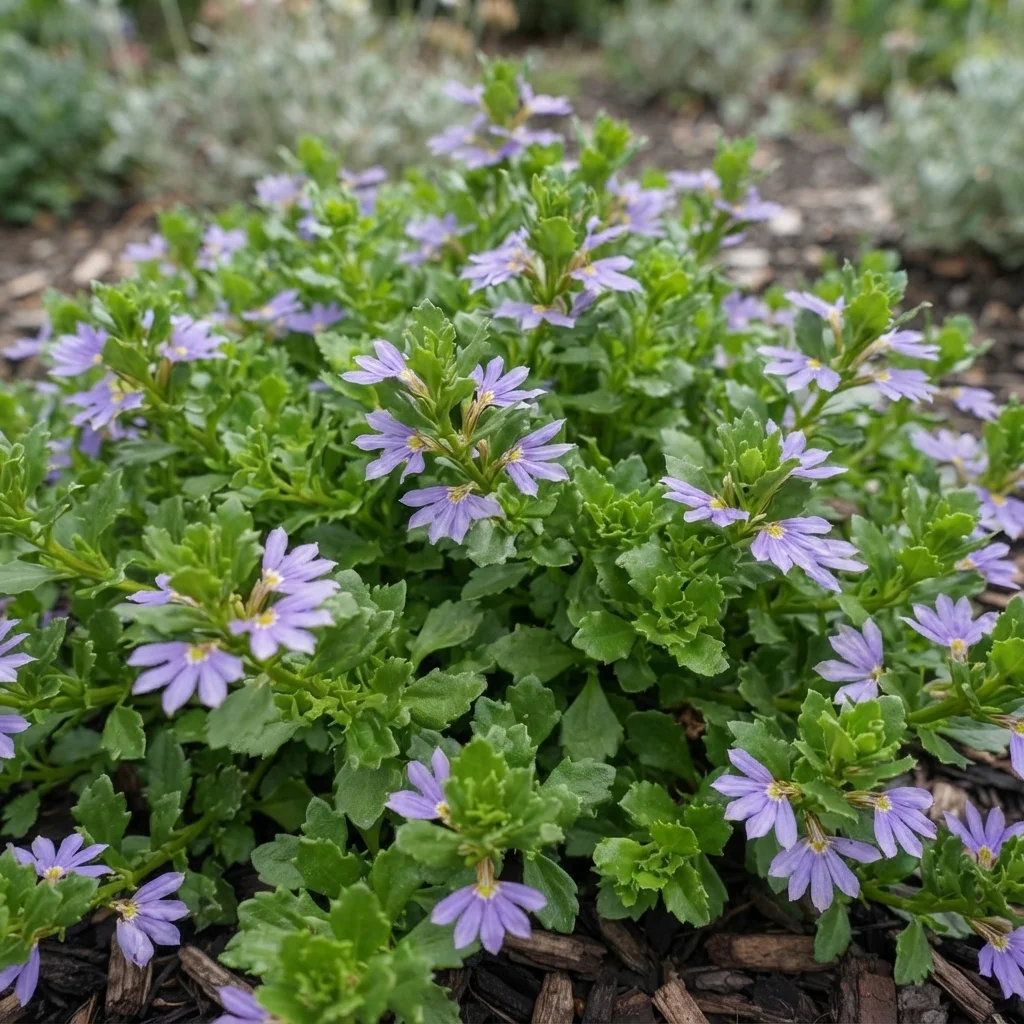
Fairy Fan Flower
Scaevola albida 'Mauve Clusters'
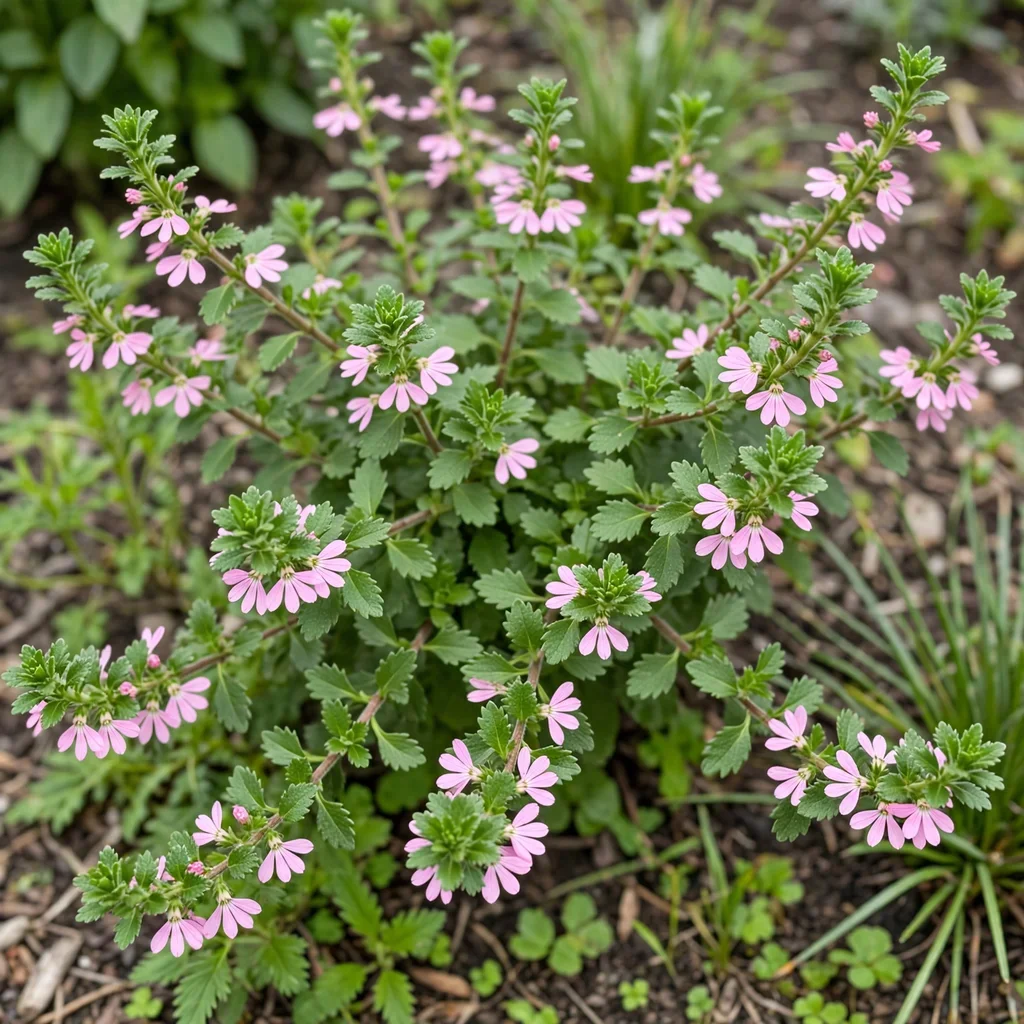
Whirlwind Pink Fan Flower
Scaevola aemula 'Whirlwind Pink'
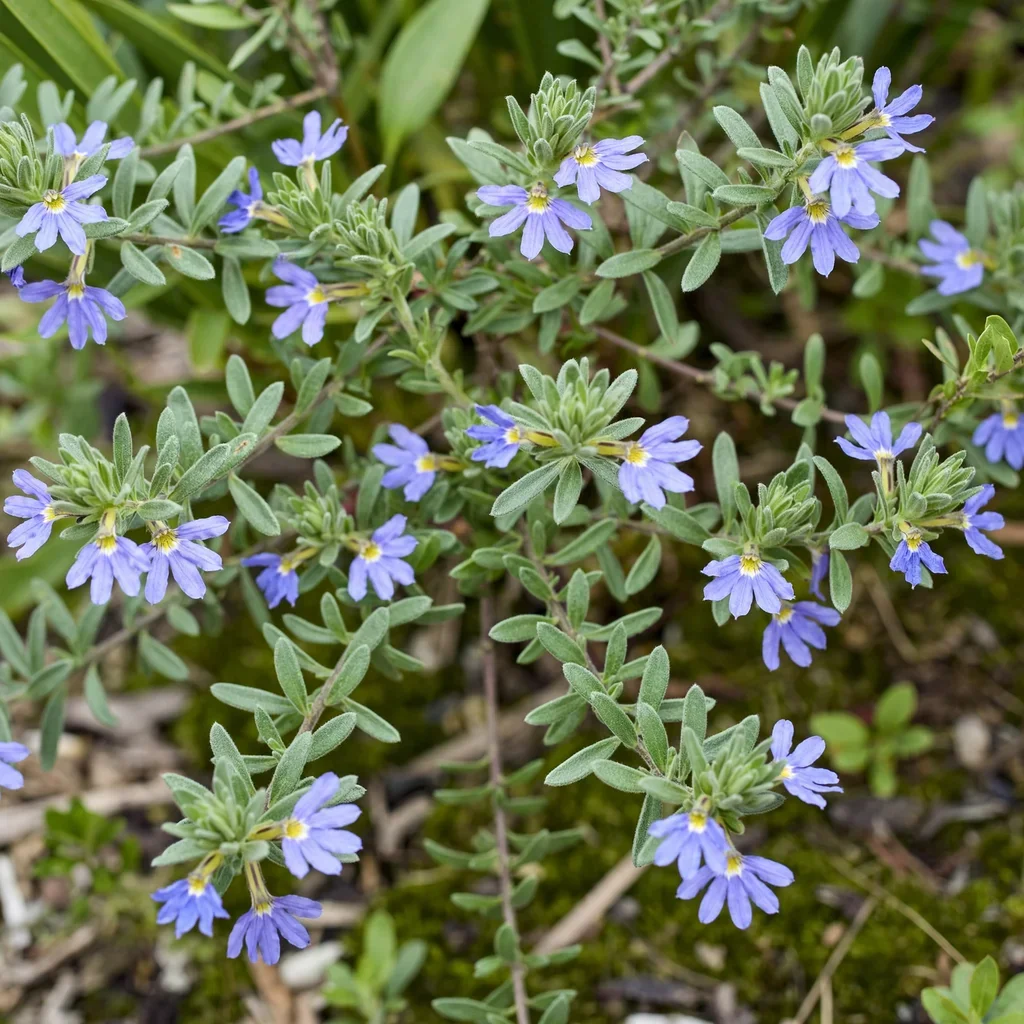
Whirlwind Blue Fan Flower
Scaevola aemula 'Whirlwind Blue'

Whirlwind Starlight Fan Flower
Scaevola aemula 'Whirlwind Starlight'
Keep exploring
Explore the genus
Hardy in your zone?
Grow Beach naupaka with confidence
See it in a design of your actual yard, get zone-matched care reminders, and track it season by season in your garden journal.