The Story
Plant Bio
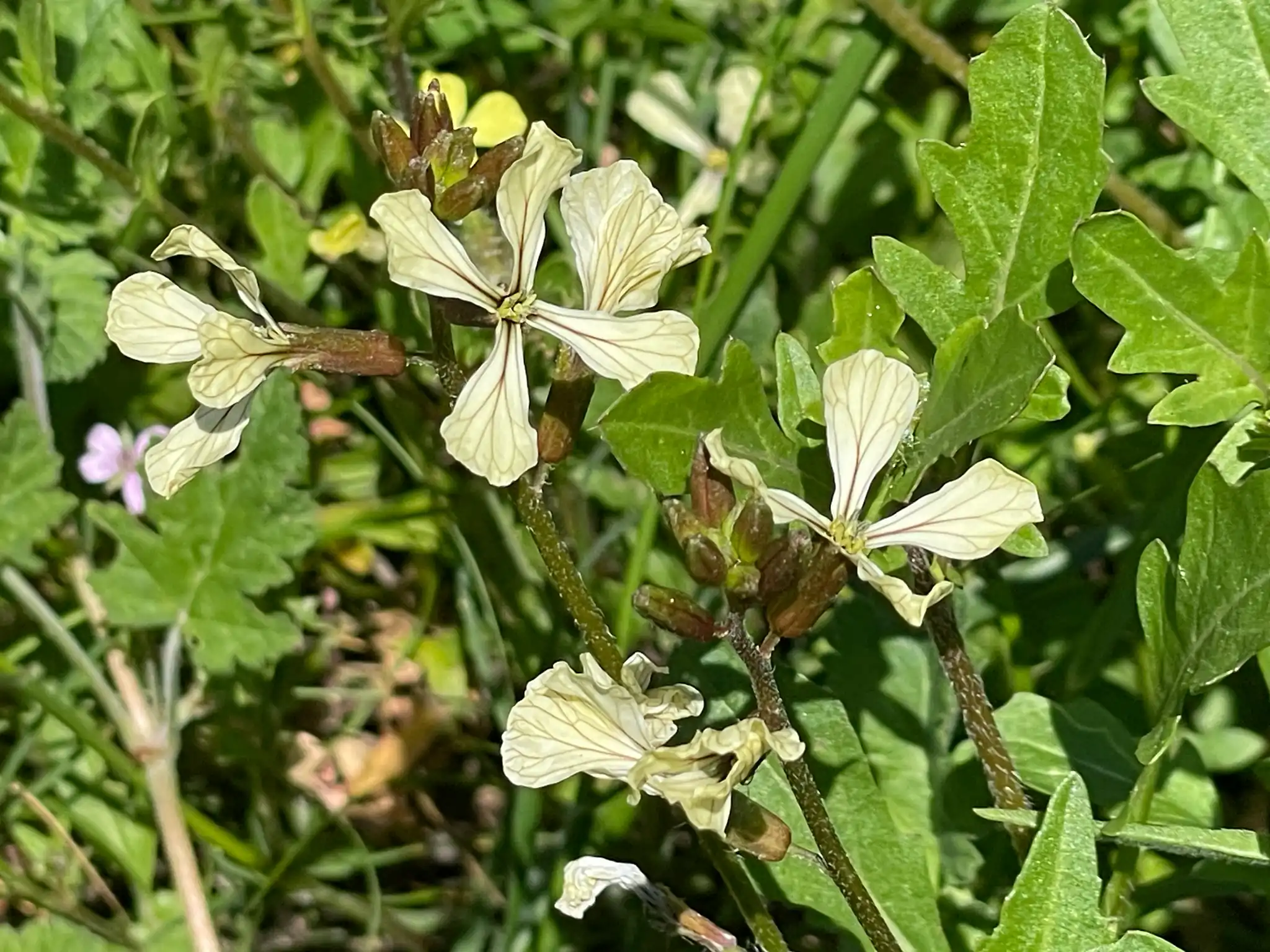
Eruca vesicaria is an erect, branching annual herb native to the Mediterranean region and western Asia, widely cultivated for its peppery, deeply lobed foliage. The plant initially forms a low basal rosette of mid-to-dark green leaves before bolting upward to produce terminal clusters of four-petaled, cream-white flowers marked with distinct purplish-brown veins.
The foliage releases a characteristic pungent, slightly sulfurous aroma when crushed or bruised. While primarily grown as a cool-season salad green, the late-season flowers attract a variety of native bees, honeybees, and syrphid flies to the garden.
Uses & Benefits:
Essentials
At a Glance
Plant Type
Annual
Height
35"
Width
18"
Light
Full Sun, Partial Sun
Zones
4, 5, 6, 7, 8, 9, 10
Water
Low to moderate
Humidity
Moderate
Lifespan
Annual
Native To
Eurasia and Africa
Toxicity
Non-toxic
Bloom period
Spring – Summer
In flower about 6 months of the year
Marketplace
Where to Buy
Shipping costs Year-round shipping Free shipping
Planting
How to Grow
- Sow seeds directly into well-drained, loamy soil in early spring or late summer, planting them one-quarter inch deep.
- Keep the soil consistently moist but not waterlogged to encourage rapid germination, which typically occurs within three to seven days.
- Thin seedlings to stand four to six inches apart to ensure adequate airflow and prevent crowded, weak growth.
- Harvest individual outer leaves once they reach three to four inches long, leaving the central growing point intact for continuous production.
Pro Tip
Plant in partial shade during warm months and harvest the outer leaves frequently to delay bolting, as heat and drought trigger premature flowering that renders the foliage unpleasantly bitter.
Keep It Thriving
Care Guide
Do
- Sow fresh seeds every two to three weeks through spring and autumn to maintain a continuous supply of tender leaves.
- Provide light shade during the heat of midsummer to prevent premature bolting.
- Incorporate a balanced organic compost into the soil prior to planting to support steady, healthy growth.
Don't
- Do not overwater or plant in poorly drained sites, as waterlogged soils quickly trigger root rot.
- Avoid applying high-nitrogen fertilizers, which stimulate soft, lush foliage that is highly susceptible to pests.
- Do not allow the soil to dry out completely, as moisture stress triggers early flowering and bitter leaves.
Seasonal Care Calendar
| Task | Jan | Feb | Mar | Apr | May | Jun | Jul | Aug | Sep | Oct | Nov | Dec |
|---|---|---|---|---|---|---|---|---|---|---|---|---|
| Harvest | ||||||||||||
| Pest Check | ||||||||||||
| Plant | ||||||||||||
| Propagate |
Watch Out For
Pests & Diseases
Common Pests
Common Diseases
In the Garden
Landscape Uses & Companions
Landscape Uses
Companion Plants
Multiply
Propagation Methods
Good to Know
Common Questions
Arugula questions
What zones can Arugula grow in?
Arugula is hardy in USDA Zones 4–10. Inside that range it survives winter in the ground; outside it, grow it as an annual or a container plant you protect.
When does Arugula bloom?
Arugula typically blooms in spring through summer. Exact timing shifts a week or two with your zone — Sow's bloom calendar maps it to your garden.
Does Arugula need full sun?
Arugula does best in full sun to part shade. In hot climates, afternoon shade keeps blooms fresher longer.
Keep exploring
Explore the genus
Grow Arugula with confidence
See it in a design of your actual yard, get zone-matched care reminders, and track it season by season in your garden journal.