The Story
Plant Bio
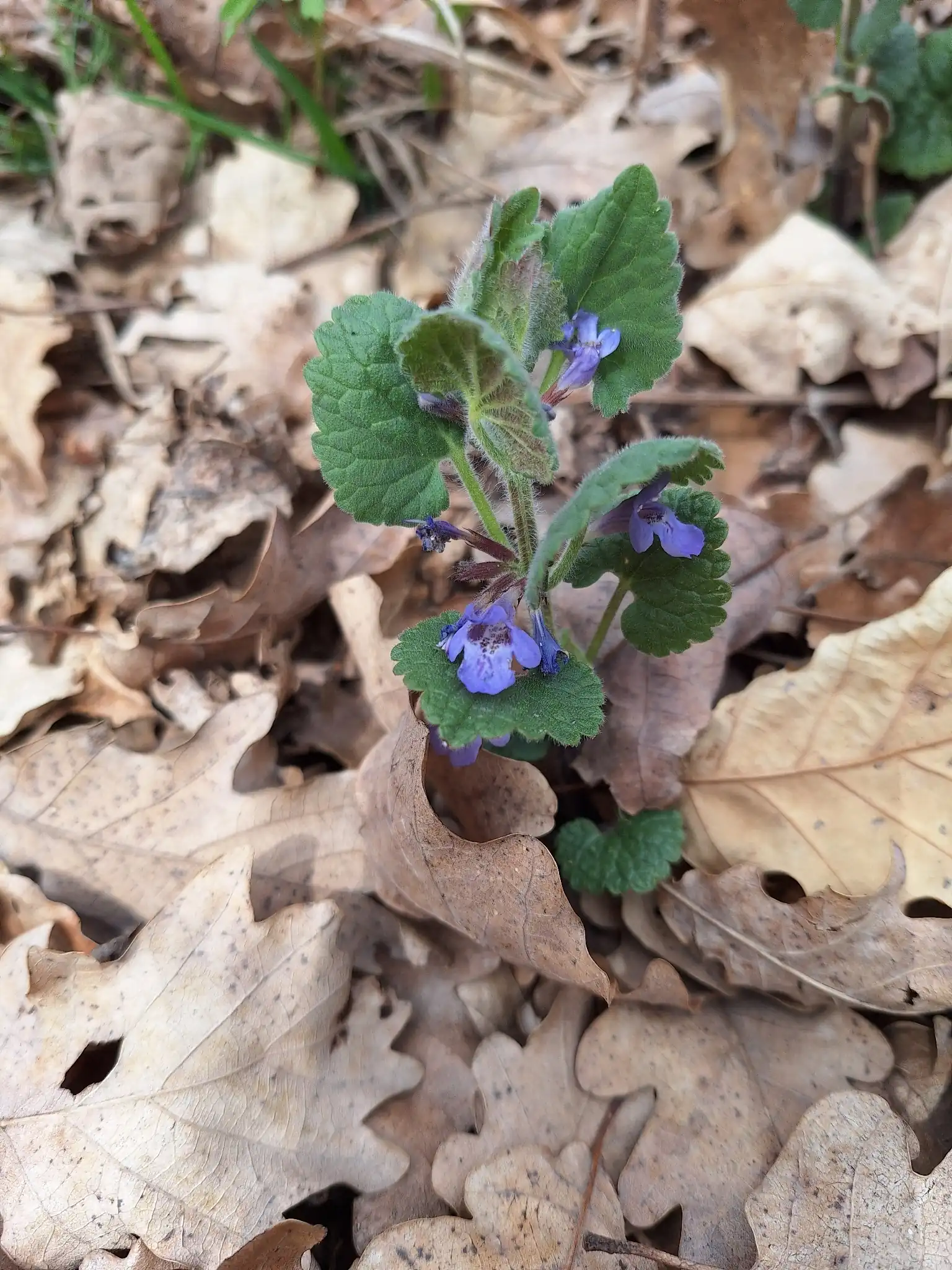
Glechoma hirsuta, commonly known as hairy ground-ivy, is a low-growing, creeping perennial herb native to continental and southeastern Europe. It spreads indefinitely via rooting stolons to form dense, soft-textured mats of kidney- to heart-shaped leaves with scalloped margins.
This species is distinguished by its dense, velvety-hairy foliage on both leaf surfaces, which separates it from the more common creeping charlie. In spring, small whorls of pale blue to bluish-purple, two-lipped tubular flowers emerge in the leaf axils.
Uses & Benefits:
Essentials
At a Glance
Plant Type
Groundcover
Height
12"
Width
36"
Light
Partial Sun, Shade
Zones
5, 6, 7, 8
Water
Moderate
Humidity
Moderate
Lifespan
Perennial
Native To
Europe
Toxicity
Toxic to horses and livestock; can cause contact dermatitis
Bloom period
Spring – Early summer
In flower about 4 months of the year
Planting
How to Grow
- Select a site in partial to full shade with fertile, humus-rich soil that retains moderate moisture.
- Plant container starts or plugs in spring, spacing them to allow the creeping stolons to fill the area.
- Water regularly during dry spells to prevent leaf scorch and premature summer dormancy.
- Install physical edging or barriers around the planting zone to contain its rapid lateral spread.
Pro Tip
Pulling this plant by hand rarely succeeds, as any tiny stolon fragment left behind at a node will rapidly regenerate into a new plant.
Keep It Thriving
Care Guide
Do
- Keep soil consistently moist but well-drained to support healthy foliage.
- Prune or edge the planting area aggressively once or twice a year to control its spread.
- Wear gloves when handling crushed foliage if you have sensitive skin to avoid mild contact dermatitis.
Don't
- Do not plant this species near delicate alpine or rockery plants that can be easily overwhelmed.
- Do not allow the plant to escape into lawns or neighboring native woodlands where it can become invasive.
- Do not plant in waterlogged bogs or dry, compacted soils where it will fail to thrive.
Seasonal Care Calendar
| Task | Jan | Feb | Mar | Apr | May | Jun | Jul | Aug | Sep | Oct | Nov | Dec |
|---|---|---|---|---|---|---|---|---|---|---|---|---|
| Pest Check | ||||||||||||
| Propagate | ||||||||||||
| Prune | ||||||||||||
| Winter Prep |
Watch Out For
Pests & Diseases
Common Pests
Common Diseases
In the Garden
Landscape Uses & Companions
Landscape Uses
Companion Plants
Multiply
Propagation Methods
Good to Know
Common Questions
Hairy Ground-Ivy questions
What zones can Hairy Ground-Ivy grow in?
Hairy Ground-Ivy is hardy in USDA Zones 5–8. Inside that range it survives winter in the ground; outside it, grow it as an annual or a container plant you protect.
Is Hairy Ground-Ivy deer resistant?
Not reliably. Deer may browse Hairy Ground-Ivy, especially tender spring growth — plan on repellents or fencing where pressure is high.
When does Hairy Ground-Ivy bloom?
Hairy Ground-Ivy typically blooms in spring through early summer. Exact timing shifts a week or two with your zone — Sow's bloom calendar maps it to your garden.
Does Hairy Ground-Ivy need full sun?
Hairy Ground-Ivy does best in part shade.
More Glechoma to compare
Keep exploring
Explore the genus
Hardy in your zone?
Grow Hairy Ground-Ivy with confidence
See it in a design of your actual yard, get zone-matched care reminders, and track it season by season in your garden journal.