The Story
Plant Bio
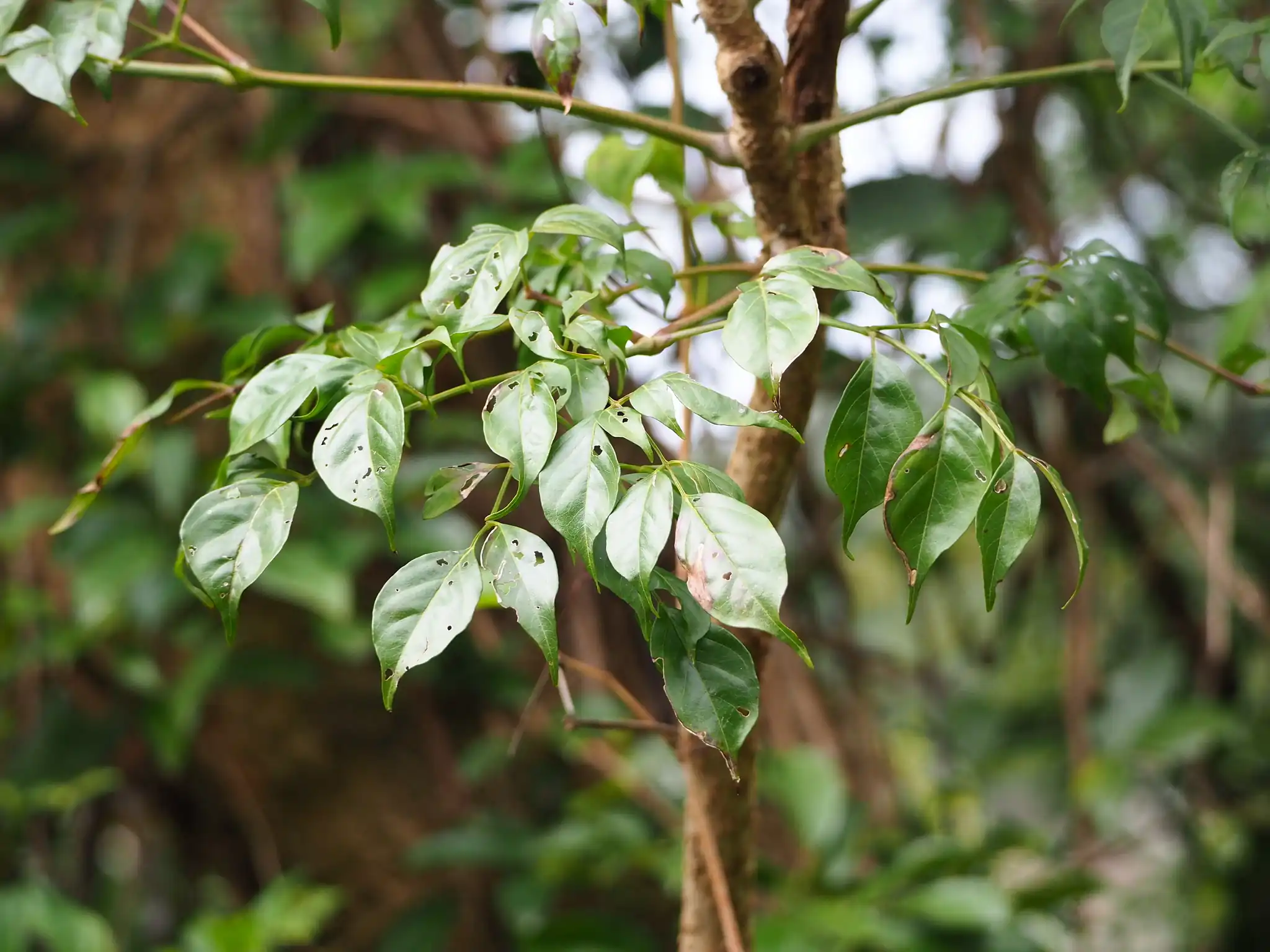
Radermachera sinica is a fast-growing evergreen tree from subtropical Asian mountain regions, widely grown in North America as a dense, upright indoor foliage plant. The highly ornamental foliage consists of large, bipinnate compound leaves divided into numerous small, glossy, dark green leaflets that emerge a bright, light green.
Though mature outdoor specimens produce large, white, trumpet-shaped flowers that open at night, container-grown indoor plants rarely bloom. The species is highly valued instead for its architectural, multi-stemmed form and delicate, lacy canopy of deeply divided leaves.
Uses & Benefits:
Essentials
At a Glance
Plant Type
Tropical
Height
72"
Width
36"
Light
Partial Sun, Shade
Zones
10
Water
Moderate
Humidity
Moderate to high
Lifespan
Multi-year
Native To
Asia
Toxicity
Toxic to pets
Bloom period
Spring – Early summer
In flower about 4 months of the year
Planting
How to Grow
- Position the plant in a location receiving bright, indirect light, avoiding direct afternoon sun which scorches the glossy leaflets.
- Plant in a rich, organic, soil-based potting mix within a container that is only slightly larger than the root ball.
- Water thoroughly when the top inch of soil feels dry, ensuring the potting mix remains evenly moist but never waterlogged.
- Maintain moderate to high humidity by misting the foliage regularly or placing the container on a wet pebble tray.
Pro Tip
Prune stems lightly in spring to maintain a bushy habit; cutting back into old, leafless, woody stems gives slow, patchy regrowth.
Keep It Thriving
Care Guide
Do
- Keep the soil consistently and evenly moist to prevent sudden leaf drop.
- Provide bright, filtered light to maintain dense, compact growth.
- Repot every two to three years into a slightly larger container to accommodate root-bound preferences.
Don't
- Do not allow the potting mix to dry out completely, which triggers immediate and catastrophic leaf drop.
- Do not overpot into an oversized container, as excess soil retains moisture and causes fatal root rot.
- Do not prune hard into old, bare, woody stems.
Seasonal Care Calendar
| Task | Jan | Feb | Mar | Apr | May | Jun | Jul | Aug | Sep | Oct | Nov | Dec |
|---|---|---|---|---|---|---|---|---|---|---|---|---|
| Fertilize | ||||||||||||
| Pest Check | ||||||||||||
| Propagate | ||||||||||||
| Prune |
Watch Out For
Pests & Diseases
Common Pests
Common Diseases
In the Garden
Landscape Uses & Companions
Landscape Uses
Companion Plants
Multiply
Propagation Methods
Good to Know
Common Questions
China Doll questions
What zones can China Doll grow in?
China Doll is hardy in USDA Zone 10. Inside that range it survives winter in the ground; outside it, grow it as an annual or a container plant you protect.
When does China Doll bloom?
China Doll typically blooms in spring through early summer. Exact timing shifts a week or two with your zone — Sow's bloom calendar maps it to your garden.
Does China Doll need full sun?
China Doll does best in part shade.
Keep exploring
Explore the genus
Hardy in your zone?
Grow China Doll with confidence
See it in a design of your actual yard, get zone-matched care reminders, and track it season by season in your garden journal.