The Story
Plant Bio
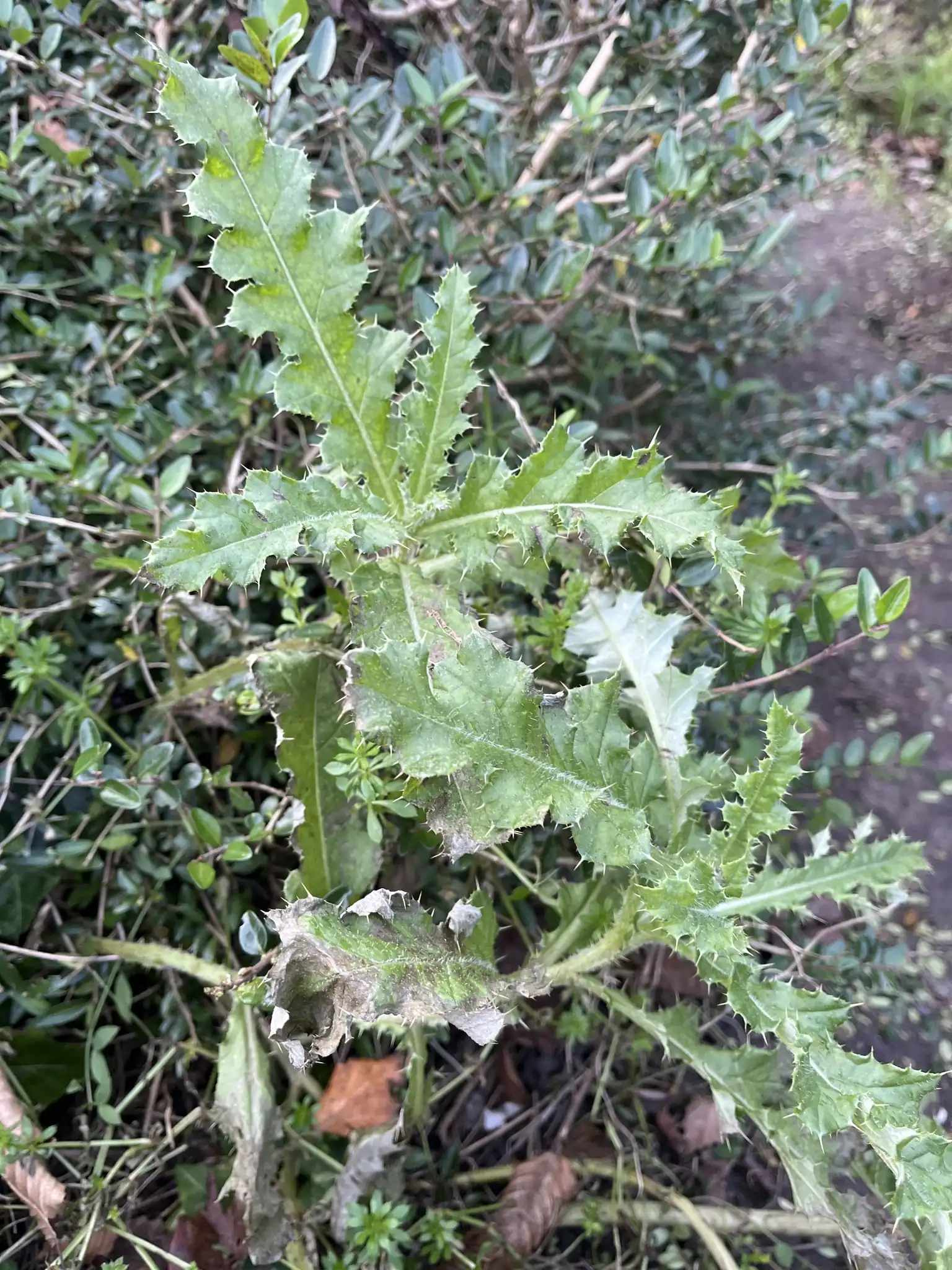
Cirsium arvense, commonly known as Canada thistle, is an aggressive herbaceous perennial that spreads indefinitely via a deep, creeping lateral root system. The upright, branching stems bear deeply lobed, dark green leaves with intensely prickly margins and produce small, fragrant pink to purple flower heads from summer through fall.
This species is dioecious, requiring separate male and female plants to produce viable, wind-dispersed seeds. Unlike many related thistles, its stems lack conspicuous spiny wings, though the foliage remains highly formidable to the touch.
Uses & Benefits:
Essentials
At a Glance
Plant Type
Perennial
Height
71"
Width
120"
Light
Full Sun, Partial Sun
Zones
4, 5, 6, 7, 8, 9
Water
Low to Moderate
Humidity
High
Lifespan
Perennial
Native To
Europe, Asia, North Africa
Toxicity
Toxic to Livestock / Skin Irritant
Bloom period
Summer – Fall
In flower about 6 months of the year
Planting
How to Grow
- Select a site in full sun with moist, fertile loam, though the plant adapts to almost any soil type.
- Establish physical barriers or root barriers if attempting to contain the plant, though containment is rarely successful.
- Monitor the area weekly during the growing season to detect emerging shoots from the creeping root system.
- Mow or cut stems to the ground repeatedly before flowering to exhaust the root reserves over multiple seasons.
Pro Tip
Avoid shallow rototilling or partial cultivation of infested soil; slicing the horizontal roots merely fragments them into thousands of viable pieces, rapidly multiplying the colony.
Keep It Thriving
Care Guide
Do
- Wear heavy leather gloves when handling any part of the plant to prevent puncture wounds from the spines.
- Cut the stems back to the ground repeatedly throughout the summer to deplete the underground rhizomes.
- Bag and dispose of any flower heads before they set seed to prevent wind-borne dispersal.
Don't
- Do not apply fertilizer, as this aggressive weed thrives in poor soils and extra nutrients only accelerate its spread.
- Do not rototill or cultivate the soil around the roots, which fragments the rhizomes and worsens the infestation.
- Do not allow the plant to flower and set seed, especially near agricultural or natural areas.
Seasonal Care Calendar
| Task | Jan | Feb | Mar | Apr | May | Jun | Jul | Aug | Sep | Oct | Nov | Dec |
|---|---|---|---|---|---|---|---|---|---|---|---|---|
| Deadhead | ||||||||||||
| Pest Check | ||||||||||||
| Prune | ||||||||||||
| Spring Cleanup |
Watch Out For
Pests & Diseases
Common Pests
Common Diseases
In the Garden
Landscape Uses & Companions
Landscape Uses
Companion Plants
Multiply
Propagation Methods
Good to Know
Common Questions
Canada Thistle questions
What zones can Canada Thistle grow in?
Canada Thistle is hardy in USDA Zones 4–9. Inside that range it survives winter in the ground; outside it, grow it as an annual or a container plant you protect.
When does Canada Thistle bloom?
Canada Thistle typically blooms in summer through fall. Exact timing shifts a week or two with your zone — Sow's bloom calendar maps it to your garden.
Does Canada Thistle need full sun?
Canada Thistle does best in full sun to part shade. In hot climates, afternoon shade keeps blooms fresher longer.
Is Canada Thistle drought tolerant?
Yes — once established (usually after the first full season), Canada Thistle handles dry spells with minimal watering. Water deeply its first year to build the root system that makes that possible.
More Cirsium to compare
Keep exploring
Explore the genus
Grow Canada Thistle with confidence
See it in a design of your actual yard, get zone-matched care reminders, and track it season by season in your garden journal.