The Story
Plant Bio
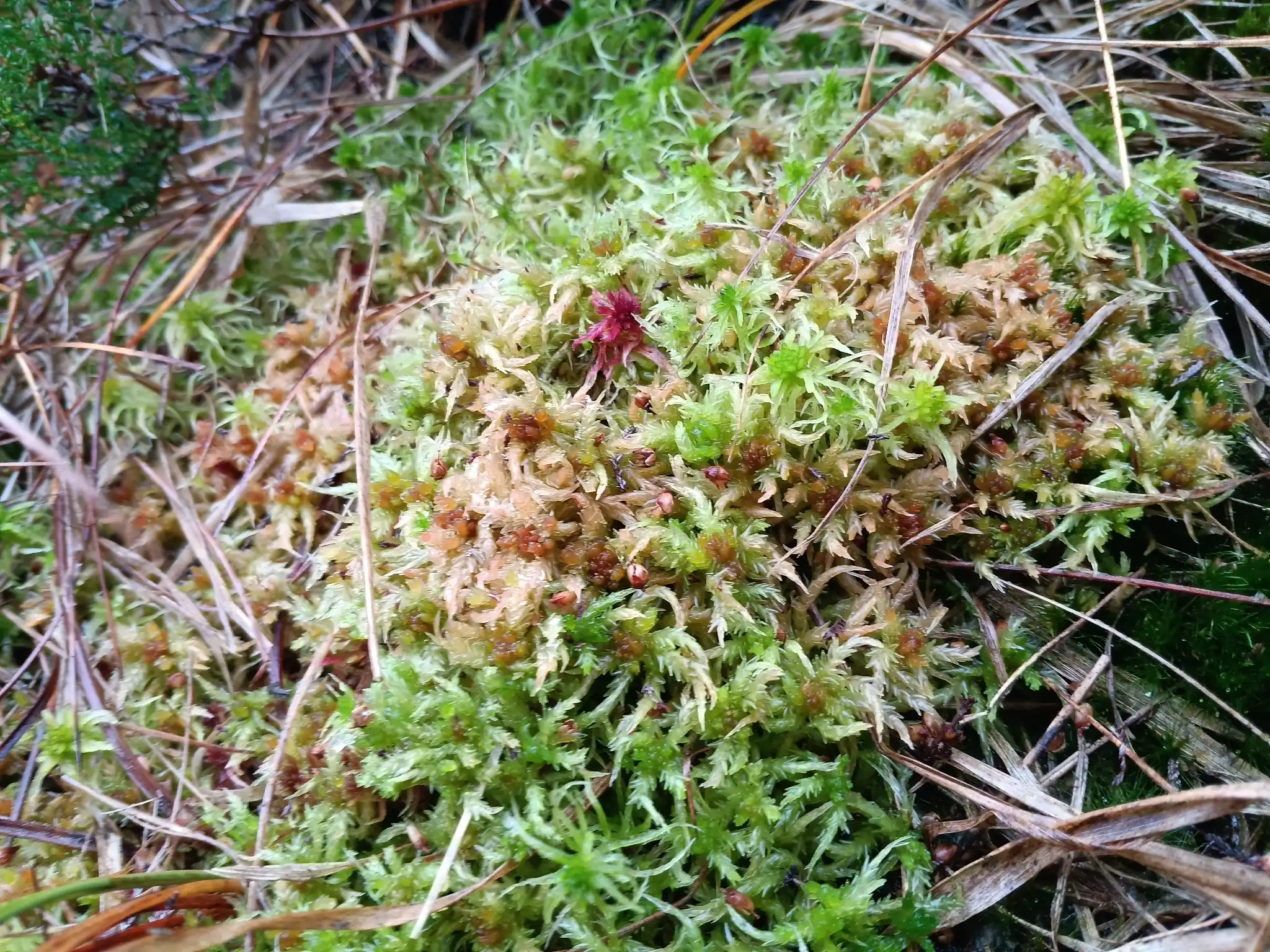
Sphagnum palustre, commonly known as prairie sphagnum, is a robust, mat-forming moss native to wetlands across the Northern Hemisphere. It forms dense, expansive carpets of stout stems topped with compact, rounded heads that range in color from pale green to golden-brown.
The foliage frequently develops a distinct pinkish or warm brown tint when grown in high-light, exposed conditions. Its specialized cellular structure allows it to absorb and retain up to twenty times its dry weight in water, maintaining a saturated micro-environment.
Uses & Benefits:
Essentials
At a Glance
Plant Type
Groundcover
Height
12"
Width
24"
Light
Full Sun, Partial Sun
Zones
4, 5, 6, 7, 8, 9
Water
Wet / Waterlogged
Humidity
High
Lifespan
Perennial
Native To
North America, Europe, Asia
Toxicity
Non-toxic
Bloom period
Summer
In flower about 3 months of the year
Planting
How to Grow
- Select a fully saturated, poorly drained site with a highly acidic peat or organic muck substrate.
- Press the living green stem tips firmly into the wet substrate, ensuring they remain partially exposed to light.
- Maintain constant waterlogged conditions, keeping the water table near the surface of the moss.
- Irrigate exclusively with mineral-free water, such as collected rainwater or distilled water.
Pro Tip
Never water this moss with standard tap water, as dissolved minerals and chlorine will quickly kill it. Use only pure rainwater, distilled water, or reverse osmosis water over a highly acidic, nutrient-free peat substrate.
Keep It Thriving
Care Guide
Do
- Water exclusively with rainwater, distilled water, or reverse osmosis water.
- Keep the growing medium constantly waterlogged and saturated.
- Grow in an acidic, nutrient-poor substrate like pure peat moss.
Don't
- Do not apply any chemical fertilizers or mineral-rich tap water.
- Do not allow the moss tissue to dry out even temporarily.
- Do not prune or cut back into the old, leafless lower stems.
Seasonal Care Calendar
| Task | Jan | Feb | Mar | Apr | May | Jun | Jul | Aug | Sep | Oct | Nov | Dec |
|---|---|---|---|---|---|---|---|---|---|---|---|---|
| Pest Check | ||||||||||||
| Propagate | ||||||||||||
| Spring Cleanup | ||||||||||||
| Winter Prep |
Watch Out For
Pests & Diseases
Common Pests
Common Diseases
In the Garden
Landscape Uses & Companions
Landscape Uses
Companion Plants
Multiply
Propagation Methods
Good to Know
Common Questions
Prairie Sphagnum questions
What zones can Prairie Sphagnum grow in?
Prairie Sphagnum is hardy in USDA Zones 4–9. Inside that range it survives winter in the ground; outside it, grow it as an annual or a container plant you protect.
Is Prairie Sphagnum deer resistant?
Yes — Prairie Sphagnum is rated deer-resistant. Deer typically pass it over, though extreme hunger can override any plant's defenses.
When does Prairie Sphagnum bloom?
Prairie Sphagnum typically blooms in summer through summer. Exact timing shifts a week or two with your zone — Sow's bloom calendar maps it to your garden.
Does Prairie Sphagnum need full sun?
Prairie Sphagnum does best in full sun to part shade. In hot climates, afternoon shade keeps blooms fresher longer.
Keep exploring
Explore the genus
Grow Prairie Sphagnum with confidence
See it in a design of your actual yard, get zone-matched care reminders, and track it season by season in your garden journal.