

The Story
Plant Bio
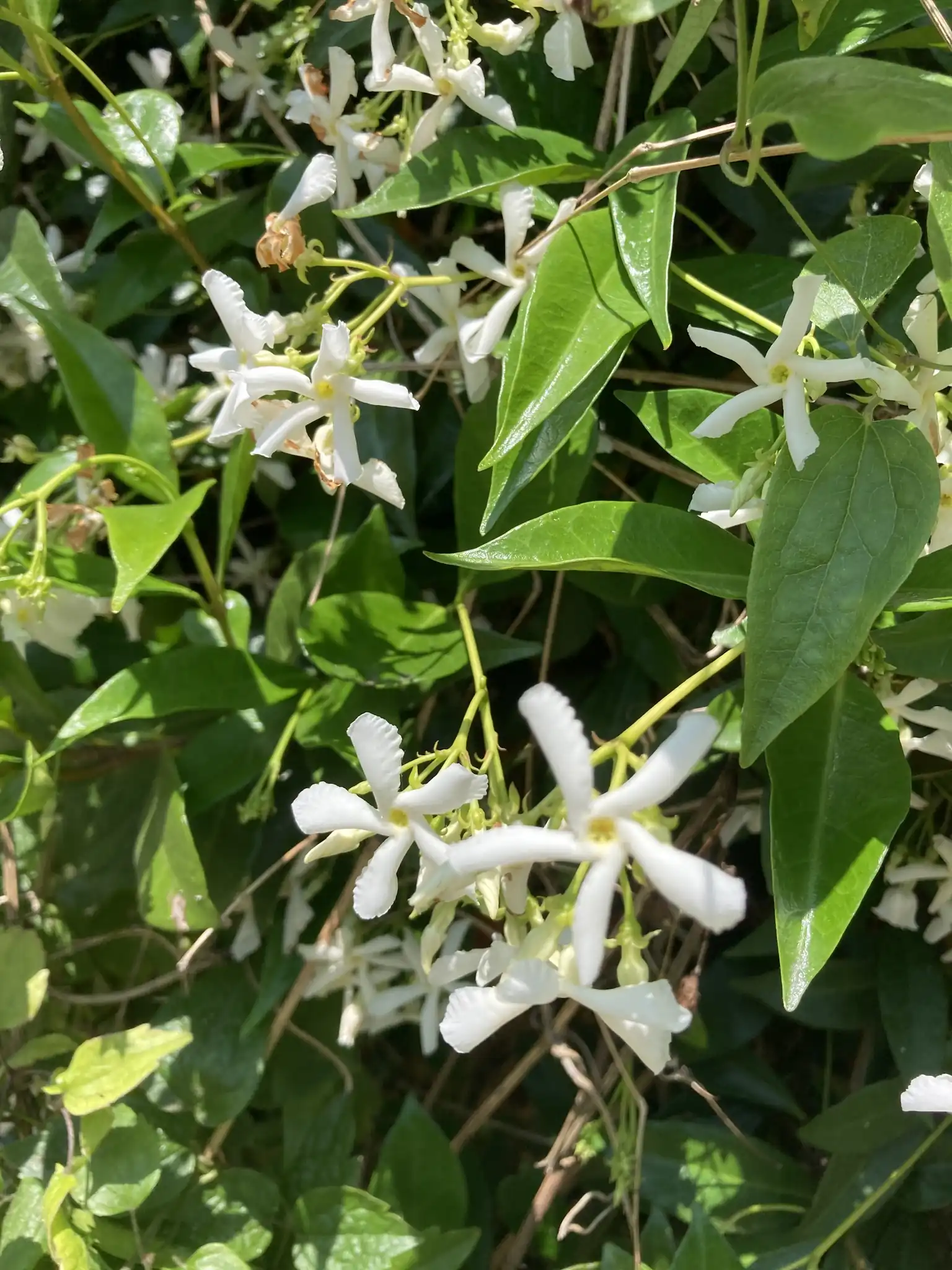
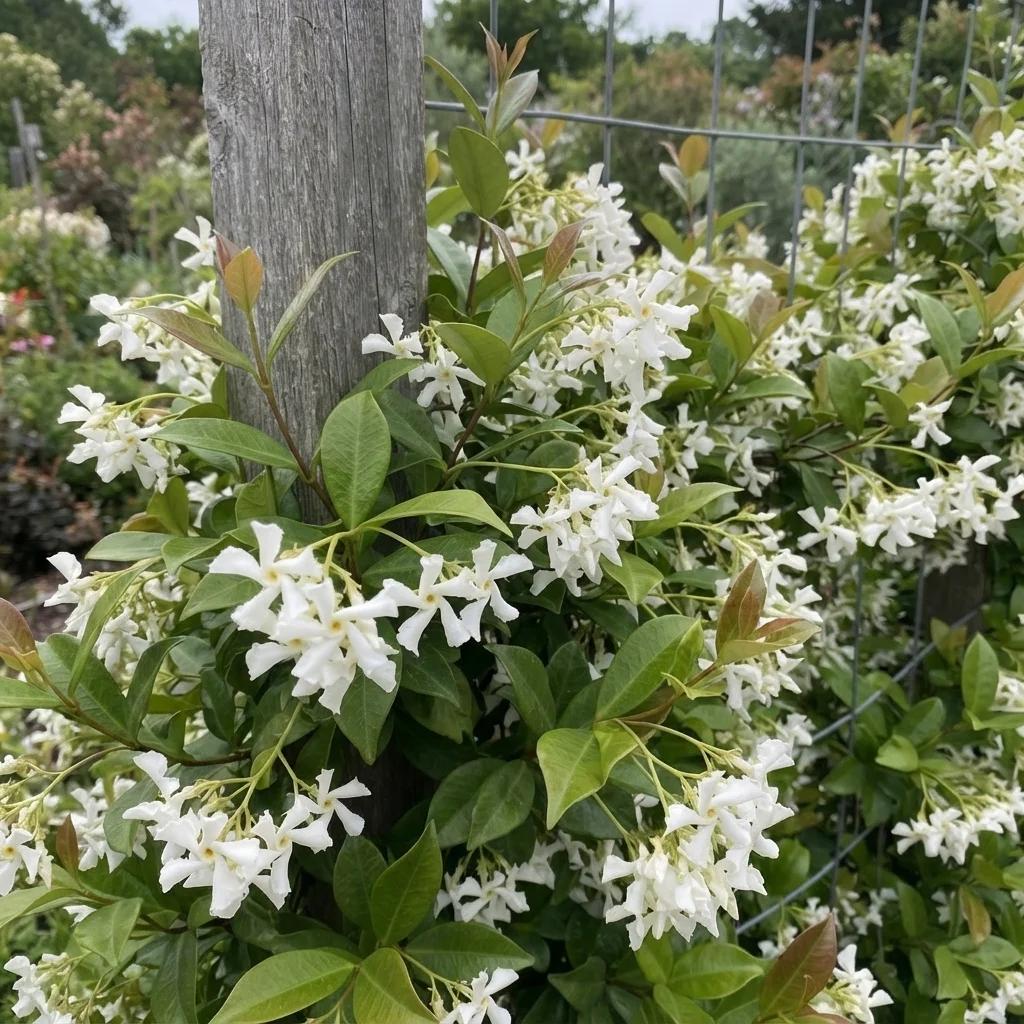
Trachelospermum jasminoides is an evergreen, woody-stemmed twining liana native to Asia that functions as a climber, sprawling shrub, or dense ground cover. The leathery, dark green leaves emerge with light green or bronze-reddish tints and provide year-round structure.
This species is distinguished by its highly fragrant, pure white salverform flowers with five propeller-like lobes that roll back at the margins. The principal bloom flush occurs from late spring to early summer, with sporadic flowers continuing through the warmer months.
Uses & Benefits:
Essentials
At a Glance
Plant Type
Vine
Height
236"
Width
142"
Light
Full Sun, Partial Sun
Zones
8, 9, 10
Water
Moderate
Humidity
High
Lifespan
Perennial
Native To
Asia
Toxicity
Toxic to pets and skin irritant
Marketplace
Where to Buy
Shipping costs Year-round shipping Free shipping
Planting
How to Grow
- Select a planting site in full sun to partial shade with neutral to slightly acidic, well-drained soil.
- Dig a hole twice the width of the root ball and set the plant at the same depth as its nursery container.
- Provide a sturdy trellis, fence, or wall support if training the plant as a climbing vine.
- Water regularly until established, then reduce irrigation to occasional deep watering during dry spells.
Pro Tip
Prune the stems immediately after the main spring flowering flush finishes, as flowers form on the previous year's growth and cutting into old, leafless wood prevents new shoots from developing.
Keep It Thriving
Care Guide
Do
- Prune immediately after the spring bloom to shape and control growth.
- Apply a balanced slow-release fertilizer in late winter before the new growth flush.
- Wear gloves when pruning to avoid contact with the irritating milky latex sap.
Don't
- Do not plant in poorly drained, waterlogged soils where root rot can develop.
- Do not shear indiscriminately into old, bare wood that lacks active leaves.
- Do not over-water once the root system is established.
Seasonal Care Calendar
| Task | Jan | Feb | Mar | Apr | May | Jun | Jul | Aug | Sep | Oct | Nov | Dec |
|---|---|---|---|---|---|---|---|---|---|---|---|---|
| Fertilize | ||||||||||||
| Pest Check | ||||||||||||
| Prune | ||||||||||||
| Winter Prep |
Watch Out For
Pests & Diseases
Common Pests
Common Diseases
In the Garden
Landscape Uses & Companions
Landscape Uses
Multiply
Propagation Methods
Good to Know
Common Questions
Star Jasmine questions
What zones can Star Jasmine grow in?
Star Jasmine is hardy in USDA Zones 8–10. Inside that range it survives winter in the ground; outside it, grow it as an annual or a container plant you protect.
Is Star Jasmine deer resistant?
Yes — Star Jasmine is rated deer-resistant. Deer typically pass it over, though extreme hunger can override any plant's defenses.
When does Star Jasmine bloom?
Star Jasmine typically blooms in late spring through summer. Exact timing shifts a week or two with your zone — Sow's bloom calendar maps it to your garden.
Does Star Jasmine need full sun?
Star Jasmine does best in full sun to part shade. In hot climates, afternoon shade keeps blooms fresher longer.
Is Star Jasmine drought tolerant?
Yes — once established (usually after the first full season), Star Jasmine handles dry spells with minimal watering. Water deeply its first year to build the root system that makes that possible.
More Trachelospermum to compare
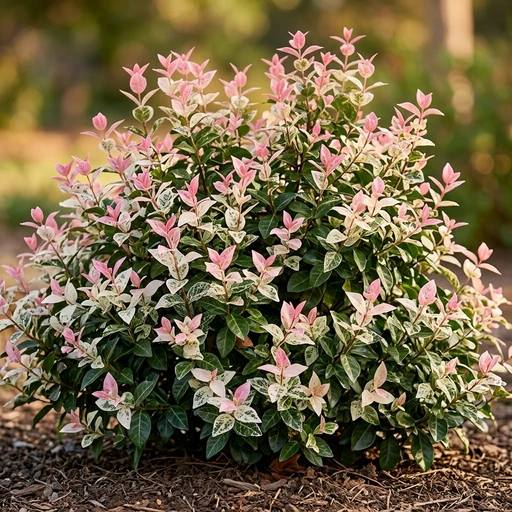
Snow-N-Summer Asiatic Jasmine
Trachelospermum asiaticum 'Snow-N-Summer'
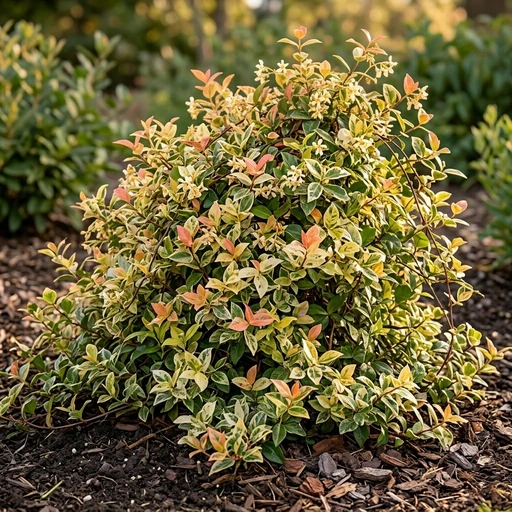
Summer Sunset Asian Jasmine
Trachelospermum asiaticum 'Summer Sunset'
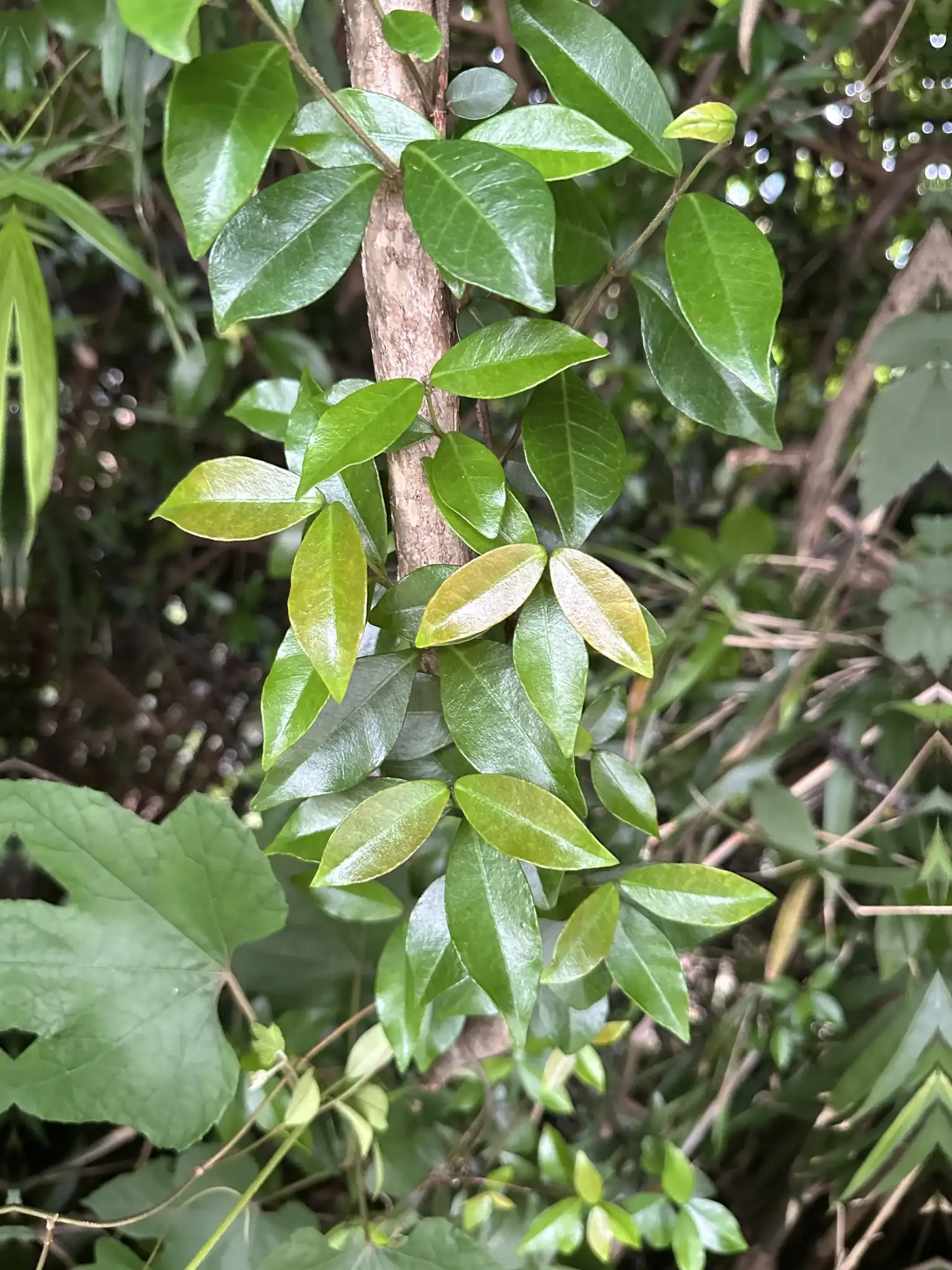
Asiatic Jasmine
Trachelospermum asiaticum
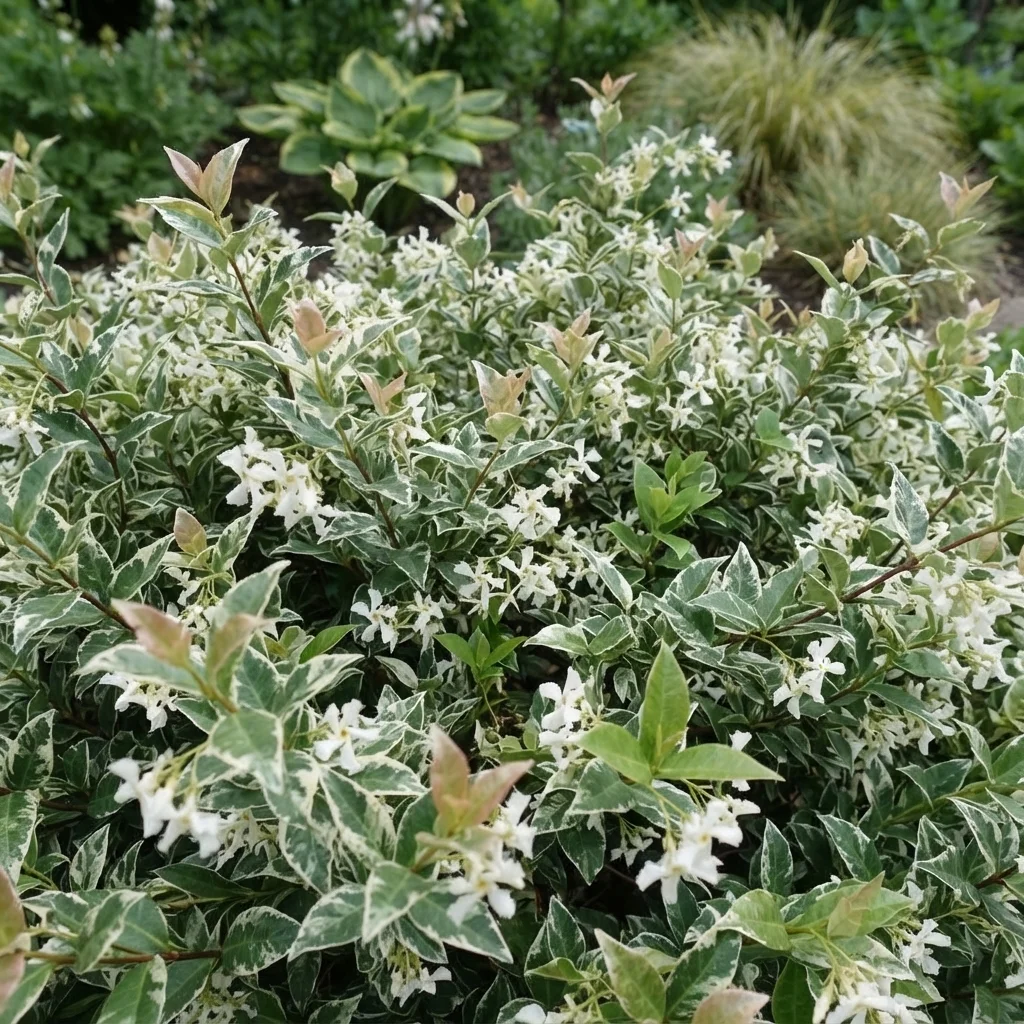
Variegated Star Jasmine
Trachelospermum jasminoides 'Variegatum'
Keep exploring
Explore the genus
Hardy in your zone?
Grow Star Jasmine with confidence
See it in a design of your actual yard, get zone-matched care reminders, and track it season by season in your garden journal.