The Story
Plant Bio
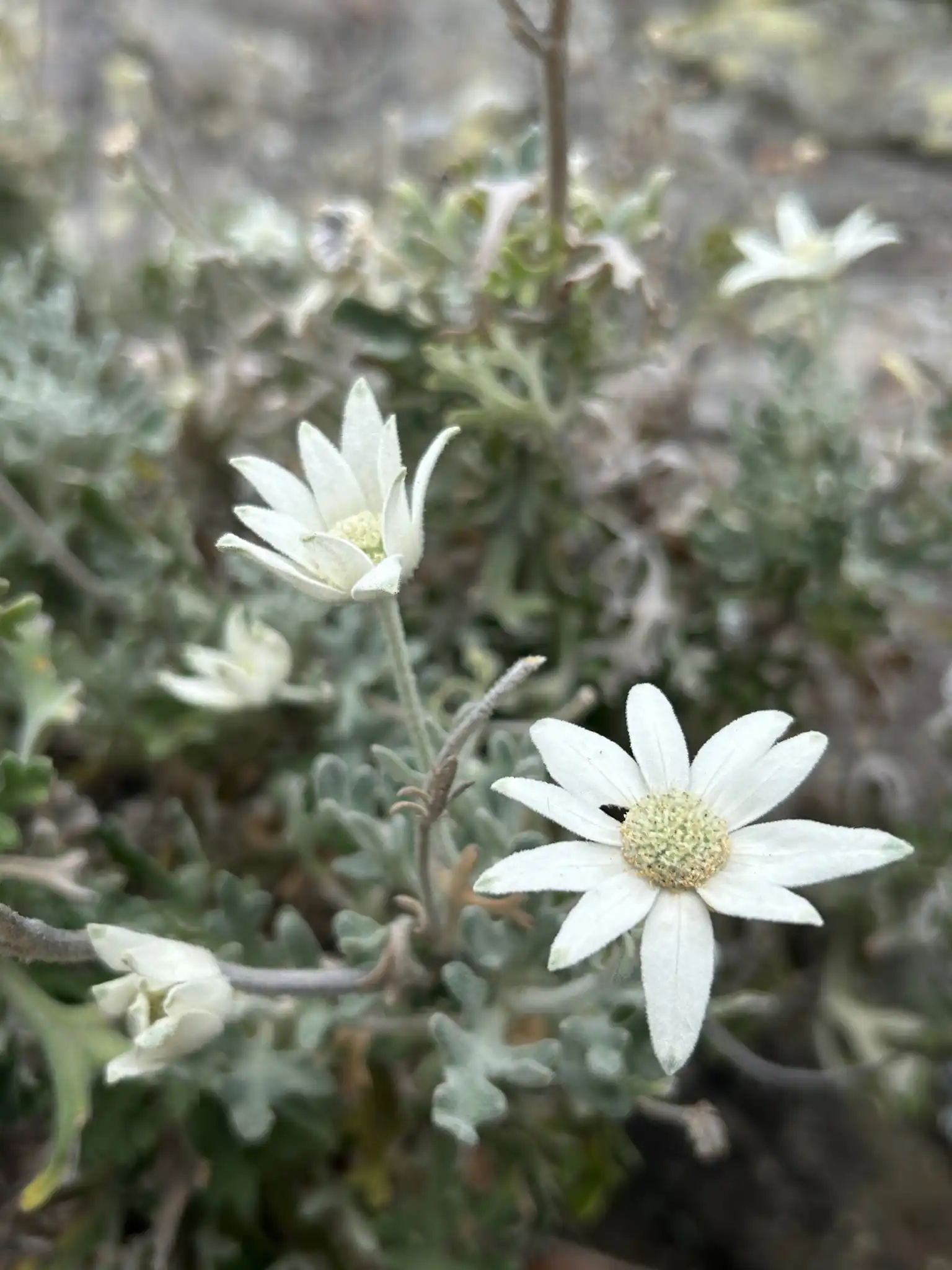
Actinotus helianthi, the flannel flower, is an erect, short-lived Australian perennial with a soft, woolly texture and striking silvery-gray foliage. The daisy-like flower heads feature a central cluster of tiny flowers ringed by ten to eighteen velvety, green-tipped bracts that bloom from spring through fall.
This species is distinguished by its dense covering of soft, floccose white hairs that protect the plant from harsh coastal winds and intense sunlight. The entire plant has a tactile, felt-like quality, with deeply divided leaves that display a prominent silver sheen on new growth.
Uses & Benefits:
Essentials
At a Glance
Plant Type
Perennial
Height
36"
Width
18"
Light
Full Sun, Partial Sun
Zones
9, 10
Water
Low
Humidity
Low to Moderate
Lifespan
Short-lived Perennial
Native To
Australia
Toxicity
Non-toxic (hairs may cause mild skin irritation)
Bloom period
Spring – Fall
In flower about 9 months of the year
Planting
How to Grow
- Select a planting site in full sun with exceptionally well-drained, sandy or gravelly soil.
- Dig a hole twice as wide as the root ball but no deeper, ensuring the soil pH is moderately acidic.
- Gently slide the plant from its container without teasing or breaking the fragile, brittle roots.
- Position the plant at its original soil level, backfill carefully, and water in lightly to settle the soil.
Pro Tip
Tip-prune stems immediately after the flowering period; cutting back into old, bare wood yields no new growth.
Keep It Thriving
Care Guide
Do
- Water deeply but infrequently during extended dry spells once the plant is established.
- Apply a low-phosphorus, controlled-release native fertilizer after the main spring flowering flush.
- Tip-prune regularly after flowering to maintain a compact, bushy habit.
- Gently hand-clean yellowing lower leaves during the cooler months to maintain neatness.
Don't
- Do not disturb, tease, or break the root ball when planting or transplanting.
- Do not apply standard garden fertilizers containing high levels of phosphorus.
- Do not plant in heavy clay soils or areas prone to standing water.
- Do not prune hard back into old, leafless wood, as stems rarely regenerate from bare wood.
Seasonal Care Calendar
| Task | Jan | Feb | Mar | Apr | May | Jun | Jul | Aug | Sep | Oct | Nov | Dec |
|---|---|---|---|---|---|---|---|---|---|---|---|---|
| Fertilize | ||||||||||||
| Pest Check | ||||||||||||
| Prune | ||||||||||||
| Winter Prep |
Watch Out For
Pests & Diseases
Common Pests
Common Diseases
In the Garden
Landscape Uses & Companions
Landscape Uses
Companion Plants
Multiply
Propagation Methods
Good to Know
Common Questions
Flannel Flower questions
What zones can Flannel Flower grow in?
Flannel Flower is hardy in USDA Zones 9–10. Inside that range it survives winter in the ground; outside it, grow it as an annual or a container plant you protect.
Is Flannel Flower deer resistant?
Not reliably. Deer may browse Flannel Flower, especially tender spring growth — plan on repellents or fencing where pressure is high.
When does Flannel Flower bloom?
Flannel Flower typically blooms in spring through fall. Exact timing shifts a week or two with your zone — Sow's bloom calendar maps it to your garden.
Does Flannel Flower need full sun?
Flannel Flower does best in full sun to part shade. In hot climates, afternoon shade keeps blooms fresher longer.
Is Flannel Flower drought tolerant?
Yes — once established (usually after the first full season), Flannel Flower handles dry spells with minimal watering. Water deeply its first year to build the root system that makes that possible.
Keep exploring
Explore the genus
Hardy in your zone?
Grow Flannel Flower with confidence
See it in a design of your actual yard, get zone-matched care reminders, and track it season by season in your garden journal.